

Why Mastering the Art of Brushing Teeth Can Transform Your Oral Health
Clinically reviewed by Dr. Mohammad Aghiad Kandar, UNO DENTAL SAN FRANCISCO
Properly brushing teeth is the cornerstone of good oral health, yet many people have never learned the correct technique. Here's what you need to know to brush like a pro:
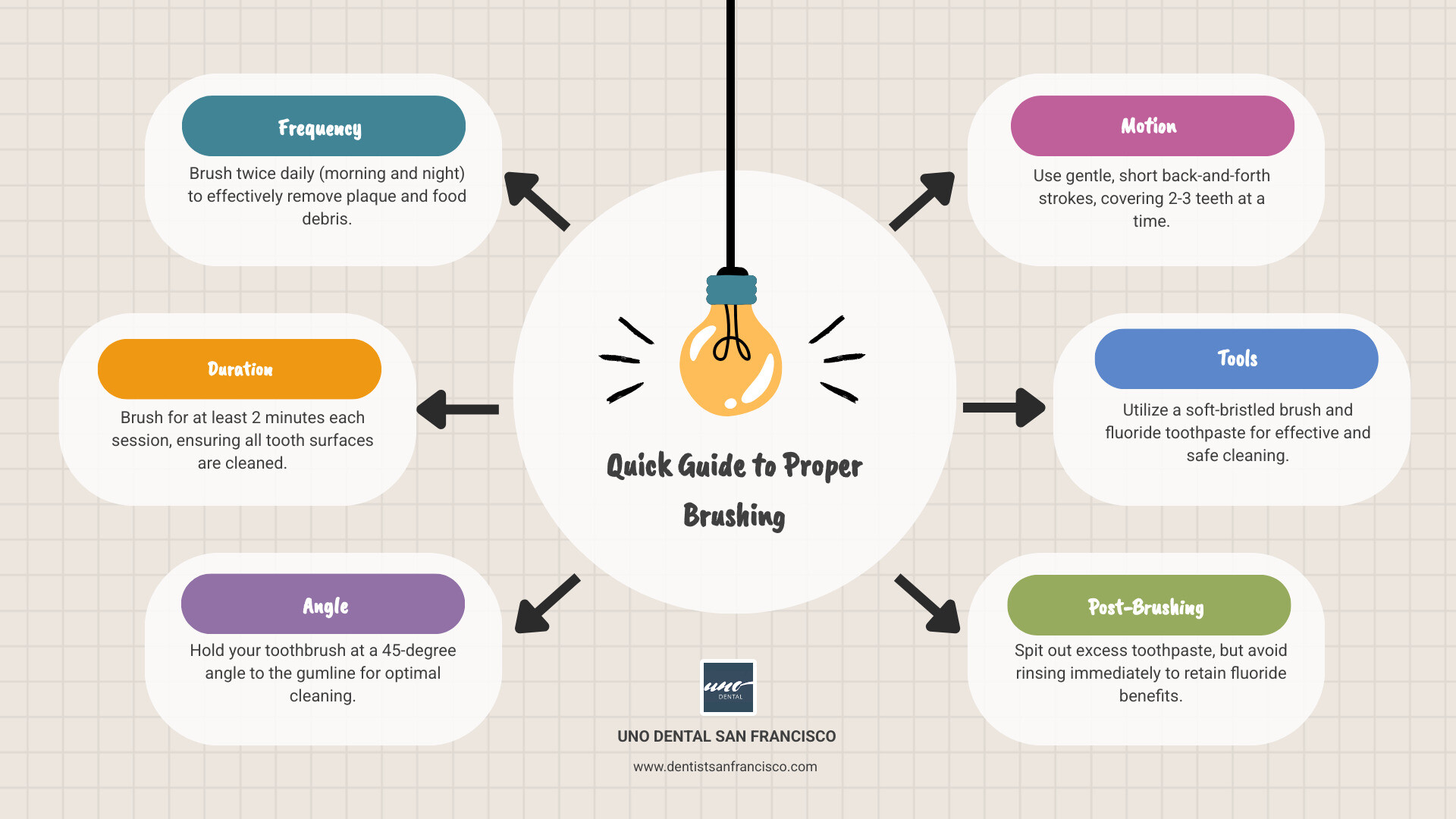
Quick Guide to Proper Tooth Brushing:
- How Often: Twice daily (morning and night)
- How Long: 2 minutes each session
- Best Angle: 45 degrees to the gumline
- Motion: Gentle, short back-and-forth strokes
- What to Use: Soft-bristled brush and fluoride toothpaste
- Key Rule: Don't rinse with water immediately after brushing
Many of us rush through brushing, use ineffective techniques, or even skip it when tired. This can lead to plaque buildup, cavities, gum disease, and can even impact your overall health. The good news is that a proper two-minute brushing technique can dramatically improve your oral health. Correct brushing removes the sticky film of bacteria (plaque), preventing tooth decay, keeping gums healthy, and freshening your breath.
The American Dental Association recommends brushing twice daily for two minutes, but technique is just as crucial as frequency. Using the wrong angle, too much pressure, or the wrong tools can damage your teeth and gums.
As Dr. Mohammad Aghiad Kandar at UNO DENTAL SAN FRANCISCO, I've spent over 15 years helping patients perfect their brushing teeth technique to prevent decay and gum disease. Through personalized preventive care and patient education, I've seen how mastering proper brushing transforms oral health outcomes.
The Fundamentals: How Often, How Long, and When to Brush
While most of us learned to brush our teeth as children, mastering the fundamentals—how often, how long, and when—is key to truly protecting your smile. The golden rule is to brush twice a day for two minutes each time. This recommendation is based on how plaque forms and what your teeth need to stay healthy.
To ensure you cover all areas, divide your mouth into four sections (upper right, upper left, lower right, lower left) and spend 30 seconds on each. Many people are surprised to find their two-minute brush is often closer to 45 seconds.
Why Two Minutes, Twice a Day?
The American Dental Association's two-minute recommendation is based on the time it takes to thoroughly clean all tooth surfaces and remove plaque. Plaque is a colorless bacterial film that constantly forms on your teeth. If not removed, it produces enamel-attacking acids and can harden into tartar, a crusty deposit that requires professional cleaning and contributes to gum disease.
Brushing before bed is especially critical. Your saliva production, which naturally cleanses your mouth, drops dramatically during sleep. This allows bacteria to multiply. A thorough bedtime brush removes the day's buildup and protects your teeth during these vulnerable hours. Your morning brush then clears away bacteria that accumulated overnight and freshens your breath.
For more practical guidance on maintaining a healthy smile beyond just brushing, visit our Tips for Healthy Teeth. The CDC's Basics of Oral Health also offers valuable information.
The Consequences of Neglecting Your Brushing Routine
Skipping brushing occasionally might just cause bad breath, but habitual neglect leads to serious problems.
Cavities are a primary consequence. Plaque acids erode enamel, creating holes that can lead to decay, infections, severe pain, and even tooth loss if left untreated.
Gum disease is another major issue. Plaque irritates gums, causing gingivitis (red, swollen, bleeding gums). Don't ignore bleeding gums; it's a warning sign. If it progresses to periodontitis, the infection can damage the bone supporting your teeth, leading to tooth loss.
Other consequences include stained teeth from plaque absorbing pigments and halitosis (chronic bad breath). Perhaps most concerning, research links poor oral health to systemic health problems like heart disease, stroke, and diabetes complications. Your mouth's health affects your entire body.
At UNO DENTAL SAN FRANCISCO, we see how proper brushing teeth habits prevent these issues. That's why we're passionate about preventive care. Learn more about our approach with our Preventive Dentistry San Francisco services.
Your Brushing Toolkit: Choosing the Right Gear
Using the right tools is essential for effective and gentle brushing teeth. Your choice of toothbrush and toothpaste significantly impacts your oral health.
Toothbrush: Manual vs. Electric
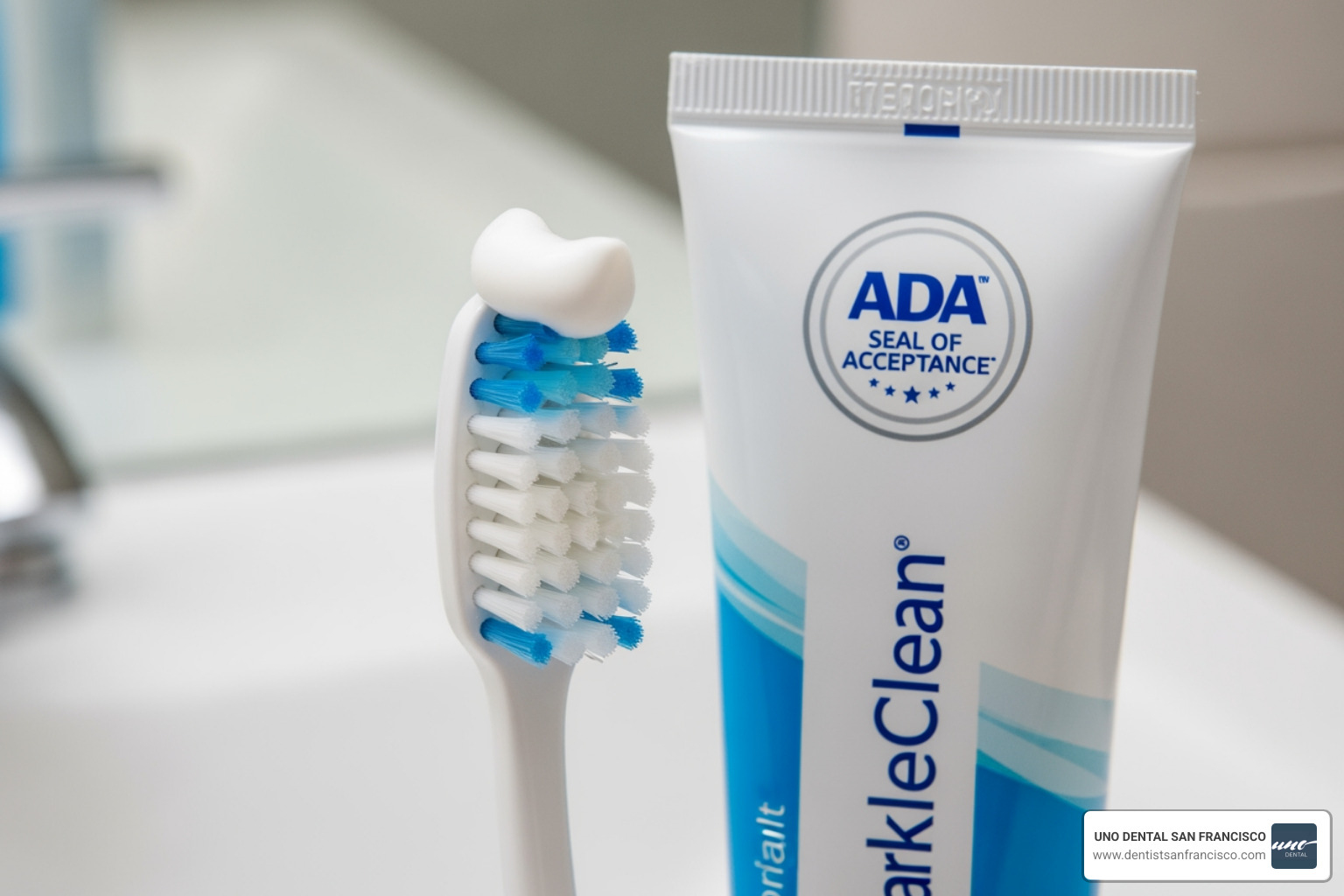
Both manual and electric toothbrushes can be effective when used correctly. The American Dental Association (ADA) recommends a soft-bristled brush to gently remove plaque without harming your gums or enamel. A small head is often best for reaching all areas, especially back molars.
Here's how manual and electric toothbrushes compare:
| Feature | Manual Toothbrush | Electric Toothbrush |
|---|---|---|
| Cost | Low initial cost, regular replacement | Higher initial cost, replacement heads needed |
| Effectiveness | Highly effective with proper technique | Often more effective at plaque removal, especially with less-than-perfect technique |
| Built-in Timers | None (requires external timer) | Many models include 2-minute timers and quadrant alerts |
| Pressure Sensors | None (relies on user's gentle touch) | Some advanced models include sensors to prevent over-brushing |
| Suitability for Dexterity Issues | Can be challenging for some individuals | Excellent for those with arthritis, limited mobility, or special needs |
While some studies suggest electric toothbrushes may be slightly more effective at removing plaque, the key is how you use your brush. An electric toothbrush can be a great aid if you have limited dexterity or find it hard to clean thoroughly with a manual one. Our team at UNO DENTAL SAN FRANCISCO can help you choose the best option for your needs.
Regardless of type, replace your toothbrush every three to four months, or sooner if the bristles are frayed. A worn-out brush won't clean effectively. Also, always replace your toothbrush after an illness to avoid reinfection.
Toothpaste: The Power of Fluoride
When choosing a toothpaste, look for one key ingredient: fluoride. We always recommend an ADA-accepted fluoride toothpaste. Fluoride is a natural mineral that strengthens teeth and fights decay in two ways:
- Remineralization: It helps repair early tooth decay by strengthening weakened enamel.
- Enamel Protection: It makes enamel more resistant to acid attacks from plaque and sugars.
This protective power makes fluoride a cornerstone of cavity prevention. For adults, a toothpaste with at least 1,350 parts per million (ppm) fluoride is recommended. Always look for the ADA Seal of Acceptance on the package to ensure the product is safe and effective.
As for how much to use:
- For adults and children aged 3 to 6, a pea-sized amount is sufficient.
- For children younger than 3, use only a smear of toothpaste (the size of a grain of rice) to prevent swallowing too much fluoride. Parental supervision is essential for young children.
The Pro Technique: A Step-by-Step Guide to Brushing Your Teeth
With the right tools in hand, it's time to master the proper technique. Professional brushing is a gentle, precise method for removing plaque without harming your gums or enamel.
Step 1: Angle and Motion
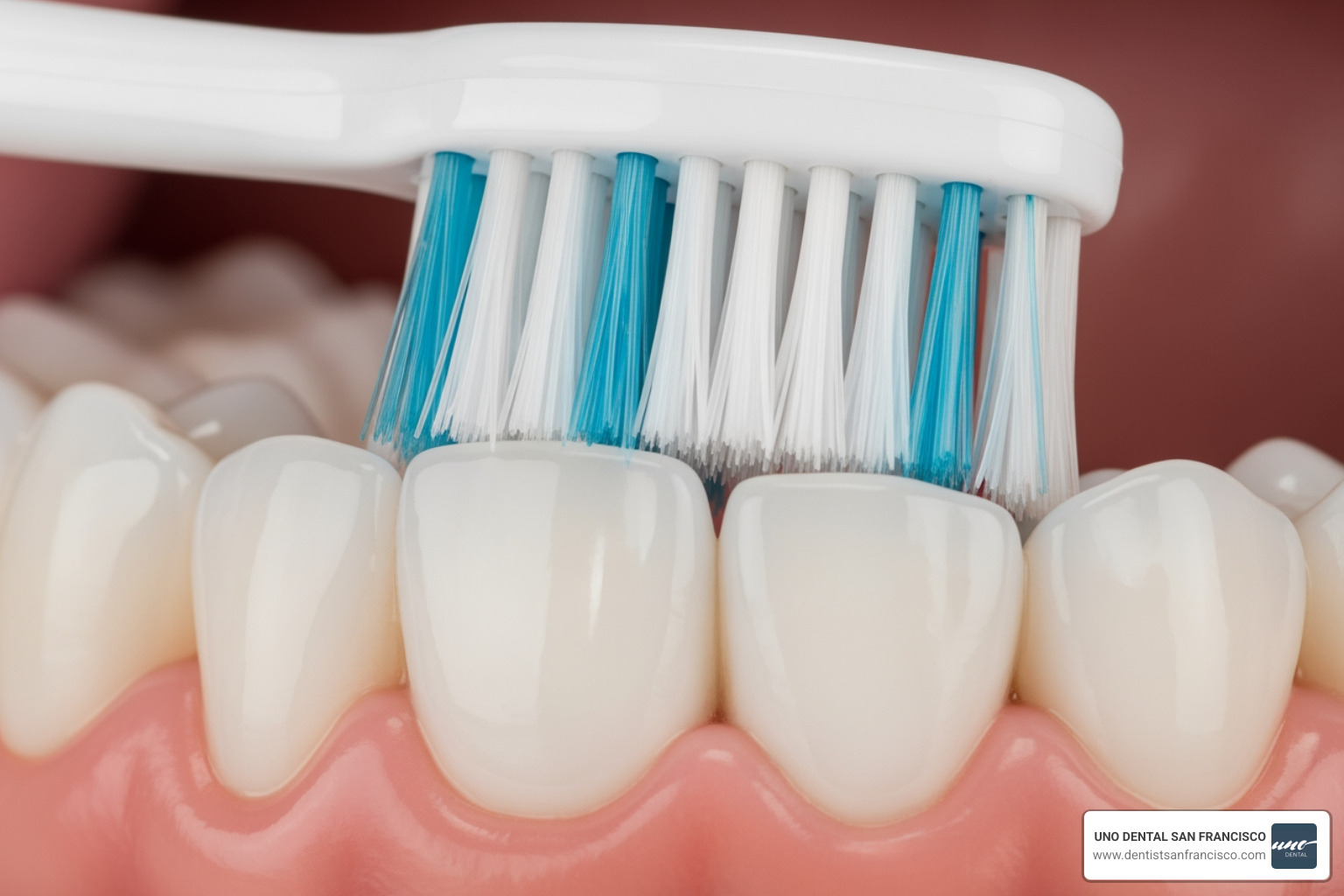
The correct angle is crucial. Hold your toothbrush at a 45-degree angle to your gums. This allows the bristles to clean both the tooth surface and just beneath the gumline, where plaque accumulates. This is often called the Bass or Modified Bass Technique.
Use gentle, short, tooth-wide strokes in a small vibrating or circular motion. Avoid harsh scrubbing, which can lead to sensitive teeth and gum recession. Focus on cleaning two to three teeth at a time before moving on.
Step 2: Cover All Surfaces
To ensure a complete clean, you need a system. Clean all three surfaces of each tooth: the outer surfaces (facing your cheeks), the inner surfaces (facing your tongue), and the chewing surfaces.
A helpful trick is to divide your mouth into four sections (quadrants): upper right, upper left, lower right, and lower left. Spend about 30 seconds on each section to ensure you don't miss any spots.
Step 3: The Finer Details for a Perfect Clean
These details make a big difference:
- Brushing inside front teeth: For the inner surfaces of your front teeth, tilt your brush vertically and use several gentle up-and-down strokes.
- Reaching back molars: Ensure your toothbrush head reaches all the way to your back molars. You may need to adjust your jaw to get the best angle.
- Don't rinse immediately: After brushing teeth, spit out excess toothpaste but don't rinse with water right away. This allows the concentrated fluoride to remain on your teeth longer, strengthening your enamel. Rinsing washes away this protective layer. While it may feel odd at first, it's a highly effective habit for better oral health!
Advanced Scenarios and Special Considerations
Brushing techniques need to adapt to special situations, such as having braces, consuming acidic foods, or teaching children. Here's how to handle these scenarios.
Brushing with Braces or Dental Work
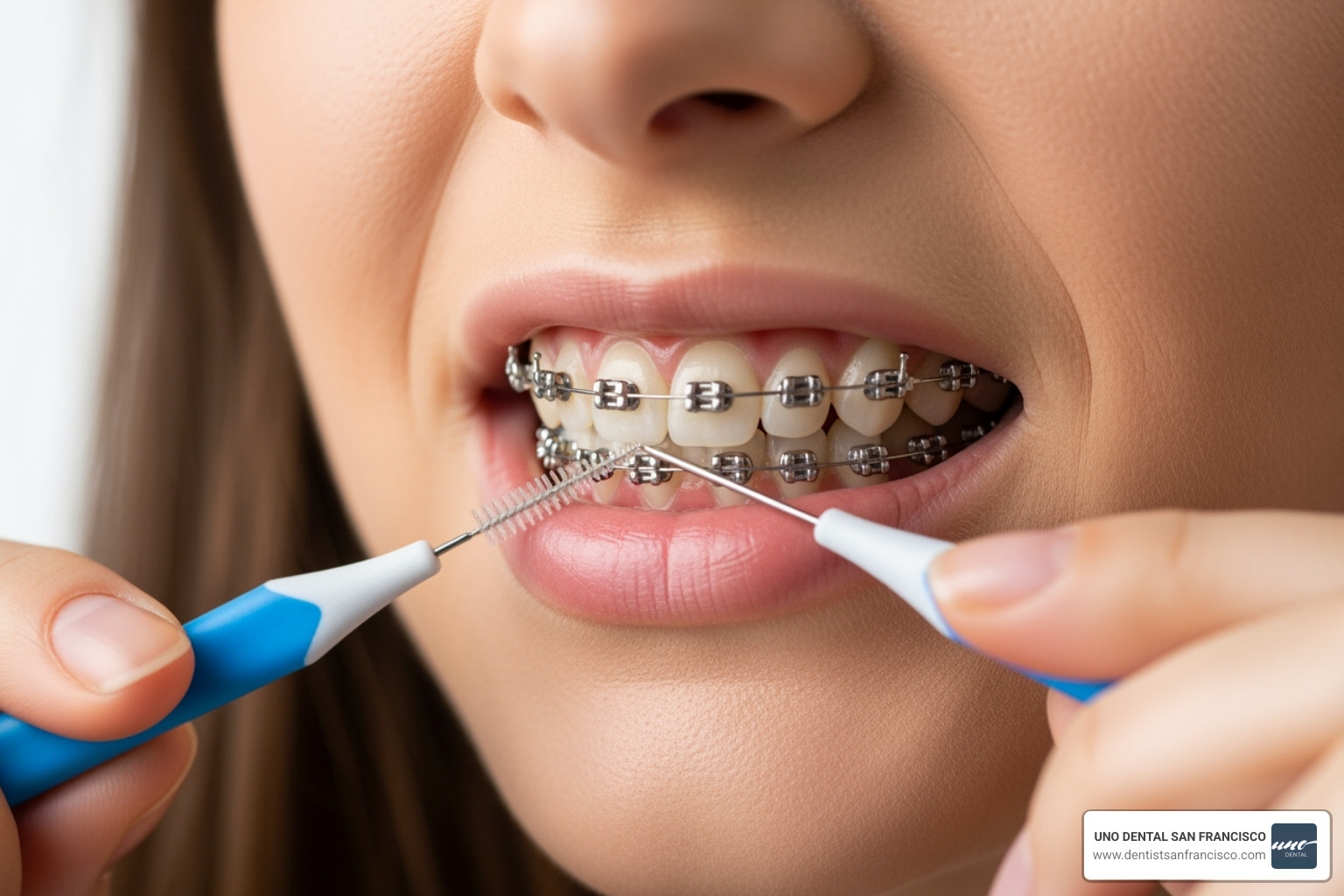
Braces create nooks and crannies where food and plaque can easily get trapped, leading to white spots or cavities. The solution is to brush after every meal. While it may seem like a hassle, it's crucial for revealing a healthy, cavity-free smile after your treatment ends.
Your regular toothbrush isn't enough. Use interdental brushes to clean around brackets and under wires. Floss threaders can help guide floss through braces, and many patients find water flossers effective for removing trapped food.
Always use a gentle touch to avoid damaging your gums or orthodontic appliances. For more strategies, check out our guide on how to Level Up Your Daily Dental Routine.
The Rule for Brushing Teeth After Acidic Foods
Surprisingly, you shouldn't brush your teeth immediately after consuming acidic foods and drinks like orange juice, soda, or tomatoes. These acids temporarily soften your tooth enamel, and brushing in this state can wear it away.
Wait 30 to 60 minutes before brushing teeth. This gives your saliva time to neutralize the acids and help your enamel re-harden. In the meantime, you can rinse your mouth with plain water or chew sugar-free gum to stimulate saliva flow.
This is especially important during holidays when acidic treats are common, a topic we cover in our Dental Tips for a Healthy Halloween San Francisco article.
Brushing for Children and Toddlers
Teaching children proper brushing habits sets them up for a lifetime of good oral health. Parental supervision is essential until at least age 7, as children lack the coordination to brush effectively on their own. A good routine is to let them brush first, then you do a thorough follow-up.
The key is to make it fun. Use a two-minute song, a sticker chart, or let them pick a character toothbrush. Age-appropriate tools are also vital. Use a soft-bristled brush for small mouths and the correct amount of fluoride toothpaste: a rice-grain-sized smear for children under 3, and a pea-sized amount for kids 3 to 6. If your child can't spit, have them tilt their head forward to let the excess dribble out.
At UNO DENTAL SAN FRANCISCO, we help families establish these foundational habits. For more inspiration, explore our New Year New Dental Goals.
Completing Your Routine: It's More Than Just Brushing Teeth
Mastering brushing is a great first step, but a complete oral hygiene routine involves more. To achieve optimal oral health, you must also clean the areas your toothbrush can't reach.
The Importance of Cleaning Between Your Teeth
Toothbrush bristles can't reach the tight spaces between teeth or below the gumline, where plaque and food particles accumulate. This buildup leads to cavities and gum disease, which is why daily interdental cleaning is non-negotiable.
At UNO DENTAL SAN FRANCISCO, we recommend these options for cleaning between teeth:
- Flossing: The traditional method remains highly effective. Guide the floss between your teeth, curve it into a "C" shape against one tooth, and slide it gently up and down. Repeat on the adjacent tooth.
- Water Flossers: These devices use a stream of pulsating water to dislodge food and plaque, and are especially helpful for those with braces or bridges.
- Interdental Picks/Brushes: These small tools are designed to fit between teeth and are excellent for cleaning larger gaps or around dental work.
This step is crucial for removing decay-causing bacteria. For more detailed guidance, see our Flossing Tips San Francisco page and our guide to the Best Dental Hygiene Practices.
Should You Brush Your Tongue?
Yes, you should clean your tongue at least twice a day. Your tongue's textured surface can trap bacteria, food debris, and dead cells. This buildup is a primary cause of bad breath (halitosis) and can contribute to plaque formation.
To clean your tongue, extend it and use your toothbrush or a dedicated tongue scraper. Gently pull the tool from the back of your tongue to the front, rinsing it after each pass. Repeat a few times to cover the entire surface. A tongue scraper may be more comfortable if you have a sensitive gag reflex.
The Role of Mouthwash
Mouthwash is a useful supplement to your routine, but it should never replace brushing teeth and flossing. It's a supporting tool, not a primary one.
If you use a fluoride mouthwash, do not use it immediately after brushing. Rinsing right after brushing washes away the concentrated fluoride from your toothpaste. Instead, use mouthwash at a different time, like after lunch.
Fluoride rinses offer an extra layer of cavity protection, while antiseptic mouthwashes can help reduce bacteria that cause gum disease and bad breath. Always look for products with the ADA Seal of Acceptance to ensure they are safe and effective.
Conclusion: Partnering for Your Lifelong Oral Health
We've covered the essentials of proper brushing teeth: the two-minute, twice-daily rule, using the right tools, the 45-degree angle technique, and cleaning every tooth surface. We also explored adapting your routine for braces, after acidic foods, and for children, as well as the importance of flossing, tongue cleaning, and using mouthwash.
Consistency is key. Making these practices a daily habit will dramatically lower your risk of cavities, gum disease, and other dental problems. This small investment of time pays huge dividends for your overall health.
At UNO DENTAL SAN FRANCISCO, we believe in empowering our patients with the knowledge for optimal oral health. Excellent home care is crucial, but it works hand-in-hand with regular dental check-ups and professional cleanings to keep your smile healthy.
Our team is here to offer personalized advice and the highest standard of care to ensure your smile stays vibrant for years to come. If you have questions about your brushing teeth technique or any part of your oral hygiene, please reach out. We are proud to be your partner on the journey to a healthier smile.
Learn more about our comprehensive periodontal treatments and find out how we can further support your oral health goals.