
The Journey to a Straighter Smile and Healthy Gums
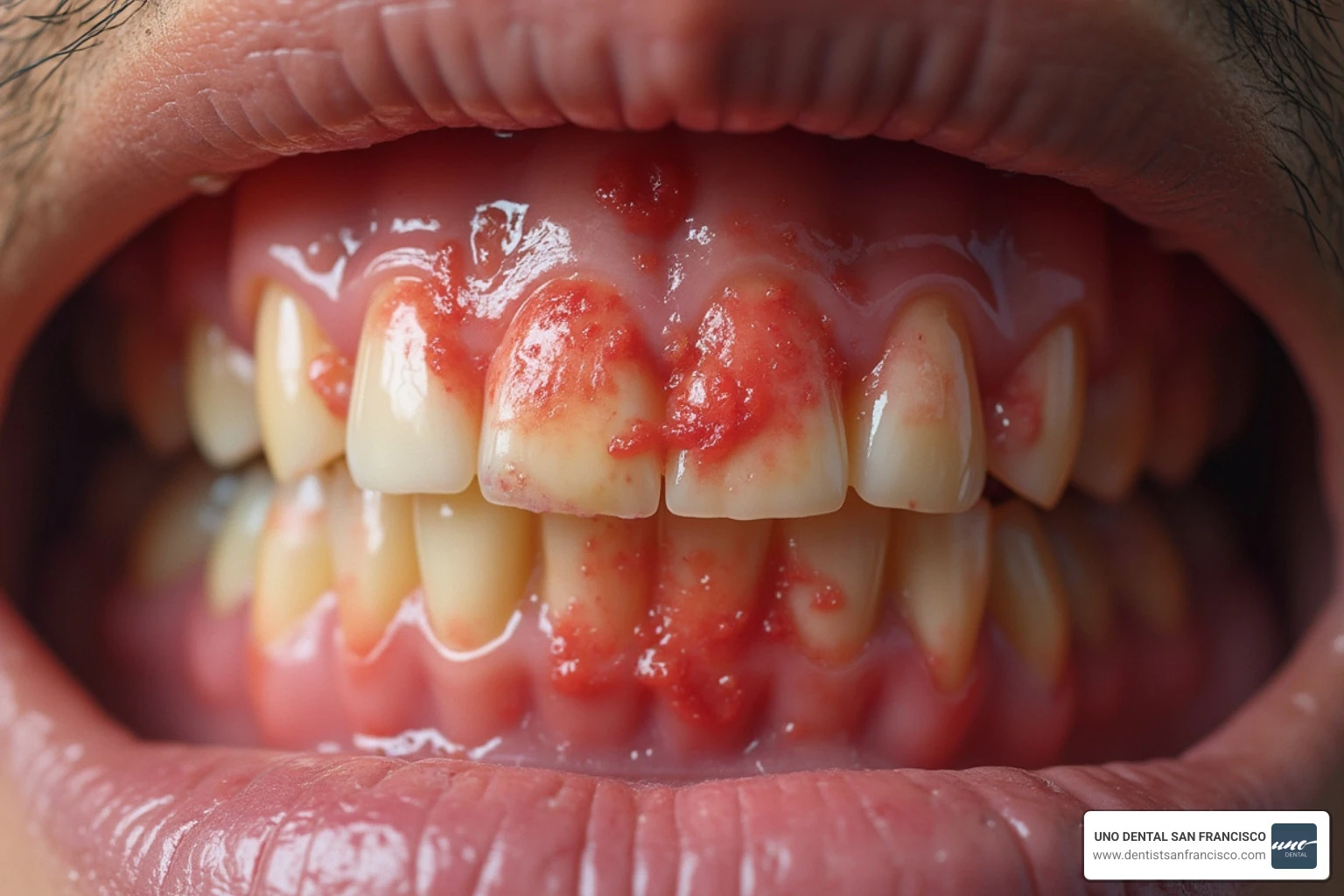
Gum issues after braces are common. Orthodontic treatment delivers a straighter smile, but gums can react with inflammation, overgrowth, or mild recession that benefits from focused care.
Common gum problems after braces include:
- Gingivitis - Red, swollen, bleeding gums from plaque buildup
- Gingival Hyperplasia - Gum tissue growing over teeth during treatment
- Gum Recession - Gums pulling away from teeth, exposing roots
- Sensitivity - Tender gums when brushing or eating
- Persistent swelling - Inflammation that lingers after braces removal
Short-term swelling after getting braces or after adjustments is typical. As teeth move, small spaces can trap plaque and food, fueling inflammation. The encouraging news: most brace-related gum issues are mild and improve with consistent hygiene and professional guidance. Recession linked to braces is usually minor and not a major disease risk when monitored.
As Mohammad Aghiad Kandar DDS at UNO DENTAL SAN FRANCISCO, I create personalized plans to resolve gum issues after braces and safeguard long-term oral health. Explore A Guide to Dental Health San Francisco for a broader overview of maintaining a healthy smile.
Common Gum Problems During and After Orthodontic Treatment
Getting braces can leave gums feeling puffy or sensitive as your mouth adjusts. The key is knowing what is normal and when to seek help.
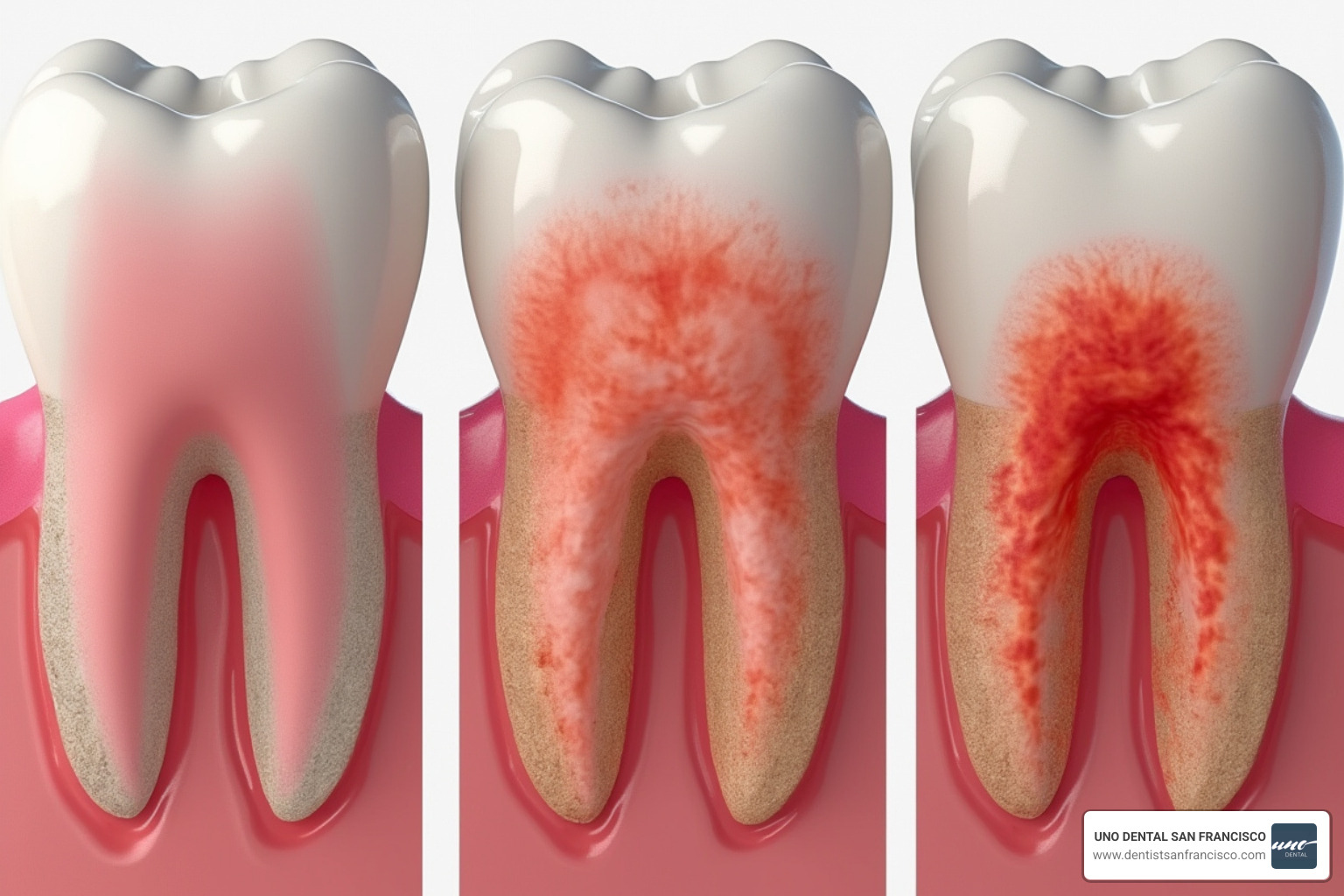
If you are unsure whether your symptoms need attention, see Could You Have Gum Disease?.
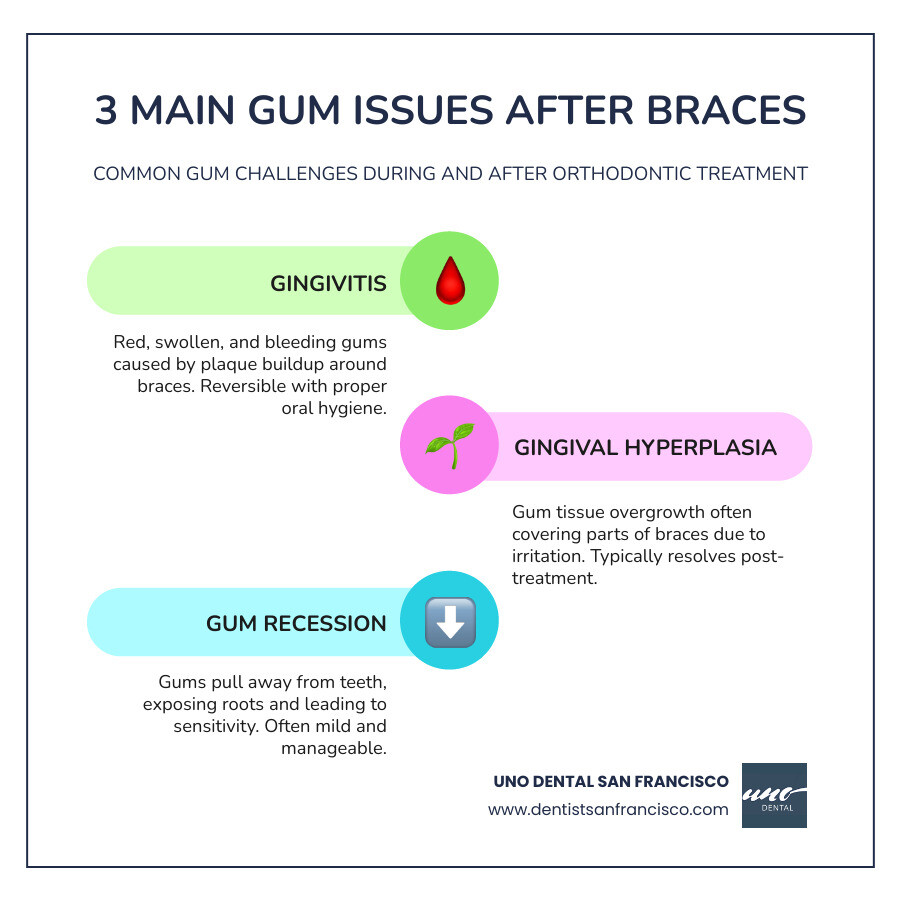
Let’s look at the three most common culprits behind gum issues after braces.
Gingivitis: The First Sign of Trouble
Plaque around brackets and wires can inflame gums, causing redness, swelling, and bleeding. Braces create plaque traps that require extra cleaning. The upside: gingivitis is reversible with diligent care and professional support. Learn the signs at Early Stage Gingivitis.
Gingival Hyperplasia: When Gums Grow Over Braces
Irritation and plaque may trigger gum overgrowth that can cover parts of brackets. The tissue often bleeds easily and can make cleaning difficult. This typically resolves within weeks after braces come off, especially with excellent hygiene and targeted professional care.
Gum Recession: When Gums Pull Away
Recession exposes sensitive root surfaces and can follow tooth movement, especially when teeth move near the bone’s boundary. Most brace-related recession is mild, but we monitor closely throughout treatment at UNO DENTAL SAN FRANCISCO. For more details about evaluation and treatment options, see our comprehensive Periodontal Treatment resources. Early intervention and consistent hygiene help prevent progression.
Why Braces Affect Gums and Who Is at Risk
Braces guide teeth through bone remodeling: bone resorbs on one side of a moving tooth and rebuilds on the other. During this process, new plaque-retentive niches form around brackets and shifting tooth surfaces, making meticulous hygiene essential.
Hormonal shifts (common in teens) can heighten gum sensitivity to plaque. Genetics matter too: people with a thin gum biotype may be more prone to recession during movement. See the broader wellness connection in What Your Teeth Say About Your Overall Health.
Risk Factors for Gum Complications
- Poor oral hygiene around brackets and wires
- Pre-existing gum disease before orthodontic care
- Thin gum tissue (biotype)
- Aggressive brushing or hard-bristled brushes
- Medical conditions affecting healing (e.g., diabetes, autoimmune conditions)
How Different Orthodontic Options Affect Gum Health
The type of orthodontics influences cleaning ease and gum comfort at UNO DENTAL SAN FRANCISCO.
| Orthodontic Option | Cleaning Difficulty | Plaque Accumulation | Irritation Potential | Gum Recession Risk |
|---|---|---|---|---|
| Traditional Braces | High | Moderate to High | Moderate to High | Moderate |
| Clear Aligners | Low | Low | Low | Low (easier hygiene) |
Traditional braces demand specialized cleaning due to fixed hardware and additional plaque traps. Clear aligners are removable, making brushing and flossing simpler while still requiring consistent wear and monitoring. Either option can be successful when paired with strong home care and regular professional oversight.
Proactive Prevention and At-Home Gum Care
The best defense against gum issues after braces is consistent, thorough hygiene from day one. Extra effort now prevents bigger problems later.
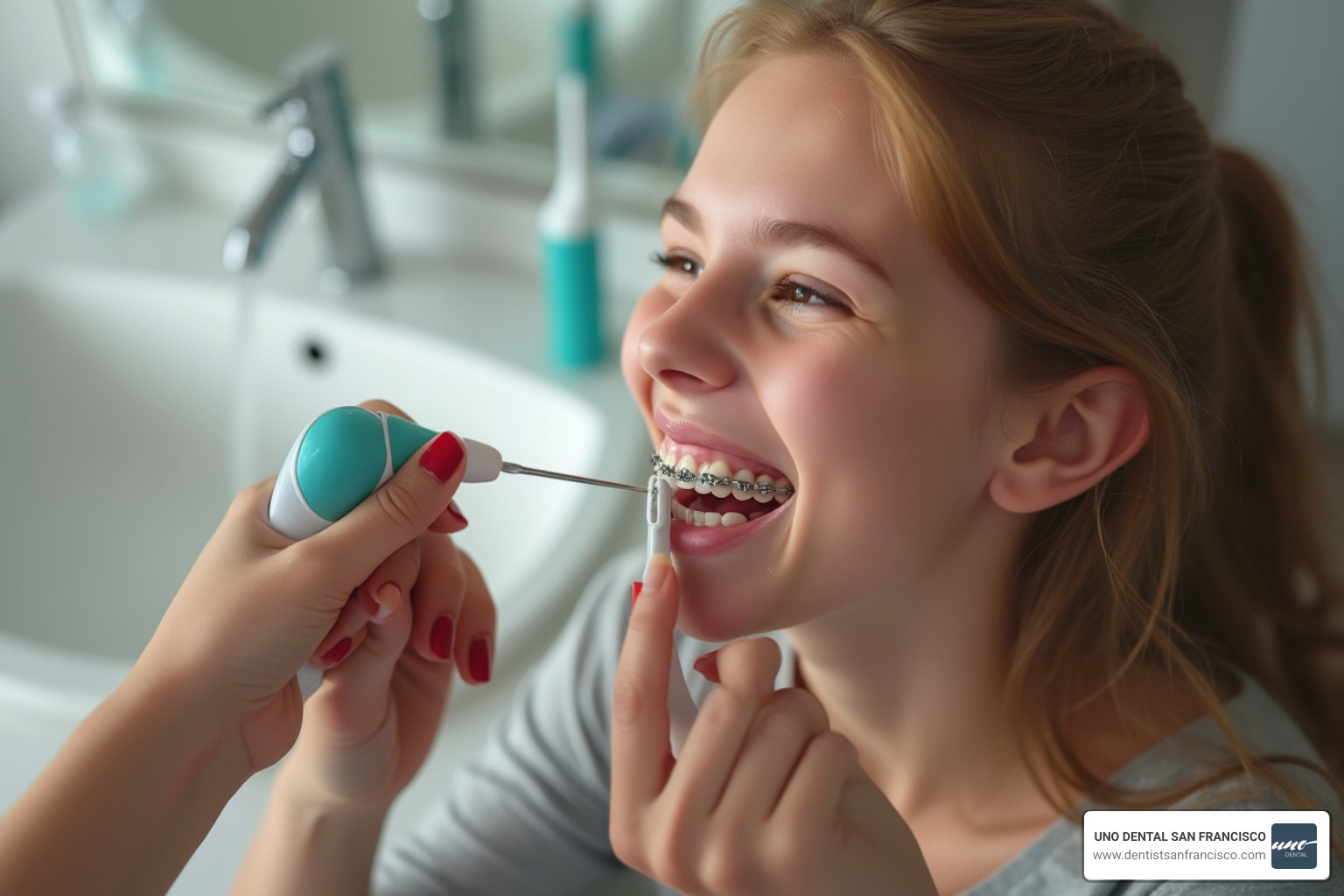
Brackets and wires create hiding spots for food and plaque. Build a routine that covers every surface of every tooth, and make smart dietary choices. Avoid hard, sticky, or sugary foods to reduce plaque and protect appliances. For a comprehensive refresher, see Best Dental Hygiene Practices.
Your Daily Oral Hygiene Toolkit for Braces
- Soft-bristled toothbrush
- Fluoride toothpaste
- Orthodontic floss threader
- Interdental brushes
- Water flosser
- Antimicrobial mouthwash
A water flosser is especially helpful for swollen areas or gum overgrowth. You can use higher pressure on overgrowth for better results, and lower pressure on sensitive, receded areas. Build your routine with Level Up Your Daily Dental Routine.
Techniques for Brushing and Flossing with Braces
- Brush at a 45-degree angle to the gum line using small circular motions; clean above, below, and around each bracket. Brush after meals when possible.
- Thread floss under the wire, curve it around the gum line, and clean each side of every tooth.
- Use saltwater rinses (warm water plus salt) several times a day to soothe inflammation.
These habits are the backbone of effective Gum Disease Prevention Tips while in orthodontic care.
Professional Treatments for Gum Issues After Braces
Home care is essential, but some situations need professional attention to reset gum health and maintain your results.
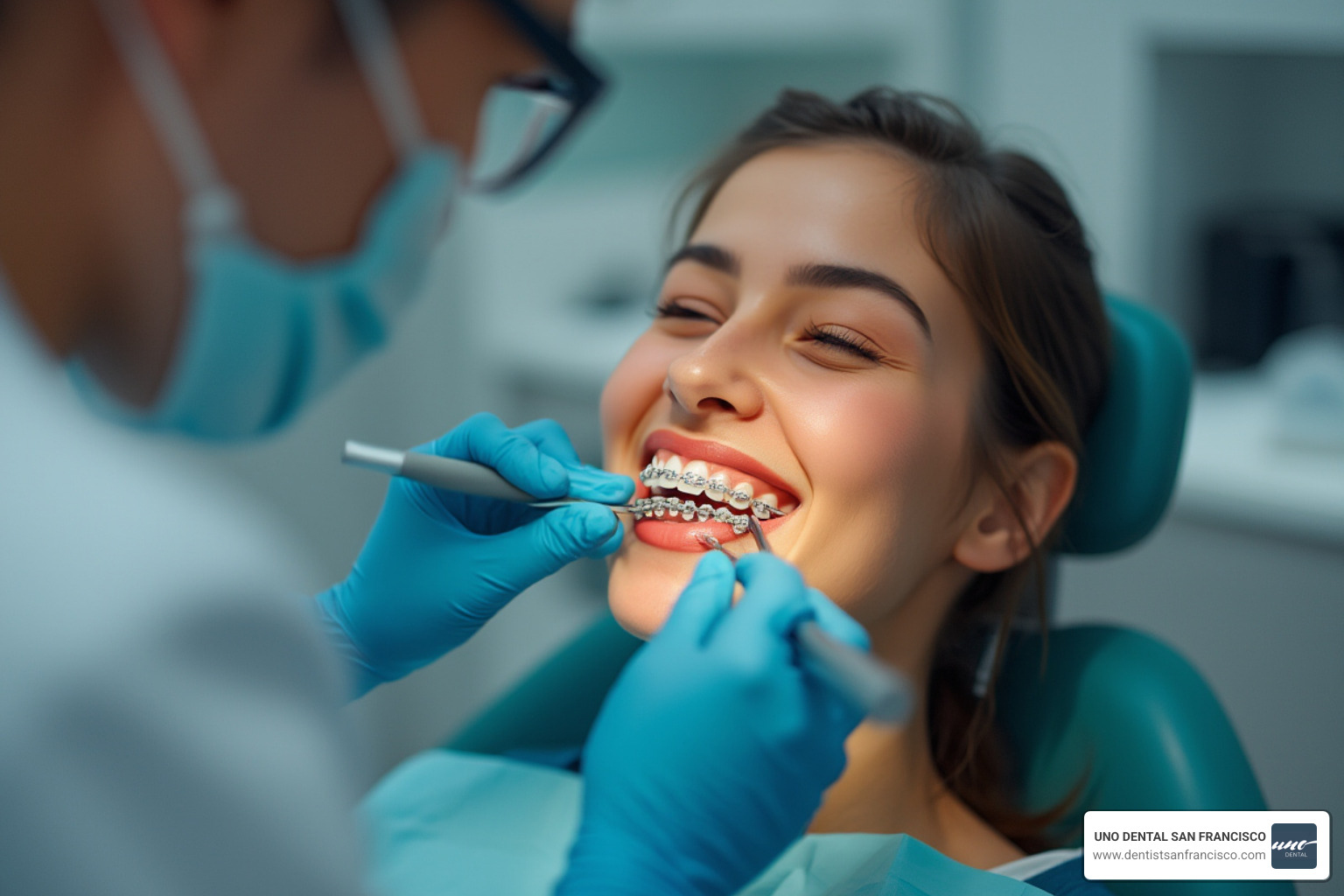
Contact us if swelling persists after braces removal, pain is significant, or bleeding is heavy. Routine monitoring through our Dental Checkup San Francisco visits helps us intervene early.
Understanding Gum Recession and Other Gum Issues After Braces
- Professional cleanings remove stubborn plaque and tartar around previous bracket sites and gum lines.
- Scaling and root planing is a deeper cleaning to smooth root surfaces and disrupt bacterial biofilms. Learn what to expect in Deep Cleaning Dental Aftercare.
- Gingivectomy can reshape or remove excess tissue from gingival hyperplasia.
- Comprehensive Periodontal Treatment restores and protects the supporting structures.
Can Receding Gums Grow Back?
Gum tissue does not regrow on its own. Our goal is to halt progression and restore coverage where possible. Untreated recession can lead to detachment of the supporting structures of the teeth.
At UNO DENTAL SAN FRANCISCO, we offer advanced options such as gum grafting and minimally invasive pinhole techniques, paired with alignment and bite optimization when needed. Our high-tech, holistic approach addresses root causes and supports lasting gum health.
Frequently Asked Questions about Gums and Braces
Dealing with orthodontic changes can be overwhelming. Here are concise answers to common questions about gum issues after braces.
Is it normal for gums to swell for a week after getting braces?
Yes. Early swelling and tenderness are common as your teeth and gums adapt. Symptoms usually ease within a few days to a week. Reach out if swelling is severe, persists, or is accompanied by significant pain.
How can I reduce gum swelling from braces at home?
- Rinse with warm salt water several times daily
- Use over-the-counter anti-inflammatories as directed
- Brush gently but thoroughly with a soft brush
- Use a water flosser to remove debris and massage gums (higher pressure for overgrowth; gentle near recession)
- Choose soft, non-irritating foods while gums are tender
Do certain orthodontic options cause fewer gum problems?
Clear aligners are generally easier to keep clean because they are removable, which can reduce plaque buildup and inflammation. Traditional braces require more meticulous cleaning. Regardless of the option, diligent hygiene and regular checkups are what protect your gums.
Your Partner in Post-Braces Oral Health
Getting your braces off is a milestone, and maintaining those results takes consistent care.
- Wear retainers exactly as prescribed to keep teeth stable.
- Keep a strong home routine: brush twice daily, floss regularly, and use antimicrobial rinses.
- Prioritize regular professional cleanings and gum evaluations so we can prevent small issues from becoming complex ones.
At UNO DENTAL SAN FRANCISCO, our comprehensive, high-tech, holistic approach supports gum health long after orthodontic treatment. We tailor care plans to your unique needs and make guidance accessible with free virtual smile consultations, all under one roof. Through Preventive Dentistry San Francisco, we help you preserve comfort, function, and esthetics for the long term.
Ready to protect your results and optimize your routine? Explore our complete guide to life after braces to ensure your smile stays perfect for step-by-step tips and professional insights.
This article has been medically reviewed by Mohammad Aghiad Kandar, DDS at UNO DENTAL SAN FRANCISCO.