

Your Smile's Biggest Enemies: An Introduction
Foods that stain teeth are more common than you might think. Here are the main culprits to watch out for:
Top Foods and Drinks That Stain Teeth:
- Coffee and Tea - Contain tannins that adhere to enamel
- Red Wine - Chromogens and acidity create a double attack
- Dark Sodas and Sports Drinks - Artificial dyes plus acid erosion
- Berries (blueberries, blackberries, cranberries) - Intensely pigmented molecules
- Tomato-Based Sauces - Bright red color and high acidity
- Curry and Turmeric - Bold yellow pigments
- Soy Sauce and Balsamic Vinegar - Dark pigments that cling to teeth
- Dark Candy and Popsicles - Artificial food coloring
Your morning coffee or healthy berry smoothie could be dimming your smile. These items contain compounds called chromogens and tannins that latch onto tooth enamel, while their acidity makes staining even easier.
The good news is you don't have to give up everything you love. Understanding which foods cause staining and learning simple prevention strategies can help you maintain a bright, confident smile.
"With over 15 years of experience helping patients address tooth discoloration, I've seen how dietary choices impact oral health and how preventive care and professional treatments can restore a smile's natural brightness," says Mohammad Aghiad Kandar, DDS at UNO DENTAL SAN FRANCISCO.
The Science of Stains: Why Do Teeth Get Discolored?
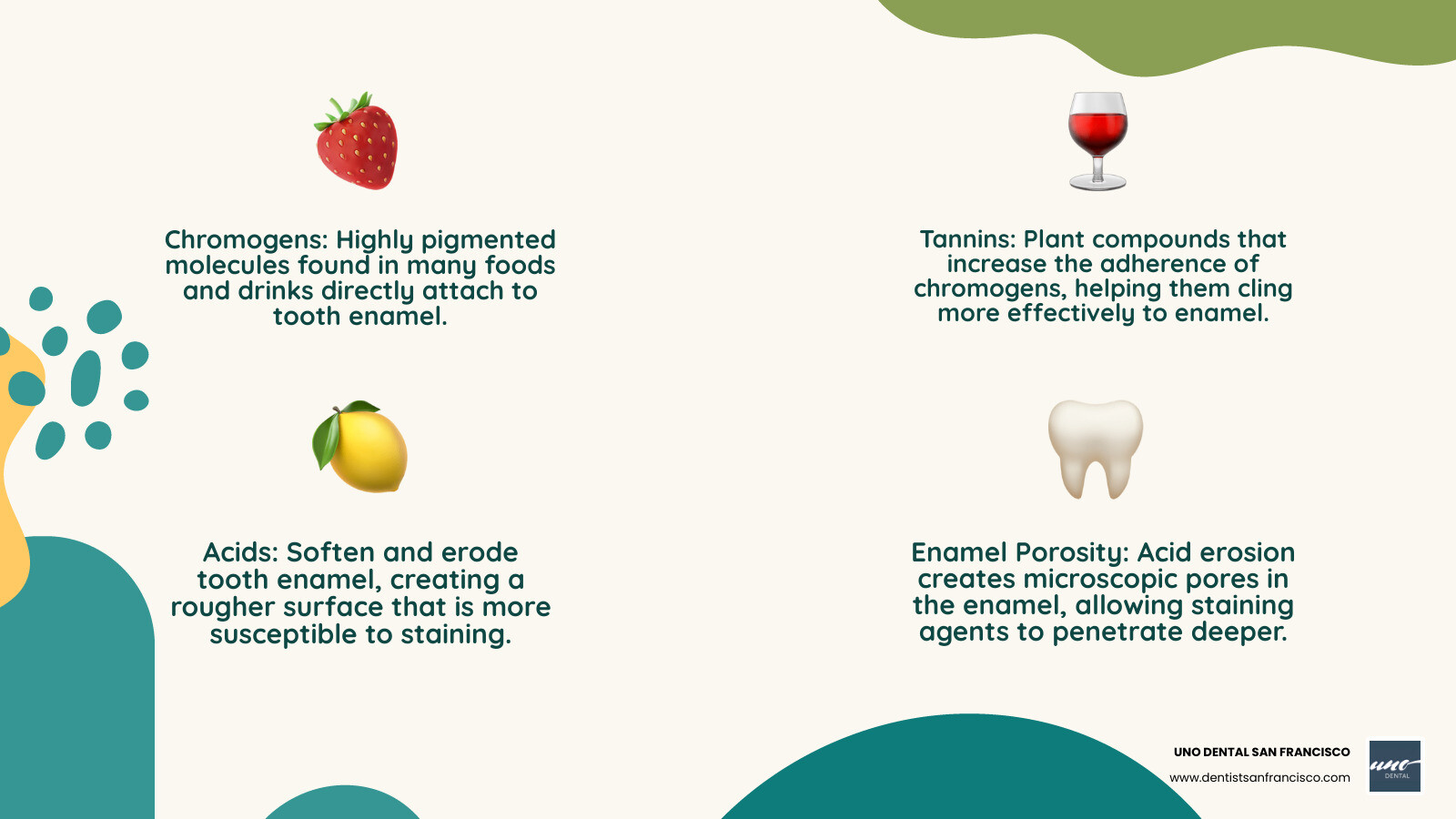
Tooth discoloration happens due to your tooth structure and the chemistry of what you consume. The outer layer, enamel, is the hardest substance in your body but is also porous. When you consume staining foods, pigmented molecules can seep into these microscopic pores.
Beneath the enamel is a yellowish layer called dentin. As you age, enamel thins, revealing more of the dentin and causing teeth to appear more yellow. Genetics also determines your natural enamel thickness and shade.
Acidity is a major factor in tooth staining. Acidic foods and drinks, many of which are also foods that stain teeth, soften and erode enamel. This creates a rougher, more porous surface that absorbs stains. According to dental experts, acidic foods can "roughen and open up the pores within the enamel," allowing stains to set in.
What are Chromogens, Tannins, and Acids?
Three main compounds cause tooth discoloration:
Chromogens are highly pigmented molecules that give foods like berries and coffee their rich color. They have a natural affinity for tooth enamel. If a food can stain your clothes, it can stain your teeth.
Tannins are plant-based compounds (polyphenols) found in coffee, tea, and red wine. They don't stain directly but act like a primer, helping chromogens adhere more strongly to your enamel.
Acids create the ideal conditions for staining. They attack and soften enamel, increasing its porosity. This allows chromogens and tannins to penetrate deeper. The lower the pH level, the more acidic and potentially damaging the substance is to your enamel.
Extrinsic vs. Intrinsic Staining
Knowing the type of stain helps determine the most effective treatment.
Extrinsic stains are surface-level discolorations on the outer enamel. They are the most common type and are primarily caused by diet-related factors—the foods that stain teeth we consume daily. Tobacco use is another major cause. Poor oral hygiene worsens extrinsic staining, as plaque creates a sticky film that holds pigments. The good news is that extrinsic stains are usually treatable with regular brushing, professional cleanings, and whitening treatments.
Intrinsic stains occur within the tooth structure, affecting the dentin. This internal discoloration is more challenging to treat.
Common causes include:
- Aging: As enamel thins over time, the yellowish dentin shows through.
- Medications: Certain antibiotics, like tetracycline, can cause dark stains if taken before age 7 when teeth are developing.
- Trauma: An injury to a tooth can damage the internal pulp, causing the tooth to turn gray or dark. Infection can have a similar effect.
While surface stains respond well to whitening, intrinsic stains may require more advanced cosmetic procedures.
A Guide to Common Foods That Stain Teeth
Many everyday foods and drinks can stain your teeth. A good rule of thumb: if it can stain a white shirt, it can stain your smile.

Dark Beverages: More Than a Morning Pick-Me-Up
Dark beverages are often the biggest offenders, as sipping them gives staining compounds ample time to settle into your enamel.
Coffee is a notorious stainer. It's packed with tannins that help color compounds cling to your teeth, and its acidity softens enamel, making it easier for stains to set. For more information, explore our guides on topics like Will Coffee Stain Your Teeth?, Teeth Whitening for Coffee Stains, and Coffee Stain Removal. You can also learn how to Get Rid of Coffee Stains on Teeth and find the best Coffee Stain Remover for Teeth.
Tea can stain even more than coffee due to its high tannin content. Black tea often causes yellow stains, while green tea can leave grayish marks. However, a 2014 study on adding milk to tea found that adding a small amount of milk can significantly reduce staining.
Red wine is a double threat. Its deep red chromogens provide color, while its high acidity and tannins help the stains stick, potentially turning teeth gray over time.
Sugary & Acidic Drinks: A Double Threat
These drinks combine artificial dyes with enamel-destroying acidity.
Sodas and colas contain chromogens and high sugar content that feeds acid-producing bacteria. Even diet sodas are highly acidic and can roughen the enamel surface, making staining easier.
Sports drinks and energy drinks can be surprisingly harmful. Research on sports drinks and enamel dissolution found they actively break down enamel. This erosion, combined with artificial dyes, is a recipe for discoloration.
Colorful Fruits and Vegetables
Frustratingly, some of the healthiest foods are also major stainers.

Berries like blueberries, blackberries, and cranberries are packed with antioxidants but also contain powerful chromogens that adhere to enamel.
Beets contain potent red and purple pigments called betalains that are incredibly effective at discoloring tooth enamel.
Sauces and Condiments
Tomato-based sauces are problematic due to their bright red chromogens and high acidity. The sauce's tendency to cling to teeth gives pigments more time to set in.
Curry and turmeric contain a deep yellow pigment, curcumin, which is a powerful staining agent that can gradually turn teeth yellow.
Soy sauce and balsamic vinegar have dark pigmentation. Balsamic vinegar is particularly troublesome because its sticky consistency and high acidity prolong contact and etch the enamel.
Sweets and Frozen Treats
Dark candy and sweets can cause mild staining, but the sugar is the bigger issue, as it feeds acid-producing bacteria that weaken enamel. If a candy turns your tongue a different color, it can stain your teeth.
Popsicles, slushies, and frozen treats are often loaded with artificial food coloring. These bright dyes are powerful stainers that readily transfer to tooth enamel.
Protecting Your Pearly Whites: Prevention and Removal
You don't have to give up your favorite foods to maintain a bright smile. Smart strategies and proactive care can minimize the impact of foods that stain teeth.
How can I enjoy these foods that stain teeth without the discoloration?
The key is to reduce contact time and protect your enamel.
- Use a straw when drinking coffee, tea, or sodas to direct the liquid past your front teeth.
- Rinse with water immediately after consuming staining foods to wash away pigments and neutralize acids.
- Wait to brush for 30-60 minutes after consuming acidic items. Your enamel is temporarily softened by acid, and brushing immediately can cause abrasion.
- Pair foods strategically. Eating leafy greens before a tomato sauce can form a protective film. Adding milk to tea or eating cheese with wine can neutralize acids.
- Eat crunchy fruits and vegetables like apples, carrots, and celery. They act as natural toothbrushes, scrubbing teeth and increasing saliva flow.
- Chew sugar-free gum after meals to stimulate saliva, which neutralizes acids and rinses away food particles.
- Brush and floss promptly (after the waiting period for acidic foods). This removes pigments before they settle. Flossing is crucial for cleaning between teeth where stains accumulate. For more guidance, explore our Best Dental Hygiene Practices.
- Practice moderation. Be mindful of how often you consume staining foods and drinks.
How Can Stains Be Removed?
If your smile has lost some brightness, modern dentistry offers several effective solutions.
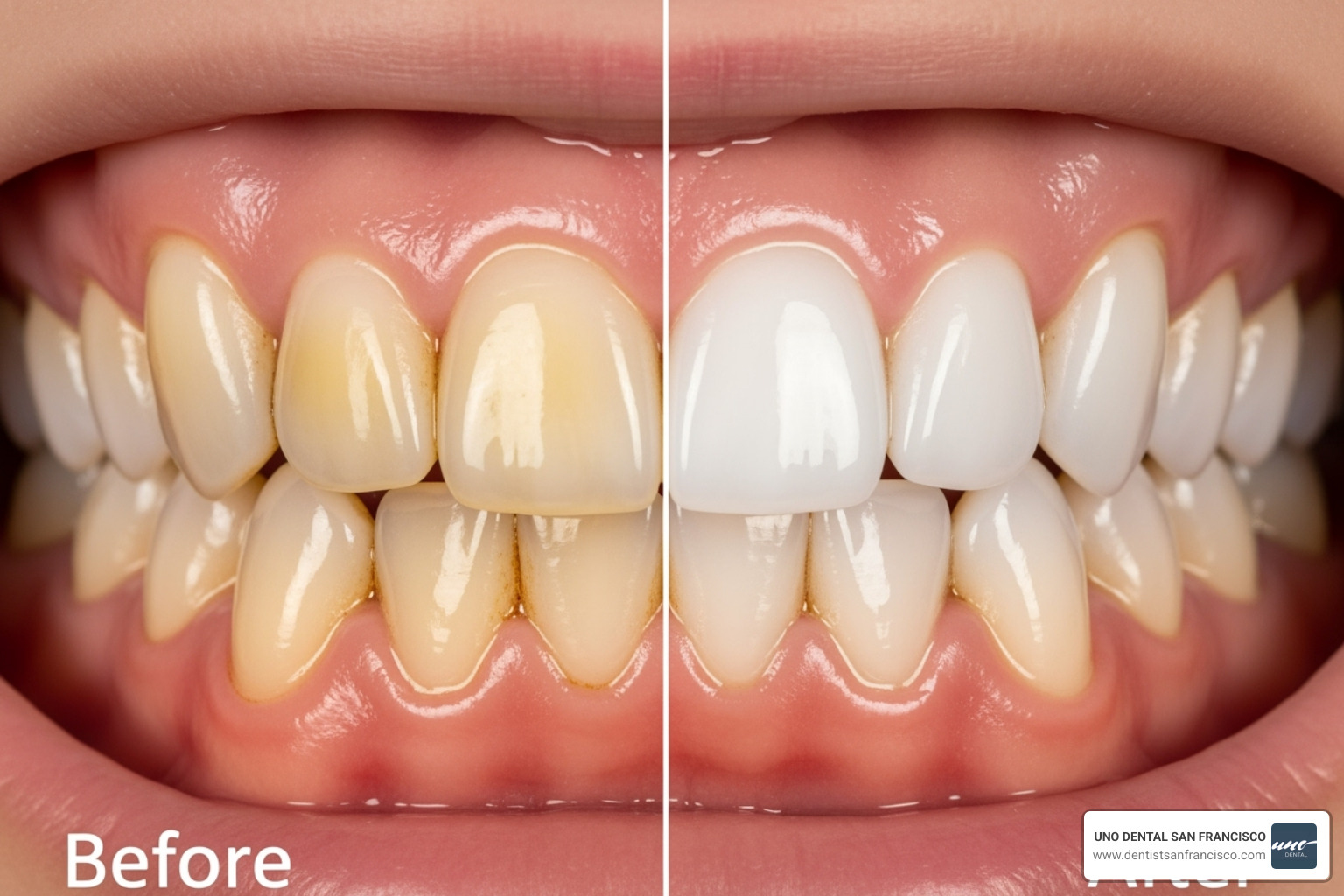
Whitening toothpastes are formulated to help remove minor surface stains.
Professional dental cleaning is your foundation. Our hygienists remove plaque, tartar, and many surface stains that home care misses. We recommend cleanings every six months.
For stubborn stains, professional in-office teeth whitening offers the most dramatic results. Using high-concentration gels, this treatment breaks down deep-set stain molecules, whitening teeth by several shades in a single visit. We offer customized Teeth Whitening for Coffee Stains and other discoloration treatments.
Custom-fitted trays with professional-grade whitening gel from our office are an effective at-home option, offering excellent results with our professional guidance.
For intrinsic stains, cosmetic solutions like dental bonding, porcelain veneers, or crowns can effectively cover the discolored tooth. At UNO DENTAL SAN FRANCISCO, we can help you find the right solution to restore your smile's brightness.
Frequently Asked Questions About Tooth Stains
Here are answers to some of the most common questions we hear at UNO DENTAL SAN FRANCISCO about foods that stain teeth.
Does white wine stain teeth?
Yes, white wine contributes to staining. While it lacks the dark pigments of red wine, its high acidity etches your enamel, creating a more porous surface. This doesn't stain teeth directly but makes them more susceptible to stains from other foods and drinks consumed afterward. The wine essentially primes your teeth to absorb other pigments more readily.
Are there any less obvious foods that stain teeth?
Beyond coffee and red wine, several surprising culprits exist.
- White wine sets your teeth up for staining due to its acidity.
- Sports drinks are highly acidic and often contain artificial dyes.
- Balsamic vinegar combines dark color, a sticky texture, and high acidity.
- Curry and turmeric contain a potent yellow pigment that can cause significant discoloration.
- Tomato-based sauces have both bright pigments and high acidity.
- Popsicles and candy with artificial coloring can easily stain teeth. The rule is simple: if it can stain a white shirt, it can stain your teeth.
Are the health benefits of staining foods worth the risk?
Yes, the health benefits of many staining foods are worth it, provided you consume them smartly and practice good oral hygiene.
Foods like berries, tea, and tomato sauce are packed with beneficial antioxidants and vitamins. Cutting these from your diet to avoid potential staining would mean missing out on important nutrients.
Our philosophy at UNO DENTAL SAN FRANCISCO is about balance, not deprivation. We encourage you to enjoy these healthy foods in moderation while being proactive with your oral care. Simple habits like rinsing with water after meals, using a straw, and maintaining consistent hygiene make a big difference. You can have both excellent general health and a bright, confident smile.
Achieve a Brighter Smile in San Francisco
Your smile tells a story, and we want it to be a bright one. We've explored how everyday items contain chromogens, tannins, and acids that can dull your teeth. Many of these foods that stain teeth are also healthy and enjoyable parts of our diet.
Our approach is about balance and smart prevention, not restriction. Simple habits like using a straw for dark drinks, rinsing with water after meals, and consistent oral hygiene protect your enamel while you enjoy the foods you love.
However, even with the best prevention, life happens. That's where professional care makes all the difference. Regular dental cleanings remove surface buildup, while advanced teeth whitening treatments can reverse years of discoloration.
At UNO DENTAL SAN FRANCISCO, we believe everyone deserves a smile they're proud to share. Our high-tech, holistic approach means individualized treatment plans—all under one roof. We also offer free virtual smile consultations, so you can explore options and get personalized recommendations before you visit.
A bright smile boosts confidence and is entirely within your reach. Don't let concerns about foods that stain teeth keep you from smiling freely.
Ready to restore your smile's natural radiance? Schedule your professional teeth whitening consultation with us today. We'll help you achieve the brilliant, healthy smile you deserve.
Manually reviewed and medically reviewed by Mohammad Aghiad Kandar, DDS (UNO DENTAL SAN FRANCISCO). Last updated: May 2024.