
Why Understanding Cosmetic Dental Insurance Matters
Reviewed by: Dr. Mohammad Aghiad Kandar, UNO DENTAL San Francisco. Last reviewed: August 30, 2025.
Cosmetic dental insurance is rarely included in traditional dental plans. Understanding your options, however, can save you thousands on smile-enhancing treatments. Here's what you need to know:
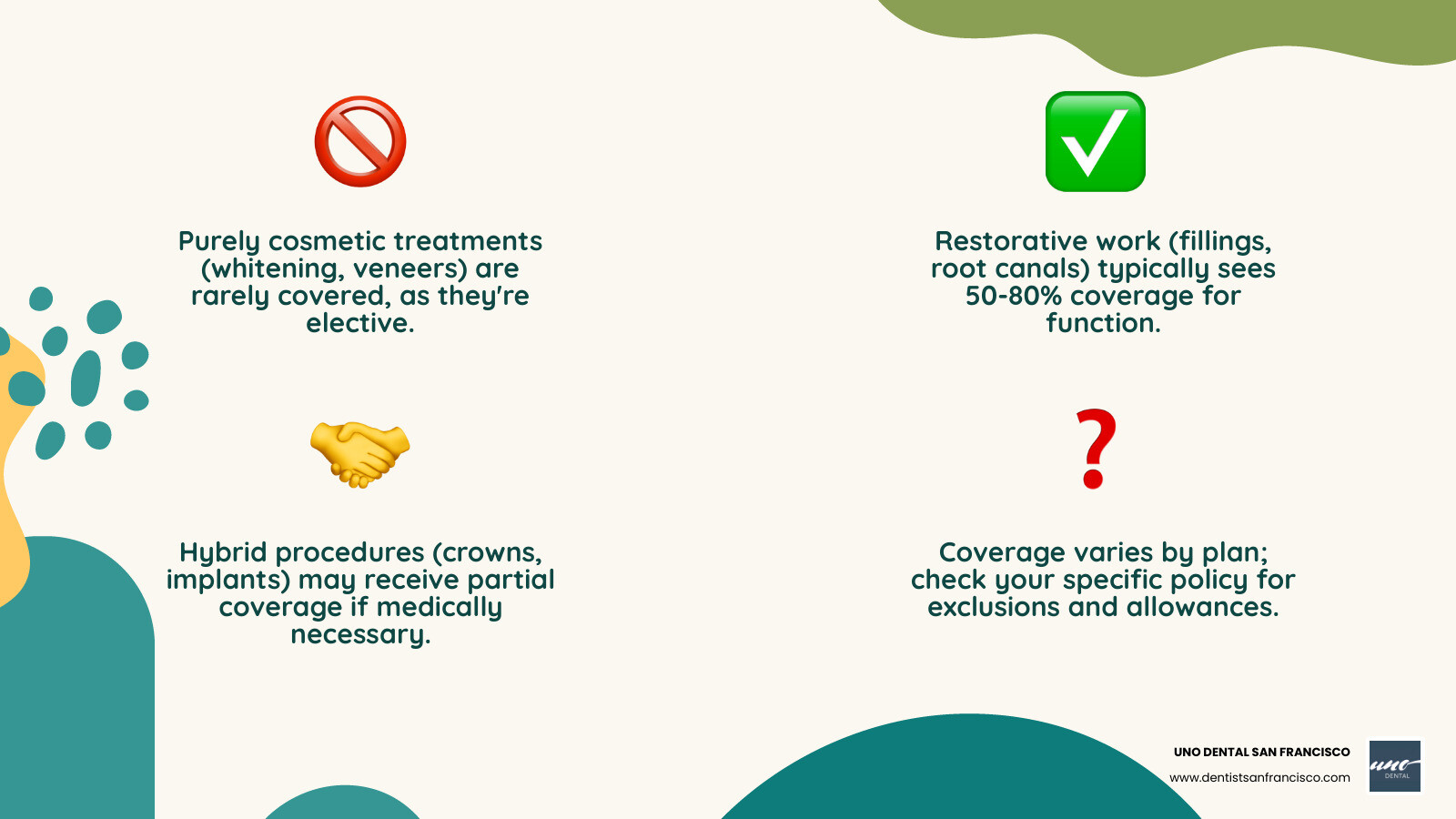
- Most cosmetic procedures are NOT covered: Teeth whitening, veneers, and bonding are typically considered elective.
- Some procedures have dual benefits: Crowns and implants may receive partial coverage when medically necessary.
- Coverage varies significantly: Some plans may cover implants at 50% after a 12-month waiting period.
- Alternative financing exists: Dental discount plans, HSAs, and payment plans can make treatments affordable.
The key challenge is that cosmetic procedures are considered electiveaimed at improving appearance, not addressing health issues. This means you'll likely pay out-of-pocket for most aesthetic improvements.
However, the landscape isn't entirely bleak. Some plans are starting to offer limited coverage for certain cosmetic treatments. For example, some plans provide a small allowance for teeth whitening, while others cover a percentage of teeth whitening costs in-network.
The distinction between cosmetic and restorative work determines coverage. When a procedure serves both functional and aesthetic purposes, like a crown on a damaged front tooth, you may find partial insurance support.
I'm Dr. Mohammad Aghiad Kandar from UNO DENTAL SAN FRANCISCO. With over 15 years of practice, I've helped countless patients steer the complexities of cosmetic dental insurance. My experience shows that understanding your specific coverage can be the difference between affordable care and overwhelming costs.
Key cosmetic dental insurance vocabulary:
What is Cosmetic Dentistry vs. Restorative Dentistry?
Understanding the difference between cosmetic and restorative dentistry is crucial, as insurance companies view them very differently, which directly impacts cosmetic dental insurance coverage.
Cosmetic Dentistry Definition
Cosmetic dentistry focuses on improving the appearance of your teeth, gums, and overall smile. While the confidence boost is priceless, insurers typically classify these treatments as elective—meaning you choose to have them, rather than needing them for your health.
According to the American Academy of Cosmetic Dentistry, cosmetic dentistry is "dentistry aimed at creating a positive change to your teeth and to your smile." The key word here is "change"—you're enhancing what you already have, not fixing a medical problem.
If you can eat, speak, and function normally without a procedure, it's likely cosmetic. This is why cosmetic dental insurance coverage is so limited; insurers view these as lifestyle improvements, not medical necessities.
Restorative Dentistry Definition
Restorative dentistry, on the other hand, fixes problems, restores function, and prevents future complications. When you have a cavity, a broken tooth, or an infection, restorative dentistry gets you back to normal.
General dentistry encompasses a broader range of preventive, diagnostic, and treatment services aimed at maintaining oral health and addressing common dental issues. The primary goal is maintaining your oral health and ensuring your teeth can do their job properly.
Insurers often cover restorative dentistry because it prevents bigger, more expensive problems later. A small filling today prevents a costly root canal tomorrow.
Common Cosmetic Procedures
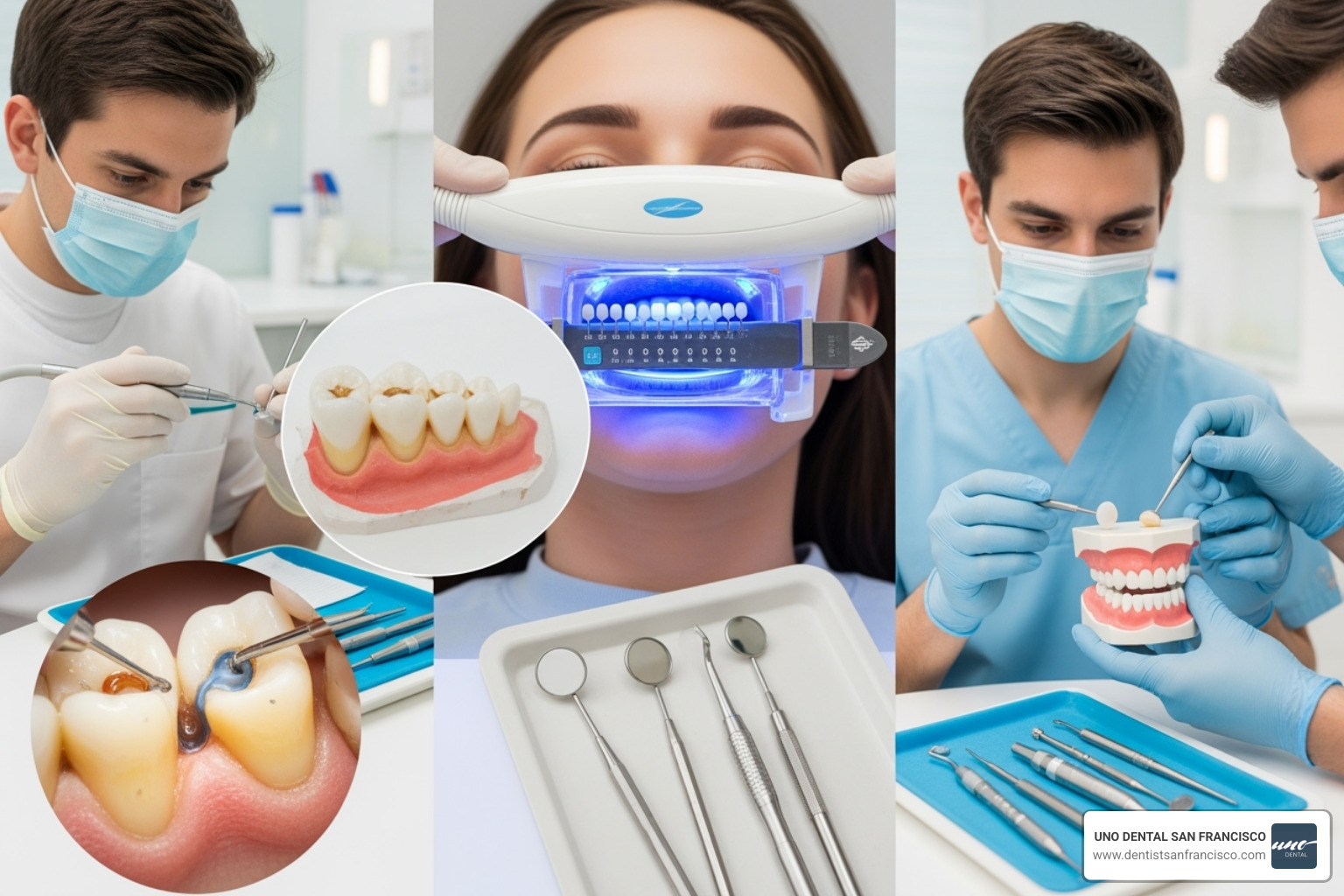
At UNO DENTAL, we help patients achieve their dream smiles. Teeth whitening brightens your smile by removing stains. While some progressive plans may offer a small allowance, most insurance won't cover this purely aesthetic treatment.
Dental veneers are thin, custom-made shells that transform chips, gaps, and discoloration. These porcelain or composite coverings can completely change your appearance, which is why dental insurance that covers veneers is rare.
Dental bonding uses resin to repair minor chips or close gaps. It's often chosen for aesthetic reasons. Gum contouring reshapes your gum line to fix a "gummy" smile—a purely cosmetic but confidence-boosting procedure.
Modern orthodontics like clear aligners can blur the line between cosmetic and restorative care, as straightening teeth improves appearance while also fixing bite problems.
To explore all possibilities for your smile, check out our guide on what can cosmetic dentistry do.
Common Restorative Procedures
Restorative treatments are the workhorses of dental care and usually get better insurance coverage. Fillings repair cavities and prevent decay. While white composite fillings look better, their primary job is stopping decay.
Root canals save teeth by eliminating infection and preserving your natural tooth. Crowns are protective caps for damaged teeth, restoring strength and function.
Bridges fill the gap from missing teeth, restoring chewing ability and preventing teeth from shifting. Dentures restore function and confidence with a complete set of teeth.
Restorative dentistry solves problems while often improving appearance as a bonus. Insurers recognize this dual benefit and typically cover these procedures at 50-80% after deductibles, making them more affordable than purely cosmetic treatments.
The Reality of Cosmetic Dental Insurance Coverage
The honest truth about cosmetic dental insurance is that comprehensive coverage for purely aesthetic procedures is incredibly rare. Traditional dental plans are designed to keep teeth healthy and functional, not necessarily beautiful.
The insurance industry operates on the principle of "medical necessity." If a procedure is essential for oral health, it may get coverage. If it's primarily for aesthetics, coverage is unlikely.
Most policies explicitly exclude elective treatments like teeth whitening, purely aesthetic veneers, and gum contouring. You'll likely pay for these out-of-pocket, as insurers view them as lifestyle choices, not healthcare needs.
But don't lose hope. There are important exceptions to explore.
| Feature | Cosmetic Procedures | Restorative Procedures |
|---|---|---|
| Primary Goal | Aesthetic improvement, improving appearance | Restoring function, health, and integrity of teeth |
| Examples | Teeth whitening, veneers, bonding (purely aesthetic), gum contouring | Fillings, root canals, crowns (for damage), bridges, dentures, extractions |
| Insurance Stance | Generally not covered (elective), rarely partial coverage | Typically covered (medically necessary), often with percentages (e.g., 80% basic, 50% major) |
| Dual Benefit | Some procedures (e.g., crowns, implants, white fillings) may have partial coverage if also medically necessary. | N/A |
When Cosmetic and Restorative Needs Overlap
This is where your cosmetic dental insurance strategy can pay off. Some procedures serve both functional and aesthetic purposes. When a treatment is medically necessary but also improves your smile, you might get insurance support.
Dental crowns are a perfect example. If a tooth is severely damaged, a crown is medically necessary to save it. While you can choose a beautiful porcelain crown, the insurance company covers the restorative function. Some plans often cover major procedures like crowns at 50%.
White fillings are another example. While you may prefer them for their appearance, they address a cavity—a health issue. Some plans cover them at the same rate as metal fillings, while others cover only the basic cost. Some plans, for example, cover 80% of white filling costs.
Dental implants have a significant cosmetic and restorative overlap. An implant replaces a missing tooth, restoring your smile while also preventing bone loss and restoring chewing function. This medical necessity is why some plans offer coverage. For instance, some plans cover implants at 50% after a 12-month wait, with a $1000 lifetime maximum. You can learn more about the medical aspects of dental implants for missing teeth from trusted medical sources.
The key is medical justification. When your dentist documents that a procedure is necessary for your oral health, you have a much better chance of getting insurance assistance, even if it also improves your smile.
Factors That Determine Your Coverage
Even with a medically necessary procedure, several factors in your plan determine your coverage.
Your plan type matters. PPO plans offer more flexibility and better coverage for major procedures but have higher premiums. HMOs usually focus on basic care with limited cosmetic coverage.
Waiting periods can be frustrating. Many plans require a 6 to 12-month wait for major procedures. For example, some plans have a 12-month wait for implants, so planning is crucial.
Your plan's annual maximum—the total amount your insurance will pay in a year—can impact your strategy. Once you hit that limit, you're on your own financially.
Deductibles and coinsurance affect your out-of-pocket costs. Even with coverage, you might still be responsible for 50% of the cost after meeting your deductible. Some plans, for example, cover 50% of teeth whitening costs after the deductible is met.
Many insurers require pre-authorization for expensive procedures. Your dentist submits a treatment plan for approval before work begins. This step prevents surprises and clarifies your costs upfront.
At UNO DENTAL, we help patients steer these complexities. Understanding these factors can prevent an overwhelming bill.
How to Find and Maximize Your Benefits
Understanding your cosmetic dental insurance can seem overwhelming, but the effort can save you thousands. Think of it as learning to steer a new city.
Reviewing Your Plan
Your insurance plan documents are your roadmap. While they can be dense, they contain all the answers you need.
Start with your Evidence of Coverage (EOC), your plan's instruction manual. It details what is and isn't covered. Look for sections on "cosmetic procedures" and "major restorative care." It's dense but worth reading.
If the paperwork is overwhelming, contact your provider directly. Customer service can translate insurance-speak into plain English. Be prepared with specific questions, like, "Does my plan cover porcelain crowns on a damaged tooth?"
Pro tip: Ask your dentist for the specific ADA procedure codes for your considered treatments. These codes remove ambiguity when you call your insurer. Asking about code D2391 for a filling gets a more definitive answer than asking about "tooth-colored fillings."

The benefits of finding the right cosmetic dental insurance
While comprehensive cosmetic dental insurance is rare, finding the right plan or alternative makes a meaningful difference. The benefits go beyond just saving money.
Reduced out-of-pocket costs make treatments achievable. When a plan covers 50% of dental implants, that could save $2,000 or more on a single tooth. Even smaller percentages add up.
Financial relief often provides access to premium materials. When your plan offers better coverage for porcelain crowns over metal, you can choose the option that looks natural and lasts longer without bearing the full cost difference.
Knowing your coverage makes treatments feel more affordable psychologically. When you know what to expect, you can make confident decisions. At UNO DENTAL, we've seen many patients realize their dream smile was more accessible than they imagined with proper planning. Learn more about our approach to Affordable Veneers San Francisco.
How to read your cosmetic dental insurance policy
Reading an insurance policy is easier once you know the key terms. This helps you predict costs and make informed decisions.
Your deductible is what you pay before your insurance contributes. For a $500 crown with a $50 deductible, you pay the first $50. Your insurance then calculates its share based on the remaining $450.
Coinsurance is the percentage of the cost you share with your insurer after meeting your deductible. With 50% coinsurance on a $450 balance, you and your insurer would each pay $225.
Annual limits are the maximum amount your insurance will pay in a policy year. Once you hit this limit, you cover all costs until the next year. This is crucial for planning extensive work.
Some procedures have lifetime maximums, capping what your plan will ever pay for a specific treatment. A $1000 lifetime maximum for implants means that once the insurer has paid that amount, the benefit is exhausted permanently.
Understanding these terms empowers you to have meaningful conversations with your dentist. At UNO DENTAL, we work with patients to structure treatment plans that maximize their benefits. For more information, explore our guide to Dental Plans for Cosmetic Dentistry.
Paying for Your Dream Smile: Alternatives and Strategies
Even the best dental insurance rarely covers purely cosmetic procedures. But that doesn't mean your dream smile is out of reach. Creative financing can make treatments affordable, and paying directly often provides more freedom than wrestling with insurance restrictions.

Most people don't have thousands saved for cosmetic dentistry. That's why smart financing options exist. The key is finding the right approach for your budget and timeline. Let's explore the options.
What if Insurance Doesn't Cover My Procedure?
When cosmetic dental insurance falls short, don't panic. We've helped many patients afford their ideal smile with options that might surprise you.
Dental discount plans are membership programs, not insurance. You pay an annual fee for significant discounts on services. For example, some discount plans offer savings on fillings, implants, and whitening with no waiting periods or annual maximums.
In-house membership plans are a smart option. At UNO DENTAL, our plan cuts out the insurance middleman. You get discounts on cosmetic treatments without deductibles, waiting periods, or coverage limits, making quality care more accessible.
Third-party financing offers healthcare credit cards, often with low or 0% APR promotional periods. This lets you spread the cost of procedures like veneers or implants over several months, making them more manageable.
Your Health Savings Account (HSA) or Flexible Spending Account (FSA) can also help. While purely cosmetic procedures aren't covered, treatments with restorative components—like crowns or implants—often qualify. These accounts use pre-tax dollars, giving you an effective discount.
Payment plans are a straightforward option. We understand investing in your smile is a big decision, so we work with patients to create flexible payment arrangements.
For a comprehensive look at these alternatives, see our guide on Making Dental Care Affordable: Alternatives to Dental Insurance. For typical costs, our Cost of Cosmetic Dentistry page has details.
Weighing the Pros and Cons
Deciding between using partial insurance coverage or paying out-of-pocket requires careful consideration.
With partial coverage, you get financial help, but with strings attached: waiting periods, annual maximums, and deductibles. The coverage can be so limited that you still pay most of the cost, and your treatment choices may be influenced by what's covered, not what's best.
Paying out-of-pocket means you cover the full cost, but it gives you complete freedom. No insurer dictates materials, waiting periods, or medical necessity. You and your dentist decide what's best for your health and aesthetic goals.
Consider the long-term value. High-quality porcelain veneers can last 15-20 years. Broken down over that time, the daily cost is minimal, yet the confidence and joy from your new smile last for decades.
The trade-off is freedom of choice versus cost. Insurance may save money upfront but comes with limitations. Paying out-of-pocket costs more initially but gives you complete control over your treatment. Financing options like those that let you Pay for Veneers Monthly can make this route surprisingly manageable.
The bottom line is there's no single "right" choice. It depends on your finances, timeline, and priorities. What matters most is not letting insurance limitations stop you from achieving the smile you want.
Conclusion: Your Path to a Confident Smile
Figuring out cosmetic dental insurance can feel like solving a puzzle. The good news is you now have the pieces you need to make smart decisions about your smile.
The reality is simple: most insurance plans won't cover elective treatments like teeth whitening or veneers. Insurers focus on keeping teeth healthy, not necessarily picture-perfect.
Don't be discouraged. There are bright spots. When a procedure is both restorative and cosmetic, you might get coverage. A crown on a cracked front tooth or a dental implant to replace a missing one are good examples.
The key is doing your homework. Understand your plan's fine print—deductibles, waiting periods, and annual maximums—to avoid surprises. Call your insurer with specific questions about procedure codes; it's your money.
If insurance falls short, you have options. Dental discount plans, payment plans, HSAs, and financing can bridge the gap. The freedom from insurance restrictions can even be a blessing.
At UNO DENTAL San Francisco, we see patients transform their confidence with their smiles. We believe in individualized treatments custom to your needs and goals. We're not just fixing teeth; we're helping you feel great about yourself.
As Leaders in Cosmetic Dentistry in San Francisco, our mission is to make beautiful smiles accessible. That's why we offer free virtual smile consultations to help you explore your options without pressure or cost.
Your journey to a confident smile doesn't have to be overwhelming. Whether you have some insurance or not, we're here to help. Explore your options and learn more about dental plans for cosmetic dentistry on our website, and let's map out your path to the smile you've always wanted.
Investing in your smile is investing in yourself. The confidence, improved first impressions, and joy of laughing freely are benefits that last a lifetime. Let's make it happen together.