
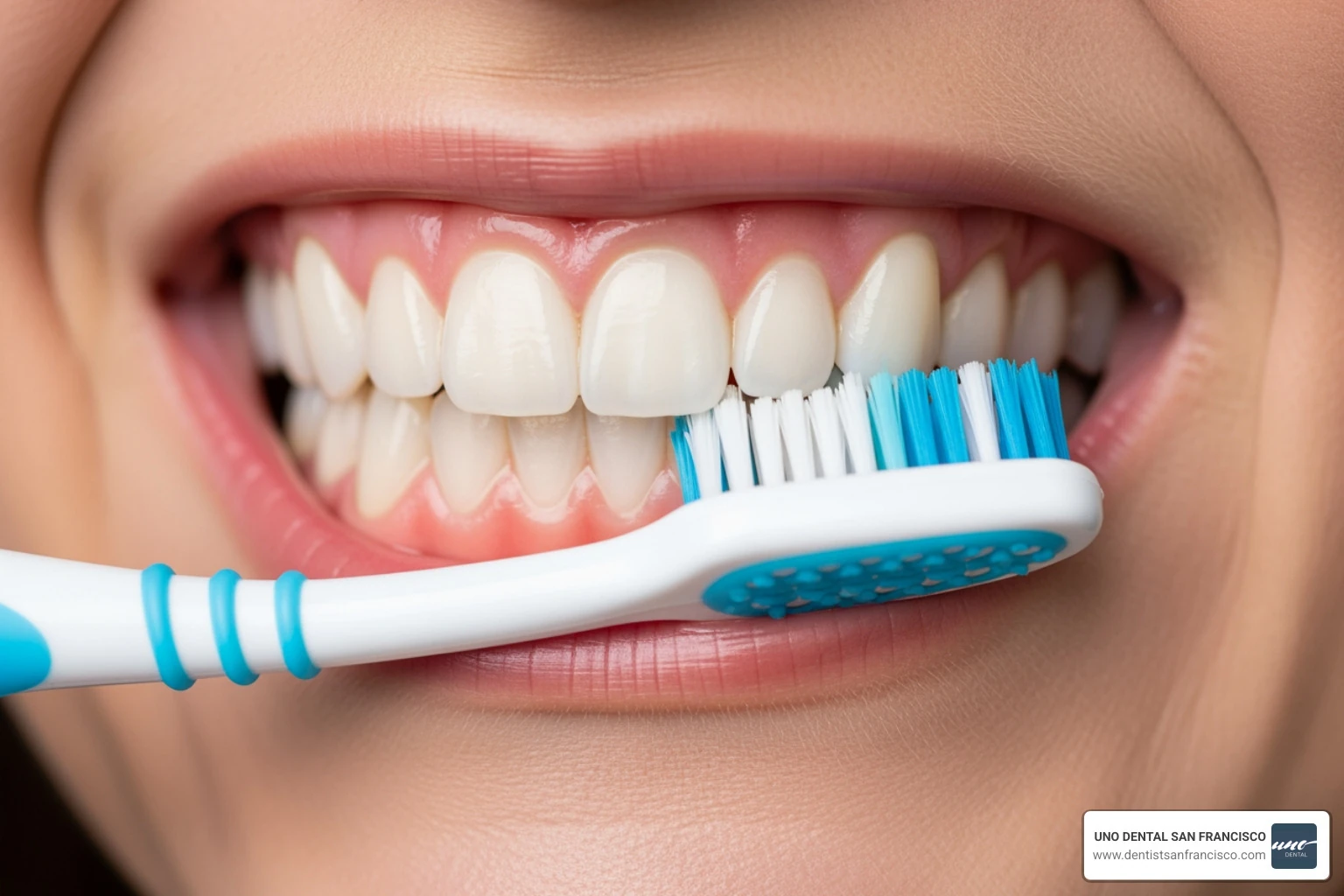
Why Gingivitis Self-Care Matters for Your Overall Health
Medically reviewed by Dr. Mohammad Aghiad Kandar, DDS (UNO DENTAL SAN FRANCISCO)
Gingivitis self care is essential for preventing gum disease and protecting your overall health. If you have red, swollen, or bleeding gums, you must act quickly.
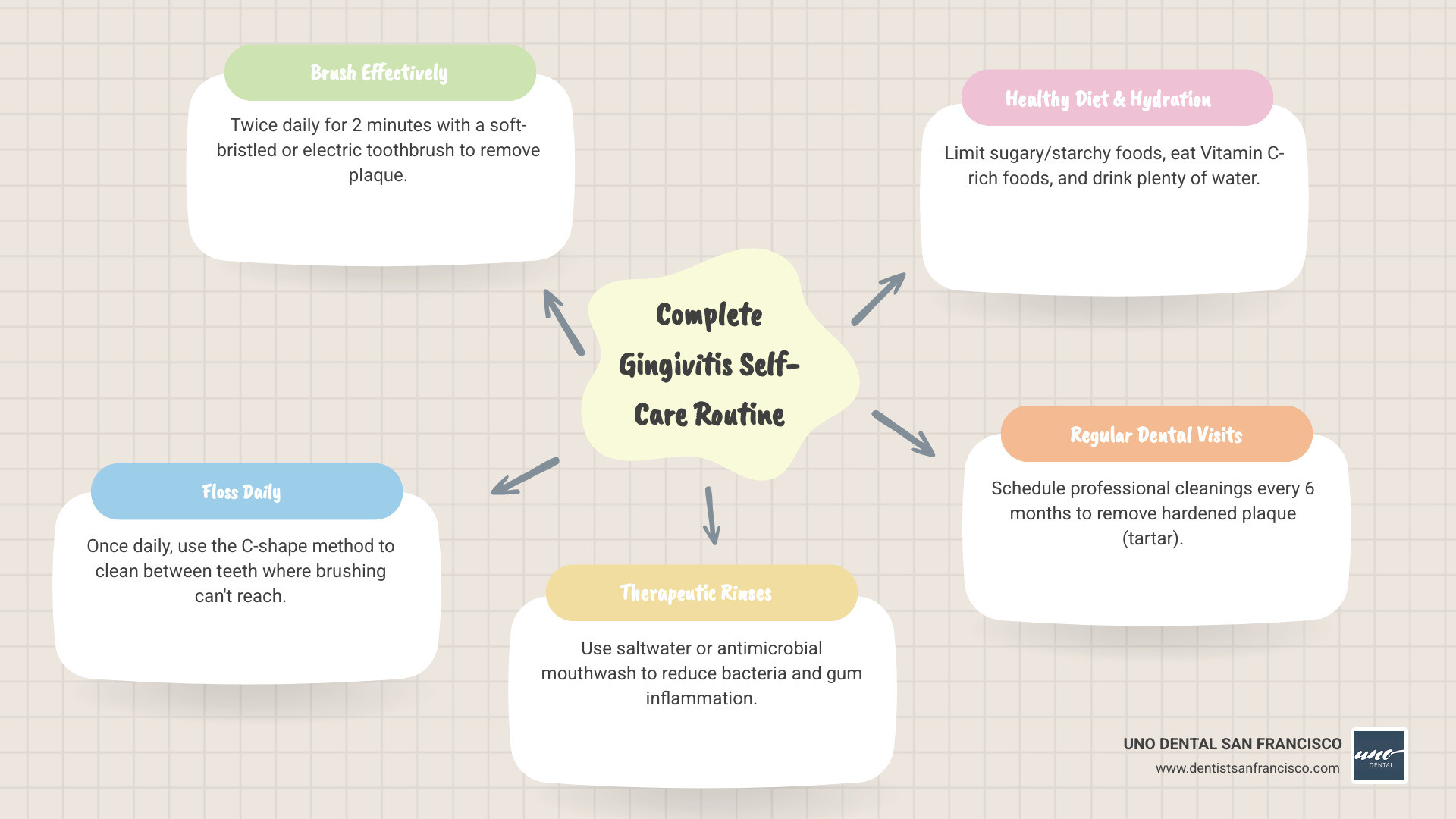
Quick Action Steps for Gingivitis Self-Care:
- Brush twice daily for two minutes using a soft-bristled or electric toothbrush
- Floss once daily to remove plaque between teeth where brushing can't reach
- Rinse with saltwater or antimicrobial mouthwash to reduce bacteria
- Limit sugary and starchy foods that feed harmful bacteria
- See a dentist if symptoms persist for more than two days
Gingivitis is common, affecting nearly half of adults over 30. The good news is that gingivitis is reversible. Unlike advanced gum disease (periodontitis), it only affects the gums, not the underlying bone. Early action can completely reverse the damage. The problem is that most people don't notice it until their gums bleed during brushing.
Gingivitis is caused by plaquea sticky film of bacteriabuilding up along the gum line. These bacteria produce toxins that irritate your gums. If left untreated, this inflammation can lead to periodontitis, causing permanent bone and tissue loss.
Consistent self-care gives you significant control over this condition. However, once plaque hardens into tartar, only a professional dental cleaning can remove it. The most effective approach combines diligent home care with regular professional treatment.
I'm Dr. Mohammad Aghiad Kandar, DDS, and for over 15 years, I've helped patients in San Francisco reverse gum disease with comprehensive gingivitis self care strategies. At UNO DENTAL SAN FRANCISCO, our holistic, patient-focused approach empowers you to manage your oral health between visits.
Understanding Gingivitis: The First Step to Healthy Gums
Gingivitis is your mouth's early warning system. As the mildest form of gum disease, it's an inflammation of the gums (gingiva) at the base of your teeth. The encouraging news is that when caught early, gingivitis is completely reversible.
The primary cause is plaque, a sticky film of bacteria that constantly forms on your teeth. These bacteria feed on sugars and starches, releasing toxins that irritate your gums and cause inflammation. If not removed daily, plaque hardens into tartar (calculus), a crusty deposit that only a dental professional can remove. This is why gingivitis self care must be combined with regular professional cleanings.
Recognizing the early signs is key to stopping its progression. Look for these symptoms:
- Red, swollen gums: Healthy gums are firm and pink. Puffy, bright red, or dark red gums are a sign of inflammation.
- Bleeding gums: Seeing blood when you brush or floss is a common symptom. Healthy gums should not bleed, even with vigorous cleaning.
- Bad breath (halitosis): Persistent bad breath can signal a buildup of odor-producing bacteria.
- Gum tenderness: Your gums may feel sore to the touch or while eating. Some people also notice their gums pulling away from their teeth, creating pockets where more bacteria can hide.

Understanding how plaque leads to gingivitis empowers you to interrupt the cycle. Every time you brush and floss, you remove the bacterial film. Every healthy food choice starves the bacteria of fuel. Consistency is key, turning gingivitis self care into a valuable investment in your long-term health.
Foundational Gingivitis Self-Care: Your Daily Defense
The foundation of effective gingivitis self care is your daily oral hygiene routine. These simple habits, when done consistently and correctly, are a powerful defense against gum disease.
The Critical Role of Brushing
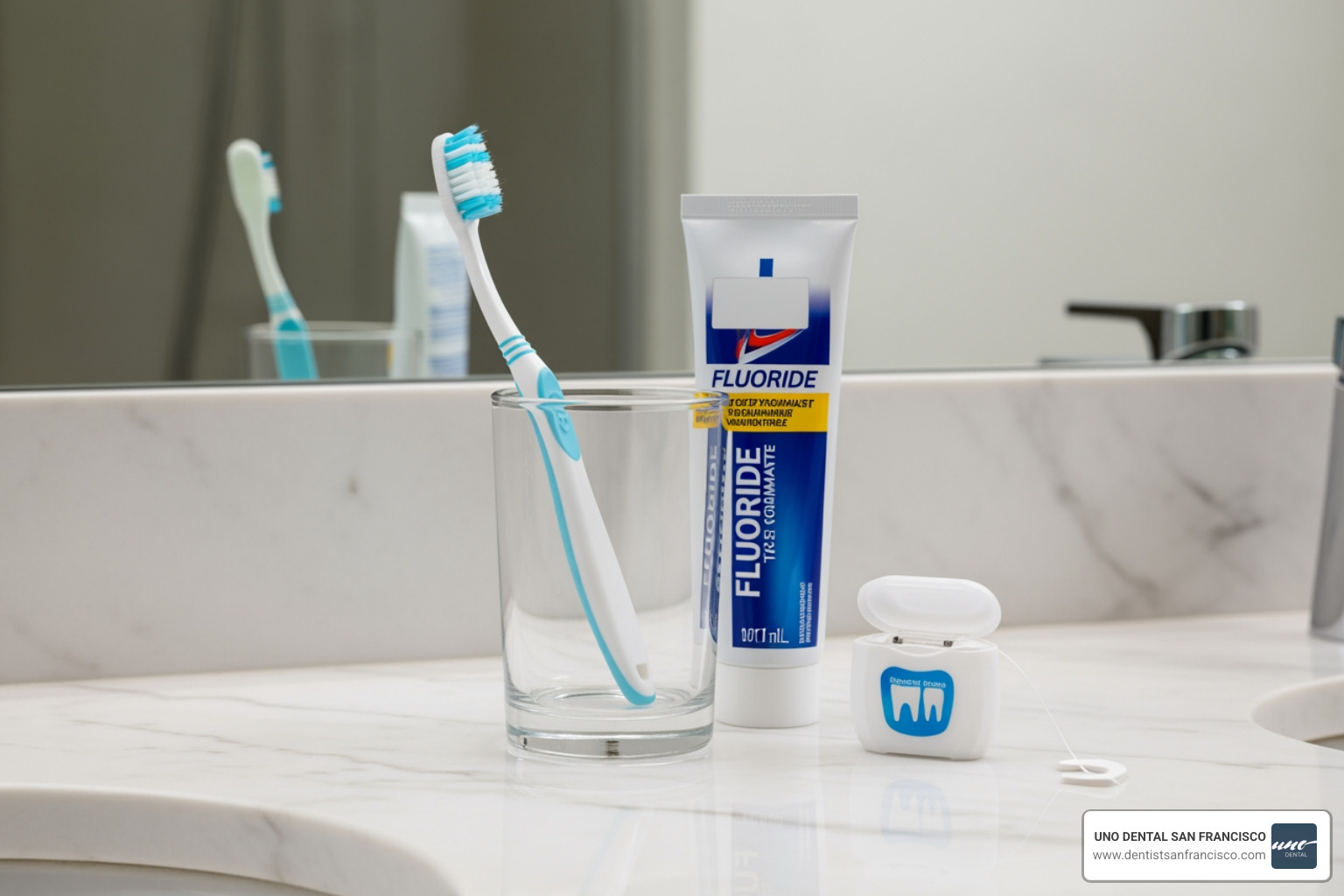
Your toothbrush is your most important tool against gingivitis, but proper technique is crucial. The American Dental Association recommends brushing twice daily for two minutes. Use a timer to ensure you're brushing long enough to clean all tooth surfaces, especially along the gum line where plaque accumulates.
Always use a soft-bristled toothbrush. Hard bristles can irritate sensitive gums and wear down enamel. Electric toothbrushes are also a great option, as research shows they remove plaque more effectively than manual brushes. We often recommend them to our San Francisco patients for a more consistent and thorough clean.
Remember to replace your toothbrush or brush head every three to four months, or sooner if the bristles are frayed and ineffective. For more guidance, explore our resources on Best Dental Hygiene Practices.
Mastering Daily Flossing
Brushing alone cleans only about 60% of your tooth surfaces. The rest is between your teeth and under the gum line—exactly where gingivitis starts. That's why flossing at least once daily is non-negotiable for gingivitis self care.
Proper technique is essential. Use the C-shape technique: take 18 inches of floss, gently slide it between your teeth, and curve it into a "C" against one tooth. Move it up and down, going slightly below the gum line, then repeat on the adjacent tooth. If your gums bleed at first, don't worry. This is a sign of inflammation and usually stops within a week or two of consistent, gentle flossing. If bleeding persists, it's time to see a dentist.
Water flossers and interdental picks are also effective alternatives, especially for those with braces or who find traditional flossing difficult. For a comprehensive guide, refer to our Flossing Tips San Francisco page.
How Your Diet Impacts Gum Health
Your diet plays a significant role in gum health. The bacteria in plaque thrive on sugar and starch, so limiting sugary foods and starchy snacks like chips reduces their fuel source.
Instead, focus on foods that support gum health. Crunchy fruits and vegetables (apples, carrots) act like natural toothbrushes, scrubbing away plaque. Vitamin C (found in bell peppers, strawberries, oranges) is vital for producing collagen, which strengthens and heals gum tissue. Omega-3 fatty acids (in fatty fish like salmon) have anti-inflammatory properties that help your body fight gingivitis.
Finally, staying hydrated by drinking water throughout the day washes away food particles and stimulates saliva, your body's natural defense against acid and bacteria.
Advanced Home Remedies to Accelerate Healing
While daily brushing and flossing are foundational to gingivitis self care, certain natural remedies can accelerate healing by reducing inflammation and fighting bacteria.
Therapeutic Mouth Rinses for Gingivitis Self-Care
Adding a therapeutic rinse to your routine provides an extra layer of protection, reaching areas your brush and floss might miss.
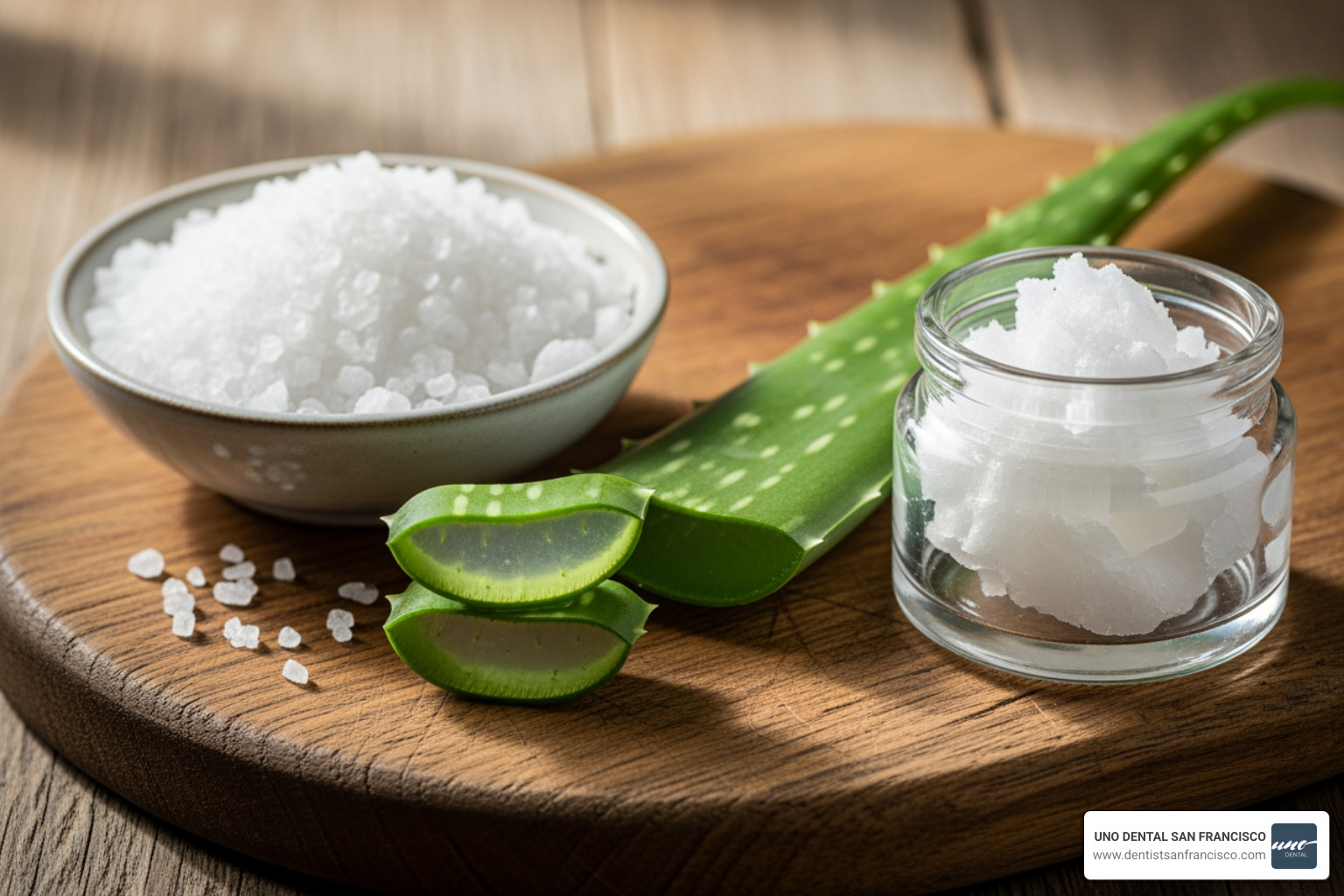
- Saltwater rinses: A simple and effective remedy. A 2017 study found saltwater as effective as some prescription mouthwashes. It reduces swelling and soothes gums. Mix half a teaspoon of salt in warm water and swish for 30 seconds.
- Aloe vera mouthwash: Known for its soothing properties. Research from 2023 showed it was as effective as chlorhexidine in reducing plaque and gingivitis. Use 100% pure aloe vera juice as a rinse.
- Tea tree oil mouthwash: Offers powerful antimicrobial benefits. Always dilute a few drops in warm water and never swallow the rinse.
- Sage mouthwash: A traditional remedy with strong anti-inflammatory and antiseptic compounds that target gum inflammation and improve signs of gum disease.
The Power of Oil Pulling
Oil pulling is an ancient Ayurvedic practice of swishing oil in your mouth to "pull out" bacteria and toxins.
Coconut oil pulling is popular due to its antimicrobial properties from lauric acid. A 2020 study found it significantly reduces plaque and signs of gingivitis. To try it, swish one to two teaspoons of fractionated coconut oil in your mouth for 20-30 minutes. Spit the oil into a trash can (not the sink) and rinse your mouth with water.
Arimedadi oil is a traditional Ayurvedic blend formulated for oral health that may inhibit plaque and improve gingivitis. It can be used for oil pulling or massaged directly onto the gums.
At UNO DENTAL SAN FRANCISCO, our Holistic Dentistry San Francisco approach values both conventional treatments and proven natural remedies to empower you with multiple tools for your oral health.
When to See a Dentist: Professional Care for Gingivitis
While consistent gingivitis self care is powerful, professional dental intervention is sometimes necessary. Think of gingivitis as a warning sign that shouldn't be ignored.
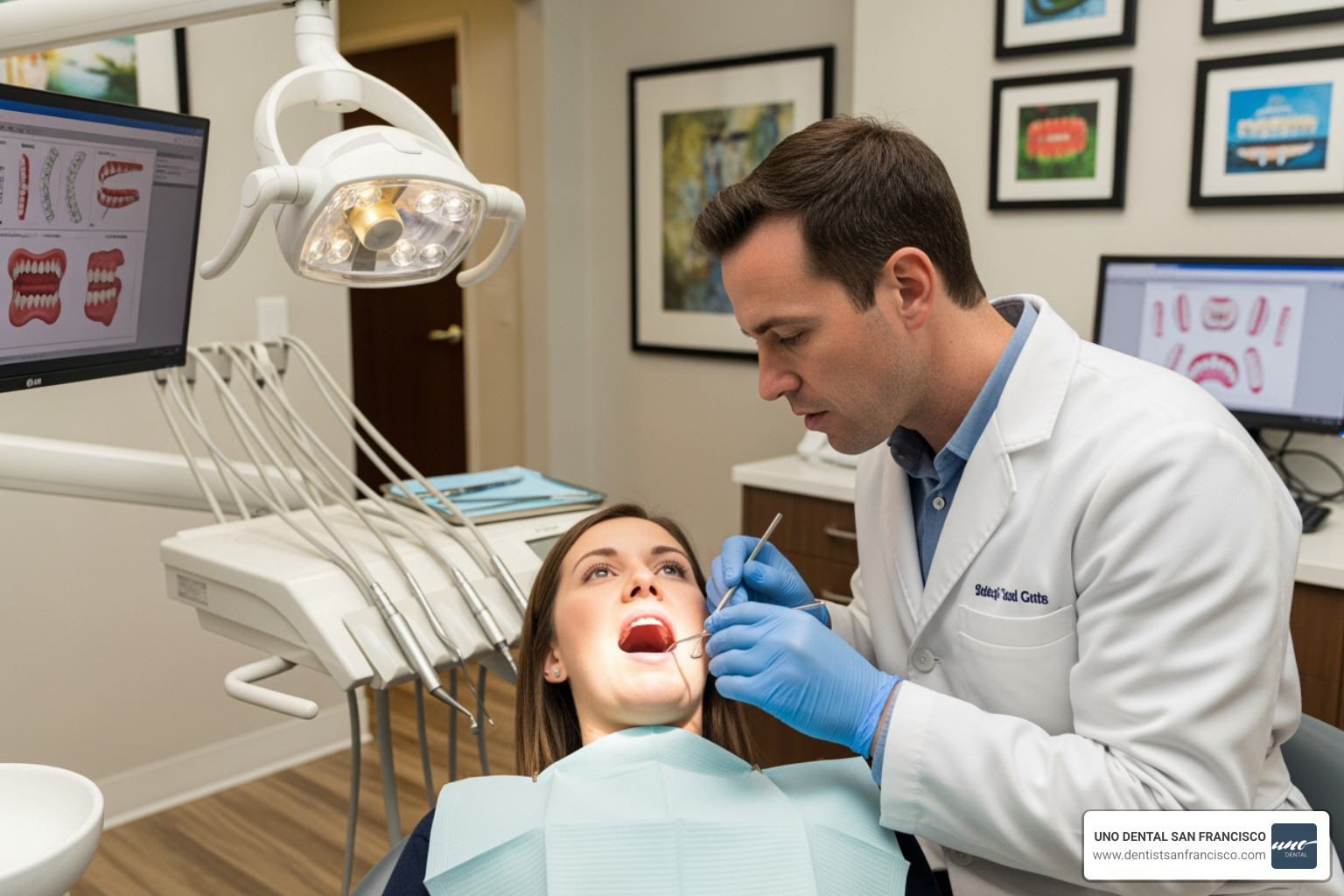
Recognizing the Signs to Seek Professional Help
If you experience symptoms that persist for more than two weeks despite diligent home care, it's time to call a dentist. Bleeding, redness, or swelling that doesn't improve indicates that home care alone isn't enough. Other red flags include:
- Severe pain or sensitivity
- Gums pulling away from your teeth (receding gums)
- Loose teeth, which signals compromised support structures
- Pus between your teeth and gums, indicating an active infection
Don't wait for small problems to become big ones. Schedule a Dental Checkup San Francisco if any of these symptoms are familiar.
The Risks of Untreated Gingivitis
Untreated gingivitis inevitably progresses to periodontitis, a severe form of gum disease causing irreversible bone and tissue loss. As periodontitis develops, the pockets between teeth and gums deepen, trapping more bacteria. This deterioration of supporting bone leads to tooth mobility and eventual tooth loss. Periodontal disease is a leading, yet preventable, cause of tooth loss in adults.
The consequences extend beyond your mouth. Research from the National Institute of Dental and Craniofacial Research and other studies has established strong links between gum disease and systemic health issues, including increased risks of:
- Respiratory disease
- Coronary artery disease and stroke
- Rheumatoid arthritis
- Difficulty managing diabetes
- Certain cancers
Addressing gingivitis early prevents these serious health risks.
What to Expect from Professional Treatment
When you visit UNO DENTAL SAN FRANCISCO for gingivitis, we begin with a thorough exam, including a review of your dental and medical history. We'll visually inspect your mouth and use a periodontal probe to measure the pocket depths between your teeth and gums. Healthy pockets are 1-3 mm deep; depths over 4 mm may indicate gum disease. X-rays may be taken to check for bone loss.
The cornerstone of professional treatment is a deep cleaning, known as scaling and root planing. We carefully remove all plaque and hardened tartar from above and below the gum line—areas your toothbrush can't reach. Tartar removal is crucial, as you cannot remove it at home. We then smooth the tooth roots (root planing) to help your gums reattach and prevent new plaque buildup. If we find dental issues like ill-fitting crowns contributing to the problem, we may recommend repairs.
After your cleaning, we provide detailed instructions for your at-home gingivitis self care to maintain your results. Our Deep Cleaning Aftercare Instructions offer valuable guidance for your healing journey.
Frequently Asked Questions about Gingivitis Self-Care
Over my 15 years of practice in San Francisco, patients often ask about gingivitis self care. Here are clear answers to the most common questions.
Can gingivitis be completely cured, and how quickly?
Yes, gingivitis is completely reversible. Unlike periodontitis, it only affects the soft gum tissue and has not yet damaged the supporting bone. With a professional cleaning and consistent home care, most patients see significant improvement within days to weeks. The inflammation subsides, bleeding stops, and healthy pink gums return. A professional cleaning removes the hardened tartar, and your daily routine prevents new plaque from building up.
Is gingivitis contagious through kissing or sharing utensils?
Gingivitis itself is not contagious like a cold. However, the bacteria that cause it can be transmitted through saliva when kissing or sharing utensils. If someone has high levels of harmful oral bacteria, they can be transferred. This doesn't mean you must avoid contact, but it highlights the importance of excellent oral hygiene for everyone. A healthy mouth is well-equipped to keep transmitted bacteria from causing problems.
Can I reverse gingivitis without going to the dentist?
Your at-home gingivitis self care routine is absolutely essential. However, home care alone cannot completely reverse gingivitis once tartar has formed. While you can improve symptoms, your toothbrush and floss cannot remove hardened tartar. It creates a rough surface that harbors bacteria and allows more plaque to attach. Only professional scaling with specialized instruments can remove this buildup. A dental visit is necessary for complete reversal, allowing your home care to be effective in maintaining gum health afterward.
Take Control of Your Gum Health Today
When your gums bleed, swell, or turn red, they are sending an urgent message. The good news is that gingivitis is reversible—but only with prompt action. Conquering gingivitis requires a two-pronged approach: consistent gingivitis self care at home and professional dental treatment. Your daily habits control plaque, while a professional cleaning removes the stubborn tartar that you can't.
At UNO DENTAL SAN FRANCISCO, we take a holistic, patient-centered approach to help you reverse gum disease and maintain your oral health for the long term. Dr. Mohammad Aghiad Kandar and our team combine high-tech care with a supportive environment, offering everything from comprehensive exams to advanced scaling and root planing under one roof.
Your gums are the foundation of your smile and overall health. If you're experiencing any signs of inflammation, don't wait for the problem to worsen. Early intervention is simpler and more effective.
Take the next step with our expert Periodontal Treatment and let us help you achieve healthier gums. Your future self will thank you for taking action today.