

Why San Francisco Residents Choose Dental Crowns for Lasting Smile Restoration
Dental crowns in San Francisco offer a proven solution for restoring damaged, decayed, or aesthetically compromised teeth. If you're searching for this service in the Bay Area, here's what you need to know:
Quick Guide to Dental Crowns in San Francisco:
- What They Are: Custom-made caps that cover the entire visible portion of a damaged tooth, restoring its shape, strength, and appearance
- Common Materials: Porcelain, Zirconia, Porcelain-Fused-to-Metal (PFM), and Gold
- Cost Range: Typically $500-$2,000 per crown, depending on material and technology
- Lifespan: 5-15 years on average; porcelain crowns can last up to 30 years with proper care
- Procedure Options: Traditional two-visit process or same-day CEREC crowns using advanced CAD/CAM technology
- Common Uses: Severe decay, cracked teeth, post-root canal protection, large fillings, dental implants, and cosmetic improvement
When you hear "crown," you might picture royal headwear. But in dentistry, crowns are the foundation of modern restorative care—protecting weakened teeth while creating natural-looking results.
Dental crowns have become increasingly sophisticated. Modern techniques use 3D scanning for a perfect fit, and materials like porcelain closely resemble natural tooth color. Some practices now offer same-day crown fabrication, eliminating the need for temporary crowns and multiple visits.
The decision to get a crown often comes after finding significant tooth damage that a simple filling cannot fix. Perhaps you've cracked a tooth, undergone root canal therapy, or want to improve your smile's appearance. Whatever your reason, understanding your options helps you make an informed choice.
As Mohammad Aghiad Kandar DDS at UNO DENTAL SAN FRANCISCO, I have carefully reviewed and approved this guide based on my experience helping countless patients steer their options for dental crowns in San Francisco, combining personalized treatment planning with advanced technology to deliver natural-looking, long-lasting results. Our approach focuses on comprehensive care that addresses both the functional and aesthetic aspects of your smile restoration.
This guide walks you through everything you need to know—from crown materials and procedures to costs and aftercare—so you can confidently take the next step toward a restored smile.
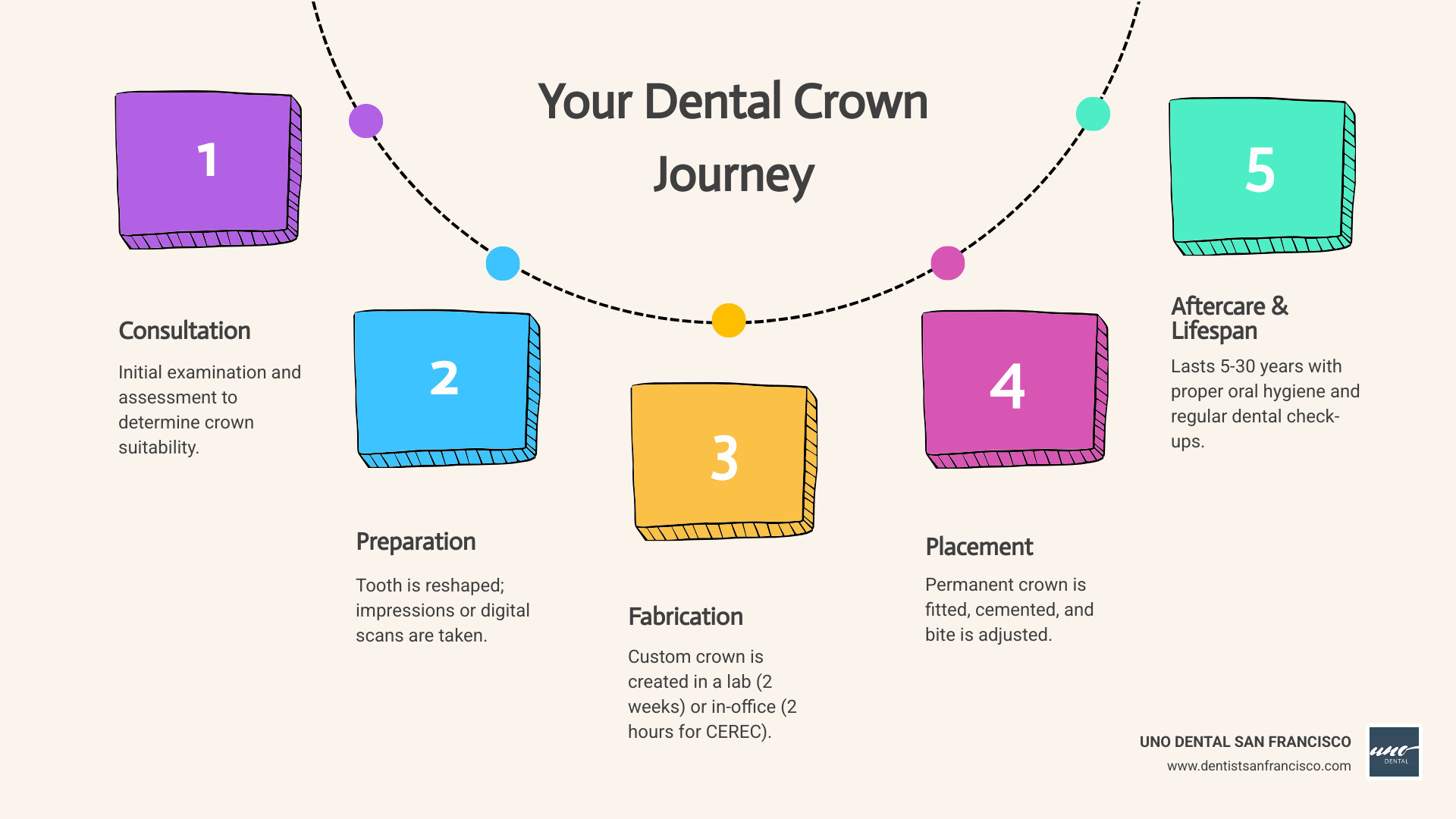
Dental crowns in san francisco terms simplified:
What is a Dental Crown? The Foundation of a Restored Smile
When we talk about a dental crown, we're referring to a custom-made "cap" that we place over an entire tooth, covering it right down to the gum line. Think of it as a protective helmet for your tooth, designed to restore its natural shape, size, strength, and appearance. These versatile restorations are a cornerstone of modern dentistry, playing a crucial role in both restorative and cosmetic treatments.
Our primary goal with a dental crown is to bring back the structural integrity and function of a tooth that has been significantly compromised. This means not only making the tooth strong enough to withstand the forces of biting and chewing but also ensuring it looks just like a natural tooth, seamlessly blending with your smile. Dental crowns are carefully crafted to fit snugly over the prepared tooth, providing a durable and aesthetically pleasing solution.
Common Reasons for Getting a Dental Crown
You might be wondering, "Why would I need a dental crown?" It's a great question, and the answer often lies in situations where a tooth has suffered damage too extensive for a simple filling. Here at UNO DENTAL SAN FRANCISCO, we see several common scenarios where dental crowns are the ideal solution:
- Severe Tooth Decay: When a cavity is too large for a traditional filling to adequately restore the tooth's structure, a crown can provide the necessary strength and protection.
- Cracked or Broken Tooth: Accidents happen, and teeth can chip, crack, or break. A crown can hold the damaged tooth together, preventing further breakage and relieving pain.
- After Root Canal Therapy: Teeth that have undergone a root canal can become brittle and vulnerable to fracture. A crown is almost always recommended to protect and strengthen these treated teeth.
- Supporting a Large Filling: If an existing filling is very large and there isn't much natural tooth structure left, a crown can provide the support needed to prevent the tooth from breaking.
- Anchoring a Dental Bridge: Crowns are essential components of dental bridges, serving as the anchors on the teeth adjacent to a gap, holding the artificial tooth (pontic) in place.
- Completing a Dental Implant: Once a dental implant has fused with the jawbone, a custom crown is placed on top to serve as the visible, functional replacement tooth.
- Cosmetic Imperfections: Crowns can dramatically improve the appearance of severely discolored, misshapen, or worn-down teeth, contributing to a more uniform and attractive smile.
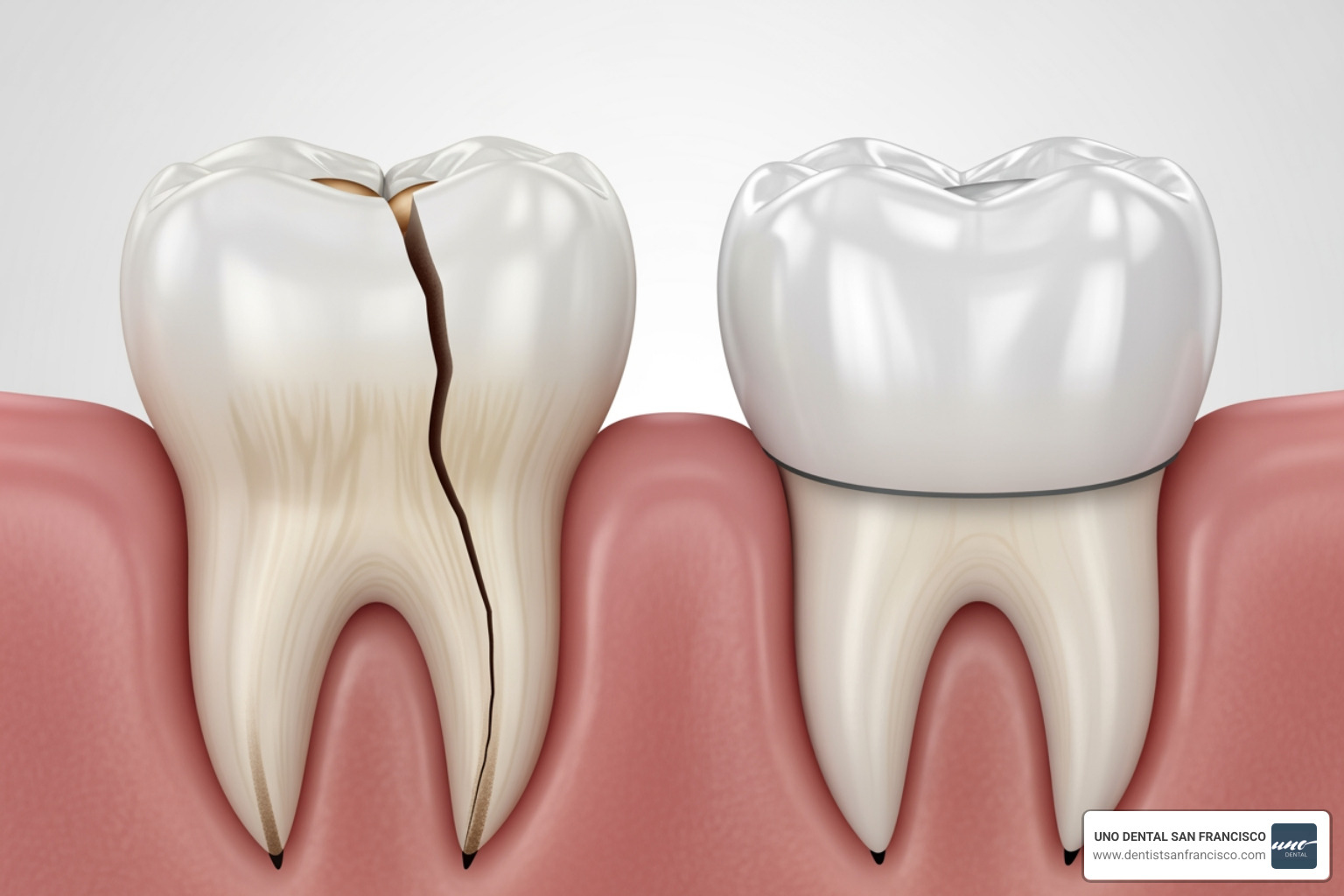
Whether your tooth has been weakened by decay, fractured due to trauma, or you simply wish to improve its appearance, dental crowns offer a robust and reliable way to restore both the health and beauty of your smile.
Choosing Your Crown: A Comparison of Modern Materials
The world of dental crowns offers a variety of materials, each with its own unique advantages in terms of aesthetics, durability, and biocompatibility. Our team at UNO DENTAL SAN FRANCISCO will help you steer these options to choose the best fit for your specific needs, considering the tooth's location, your bite, and your aesthetic goals.
Here's a comparison of the most common materials we use for dental crowns in San Francisco:
| Material Type | Aesthetics | Durability | Biocompatibility | Pros | Cons |
|---|---|---|---|---|---|
| All-Ceramic / Porcelain | Excellent, mimics natural tooth translucency. | Good, but can be brittle. Porcelain crowns can last up to 30 years with proper care. | Excellent (metal-free). | Most natural look, ideal for front teeth, metal-free. | Can be more prone to chipping than metal, may cause wear on opposing teeth if not properly adjusted. |
| Zirconia | Very good, opaque but can be layered for translucency. | Excellent, highly resistant to chipping and breaking. | Excellent (metal-free). | Extremely strong, durable, metal-free, good aesthetics, stain-resistant. | Can sometimes appear more opaque than all-porcelain, can be harder to adjust. |
| PFM (Porcelain-Fused-to-Metal) | Good, but metal base can show at gum line over time. | Very good, combines strength of metal with aesthetics of porcelain. | Good, but contains metal. | Strong, durable, more aesthetic than full metal, less expensive than all-ceramic. | Metal margin can show, porcelain can chip from metal, may cause wear on opposing teeth. |
| Gold Alloys | Poor (metallic color). | Excellent, highly durable, gentle on opposing teeth. | Excellent, very well-tolerated. | Very strong, long-lasting (can last a lifetime), wear well with opposing teeth, conserve tooth structure. | Not aesthetic, higher cost due to gold content. |
At UNO DENTAL SAN FRANCISCO, we often recommend all-ceramic or zirconia crowns for their superior aesthetics and metal-free properties, especially for visible teeth. However, we always discuss all options to ensure the chosen material aligns with your preferences and clinical needs. For more information, the American Dental Association offers reliable patient resources on topics like dental crowns.
The Dental Crown Procedure: From Traditional to Same-Day Technology
Getting a dental crown is a process that we've refined to be as comfortable and efficient as possible for our San Francisco patients. Depending on your specific needs and the type of crown chosen, the procedure can involve either a traditional two-visit approach or the convenience of same-day technology.
The Traditional Two-Visit Crown Process
The traditional method for obtaining a dental crown typically involves two appointments with our office, spread over a couple of weeks.
-
First Visit: Preparation and Impressions
- Examination and Numbing: We begin with a thorough examination, including X-rays, to assess the tooth and surrounding bone. Once we've determined a crown is the best option, we'll numb the tooth and surrounding gum tissue with a local anesthetic to ensure your comfort.
- Tooth Preparation: We then carefully reshape the tooth, removing any decay and reducing its size to make room for the crown to fit over it. This usually involves removing 1-2mm of the tooth structure.
- Dental Impressions: Next, we take precise impressions of your prepared tooth and the surrounding teeth. These impressions are crucial for the dental lab to create a crown that fits perfectly and matches your bite. Modern techniques often use digital scans instead of traditional "gooey" impressions, which many patients find more comfortable.
- Temporary Crown: Before you leave, we'll place a temporary crown on your prepared tooth. This protects the tooth while your permanent crown is being fabricated by a dental laboratory. We'll provide you with instructions on how to care for your temporary crown, such as avoiding sticky or very hard foods.
- Dental Lab Fabrication: The impressions are sent to a skilled dental laboratory where your custom crown is carefully crafted. This process typically takes about two weeks.
-
Second Visit: Permanent Crown Placement
- Removal of Temporary Crown: When your permanent crown arrives from the lab, you'll return for your second appointment. We'll gently remove the temporary crown.
- Fit and Adjustment: We then carefully place the new permanent crown on your tooth, checking its fit, bite, and appearance. We'll make any necessary adjustments to ensure it's comfortable and blends seamlessly with your natural teeth.
- Cementation: Once you and our team are completely satisfied with the fit and aesthetics, we'll permanently cement the crown onto your tooth.
The Same-Day CEREC Crown Advantage in San Francisco
For those seeking a more streamlined experience, we offer same-day CEREC (Chairside Economical Restoration of Esthetic Ceramic) crowns at UNO DENTAL SAN FRANCISCO. This innovative technology allows us to design, create, and place your custom crown in a single visit, often in just a couple of hours.
- CAD/CAM Technology: CEREC uses advanced Computer-Aided Design (CAD) and Computer-Aided Manufacturing (CAM) technology.
- Digital 3D Scanning: Instead of traditional impressions, we use a specialized camera to take precise digital 3D images of your tooth. This digital scan creates a virtual model of your tooth.
- In-Office Milling: Using the 3D model, we design your crown on a computer. Once the design is finalized, our in-office milling machine carves your custom crown from a high-quality ceramic block right here in our office. This carving process can take as little as 15 minutes.
- Single-Visit Convenience: After the crown is milled, we'll polish it, match its shade to your natural teeth, and then cement it into place. The entire process, from preparation to placement, is completed in one appointment, saving you significant time and hassle.
- No Temporary Crown Needed: One of the biggest advantages is eliminating the need for a temporary crown and a second visit, meaning less disruption to your busy San Francisco schedule.
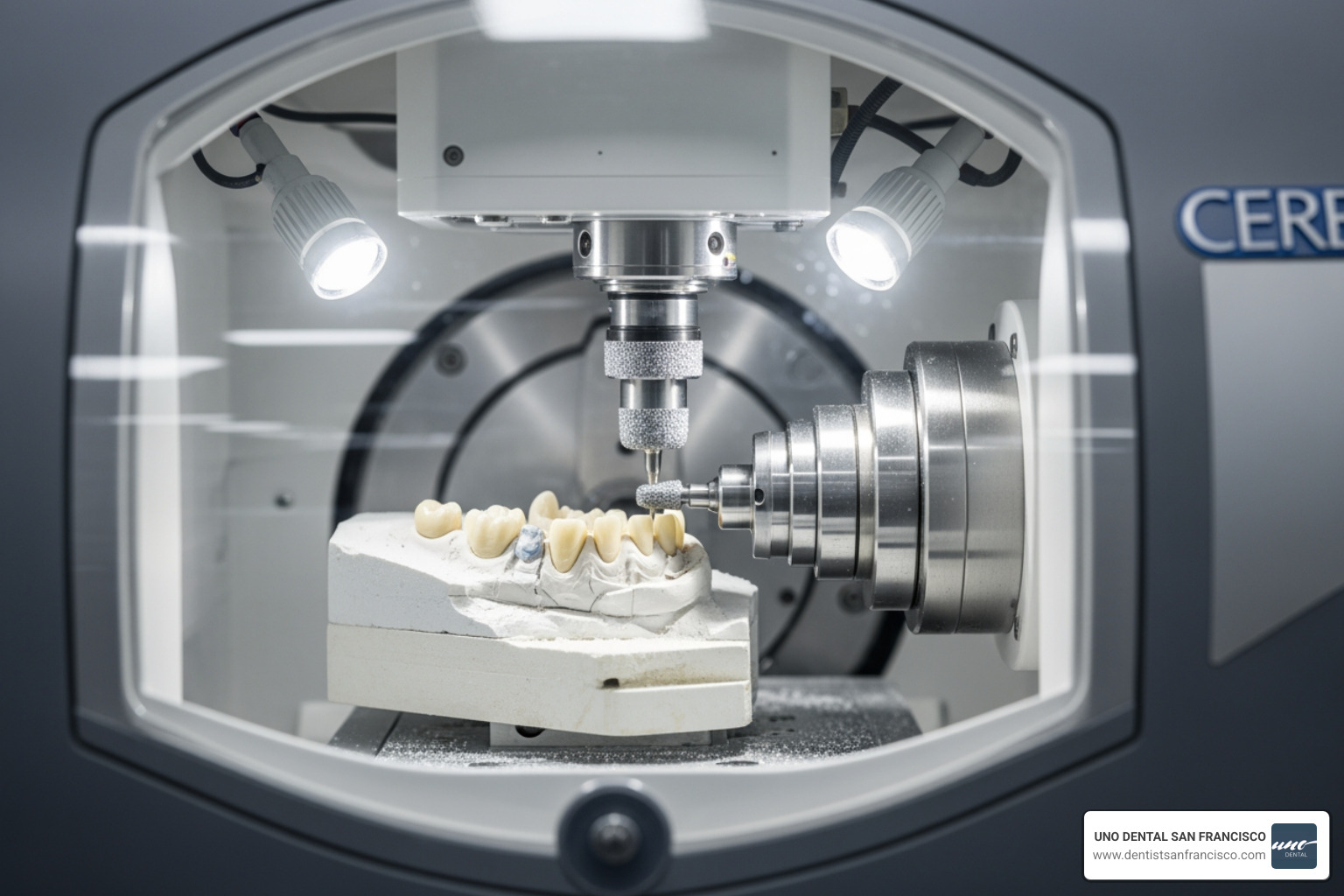
While traditional crowns have a long track record of success, same-day CEREC crowns have become a worthy rival, offering incredible convenience without compromising on quality or durability.
Your Guide to Dental Crowns in San Francisco: Cost, Care, and Longevity
Investing in a dental crown is an investment in your oral health and overall well-being. Understanding the lifespan, proper care, and associated costs will help you maximize the benefits of your new restoration.
Lifespan and Aftercare for Your New Crown
With proper care, your dental crown can last for many years, providing a durable and beautiful solution.
- Average Lifespan: The lifespan of a tooth crown is typically between 5 to 15 years. However, with excellent care, some can last even longer.
- Porcelain Crown Longevity: Porcelain crowns, in particular, when cared for properly, can last up to 30 years.
- CEREC Crown Lifespan: CEREC crowns typically last 10-15 years, and possibly even longer with proper upkeep.
- Survival Rate: The average survival rate for a crown over ten years is an impressive 90%.
To extend the life of your crown and ensure its continued health, we recommend the following aftercare practices:
- Proper Oral Hygiene: Treat your crowned tooth just like your natural teeth. Brush at least twice daily with a fluoride toothpaste and floss once a day to prevent decay around the crown's margin and maintain gum health. A mechanical toothbrush can be very effective.
- Regular Dental Check-ups: Continue to visit us for regular dental check-ups and cleanings, ideally at least twice a year. We'll monitor your crown, check for any issues, and ensure your overall oral health is in top shape.
- Foods to Avoid: While your permanent crown is strong, avoid chewing on extremely hard foods (like ice or hard candies) or sticky foods (like caramels) that could potentially damage it or pull it off. If you have a temporary crown, be especially careful with sticky and chewy foods.
- Protect Against Grinding/Clenching: If you grind or clench your teeth (bruxism), we may recommend a nightguard to protect your crown and natural teeth from excessive wear.
- Mouthguards for Sports: If you participate in contact sports, wear a mouthguard to protect your crown and other teeth from injury.
Understanding the Cost of Dental Crowns in San Francisco
The cost of dental crowns in San Francisco can vary, but typically ranges between $500 and $2,000 per crown. This range reflects several influencing factors:
- Material Choice: As discussed, different materials have different costs. Gold and high-quality all-ceramic or zirconia crowns tend to be at the higher end of the spectrum due to material expense and fabrication complexity. PFM crowns are often less expensive.
- Technology Used: Crowns made with advanced CAD/CAM technology (like CEREC) might have a different pricing structure compared to lab-fabricated crowns, though the overall cost is often similar.
- Complexity of the Case: The amount of tooth preparation required, whether a root canal is needed first, or if additional procedures are necessary can impact the overall cost.
- Dentist's Fees: Our fees reflect the expertise of our team, the quality of materials we use, and the advanced technology we invest in to provide the best possible care.
- Insurance Considerations: Dental insurance often covers a portion of the cost of crowns, as they are considered a restorative procedure. We recommend contacting your insurance provider to understand your specific benefits and coverage. Our team can also help you steer your insurance claims.
We believe in transparent pricing and will provide you with a detailed cost estimate before beginning any treatment, discussing all your options so you can make an informed decision.
Potential Risks and Post-Procedure Expectations
While dental crowns are a routine and highly successful procedure, it's normal to experience some sensations afterward, and it's important to be aware of potential, though rare, risks.
- Temporary Sensitivity: After the local anesthetic wears off, you might experience some sensitivity to hot, cold, or pressure. This is usually mild and temporary, subsiding within a few days or weeks as your mouth adjusts. We might recommend using a desensitizing toothpaste or avoiding extreme temperatures.
- Bite Adjustment: Sometimes, a crown might feel slightly "high" or uneven after placement. It's crucial to inform us if your bite feels off, as even minor bite irregularities can lead to discomfort, jaw pain, or even damage to the crown or opposing teeth. We can easily adjust the crown to ensure a comfortable and proper bite.
- Potential Complications: Although rare, potential complications can include:
- Pulpitis or Pulp Necrosis: In some cases, the tooth's nerve might become inflamed (pulpitis) or die (pulp necrosis), requiring further treatment like a root canal.
- Crown Loosening or Falling Off: This can happen if the cement washes out or if there isn't enough tooth structure to hold the crown securely. If this occurs, contact us immediately.
- Chipping: Porcelain crowns can occasionally chip, especially if subjected to excessive force. Small chips can sometimes be repaired, while larger ones might require replacement.
- The Importance of an Experienced Team: The skill and experience of the dental team are key to minimizing risks and ensuring a successful outcome. At UNO DENTAL SAN FRANCISCO, our team is dedicated to providing high-quality care and addressing any concerns you may have.
If you experience ongoing or debilitating sensitivity, severe pain, or notice any issues with your crown, please don't hesitate to contact our office. Your comfort and oral health are our top priorities.
The UNO DENTAL SAN FRANCISCO Approach to Your Crown Procedure
Choosing the right dentist for your dental crowns in San Francisco is a crucial decision that impacts both the longevity and aesthetics of your restoration. At UNO DENTAL SAN FRANCISCO, we are committed to providing an exceptional patient experience. Here are some key aspects of our approach to care:
- Advanced Technology: We leverage state-of-the-art dental technology, including CEREC for same-day crowns and advanced 3D imaging, to ensure precision, efficiency, and comfort. This means more accurate diagnoses, perfectly fitting crowns, and often fewer appointments for you.
- Personalized Treatment Plans: We understand that every smile is unique. We take the time to listen to your concerns, conduct thorough examinations, and discuss all your options. Our treatment plans are custom-custom to your individual needs and aesthetic goals, ensuring results that look natural and feel comfortable.
- Patient-Focused Experience: Our patients appreciate our friendly staff, the time we take to explain procedures, our attentiveness to their comfort, and our professional, punctual service. We strive to make every visit a positive and reassuring experience.
- Comprehensive Care: We offer a full range of dental services under one roof, from preventative care to complex restorative procedures like dental crowns and implants. This holistic approach means we can address all your oral health needs comprehensively, ensuring continuity of care.
- Holistic Approach: Our philosophy extends beyond just treating teeth; we consider your overall health and well-being. We use biocompatible materials and focus on treatments that support your long-term health, ensuring our solutions are not just effective but also gentle on your system.
- Free Virtual Smile Consultations: To make your journey even easier, we offer free virtual smile consultations. This allows you to discuss your crown needs and explore possibilities from the comfort of your home before stepping into our office.
We are committed to providing you with high-quality, long-lasting dental crowns in San Francisco that restore your smile's strength and beauty.
Frequently Asked Questions
We know you might have more questions about dental crowns, and we're here to provide clear, straightforward answers.
Do dental crowns hurt during the procedure?
We understand that dental procedures can sometimes cause anxiety, but we assure you that our priority is your comfort. For crown procedures, we use a local anesthetic to thoroughly numb the tooth and surrounding area, so you should not feel any pain during the treatment. Many of our patients find the procedure surprisingly comfortable.
If you experience dental anxiety, we also offer sedation options, such as oral sedatives like Xanax or nitrous oxide (laughing gas), to help you relax during your appointment. After the procedure, it's normal to experience some mild sensitivity or discomfort once the numbing wears off, but this can typically be managed with over-the-counter pain medication and usually subsides quickly. Always communicate any discomfort to our team, and we'll ensure you're taken care of.
What are the alternatives to a full dental crown?
While dental crowns are an excellent solution for many extensive dental issues, they are not always the only option. Depending on the extent of the damage, we might consider alternatives such as:
- Inlays and Onlays: These are sometimes called "partial crowns." An inlay fits within the cusps (the bumps on the chewing surface) of your tooth, while an onlay extends over one or more cusps. They are used when a filling is too large or weak, but the tooth doesn't require a full crown. Inlays and onlays are typically made from porcelain or composite resin and are bonded to the tooth, often strengthening it more than a traditional filling. They are a less invasive option as they require less removal of healthy tooth structure compared to a full crown.
- Dental Veneers: If the concern is primarily cosmetic, such as discoloration, minor chips, or slight misalignment on front teeth, veneers might be an alternative. Veneers are thin, custom-made shells of porcelain or resin that cover only the front surface of the tooth. They are generally used for aesthetic improvements rather than strengthening a severely damaged tooth.
We will always discuss the most appropriate treatment options for your specific situation, explaining the pros and cons of each, to help you make an informed decision about your oral health.
Can a tooth with a crown still get a cavity?
Yes, unfortunately, a tooth with a crown can still develop a cavity. While the crown itself is made of materials like porcelain or zirconia and cannot decay, the natural tooth structure underneath the crown and around its margins (where the crown meets the tooth) is still susceptible to decay.
This is why maintaining excellent oral hygiene is paramount, even with a crown. Brushing twice a day, flossing daily, and using an antiseptic mouthwash are essential to prevent plaque buildup and bacterial activity at the crown's margins. Regular dental check-ups and professional cleanings are also vital, as we can monitor the integrity of your crown and detect any signs of decay early. If a cavity forms under a crown, it may require the crown to be removed, the decay treated, and a new crown placed.
Begin Your Smile Restoration Journey in San Francisco
We hope this extensive guide has provided you with a clear understanding of dental crowns in San Francisco and how they can be a transformative solution for your oral health. Whether you're dealing with a damaged tooth, seeking protection after a root canal, or simply looking to improve your smile's aesthetics, a dental crown offers a durable, natural-looking, and effective solution.
At UNO DENTAL SAN FRANCISCO, we are committed to providing you with personalized care, utilizing advanced technology, and ensuring your comfort every step of the way. We believe that everyone deserves a healthy, confident smile, and we're here to help you achieve it.
Don't let damaged or imperfect teeth hold you back. Take the first step towards a glimmering grin. Learn more about our dental crown services and find how we can restore your smile's strength and beauty. We look forward to welcoming you to our practice.