

Why Understanding Dental Veneers Matters for Your Smile Decision
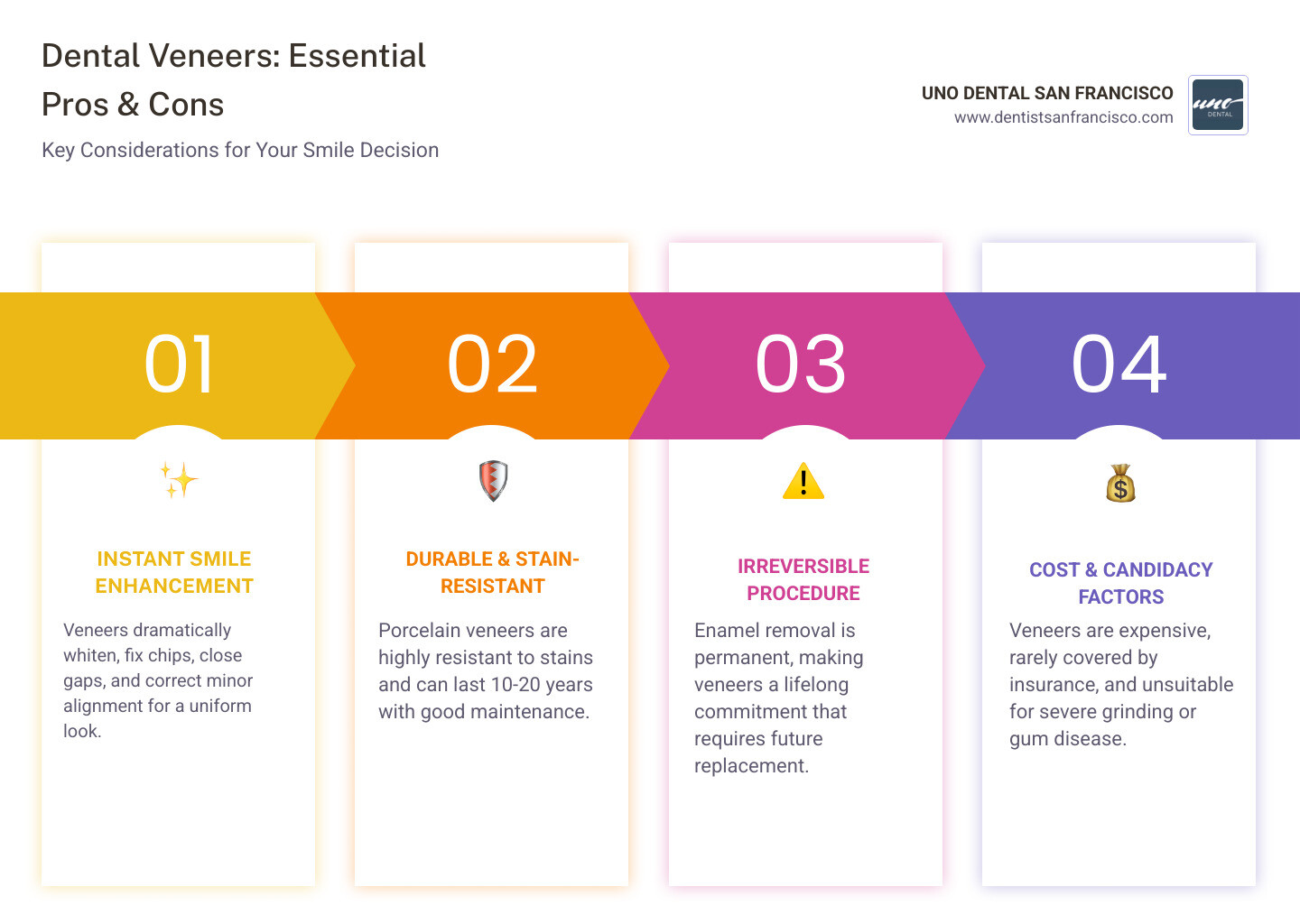
Understanding the dental veneers pros and cons is essential before committing to this popular cosmetic procedure. These thin, custom-made shells can transform your smile, but they're also a permanent change to your natural teeth.
Quick Answer: The Essential Pros and Cons
| Pros | Cons |
|---|---|
| Instantly whitens and brightens your smile | Procedure is irreversible due to enamel removal |
| Corrects multiple flaws at once (chips, gaps, stains, minor misalignment) | Can cause temporary tooth sensitivity |
| Highly stain-resistant, especially porcelain | Risk of chipping or cracking with hard foods |
| Long-lasting (10-20 years for porcelain, 5-7 years for composite) | Expensive ($925-$2,500+ per tooth) |
| Minimally invasive compared to crowns | Usually not covered by dental insurance |
| Easy to maintain with normal brushing and flossing | Not suitable for everyone (e.g., active gum disease, teeth grinding) |
The popularity of veneers has grown significantly in recent years as people seek a confidence boost. However, it's a major decision. The procedure requires removing a thin layer of natural tooth enamel, making it a lifelong commitment.
When done right, veneers can last 10 to 20 years and give you a smile that looks natural and feels great. The challenge is that they're expensive, permanent, and not right for everyone.
At UNO DENTAL SAN FRANCISCO, Dr. Mohammad Aghiad Kandar uses his 15+ years of experience in cosmetic and restorative dentistry to help patients steer the dental veneers pros and cons. We customize treatment plans that balance your aesthetic goals with your long-term oral health. Every article we publish, including this one, is carefully reviewed for accuracy and clarity so you can make informed decisions about your care.
Common dental veneers pros and cons vocab:
What Are Dental Veneers?
Dental veneers are wafer-thin, custom-made shells designed to cover the front surface of your teeth. Think of them as cosmetic masks for your teeth, crafted to improve their appearance. Made from either porcelain or composite resin, these shells are bonded to your natural teeth, changing their color, shape, size, or length. The American Dental Association describes veneers as a permanent change used to correct various tooth imperfections.
We use veneers to address cosmetic concerns like discoloration, worn enamel, chips, cracks, and even minor misalignment or gaps. They camouflage aesthetic flaws, giving you a more uniform and radiant smile.
Veneers are primarily a cosmetic solution. They differ from dental crowns, which cover the entire tooth and are typically used to restore severely damaged teeth. Veneers focus on the aesthetic improvement of the front surface, making them a less invasive option.
Types of Veneers Offered at UNO DENTAL SAN FRANCISCO
At UNO DENTAL SAN FRANCISCO, we offer various types of veneers to suit different needs and budgets. Our goal is to provide individualized treatments that align with your aesthetic goals and long-term oral health.
- Porcelain Veneers: Crafted from high-quality ceramic in a dental lab, these custom-made shells are renowned for their durability, natural look, and superior stain resistance. Porcelain veneers mimic the light-reflecting properties of natural enamel for a lifelike result and typically require two to three appointments.
- Composite Resin Veneers: Also known as direct veneers, these are made from a tooth-colored resin applied and sculpted by your dentist, often in a single visit. Composite veneers are a more affordable option that offers good aesthetic results but are less durable and more prone to staining than porcelain.
- No-Prep Veneers: These ultra-thin porcelain veneers require minimal to no enamel removal. They are a good, sometimes reversible, option for minor cosmetic corrections like small gaps or slight discoloration. However, their thinness may not be enough to mask severe stains or significantly change tooth shape.
To help you visualize the differences, here's a comparison of our most popular veneer options:
| Feature | Porcelain Veneers | Composite Veneers |
|---|---|---|
| Material | High-quality ceramic (porcelain) | Resin (plastic and ceramic mixture) |
| Cost | Higher, typically $900-$2,500 per tooth | Lower, typically $400-$2,000 per tooth |
| Durability & Lifespan | Excellent; 10-20 years with proper care | Good; 5-7 years with proper care |
| Appearance | Highly natural, superior stain resistance, reflects light like natural teeth, custom-made for ideal aesthetics | Natural, but can be more prone to staining over time, less natural luster than porcelain, directly sculpted on tooth |
| Procedure | Requires 2-3 visits (preparation, impression, lab fabrication, bonding) | Often 1 visit (direct application and sculpting) |
| Enamel Removal | Minimal enamel removal typically required for optimal bonding and fit | Less or no enamel removal for direct bonding, especially for minor corrections |
| Stain Resistance | Highly resistant to stains | More susceptible to staining over time, similar to natural teeth |
The "Smile" Side: Top Benefits of Dental Veneers
Choosing dental veneers can be a truly transformative experience, offering benefits that go beyond just improving your smile. A beautiful smile can boost confidence and leave a lasting impression. Here are the key advantages that make veneers a popular choice for our patients in San Francisco.
Instantly Corrects Multiple Cosmetic Flaws
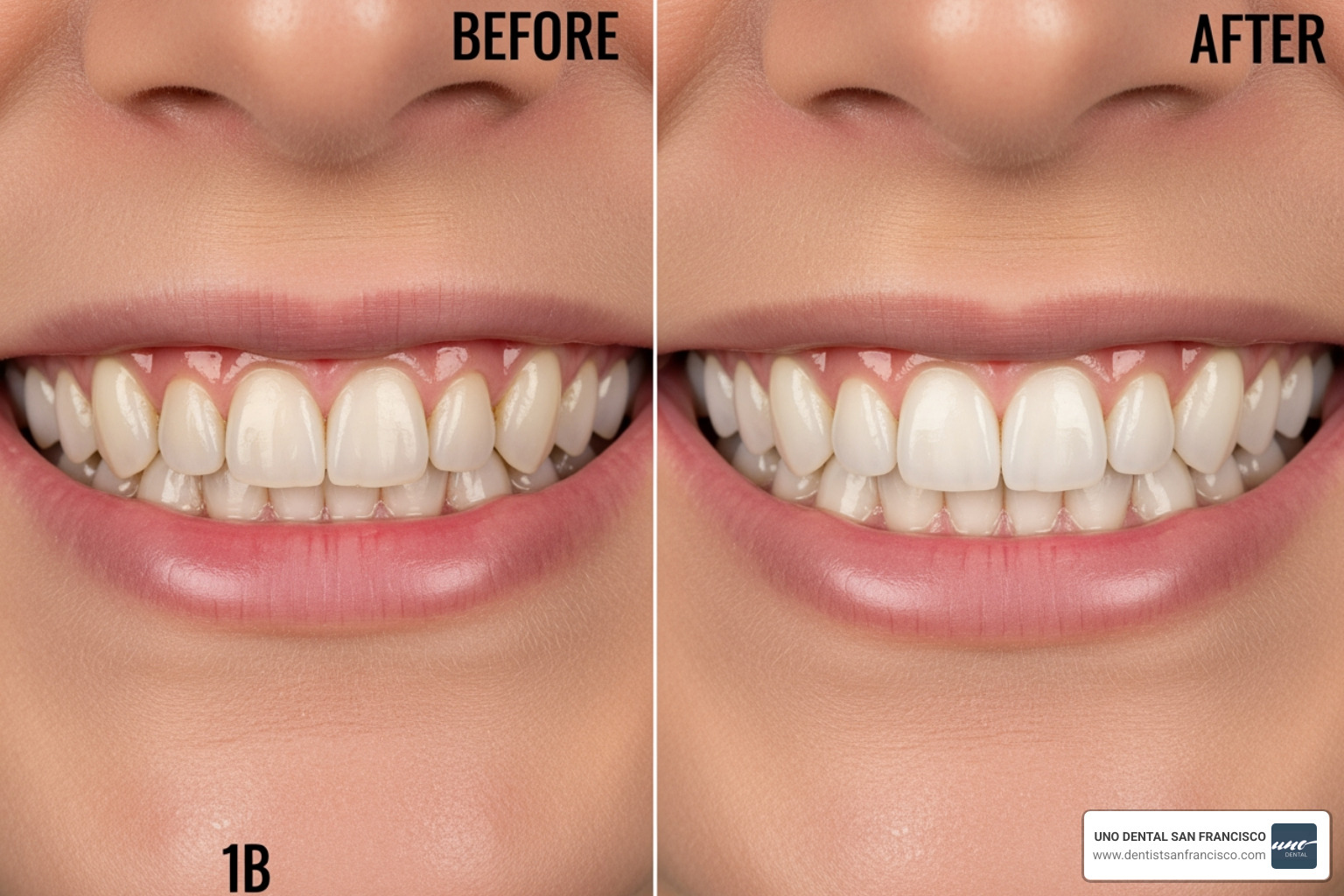
One of the most compelling advantages of veneers is their ability to address several cosmetic imperfections at once, providing dramatic and immediate results.
- Whiter, Brighter Smile: Veneers cover deep stains from coffee, smoking, or food that don't respond to whitening. Porcelain veneers are highly stain-resistant, providing a permanent solution for a dazzling white smile that won't change color over time.
- Fixes Chips and Cracks: Veneers effectively cover imperfections from wear and tear, restoring the tooth's smooth, natural appearance.
- Closes Gaps: Small gaps between teeth (diastema) can be closed by custom-designing veneers to subtly widen teeth, creating a uniform smile without orthodontics.
- Corrects Minor Misalignment: For slightly crooked or uneven teeth, veneers can be an excellent alternative to lengthy orthodontic treatments by creating the illusion of perfect alignment.
- Creates a Uniform Shape and Size: Veneers allow us to reshape teeth that are too small, oddly shaped, or uneven, creating a symmetrical and harmonious smile line. They can also replace damaged or worn enamel.
Durable, Stain-Resistant, and Long-Lasting
When you invest in your smile, you want enduring results. Veneers, particularly porcelain, offer impressive durability and longevity.
Porcelain is exceptionally resistant to stains, far surpassing natural enamel, so you can enjoy coffee or red wine with less worry. It also mimics the translucency of natural teeth for a remarkably lifelike aesthetic.
With proper care, porcelain veneers can last 10 to 20 years, making them a long-lasting cosmetic solution. Compared to other cosmetic dentistry procedures, veneers are very long-lasting. For example, porcelain veneers can last over a decade (7-15 years for many patients). Composite veneers typically have a lifespan of 5 to 7 years. Both options are resilient enough for daily chewing, providing a beautiful smile for years to come.
A Minimally Invasive Procedure with Easy Maintenance
Many patients appreciate that veneers offer significant aesthetic improvements with a relatively conservative approach.
Traditional porcelain veneers typically require removing only a very thin layer of tooth enamel—about 1 millimeter. This is considerably less than what's needed for a dental crown, preserving more of the natural tooth structure. For some types, like no-prep veneers, even less or no enamel removal might be necessary.
Despite their sophisticated appearance, veneers are surprisingly easy to care for. Your daily oral hygiene routine remains largely unchanged. We recommend normal brushing twice a day with a non-abrasive fluoride toothpaste, daily flossing, and regular dental check-ups. No special maintenance is required beyond what you already do to keep your natural teeth healthy.
The "Sigh" Side: Potential Cons and Considerations
While the benefits of dental veneers are clear, it's equally important to understand the potential drawbacks before making a decision. We believe in providing all the information you need to make an informed choice for your long-term oral health and happiness.
The Procedure is Irreversible
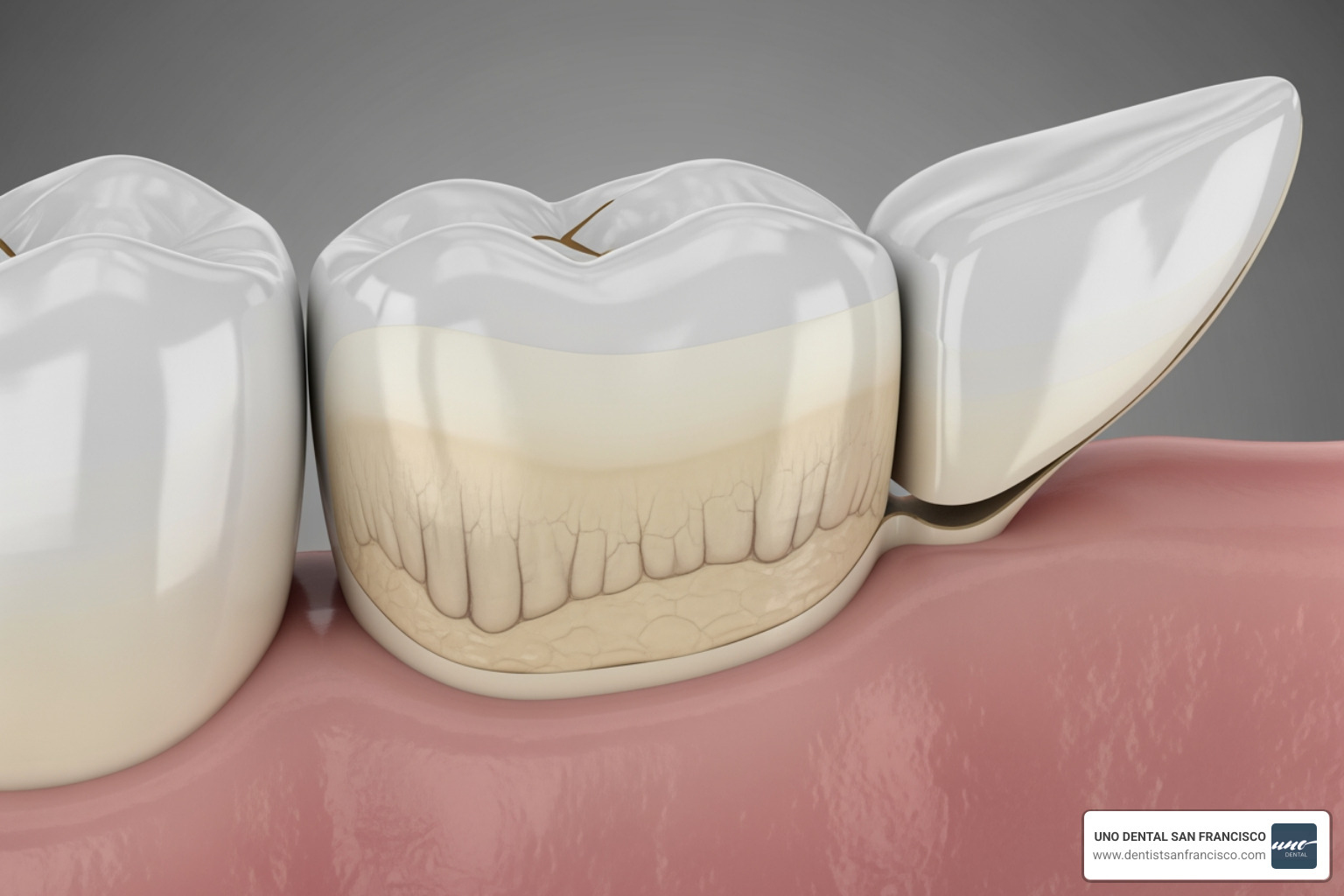
The most significant consideration when weighing the dental veneers pros and cons is the irreversible nature of the procedure. To ensure a proper bond and a natural look, a small amount of tooth enamel is permanently removed from the front of your teeth. Because enamel does not grow back, your teeth will always need to be covered by veneers or another restoration. This makes getting veneers a lifelong commitment, as they will eventually need to be replaced. Understanding this permanence is crucial before you begin.
Potential for Tooth Sensitivity and Damage
After getting veneers, some patients experience temporary tooth sensitivity to hot or cold temperatures. This typically subsides within a few days or weeks. The American Academy of Cosmetic Dentistry notes that this sensitivity usually goes away, and we can recommend products to manage any discomfort.
While durable, veneers are not indestructible. There is a risk of chipping or cracking if you bite your nails, chew on ice, or use your teeth to open packages. If you clench or grind your teeth (bruxism), we may recommend a nightguard to protect your veneers. Veneers are not suitable for severely damaged teeth; a dental crown might be a more appropriate solution in such cases.
Weighing the Dental Veneers Pros and Cons for Your Smile
Veneers are an incredible cosmetic solution, but they are not suitable for everyone. It's important to consider your overall oral health and lifestyle.
- Not a Solution for Severe Decay or Unhealthy Gums: Veneers can only be placed on healthy teeth and gums. Active gum disease or extensive cavities must be resolved before considering veneers.
- May Not Match Perfectly Over Time: While porcelain veneers are highly stain-resistant, your natural teeth without veneers can still discolor. This may create a mismatch over time, so maintaining good oral hygiene for all your teeth is essential.
- Natural Teeth Can Still Stain: The underlying natural tooth is still susceptible to decay and staining at the edges where the veneer meets the tooth. This underscores the importance of diligent oral hygiene.
The Veneer Journey: Process, Cost, and Longevity
Understanding the journey—from initial consultation to long-term care—is key to appreciating the full scope of dental veneers pros and cons. We guide you through each step, ensuring clarity and comfort.
Are You a Good Candidate for Veneers?
Determining if veneers are right for you begins with a thorough assessment of your oral health. You are generally a good candidate if you:
- Have good overall oral health, free from extensive cavities or active gum disease.
- Possess sufficient tooth enamel for bonding.
- Have realistic expectations about the outcome.
- Want to correct cosmetic issues like discoloration, chips, minor gaps, or slight misalignment.
- Are committed to excellent oral hygiene.
Veneers might not be suitable if you:
- Have severe misalignment better addressed with orthodontics.
- Suffer from clenching or grinding (bruxism) without a willingness to wear a nightguard.
- Have weakened teeth due to large fillings or extensive decay.
- Have insufficient enamel.
The best way to determine your suitability is through a personalized consultation. We invite you to Book a virtual smile consultation with UNO DENTAL SAN FRANCISCO to discuss your goals.
The Step-by-Step Process
Getting dental veneers typically involves a few visits to our San Francisco office. Here’s what to expect:
- Initial Consultation: This first step involves discussing your aesthetic goals, examining your oral health (with X-rays if needed), and reviewing the dental veneers pros and cons for your specific case. We'll also discuss material options and the number of veneers required.
- Tooth Preparation: For traditional porcelain veneers, a small amount of enamel (about 0.5 to 1 millimeter) is gently removed from the tooth's front surface. This creates space for the veneer and ensures a non-bulky look. This step may be skipped for no-prep veneers.
- Impressions or 3D Scan: We take precise impressions or a digital 3D scan of your teeth. These are sent to a specialized dental lab where your custom veneers will be crafted.
- Temporary Veneers (if needed): While your permanent veneers are being made (which can take 2-4 weeks), we may place temporary veneers to protect your prepared teeth.
- Final Bonding Appointment: Once your custom veneers arrive, we will check their fit and appearance. After you and our dentist are completely satisfied, your teeth are cleaned and etched for a strong bond. The veneers are then permanently cemented into place using a special dental cement and a curing light.
- Bite Adjustment: After bonding, we'll check your bite to ensure comfort and proper function, making any minor adjustments.
Understanding the Dental Veneers Pros and Cons for Longevity
The lifespan of your veneers is a key factor when weighing the dental veneers pros and cons. Longevity varies by material:
- Porcelain Veneer Lifespan: Known for exceptional durability, porcelain veneers can last 10 to 20 years with diligent care.
- Composite Veneer Lifespan: These typically last between 5 and 7 years and may require replacement sooner than porcelain.
Several factors influence longevity:
- Oral Hygiene: Consistent brushing, flossing, and regular cleanings are paramount. The underlying tooth can still get cavities.
- Habits: Avoid biting hard objects (ice, nuts), using teeth as tools, or nail-biting.
- Bruxism: If you grind your teeth, a nightguard is crucial to protect veneers from fracture.
- Regular Dental Check-ups: Routine visits to UNO DENTAL SAN FRANCISCO allow us to monitor your veneers and overall oral health.
Investing in Your Smile: Cost and Insurance
When considering dental veneers pros and cons, the financial aspect is often a significant point of discussion. We aim to be transparent about costs and help you explore available options.

What is the Typical Cost of Dental Veneers?
Veneer costs vary based on material, the number of teeth treated, case complexity, and dentist expertise. In San Francisco, you can expect these general ranges:
- National Average Cost: A single veneer averages $1,765, with a typical range of $500 to $2,895 per tooth.
- Porcelain Veneers: As the premium option, the cost of porcelain veneers in San Francisco typically ranges from $900 to $2,500 per tooth.
- Composite Veneers: This more affordable option costs roughly $400–$2,000 per tooth when applied directly. Lab-fabricated composite veneers are around $1,100 per tooth.
Factors affecting the price include:
- Material Choice: Porcelain is more costly than composite resin.
- Number of Veneers: The more teeth you treat, the higher the overall cost.
- Geographic Location: Dental costs can vary by city.
- Dentist's Expertise: Experienced cosmetic dentists may charge more.
- Additional Procedures: Preliminary treatments, like gum contouring, will add to the total cost.
Are Veneers Covered by Dental Insurance?
Dental veneers are typically considered a cosmetic procedure and are usually not covered by insurance, which prioritizes medically necessary treatments. However, there can be exceptions if a veneer is needed to repair accidental damage. We always recommend checking with your insurance provider to understand your benefits.
At UNO DENTAL SAN FRANCISCO, we know veneers are a significant investment. We offer various dental veneers payment plan options and financing solutions to make your dream smile more accessible.
Frequently Asked Questions about Dental Veneers
We receive many questions from patients considering veneers, and we're happy to provide clear answers to help you understand the dental veneers pros and cons.
How do I care for my new veneers?
Caring for veneers is straightforward and similar to caring for natural teeth. To ensure they last, follow these steps:
- Brush Twice Daily: Use a soft-bristled toothbrush and non-abrasive fluoride toothpaste.
- Floss Daily: It's crucial to floss around the edges of your veneers to prevent decay on the underlying tooth.
- Avoid Hard or Sticky Foods: Veneers can chip, so avoid biting into ice, hard candies, or nuts with your front teeth.
- Regular Dental Cleanings: Schedule routine check-ups at UNO DENTAL SAN FRANCISCO to monitor your veneers and oral health.
- Consider a Nightguard: If you grind or clench your teeth (bruxism), we highly recommend a custom nightguard to protect your veneers from excessive force while you sleep.
Can veneers get cavities?
This is a common question. The veneer itself, whether porcelain or composite, cannot decay. However, the natural tooth underneath is still susceptible to cavities.
If plaque accumulates around the edges of the veneer where it meets the tooth, decay can develop. This is why meticulous oral hygiene is so important. A cavity under a veneer can compromise its bond and may require removal to treat the decay, emphasizing the need for consistent home care and regular professional check-ups.
What is the difference between veneers and dental bonding?
Veneers and dental bonding are both cosmetic procedures, but they differ in materials, application, durability, and cost. Understanding these distinctions is key to evaluating their respective dental veneers pros and cons.
| Feature | Dental Veneers | Dental Bonding |
|---|---|---|
| Material | Custom-made shells of porcelain or composite resin | Tooth-colored composite resin |
| Application | Lab-fabricated shells bonded to the tooth (porcelain) or sculpted directly (composite) | Resin applied directly to the tooth, sculpted, hardened with light, and polished |
| Durability | Porcelain is highly durable (10-20 years); composite veneers are moderately durable (5-7 years) | Less durable than veneers, more prone to chipping and staining (typically 3-10 years) |
| Stain Resistance | Porcelain is highly stain-resistant; composite veneers are moderately stain-resistant | More susceptible to staining over time |
| Enamel Removal | Minimal enamel removal often required for porcelain; less or none for composite veneers | Minimal to no enamel removal |
| Cost | Higher (average $900-$2,500 per tooth for porcelain) | Lower (average $300-$1,000 per tooth) |
| Best For | Significant cosmetic changes, long-lasting results, covering severe discoloration, reshaping multiple teeth | Minor chips, small gaps, slight discoloration, temporary fixes, or budget-conscious solutions |
Veneers offer a more comprehensive and durable aesthetic change, especially porcelain, while dental bonding is a more conservative and affordable option for minor imperfections.
Is a Brighter Smile with Veneers Right for You?
Deciding on veneers is a personal journey through the dental veneers pros and cons. We've covered how they can transform your smile by fixing cosmetic flaws with durable, natural-looking results, while also reviewing key considerations like the irreversible procedure, potential sensitivity, and cost.
The best choice comes from personalized planning and a professional consultation. At UNO DENTAL SAN FRANCISCO, our high-tech, holistic approach means we take the time to understand your unique needs and goals to help you achieve a confident, radiant smile.
If you're ready to explore if veneers are the right solution for you, we invite you to connect with us. Let us help you weigh the pros and cons for your individual smile goals.