
Why Sleep Apnea Mouth Guards Are Worth Knowing About
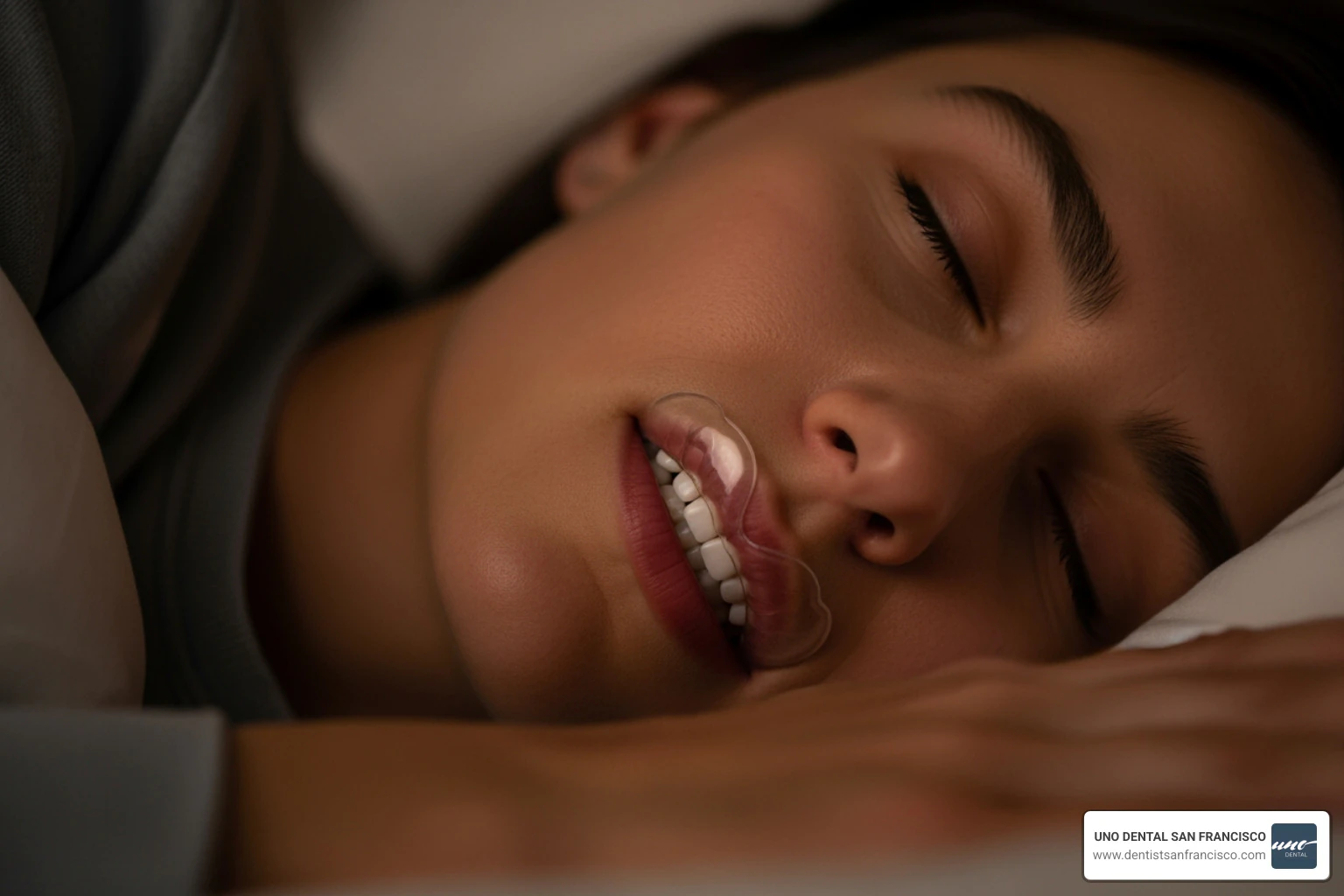
Sleep apnea mouth guards are dental devices worn at night to help keep your airway open while you sleep. Here is a quick summary of what they are and how they help:
- What they are: Custom-fitted oral appliances that reposition your jaw or tongue to reduce airway collapse
- Who they help: People with mild to moderate obstructive sleep apnea (OSA), or those who have trouble tolerating other common therapies
- How well they work: Many patients see meaningful improvement when appropriately selected and properly fitted; consistent nightly use is a major factor in real-world results
- Main types: Mandibular Advancement Devices (MADs) and Tongue-Retaining Devices (TRDs)
- Where to get one: Through a dentist trained in sleep medicine, not off a pharmacy shelf
Between 10% and 30% of adults have obstructive sleep apnea, and many do not realize it. Left untreated, OSA can increase health risks and lead to persistent fatigue and reduced quality of life. A major challenge with any therapy is long-term use. If a solution is uncomfortable or inconvenient, people often stop using it.
That is where sleep apnea mouth guards can be a strong option. For many patients, they offer a simpler, quieter, and more travel-friendly path to better sleep. They are small enough to pack easily and silent enough to avoid disturbing a partner.
This guide walks you through what to know: how these appliances work, which type may be appropriate, what the fitting process involves, and what to expect from treatment.
I am Mohammad Aghiad Kandar, DDS, a San Francisco-based dentist with over 15 years of clinical experience, including advanced training in restorative and comprehensive dental care that informs my approach to sleep apnea mouth guards and oral appliance therapy. I will cover the key facts so you can make a confident, informed decision about your sleep health.
Related content about sleep apnea mouth guards:
Understanding Sleep Apnea Mouth Guards and How They Work

When we talk about Obstructive Sleep Apnea (OSA), we are describing a physical blockage in the back of the throat. When you fall asleep, your muscles relax. For many of us in San Francisco, that relaxation causes the tongue and soft tissues to collapse backward, effectively closing off the "pipe" you use to breathe.
Sleep apnea mouth guards work by using mechanical "real estate" management. Instead of relying on external machinery to push the airway open, these devices use the structure of your own mouth to pull it open.
Mandibular Advancement
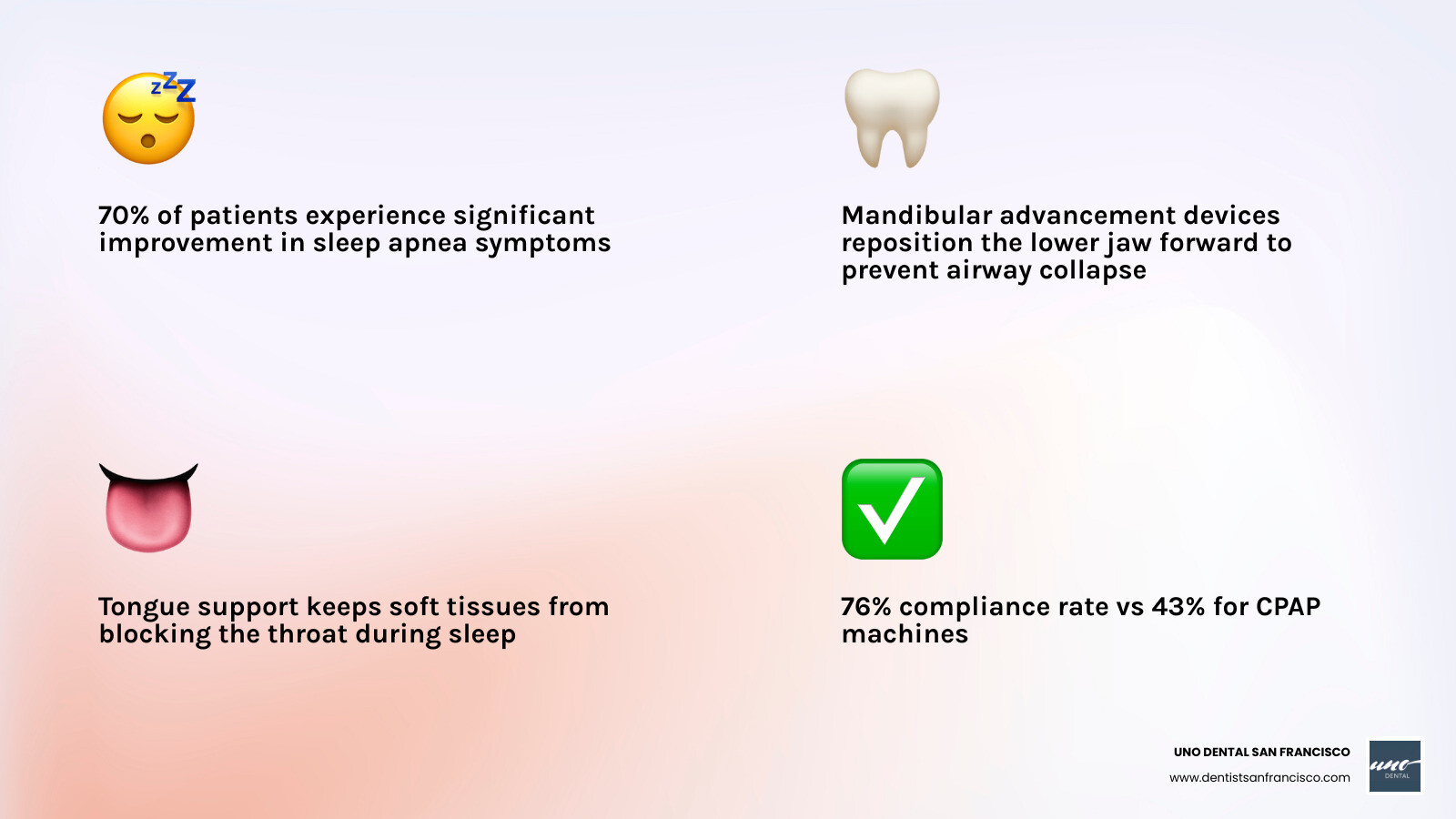
The most common mechanism is known as mandibular advancement. By gently shifting your lower jaw (the mandible) forward by just a few millimeters, the device creates tension in the soft tissues of the throat. This prevents the tongue from falling back and keeps the airway patent (open).
Airway Patency and Soft Tissue Support
Maintaining airway patency is the primary goal. Research shows that even a slight forward movement of the jaw can significantly increase the diameter of the upper airway. According to Scientific research on oral appliances for sleep apnea, these devices are highly effective because they stabilize the jaw and increase the "vertical height" of the mouth, providing more room for the tongue to sit comfortably without obstructing your breath.
Types of Oral Appliances for Sleep Apnea
Not all sleep apnea mouth guards are created equal. Depending on your anatomy and the severity of your snoring or apnea, we might recommend different styles of appliances.
Mandibular Advancement Devices (MADs)
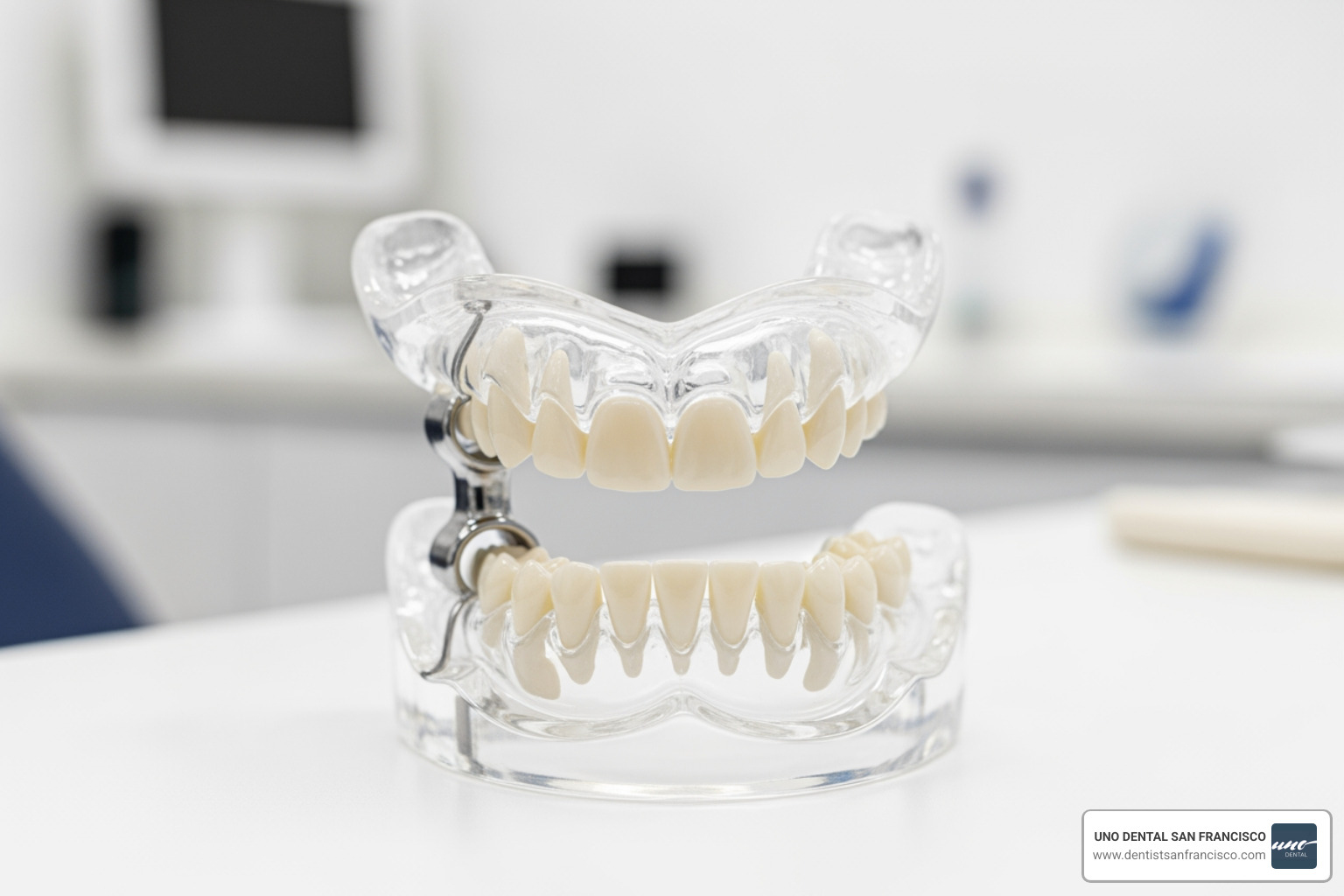
These are the most popular choice. They look similar to a sports mouth guard or an orthodontic retainer. They snap over your upper and lower teeth and are connected by a hinge or a connector that keeps the lower jaw in a forward position.
- One-piece designs: Often more affordable but offer less jaw movement.
- Two-piece designs: These are the "gold standard." They allow you to open and close your mouth, speak, and even sip water while wearing them, making them much more comfortable for long-term use.
Tongue-Retaining Devices (TRDs)
Also known as tongue-stabilizing devices, these look a bit like a pacifier with a bulb. They use gentle suction to hold the tongue forward. These are typically reserved for patients who may not have enough healthy teeth to support a MAD or those who have very large tongues that are the primary cause of their airway obstruction.
Soft Palate Lifters
While less common, some devices focus specifically on lifting the soft palate (the back part of the roof of your mouth). However, clinical research suggests these are often less consistent in their results than MADs.
Comparison of Custom Oral Appliances
To help you visualize the differences, we’ve put together a quick comparison of the features you’ll find in high-quality oral appliances. For more detailed insights, you can explore More info about oral appliance therapy.
| Feature | Mandibular Advancement Device (MAD) | Tongue-Retaining Device (TRD) |
|---|---|---|
| Primary Mechanism | Moves lower jaw forward | Uses suction to hold tongue forward |
| Best For | Mild-to-moderate OSA, snoring | Patients with few teeth or large tongues |
| Adjustability | High (Titratable) | Low |
| Comfort Level | High (especially two-piece) | Moderate (takes time to adjust to suction) |
| Clinical Success | ~70% of patients see significant improvement | Effective for specific anatomical issues |
Custom-Fitted vs. Over-the-Counter Sleep Apnea Mouth Guards
It is tempting to head to a local pharmacy in San Francisco and grab a "boil-and-bite" mouth guard for $50. However, there is a massive difference between a snoring guard and a medical-grade sleep apnea device.
- FDA Clearance: Most over-the-counter (OTC) devices are only cleared for snoring, not for the treatment of obstructive sleep apnea. Custom devices provided by UNO DENTAL San Francisco are FDA-cleared medical devices.
- Precision Titration: A custom device is "titratable," meaning we can adjust the forward movement of the jaw in 1mm increments. OTC devices are static; if the position they provide doesn't work, you're out of luck.
- Dental Health Risks: Poorly fitted OTC guards can cause permanent changes to your bite, tooth movement, and significant jaw pain.
- Professional Fitting: At UNO DENTAL, we use digital impressions to ensure the device fits your unique tooth anatomy perfectly, preventing the "loose" feeling that often leads people to spit out OTC guards in the middle of the night.
Who Should Use Sleep Apnea Mouth Guards?
While various treatments exist for severe cases, sleep apnea mouth guards are an excellent—and often preferred—choice for a wide range of people. According to the Clinical guidelines for oral appliance therapy, the best candidates include:
- Mild to Moderate OSA: People who stop breathing between 5 and 30 times per hour.
- Treatment Intolerance: The 46% to 83% of people who find traditional masks too claustrophobic, noisy, or drying.
- Primary Snorers: People who don't have full apnea but whose snoring is disrupting their partner's sleep (and their own).
- Travelers: People who don't want to lug heavy equipment and distilled water through SFO every time they take a trip.
Benefits and Effectiveness of Custom Oral Appliances
The biggest benefit of a mouth guard isn't just that it works—it's that you’ll actually use it.
High Compliance Rates
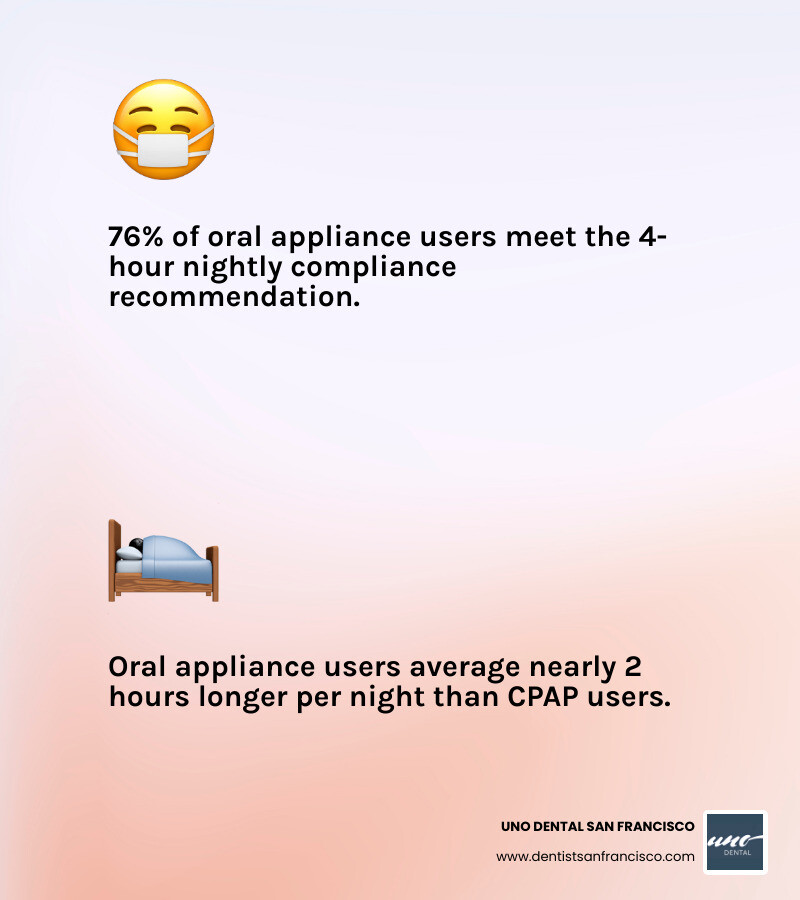
In sleep medicine, "compliance" is everything. A treatment only works if you use it. Statistics show that 76% of oral appliance users meet the 4-hour nightly recommendation, compared to just 43% for those using other common treatments. On average, people using a mouth guard use it for nearly two hours longer per night than those using other methods.
Portability and Quiet Operation
There are no hoses, no humming motors, and no need for an electrical outlet. You can sleep in any position—on your back, side, or stomach—without worrying about cumbersome equipment. It’s a discreet solution that fits in a small case in your nightstand.
Discreet and Comfortable
Many of our San Francisco patients appreciate that sleep apnea mouth guards are invisible to anyone else once your mouth is closed. It allows for a much more natural bedtime routine with your partner. You can Learn more about oral appliance therapy to see how it compares directly to other interventions.
The Process of Getting a Custom-Fitted Device at UNO DENTAL San Francisco

At UNO DENTAL, we pride ourselves on a high-tech, holistic approach. We don't just hand you a piece of plastic; we manage your care from start to finish.
- Comprehensive Sleep Assessment: We begin by reviewing your sleep study results. If you haven't had one yet, we can help facilitate a home sleep test to confirm your diagnosis.
- Digital Impressions: Forget the goopy, gag-inducing putty of the past. We use advanced digital scanners to create a 3D map of your teeth and bite. This ensures a fit that is accurate to the micron.
- Custom Fabrication: Your scans are sent to a specialized lab where your appliance is 3D printed or milled from high-quality, biocompatible materials.
- Titration Process: Once your device arrives, we fit it and show you how to adjust it. We start with a conservative forward position and gradually move the jaw forward over several weeks until your snoring stops and you feel refreshed.
- Follow-up Care: We see you for regular check-ins to monitor your jaw health and ensure the device is still performing optimally. We often recommend a follow-up sleep study with the device in place to prove its effectiveness.
Potential Risks, Side Effects, and Maintenance
Like any medical treatment, sleep apnea mouth guards come with potential side effects. Most are minor and resolve within the first few weeks of use.
- TMJ Discomfort: Because the jaw is being held forward, you might feel some soreness in the jaw joint (TMJ) or muscles in the morning. We provide "morning repositioning" exercises to help your jaw click back into its natural spot quickly.
- Teeth Shifting: Over many years, a mouth guard can cause minor changes in how your teeth meet. Regular dental check-ups allow us to catch and manage this early.
- Excessive Salivation or Dry Mouth: Your brain might initially think the mouth guard is food, leading to extra drooling. Conversely, if your lips don't close fully, you might experience dry mouth. Both usually disappear as your body acclimates.
Daily Cleaning Protocols
Maintenance is simple but vital. Because the device sits in a dark, moist environment, bacteria can thrive if it isn't cleaned.
- Morning: Brush the device with a soft toothbrush and mild soap or a non-abrasive toothpaste.
- Drying: Let it air dry completely in its protective case (open) to prevent mold growth.
- Weekly: Use a specialized cleaning tablet (like those used for dentures or retainers) for a deep soak to remove calcium buildup and odors.
Frequently Asked Questions about Sleep Apnea Mouth Guards
How much do sleep apnea mouth guards cost?
The cost of a high-quality, custom-fitted appliance typically ranges between $1,500 and $2,500. This includes the initial consultation, digital impressions, the device itself, and all follow-up titration appointments. While this is more than an OTC guard, the medical-grade materials and professional oversight make it a long-term investment in your health.
Does medical insurance cover oral appliance therapy?
Yes! Interestingly, sleep apnea mouth guards are usually covered under medical insurance, not dental insurance, because sleep apnea is a medical condition. Most major plans, including Medicare, provide coverage for custom oral appliances if you have a confirmed diagnosis of OSA from a physician. Our team at UNO DENTAL is experienced in helping patients navigate the pre-authorization process.
How long does a custom sleep apnea mouth guard last?
With proper care, a custom-fitted device typically lasts between 3 and 5 years. The high-quality acrylics and metals used are designed to withstand the pressure of nightly use and occasional teeth grinding (bruxism).
Conclusion
Sleep is the foundation of your health, and you shouldn't have to choose between cumbersome equipment and a good night’s rest. At UNO DENTAL San Francisco, we combine high-tech diagnostics with a warm, patient-centered approach to help you breathe easy again.
Whether you are newly diagnosed or looking for an alternative to other treatments, we are here to provide individualized treatment plans that fit your lifestyle. From our free virtual smile consultations to our precision digital fittings, we handle everything under one roof in the heart of San Francisco.
Ready to stop snoring and start living? Schedule a sleep apnea consultation in San Francisco today and take the first step toward a healthier, more energized you.