

The Big Reveal: What Happens When Your Smile Isn't What You Expected
Finding you have bad teeth after braces can be frustrating. After months or years of orthodontic treatment, you expect a perfect smile—only to find discoloration, white spots, or shifting teeth instead.
Common issues after braces removal include:
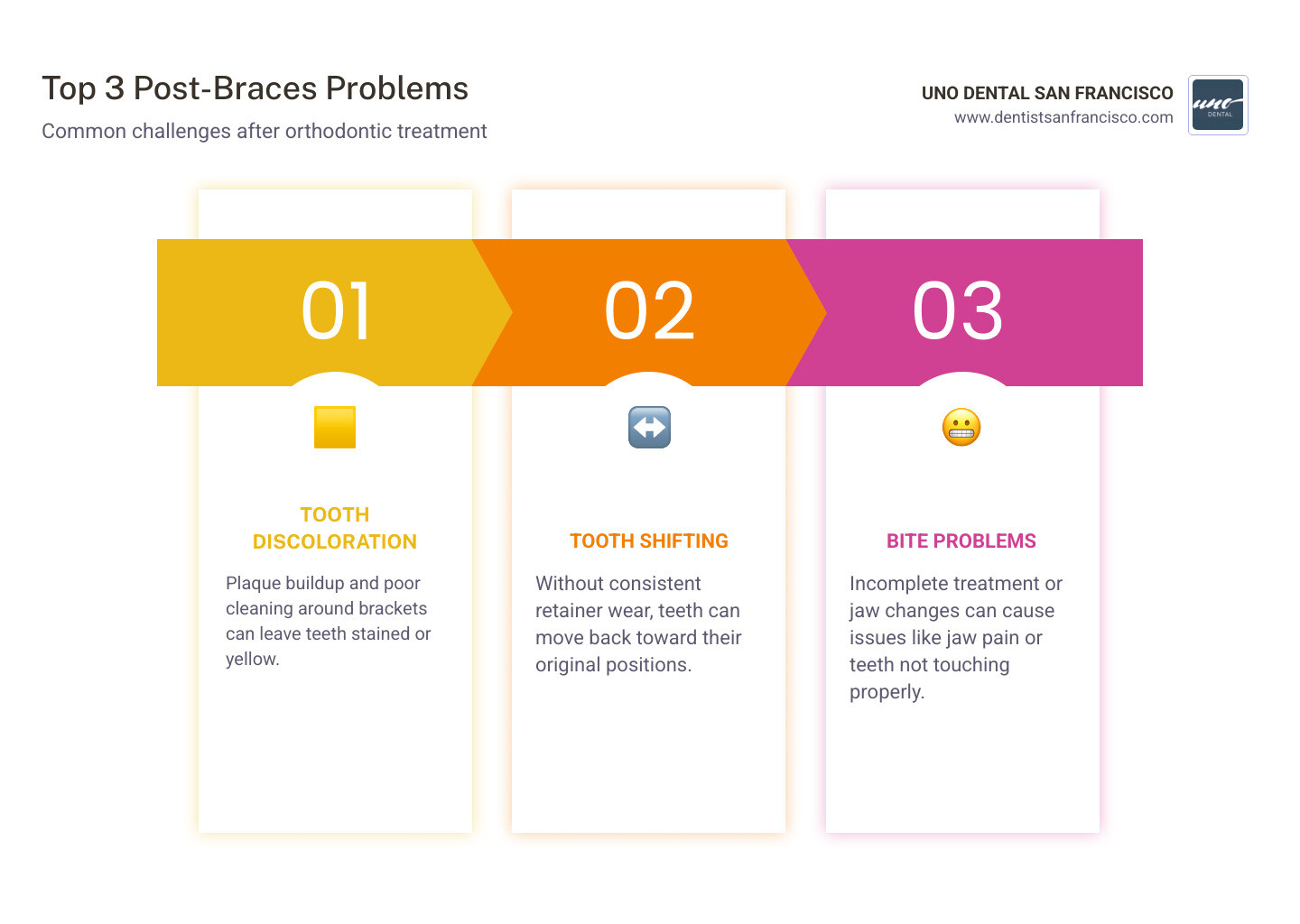
- Discoloration and yellowing – Plaque buildup around brackets can leave teeth stained.
- White spot lesions – Demineralization creates chalky white marks where brackets were.
- Tooth shifting – Without consistent retainer wear, teeth can move back to their original positions.
- Bite problems – Incomplete treatment can cause jaw pain or an improper bite.
- Sensitivity – Newly exposed enamel may react to hot or cold temperatures.
The good news is that most of these problems are preventable and treatable. Understanding the causes and your options can help you protect your investment and achieve the healthy, beautiful smile you worked for.
I'm Dr. Mohammad Aghiad Kandar, and with over 15 years of experience at UNO DENTAL SAN FRANCISCO, I've helped countless patients restore their smiles after braces. I've seen every common post-orthodontic concern, from discoloration to shifting, and created customized treatment plans to fix them. Let me guide you through the causes and solutions.
Why Do I Have Bad Teeth After Braces? Common Causes Explained
After months of orthodontic work, finding bad teeth after braces can be a shock. You thought you did everything right, so why are your teeth discolored or shifting? Let's unpack the most common culprits.
Discoloration, Stains, and White Spots
The most frequent concern I hear at UNO DENTAL SAN FRANCISCO is discoloration. This can appear as yellowing, brownish patches, or chalky white spots.
The main villain is plaque buildup. Plaque is a sticky bacterial film that finds perfect hiding spots around braces. The role of plaque in oral health is critical during orthodontic treatment because cleaning is so difficult. When plaque isn't removed, it hardens into tartar, a yellowish deposit only a professional cleaning can remove.
These plaque bacteria feed on sugars and produce acids that attack your enamel. This process, called demineralization, dissolves minerals from your tooth surface. The result is acid erosion and enamel decalcification, which leaves behind white spot lesions—chalky marks where your brackets used to be. These spots are early signs of decay and need professional attention.
Your diet also plays a role. Coffee, tea, red wine, and dark sodas contain pigments that stain enamel. When brackets trap these staining agents against your teeth, the discoloration becomes more pronounced. Poor Oral Hygiene during treatment gives these pigments even more opportunity to create lasting stains.
Why Teeth Shift and Bites Change
Even if your teeth were perfectly straight on removal day, they can drift back to their old positions. This is because your teeth have a “biological memory.” The periodontal ligaments and bone around them need time to stabilize in their new positions. This remodeling process isn't complete when your braces come off, and teeth are eager to migrate back.
This is why retainers are non-negotiable. They are the only thing preventing relapse. Retainer non-compliance is the number one reason for shifted teeth. Without consistent wear, your teeth will shift, sometimes within days. Retention is a lifelong commitment to maintain your results.
Other forces can also cause shifting. Pressure from tongue thrusting or grinding (bruxism) can gradually move teeth. Sometimes, bad teeth after braces refers to persistent bite issues like an overbite, underbite, or a posterior open bite (where back teeth don't touch). These may linger if treatment was incomplete or if jaw growth continued after braces. If you're dealing with these concerns, exploring options like adult braces might be necessary.
Your Action Plan: How to Fix Post-Braces Imperfections
If you're noticing bad teeth after braces, don't worry—you have many options. At UNO DENTAL SAN FRANCISCO, we help patients transform post-braces disappointment into smile confidence with personalized plans.

The first step is a professional evaluation. A thorough exam allows us to identify the issues, discuss your goals, and recommend the most effective treatment. Schedule a Dental Checkup San Francisco to create a roadmap to your ideal smile.
At-Home Strategies for a Brighter Smile
Your daily oral care routine is your secret weapon. Now that brackets are off, you have better access to your teeth—make the most of it.
Improved brushing and flossing. With braces gone, brushing is easier, but technique still matters. Brush twice daily for two minutes with a soft-bristled brush and fluoride toothpaste. An electric toothbrush can be especially effective. Flossing is also no longer a challenge. Cleaning between every tooth is crucial for removing plaque where a toothbrush can't reach. The benefits of daily flossing are significant, and a water flosser can be a great alternative.
Fluoride is key. Fluoride strengthens enamel, especially in areas that experienced demineralization. Use a fluoride toothpaste and consider a fluoride mouthwash for extra protection against decay and sensitivity.
Watch for stains. Be mindful of what you eat and drink to prevent new discoloration. The biggest culprits are coffee, tea, red wine, dark sodas, sports drinks, berries, dark sauces, sugary candies, and tobacco. When you indulge, rinse with water immediately afterward.
Professional Solutions for Bad Teeth After Braces
When at-home efforts aren't enough, professional treatments deliver dramatic results.
Professional cleaning. The first step is often a thorough cleaning to remove stubborn plaque and tartar that accumulated during orthodontic treatment. This brightens your smile and prepares your teeth for other treatments.
Teeth whitening. For general yellowing, professional teeth whitening is highly effective. We offer in-office laser whitening for rapid results and professional-grade take-home kits. We recommend waiting a few weeks after braces removal to allow gums to heal. Learn more about Teeth Whitening After Braces.
Microabrasion. This minimally invasive procedure gently removes a thin layer of enamel to blend frustrating white spot lesions with the surrounding tooth structure.
Composite bonding. For minor chips, uneven edges, or stubborn spots, we can apply a tooth-colored resin to the affected area, sculpting it to match your tooth's natural contours. Explore our Dental Bonding San Francisco services for more details.
Retainer adjustments. If your teeth have shifted slightly, adjusting your existing retainer or creating a new one can often guide them back into position. The key is to act early.
Advanced Cosmetic and Restorative Dentistry
For more severe cases or a complete smile makeover, we offer advanced solutions.
Dental veneers. These thin, custom-made porcelain shells are bonded to the front of your teeth to cover severe discoloration, correct minor misalignments, or improve tooth shape and size. Find your options with Dental Veneers San Francisco.
Composite restoration. For more extensive damage, we use high-quality composite resin to rebuild or reshape teeth, providing both aesthetic beauty and functional strength. Our Restorative Dentistry Guide 2025 offers more insights.
Clear aligners. If you have significant shifting or bite issues, retreatment with clear aligners can be an effective solution, often requiring less time than traditional braces. Combining clear aligners with whitening often leads to higher patient satisfaction.
How to Prevent "Bad Teeth" During and After Orthodontics
The best way to deal with bad teeth after braces is to prevent them from happening. Your orthodontic treatment is an investment that needs protection. Proactive steps during and after your braces journey can help you avoid most common pitfalls. At UNO DENTAL SAN FRANCISCO, we're passionate about preventive care. Our Preventive Dentistry San Francisco guide offers more on this approach.
Mastering Oral Hygiene with Braces
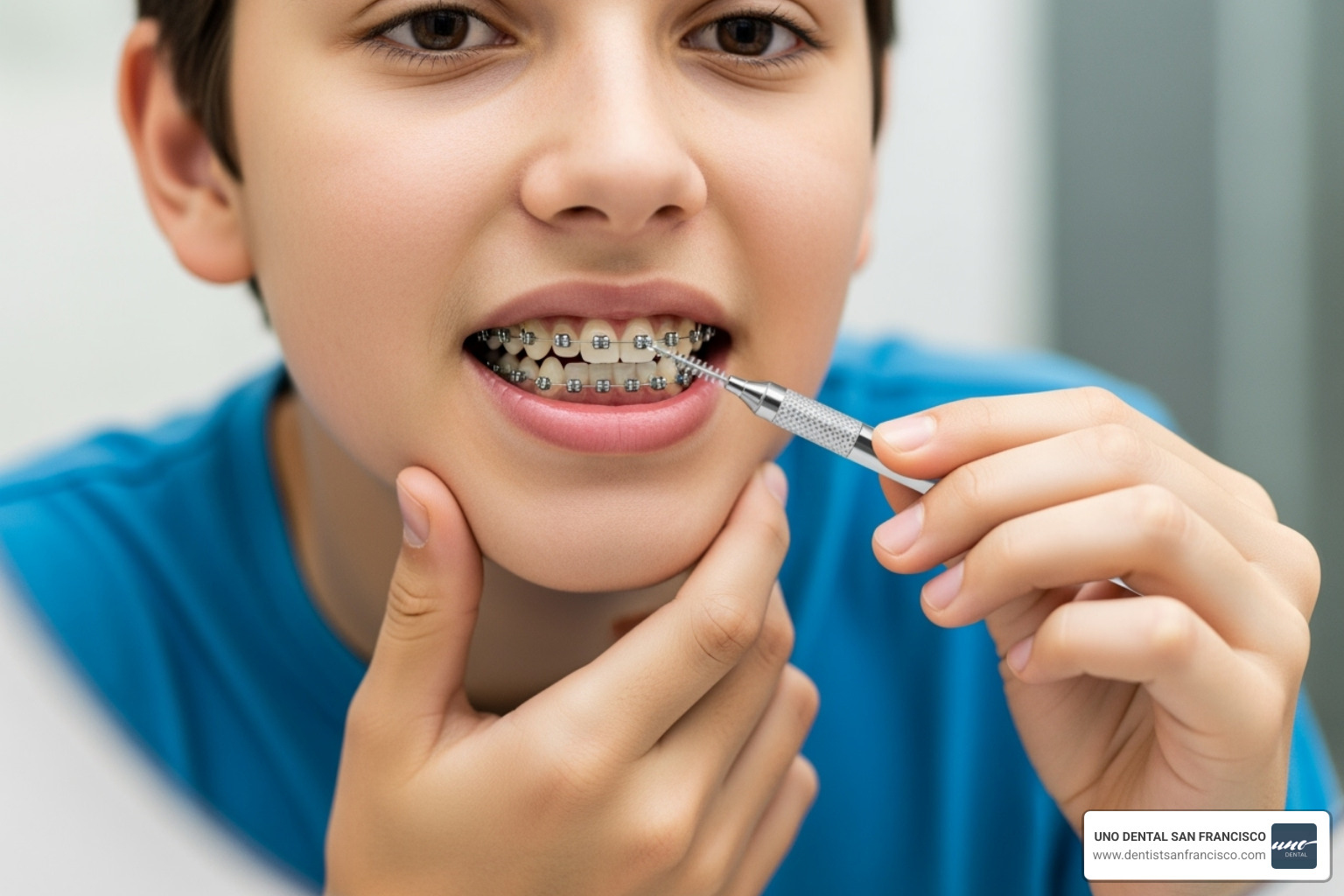
Cleaning your teeth with braces is challenging but essential. This is when most problems that lead to bad teeth after braces begin.
Brushing after every meal is your best defense against stains and plaque. Food particles hide around brackets and wires, feeding bacteria that produce enamel-eroding acids. Carrying a travel toothbrush is a small inconvenience that prevents bigger problems later.
Special tools make cleaning easier. Orthodontic toothbrushes have V-shaped bristles to clean around brackets. Floss threaders help guide floss under the archwire. Interdental brushes, which are small and cone-shaped, are great for cleaning tight spaces your regular brush can't reach. Finally, an antimicrobial mouthwash helps reduce bacteria and prevent plaque buildup. For more tips, see our guide on Best Dental Hygiene Practices.
The Role of Diet and Alternative Appliances
What you eat and drink during treatment significantly impacts your results.
Avoid sugary and acidic drinks like sodas, sports drinks, and fruit juices. The sugar feeds plaque bacteria, while the acids directly attack your teeth. Water is always the best choice.
Also, avoid sticky and hard foods. Sticky foods like caramels and gummy candies cling to brackets, creating breeding grounds for bacteria. Hard foods like nuts and ice can break brackets, potentially extending your treatment time.
If you're concerned about hygiene, clear aligners are a great alternative. They are removable, so you can eat, brush, and floss normally. This significantly reduces the risk of plaque buildup and staining compared to traditional braces. We also offer San Francisco Clear Braces customized to your lifestyle.
Frequently Asked Questions About Teeth After Braces
Here are answers to some of the most common questions we hear at UNO DENTAL SAN FRANCISCO about life after braces.
Are the white spots from braces permanent?
Those chalky white spots are from demineralization, an early stage of decay. While not reversible at home, they are highly treatable. Professional options like topical fluoride applications, microabrasion (which gently buffs the surface), or cosmetic bonding (which covers the spot with a tooth-colored resin) can eliminate their appearance. Early intervention is key, as untreated demineralization can lead to a cavity.
How soon can I whiten my teeth after braces are removed?
We recommend waiting a few weeks. Your gums need time to heal from the irritation of the brackets, and your saliva needs time to naturally remineralize the enamel. Whitening too soon can cause sensitivity and uneven results. We can evaluate when your teeth are ready and discuss the best whitening option for you, whether it's in-office or a take-home kit. For cost information, see our guide on Teeth Whitening San Francisco Cost.
Can my teeth be fixed without getting braces again?
Often, yes. The solution depends on the specific issue. Minor shifting can frequently be corrected with a new or adjusted retainer. Discoloration and staining are addressed with professional whitening, microabrasion, or cosmetic bonding. However, for significant relapse or persistent bite problems, some form of orthodontic retreatment may be needed. This doesn't always mean metal braces; many patients are great candidates for a short course of clear aligners.
Achieve the Smile You Deserve
If you're disappointed with your smile after seeing bad teeth after braces, know that you're not stuck. Common issues like discoloration, white spots, and shifting teeth are all treatable. You've already invested in straightening your smile—now let's perfect it.
The solution is often a combination of excellent home care and professional treatment. At-home habits create a strong foundation, while professional services like whitening, bonding, and veneers provide the finishing touches. Together, we can transform a disappointing result into the radiant smile you've been working toward.
Your orthodontic journey enters a new phase after braces: maintenance and refinement. At UNO DENTAL SAN FRANCISCO, we understand how frustrating a less-than-perfect result can be. Dr. Mohammad Aghiad Kandar and our team provide patient-centered care, addressing underlying causes to craft a personalized treatment plan that fits your needs.
Taking the first step is easy. We offer free virtual smile consultations, allowing you to discuss your concerns from home with no pressure. We'll provide honest guidance on your options.
Your dream smile is within reach. Let us help you protect your investment. For a complete overview, Get your complete guide to teeth after braces from UNO DENTAL SAN FRANCISCO. Your smile deserves it.