
Why Same-Day Dental Relief Is More Accessible Than You Think
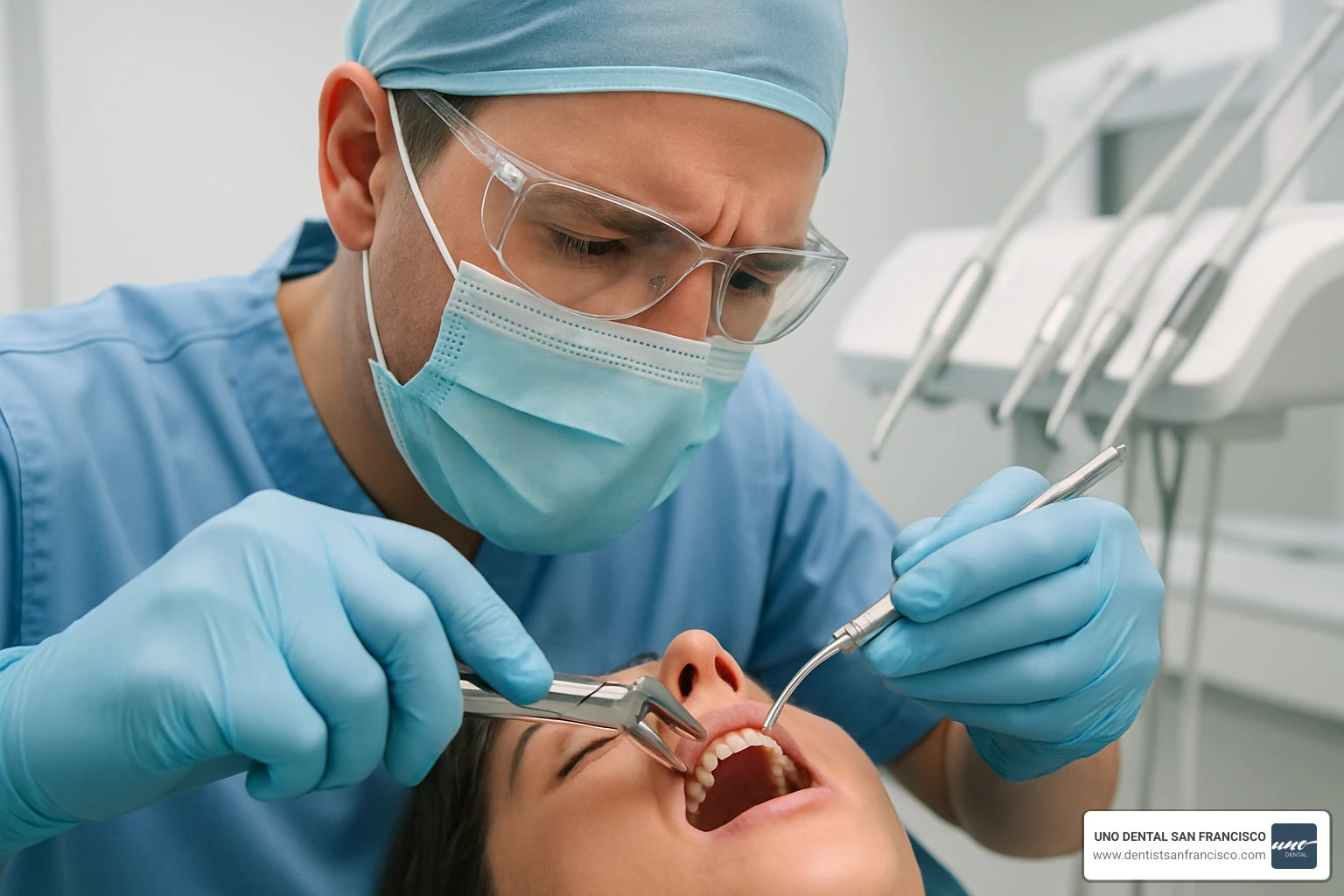
Can I get a tooth extraction the same day you visit the dentist? The short answer is yes - in most cases involving severe pain, infection, or trauma, emergency dental clinics can perform extractions within hours of your arrival.
Quick Answer for Same-Day Extraction Eligibility:
• Severe tooth pain that disrupts sleep or daily activities
• Visible infection with swelling, pus, or fever
• Broken teeth below the gum line from trauma
• Impacted wisdom teeth causing jaw pain
• Good overall health without blood-clotting disorders
• No diffuse facial swelling requiring antibiotics first
When you're dealing with excruciating tooth pain at 2 AM or facing a dental emergency that won't wait for next week's appointment, same-day extractions can provide immediate relief. Research shows that most tooth extractions take just 20-40 minutes to complete, allowing patients to leave the dental office pain-free the same day they arrive.
The key factors that determine your eligibility include the severity of your symptoms, your overall health status, and whether the infection has spread beyond the immediate tooth area. Emergency dentists routinely extract infected teeth without requiring antibiotics first, as removal of the source provides the fastest path to healing.
As Dr. Mohammad Aghiad Kandar at UNO DENTAL SAN FRANCISCO, I've helped countless patients who wondered can I get a tooth extraction the same day and needed immediate relief from dental emergencies. With over 15 years of experience in comprehensive dentistry, I've streamlined same-day extraction protocols that prioritize both patient comfort and optimal healing outcomes.
Can i get a tooth extraction the same day terms explained:
- can i brush my teeth same day as tooth extraction
- can i eat the same day after tooth extraction
- can i get abscess and tooth extraction same day
Why This Guide Matters
The statistics around tooth loss in America are sobering. Nearly 10% of adults age 65 or older have lost all their teeth, and more than 33% of adults in that age group have lost six or more teeth. Even among younger adults aged 18-64, 32% have lost at least one permanent tooth. These numbers highlight why understanding your options for urgent dental care matters.
When dental emergencies strike, time is often critical. A typical tooth extraction takes just 20-40 minutes to complete, making it one of the most efficient ways to eliminate severe pain and prevent infection from spreading. The average US adult has three or more permanent teeth that are missing or severely decayed, meaning many people will face extraction decisions at some point in their lives.
What makes same-day extractions particularly valuable is their ability to prevent minor problems from becoming major health crises. An untreated tooth infection can spread to the neck, face, brain, or bloodstream - potentially becoming life-threatening. By providing immediate access to extraction services, we help patients avoid these serious complications while restoring their quality of life quickly.
Can I Get a Tooth Extraction the Same Day?
When you're dealing with intense tooth pain or a dental emergency, waiting days or weeks for treatment isn't always an option. The good news? Can I get a tooth extraction the same day is often answered with a resounding "yes" when you're facing urgent dental situations.
Most dental emergencies qualify for immediate extraction, especially when you're experiencing severe pain that keeps you awake at night or visible signs of infection. Unlike hospital emergency rooms that can only prescribe pain medication and antibiotics, dental emergency clinics have the tools and expertise to actually solve your problem on the spot.
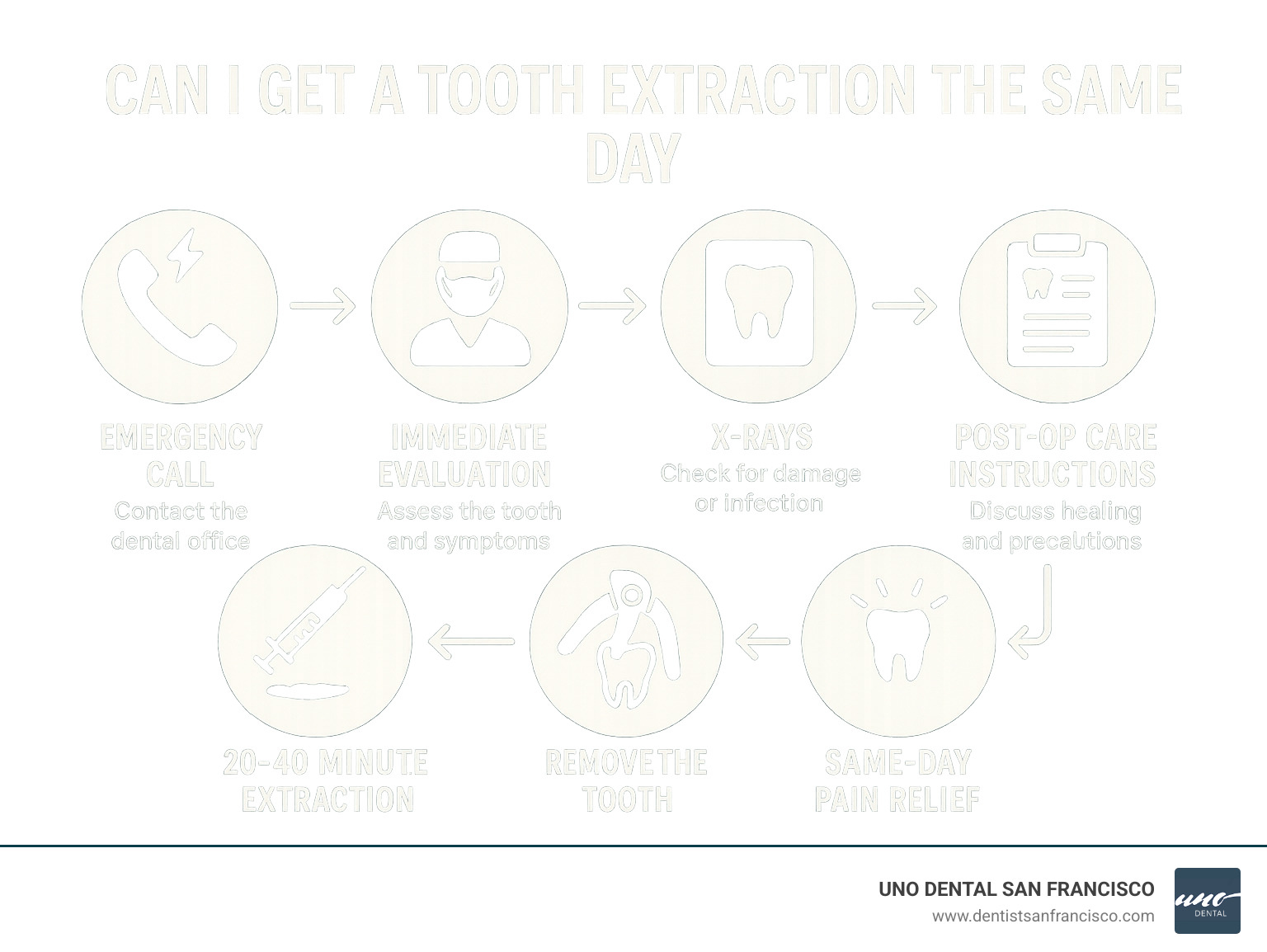
The process is surprisingly straightforward. When you arrive with urgent pain or swelling, we take digital X-rays to assess the situation, then determine whether immediate extraction is the best path forward. In most cases involving urgent pain, infection control, or emergency criteria, we can have you pain-free within an hour or two of walking through our doors.
What makes same-day extractions so effective is that they address the root cause rather than just masking symptoms. Scientific research on infected tooth removal consistently shows that removing the source of infection provides faster healing than antibiotics alone. When a tooth is severely damaged or infected, extraction eliminates the bacteria factory that's causing your misery.
Dentist availability plays a crucial role in same-day treatment. At UNO DENTAL SAN FRANCISCO, we've structured our emergency protocols specifically to accommodate urgent extractions. Our eligibility checklist includes factors like your overall health, the severity of infection, and whether the tooth is accessible for safe removal.
Key Emergencies That Qualify
Some dental situations are clear-cut candidates for immediate extraction. Abscesses top this list - these painful pockets of infection create constant throbbing that disrupts your entire life. When you have an abscess, waiting only allows the infection to spread and worsen.
Facial swelling around a specific tooth usually signals an infection that needs immediate attention. The swelling indicates your body is fighting bacteria, and removing the infected tooth gives your immune system the upper hand. We can typically extract these teeth the same day unless the swelling has spread extensively.
Trauma from accidents or sports injuries often leaves teeth cracked below the gum line or knocked loose. These damaged teeth rarely heal properly and become breeding grounds for bacteria. Immediate extraction prevents infection and allows us to start planning your replacement options right away.
Cracked roots present another clear case for same-day extraction. When tooth roots split vertically, bacteria seep into the cracks and cause intense pain. Unlike surface cracks that we can repair, root fractures typically require extraction to eliminate the source of infection.
When the Answer Might Be "Not Today"
While we always aim to provide immediate relief, certain conditions require a more cautious approach. Diffuse swelling that extends across your face or down your neck indicates infection has spread beyond the tooth area. In these cases, we typically start with antibiotics and drainage to reduce infection levels before extraction becomes safe.
Uncontrolled diabetes can complicate same-day extractions because high blood sugar impairs healing and increases infection risk. If your glucose levels are severely liftd, we may need to coordinate with your physician to optimize your blood sugar before proceeding.
Blood thinners present another consideration. Medications like warfarin or newer anticoagulants increase bleeding risk during extraction. Depending on your specific medication and medical condition, we might need to adjust timing or dosing in consultation with your prescribing doctor.
Complex impaction cases, particularly wisdom teeth deeply embedded in bone or positioned near nerves, sometimes require surgical planning that extends beyond emergency appointment timeframes. While we can often address these same-day, some situations benefit from scheduled surgical extraction with specialized preparation.
The key is honest communication about your symptoms and medical history. Most patients asking "can I get a tooth extraction the same day" find that their situation does qualify for immediate treatment, allowing them to leave our office with genuine relief rather than just temporary pain management.
Who Really Qualifies for Same-Day Tooth Removal?
While many patients wonder can I get a tooth extraction the same day, the reality is that not everyone who walks through our doors will be an ideal candidate for immediate removal. Your safety comes first, and we carefully evaluate several key factors before giving you the green light.
Your overall health status plays a huge role in determining whether you're ready for same-day extraction. We'll review your medical history to check for conditions that might complicate healing - things like autoimmune diseases, active cancer treatments, or medications that affect how your blood clots. The good news? Most healthy adults sail through this evaluation and qualify for immediate treatment.
The condition of your mouth also matters significantly. If you have active gum disease, we might need to get that under control first. The position of your neighboring teeth can affect our surgical approach, and we'll assess the bone density around the problematic tooth to predict how well you'll heal. Think of it as checking the foundation before we start construction.
Here's something that might surprise you: your smoking status can be a game-changer. Tobacco use dramatically slows down healing after tooth extraction and cranks up your risk of developing dry socket - a painful complication where the protective blood clot fails to form properly. While we won't turn away smokers, we'll have an honest conversation about the increased risks you're facing.
Age and healing capacity come into play, but don't worry if you've got some years behind you. Younger patients typically bounce back faster, but age alone won't disqualify you from same-day extraction. We've successfully treated patients well into their 80s and 90s when their overall health gave us the thumbs up.
"Can I Get a Tooth Extraction the Same Day" if the Tooth Is Infected?
Absolutely! In fact, infected teeth are often the perfect candidates for same-day extraction. Can I get a tooth extraction the same day when there's an infection? The answer is usually yes, and here's why it's often the smartest approach.
Research consistently backs up what we see in practice: removing an infected tooth eliminates the source of trouble more effectively than antibiotics alone. When we extract that infected tooth, we're not just taking out the problem - we're creating a natural drainage pathway through the extraction socket. This approach delivers faster pain relief and better healing compared to trying to save the tooth with emergency root canal therapy.
We assess infection severity by looking at swelling patterns, your pain levels, and whether you're showing systemic symptoms like fever. Infections that stay localized around a single tooth typically get the green light for immediate extraction. The critical question is whether the infection has stayed put or decided to spread to surrounding facial areas.
Getting you numb can be trickier when there's infection involved, since local anesthetics don't work as well in inflamed, acidic tissue. But we've got this covered - we use nerve block techniques that deliver anesthesia to clean areas away from the infection site. Scientific research on infected tooth removal shows that these nerve blocks provide excellent pain control even when there are facial abscesses present.
The drainage benefits of extraction are immediate and dramatic. That extraction socket becomes your body's express lane for getting rid of infected material. This instant drainage often provides more relief than antibiotics, which can take several days to kick in. If there are pus collections present, we might perform additional drainage procedures to speed up your recovery.
Most patients with localized tooth infections don't need antibiotics before extraction. However, we may prescribe post-extraction antibiotics if there's diffuse swelling that can't be adequately drained through the socket alone.
Red Flags That Delay Extraction
Sometimes we have to pump the brakes on same-day extraction, even when you're eager to get that troublesome tooth out. These warning signs tell us that immediate extraction might not be safe and that you need some prep work first.
Severe trismus - when your jaw muscles go into spasm and prevent you from opening your mouth adequately - puts extraction on hold. We simply can't safely access the tooth or provide proper anesthesia when your mouth won't cooperate. This condition usually requires anti-inflammatory treatment and muscle relaxants before we can proceed.
Spreading cellulitis is our biggest red flag. When infection races through facial tissues and causes firm, woody swelling, we're looking at a serious condition that demands immediate antibiotic therapy. These patients often need hospitalization and IV antibiotics before any dental treatment can happen.
Systemic symptoms like high fever, difficulty swallowing, or signs of sepsis require immediate medical attention before we even think about dental procedures. We work closely with emergency physicians to get these patients stabilized first - your overall health trumps dental concerns every time.
Airway compromise is an absolute emergency. Any swelling that affects your breathing or swallowing sends you straight to the hospital for treatment before dental care enters the picture. We don't mess around when it comes to your ability to breathe.
The Same-Day Extraction Process Step by Step
When you're wondering "can I get a tooth extraction the same day," it helps to know exactly what happens during your visit. We've streamlined our process to get you out of pain quickly while keeping everything safe and comfortable.
Your journey starts the moment you call our office. We'll ask about your pain level and symptoms to determine if you need immediate attention. Most patients are surprised at how efficiently we can move from "hello" to "goodbye" with their tooth problem solved.
Getting Started: X-rays and Assessment
First things first - we need to see what's happening inside your mouth. Our digital X-ray system gives us crystal-clear images in seconds, not the old-fashioned film that took forever to develop. These pictures show us your tooth's root shape, bone levels, and any hidden complications.
While reviewing your X-rays, we'll chat about your medical history. Any blood thinners? Diabetes? Previous bad reactions to dental work? This isn't small talk - it's crucial information that keeps you safe during the procedure.
The Consent Conversation
Before we touch anything, we'll explain exactly what we're going to do and why. You'll learn about the risks (minimal for most people), benefits (immediate pain relief), and what your other options might be. No pressure, no rush - just honest information so you can make the best decision for your situation.
Making You Comfortable: Anesthesia Options
Here's where modern dentistry really shines. We start with a topical gel that numbs your gums before any injections. Think of it as anesthesia for the anesthesia - pretty clever, right?
The actual numbing injection uses lidocaine with a tiny amount of epinephrine. The lidocaine blocks pain signals, while the epinephrine keeps you from bleeding too much. Most people describe the injection as a quick pinch followed by a warm, tingly feeling as the area goes numb.
The Actual Extraction
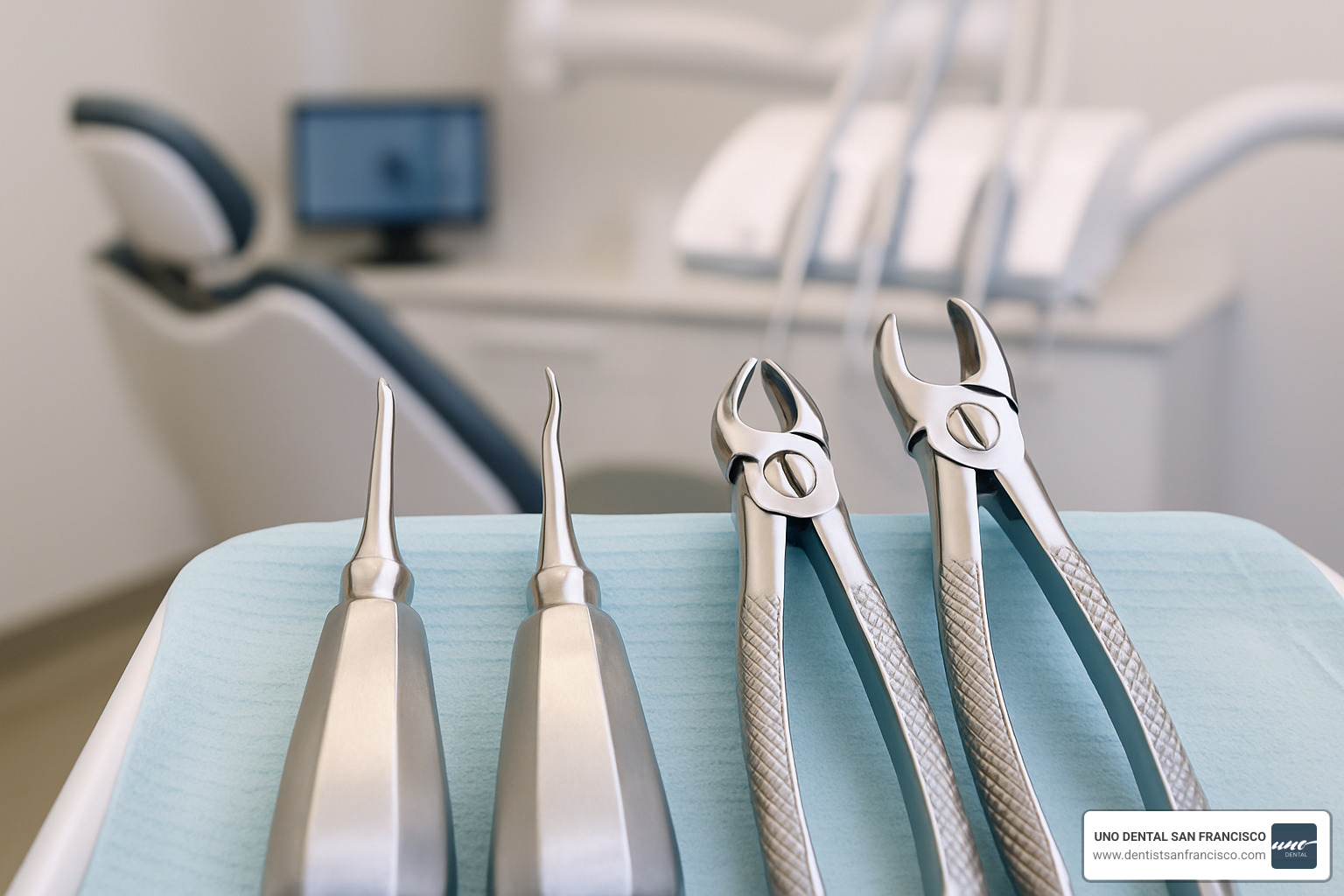
Once you're completely numb, we use special instruments called elevators to gently rock your tooth back and forth. This gradually loosens the tiny fibers that hold your tooth in its socket. You'll feel pressure and movement, but no sharp pain.
When the tooth is loose enough, we switch to forceps - basically very sophisticated pliers designed specifically for teeth. With steady, controlled pressure, the tooth comes out. The whole removal process typically takes just 20-40 minutes, depending on your tooth's complexity.
Cleaning Up and Clot Formation
After your tooth is out, we carefully clean the empty socket to remove any infected tissue or small fragments. A blood clot forms naturally in this space - it's like nature's bandage and absolutely essential for proper healing.
We might place a few stitches if needed, especially for surgical extractions. Don't worry - we use dissolvable sutures that disappear on their own in about a week.
Will It Hurt? Anesthesia & Sedation Explained
Let's be honest - this is probably your biggest concern. The good news? Modern pain management makes tooth extraction surprisingly comfortable for most people.
During the Procedure
With proper anesthesia, you shouldn't feel any sharp or shooting pain during extraction. You will feel pressure, pushing, and movement - imagine someone firmly pressing on your arm. It's noticeable but not painful.
On a scale of 1 to 10, most patients rate the pressure sensations around 2 or 3. If you feel any actual pain, we stop immediately and add more anesthesia.
Extra Comfort for Anxious Patients
If you're nervous about dental work (and who isn't?), we offer several sedation options. Oral sedation involves taking a pill about an hour before your appointment - you'll feel relaxed and drowsy but still conscious.
Nitrous oxide, or "laughing gas," provides gentle relaxation while keeping you fully aware. For complex cases or severe anxiety, IV sedation offers deeper relaxation, though you'll need someone to drive you home afterward.
Managing Infected Teeth
When your tooth is infected, the tissue becomes more acidic, which can make local anesthesia less effective. We solve this problem using nerve block techniques that deliver medication to the main nerve trunk, bypassing the infected area entirely.
How Long Does the Appointment Take?
Most patients are pleasantly surprised by how quickly everything happens. From walking in our door to walking out pain-free, here's your timeline:
Simple extractions of visible teeth with straightforward roots take about 20-30 minutes once we start. Add another 15-20 minutes for X-rays, paperwork, and pre-procedure discussion.
Surgical extractions involving impacted teeth, broken roots, or complex anatomy take 30-60 minutes for the actual removal. These cases might need small incisions in your gums or gentle bone removal to access the tooth.
Your complete visit typically runs 45-90 minutes total, including everything from initial consultation to final post-operative instructions. We never rush - your comfort and safety matter more than speed.
The beauty of same-day extractions is that you arrive in pain and leave feeling dramatically better, all in about the time it takes to watch a movie. For patients asking "can I get a tooth extraction the same day," the answer is usually yes - and faster than you might expect.
Immediate Replacement Options After Extraction
Walking out of the dental office with a gap in your smile isn't something most people want to do. The good news? You don't have to. Modern dentistry offers several ways to replace your tooth immediately after extraction, so you can maintain your confidence and function right away.
Same-day dental implants represent the gold standard for immediate tooth replacement. If you're a good candidate, we can place a titanium implant directly into your fresh extraction socket and often attach a temporary crown the same day. This "immediate loading" technique preserves the bone and gum tissue that would otherwise shrink after tooth loss, while giving you back your smile instantly.
Immediate dentures offer another excellent option, especially for patients having multiple teeth removed. These pre-made prosthetics can be placed right after your extractions, protecting the healing sites while maintaining your facial support. Think of them as a protective bandage that also happens to give you teeth.
Temporary bridges work well in certain situations where we can modify existing dental work or create interim solutions that span the extraction site. While these aren't permanent fixes, they keep you comfortable and confident during the healing period.
Bone grafting becomes important when immediate implant placement isn't possible. We place special bone material in your extraction socket to maintain the bone volume needed for future implant placement. It's like preparing the foundation for a house you'll build later.
| Treatment Option | Same-Day Availability | Healing Time | Long-term Success |
|---|---|---|---|
| Immediate Implant | Yes (if qualified) | 3-6 months | 95%+ success rate |
| Immediate Denture | Yes | 4-8 weeks adjustment | Good with proper care |
| Temporary Bridge | Sometimes | 2-4 weeks | Interim solution only |
| Bone Graft Only | Yes | 4-6 months | Prepares for future implant |
Same-Day Implants: Benefits & Risks
Immediate implant placement after extraction sounds almost too good to be true - but for the right patients, it's an amazing option that combines two procedures into one efficient treatment.
The biggest advantage is bone preservation. When you lose a tooth, the surrounding bone starts shrinking within weeks. By placing an implant immediately, we maintain that bone structure and keep your facial support intact. You also save months of treatment time since we're combining extraction and implant placement into a single appointment.
Aesthetically, immediate implants are fantastic because we can often place a temporary crown right away. No one needs to know you had dental work done. You walk in with a problem tooth and leave with a new implant and crown - it's pretty remarkable when you think about it.
Scientific research on osseointegration shows that immediate implants can be just as successful as traditional delayed placement when we select the right patients. The key is having adequate bone thickness around the extraction site and healthy gums without active infection.
Not everyone qualifies, though. We need sufficient bone density to stabilize the implant, and you'll need to be a non-smoker or willing to quit during healing. Any active infection or uncontrolled health conditions like diabetes can compromise the success of immediate implants.
The main risks include slightly less initial stability compared to delayed placement and potential aesthetic challenges as your gums heal and remodel. There's also a small increase in failure rates compared to waiting for complete healing before implant placement, but the convenience often outweighs this minimal risk increase.
Can I Leave With Teeth? Same-Day Dentures
Absolutely! Same-day dentures let you keep your smile intact even when having multiple teeth extracted. It's one of the most confidence-preserving treatments we offer, especially for patients facing full-mouth extractions.
Planning ahead makes this possible. We'll take impressions about 2-4 weeks before your extraction appointment, giving our dental laboratory time to create dentures that fit your mouth perfectly. When extraction day arrives, your new dentures are ready to go in immediately.
These dentures actually help your healing by protecting the extraction sites from food debris and providing gentle pressure that helps control bleeding. Think of them as functional bandages that also restore your appearance.
The adjustment period requires patience. Your gums will change shape as they heal, so you'll need several adjustment appointments over the first 6-8 weeks. Most patients need 3-5 visits to fine-tune the fit, but this is completely normal and expected.
Eating will be different initially. You'll start with soft foods and gradually work your way back to your regular diet as healing progresses. The temporary limitations are worth it for the confidence of having teeth throughout your recovery.
Cost considerations include additional laboratory fees and more frequent appointments compared to conventional dentures made after healing. However, most patients tell us the ability to maintain their social and professional lives without interruption makes the investment worthwhile.
At UNO DENTAL SAN FRANCISCO, we understand that "can I get a tooth extraction the same day" often comes with concerns about leaving with gaps in your smile. Our comprehensive approach means we can discuss all your immediate replacement options during your consultation, ensuring you feel confident about your treatment plan from start to finish.
Preparing for & Recovering From Your Same-Day Extraction
Getting ready for your same-day extraction doesn't have to be stressful. Think of it like preparing for any minor procedure - a little planning goes a long way toward ensuring your comfort and smooth healing.
Before your appointment, there are a few simple steps that make a big difference. If we're planning to use sedation, you'll need to avoid eating for 2-3 hours beforehand. This isn't because we're trying to make you hangry - it's a safety measure that prevents nausea during the procedure. Bring along a complete list of your current medications and supplements, including those "harmless" vitamins that might actually affect bleeding or healing.
Here's something many patients forget: arrange for someone to drive you home if any form of sedation is involved. Even mild sedation can affect your reflexes and judgment for several hours. Wear comfortable, loose-fitting clothes and leave the fancy jewelry at home - you want to focus on healing, not worrying about accessories.
Setting up your recovery space at home is like creating a healing sanctuary. Stock up on soft, comforting foods like yogurt, soup, ice cream, and smoothies. Your jaw will thank you for avoiding anything that requires serious chewing for the first few days. Have ice packs ready in your freezer, and prepare a comfortable resting area with extra pillows so you can keep your head liftd while sleeping.
The immediate hours after your extraction are crucial for proper healing. Bite firmly on the gauze we provide for 30-45 minutes - this steady pressure helps form the blood clot that's essential for healing. Apply ice packs for 15 minutes on, then 15 minutes off during the first 6 hours. This rhythm helps control swelling without over-chilling the tissue.
Here's where willpower comes in: avoid smoking, drinking through straws, and vigorous rinsing for 24 hours. These activities can dislodge the blood clot and lead to a painful condition called dry socket. Trust us, it's worth resisting that smoothie-through-a-straw temptation.
For comprehensive information about our dental services and same-day care options, visit More info about dental services.
Post-Op Day-By-Day Timeline
Knowing what to expect each day after your extraction helps you feel confident about your healing progress and recognize when things are going exactly as planned.
Day 1 is all about clot formation. Within 2-4 hours, a protective blood clot forms in the extraction socket like nature's own bandage. Some light oozing is completely normal - you're not turning into a vampire movie extra. Stick to cold, soft foods and rest with your head liftd. Think of this as your officially sanctioned excuse to binge-watch your favorite shows while eating ice cream.
Days 2-3 bring peak swelling, and you might look like you're storing nuts for winter on one side of your face. This is totally normal and expected, not a sign that something's wrong. Continue ice therapy and take anti-inflammatory medications as prescribed. Some bruising may appear, especially after surgical extractions, giving you temporary battle scars that prove you survived dental combat.
Days 4-7 mark the improvement phase when you start feeling more like yourself. Pain and swelling should decrease noticeably, and you can gradually introduce slightly firmer foods. Just be gentle with the extraction area - it's still healing. If we placed stitches, they may dissolve on their own or need removal around day 7.
Week 2 brings soft tissue healing completion. The extraction site should feel much more comfortable, and surface healing of the gums is usually finished. You can resume normal eating habits while still showing some TLC to the extraction area.
Weeks 3-4 involve bone remodeling as your body works to fill the extraction socket with new bone. This process continues for several months but shouldn't cause significant discomfort. Complete bone healing takes 3-6 months, though you'll feel back to normal much sooner.
When to Call the Dentist
While most extractions heal beautifully without drama, certain symptoms deserve immediate attention. Can I get a tooth extraction the same day patients often ask about warning signs, so here's what to watch for.
Persistent bleeding that continues heavily after 2-3 hours despite following our pressure instructions needs evaluation. Some light oozing for 24-48 hours is normal, but continuous heavy bleeding isn't part of the typical healing script.
Severe pain that worsens after 48 hours is unusual and may indicate dry socket or infection. While some discomfort is expected, pain should generally improve each day, not get dramatically worse.
Signs of infection include fever above 101°F, increasing swelling after day 3, pus drainage, or a foul taste or odor from the extraction site. Your body's pretty good at fighting off infection, but sometimes it needs backup.
Dry socket symptoms typically appear 3-5 days after extraction and include severe, throbbing pain that radiates to your ear. The extraction site may look empty without its protective blood clot. This condition is uncomfortable but treatable.
Numbness that persists beyond the expected anesthetic duration, especially in your lower lip or tongue, should be reported immediately. While rare, this can indicate nerve involvement that needs prompt attention.
If we placed an immediate implant, any mobility of the temporary crown or unusual pain requires quick evaluation. Implants need to stay perfectly still during the initial healing phase to integrate properly with your bone.
We're always here to help ensure your healing goes smoothly. When in doubt, give us a call - that's what we're here for.
Frequently Asked Questions about Same-Day Extractions
When you're dealing with dental pain or an emergency, practical questions about timing, costs, and logistics become just as important as the medical details. Let's address the most common concerns patients have about same-day extractions.
Can I get a tooth extraction the same day during a weekend emergency?
Absolutely - dental emergencies have terrible timing, and they definitely don't respect weekends or holidays. Can I get a tooth extraction the same day even when it's Saturday night or Sunday morning? The answer is yes, though your options may be more limited than during regular business hours.
Many emergency dental clinics, including UNO DENTAL SAN FRANCISCO, maintain protocols specifically for urgent weekend situations. We understand that an abscessed tooth causing excruciating pain at 2 AM on Saturday can't wait until Monday morning for relief.
Weekend emergency extractions follow the exact same clinical standards as weekday procedures. If you're experiencing severe pain, visible swelling from infection, or dental trauma from an accident, we can typically provide same-day extraction relief regardless of when the emergency strikes.
The main difference is that certain complex procedures might need specialist consultation that's only available during business hours. But for straightforward emergency extractions - which make up about 80% of urgent cases - weekend treatment is absolutely possible.
Here's the key: call ahead to confirm the emergency clinic can actually perform extractions. Some urgent care facilities only provide temporary pain relief and antibiotics, while others have full surgical capabilities. Don't waste precious time driving to a clinic that can't solve your problem.
Will my insurance cover an emergency same-day extraction?
Good news - most dental insurance plans recognize that emergency extractions are medically necessary and provide coverage, even when performed on the same day you call for help. Can I get a tooth extraction the same day without breaking the bank? Usually, yes.
Emergency extractions typically fall under basic dental services, which means most plans cover 70-80% of the cost after you meet your deductible. Even better, insurance companies usually waive pre-authorization requirements for true dental emergencies because they understand that waiting could lead to more serious (and expensive) complications.
The coverage picture gets more interesting when you consider replacement options. While the extraction itself is well-covered, same-day implants or immediate dentures often fall under different benefit categories with varying coverage levels. We always recommend calling your insurance provider to understand your specific benefits, but don't let insurance uncertainty delay necessary emergency treatment.
At UNO DENTAL SAN FRANCISCO, we work with most major insurance plans and can provide treatment estimates before beginning any work. We also offer flexible payment options for portions not covered by insurance, because financial stress shouldn't compound the anxiety of a dental emergency.
One important note: out-of-network emergency treatment typically has reduced benefits but is still covered by most plans. Insurance companies recognize that you can't always choose your emergency provider, especially during off-hours or when traveling.
Can I drive myself home after local anesthesia only?
Yes, if you receive only local anesthesia (those lidocaine injections that numb the area), you're perfectly safe to drive yourself home after a same-day extraction. Local anesthetics only affect the treatment area - they don't impair your mental function, coordination, or reaction times the way sedation medications do.
However, there are some practical considerations to keep in mind. The numbness from local anesthesia typically lasts 2-4 hours after your procedure, so you'll want to avoid eating or drinking anything hot until full sensation returns. Nobody wants to accidentally bite their numb lip or burn their tongue on coffee.
When you definitely need someone else to drive:
- Any form of sedation was used (oral anti-anxiety medication, nitrous oxide, or IV sedation)
- Multiple extractions were performed that might cause significant discomfort
- Prescription pain medications were taken at the office that cause drowsiness
- You feel anxious, dizzy, or unwell after the procedure for any reason
Some patients experience what we call a "stress response" after dental procedures - feeling shaky, emotional, or just "off" even when no sedation was used. This is completely normal, and if it happens to you, there's no shame in calling someone for a ride or waiting in our office until you feel more steady.
We always assess each patient individually before they leave our office. If there's any question about your ability to drive safely, we'll be honest about recommending alternative transportation. Your safety is far more important than convenience, and we'd rather have you arrive home safely than risk any problems on the road.
The bottom line: most patients who receive only local anesthesia for same-day extractions drive themselves home without any issues. But listen to your body, and don't hesitate to ask for help if you need it.
Conclusion

When you're lying awake at 3 AM with throbbing tooth pain, wondering "can I get a tooth extraction the same day" becomes more than just a question - it becomes your lifeline to relief. The answer that brings hope is yes, absolutely yes.
Modern emergency dentistry has transformed what's possible when dental crises strike. You don't have to suffer through days or weeks of pain waiting for an appointment. Same-day extractions have become the standard of care for dental emergencies, not the exception.
Think about it - most tooth extractions take just 20-40 minutes to complete. That's less time than your average lunch break, and you walk out pain-free. Compare that to the alternative: days of agony, sleepless nights, and the very real risk of infection spreading to dangerous areas of your face and neck.
The change is immediate and profound. Patients who arrive at our office clutching their jaw in pain leave with smiles of relief. The infected tooth that was poisoning their system is gone. The source of their misery has been eliminated, and their body can finally begin healing.
At UNO DENTAL SAN FRANCISCO, we've witnessed these dramatic turnarounds thousands of times. There's something deeply satisfying about providing such immediate, life-changing relief. Our comprehensive approach under one roof means you don't get shuffled between different offices or specialists when you're already in pain.
Your confidence returns almost instantly. No more avoiding social situations because of dental pain. No more struggling to concentrate at work. No more wondering if that swelling means something serious is happening. The problem is solved, and you can get back to living your life.
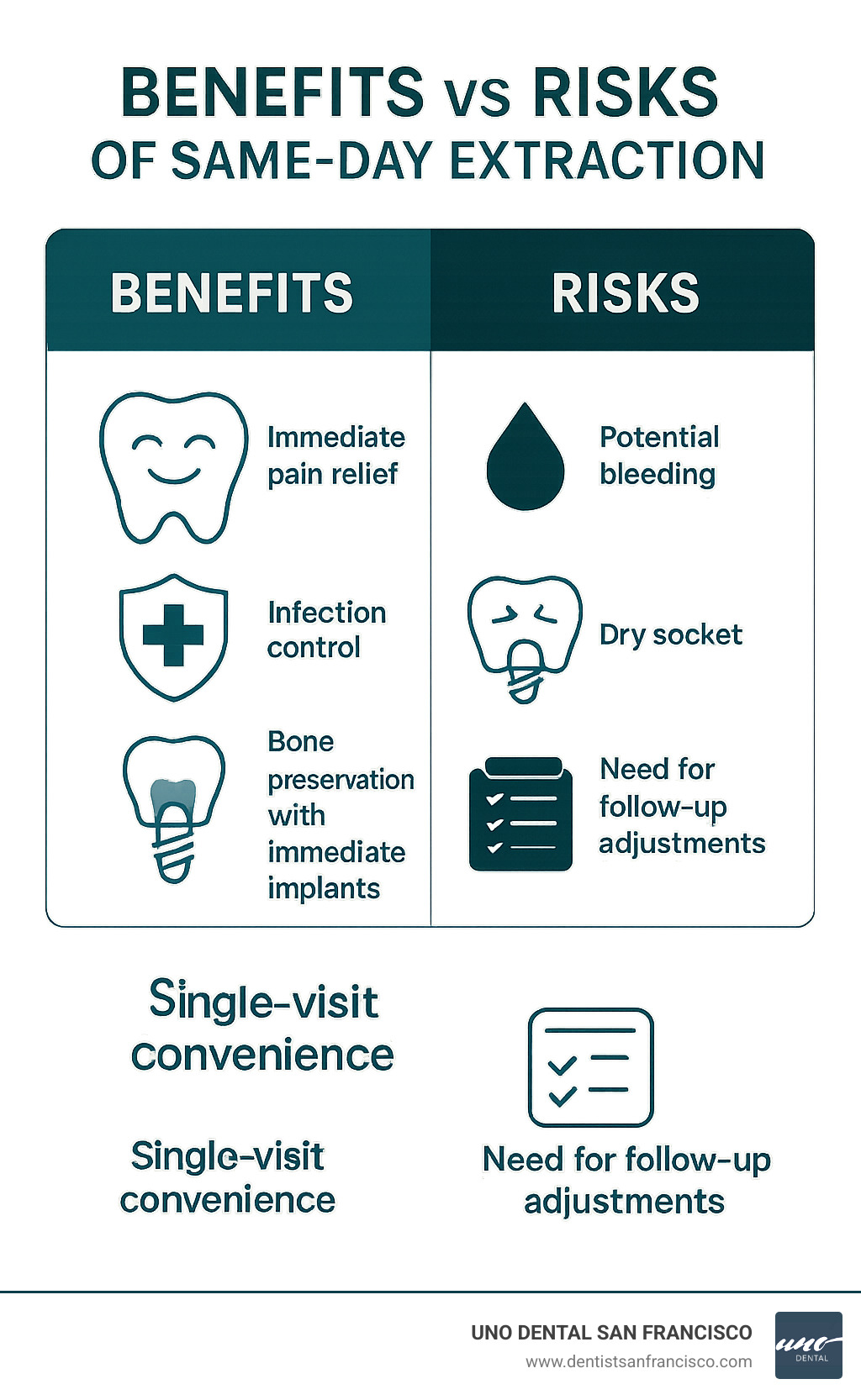
The beauty of same-day extraction lies not just in the immediate relief, but in preventing tomorrow's bigger problems. Every hour you delay treatment for a serious dental infection increases the stakes. What starts as a toothache can become a life-threatening situation if the infection spreads.
We've also revolutionized what happens after extraction. Gone are the days when tooth removal meant months of embarrassing gaps in your smile. Same-day implants and immediate dentures mean you can often leave our office with your smile intact and your confidence restored.
Don't let another night pass in pain. If you're reading this because you're suffering from a dental emergency, help is available right now. Our free virtual smile consultation can quickly assess whether same-day extraction is right for your situation, often within hours of your call.
The technology, techniques, and protocols exist today to solve your dental emergency quickly and safely. The question isn't whether same-day extraction is possible - it's whether you're ready to take that step toward relief.
For more information about our comprehensive dental services and to schedule your consultation, visit More info about booking. Your pain doesn't have to wait for next week's appointment. We're here to help you get your life back today.