
Why Coffee Lovers Need Effective Stain Removal Solutions
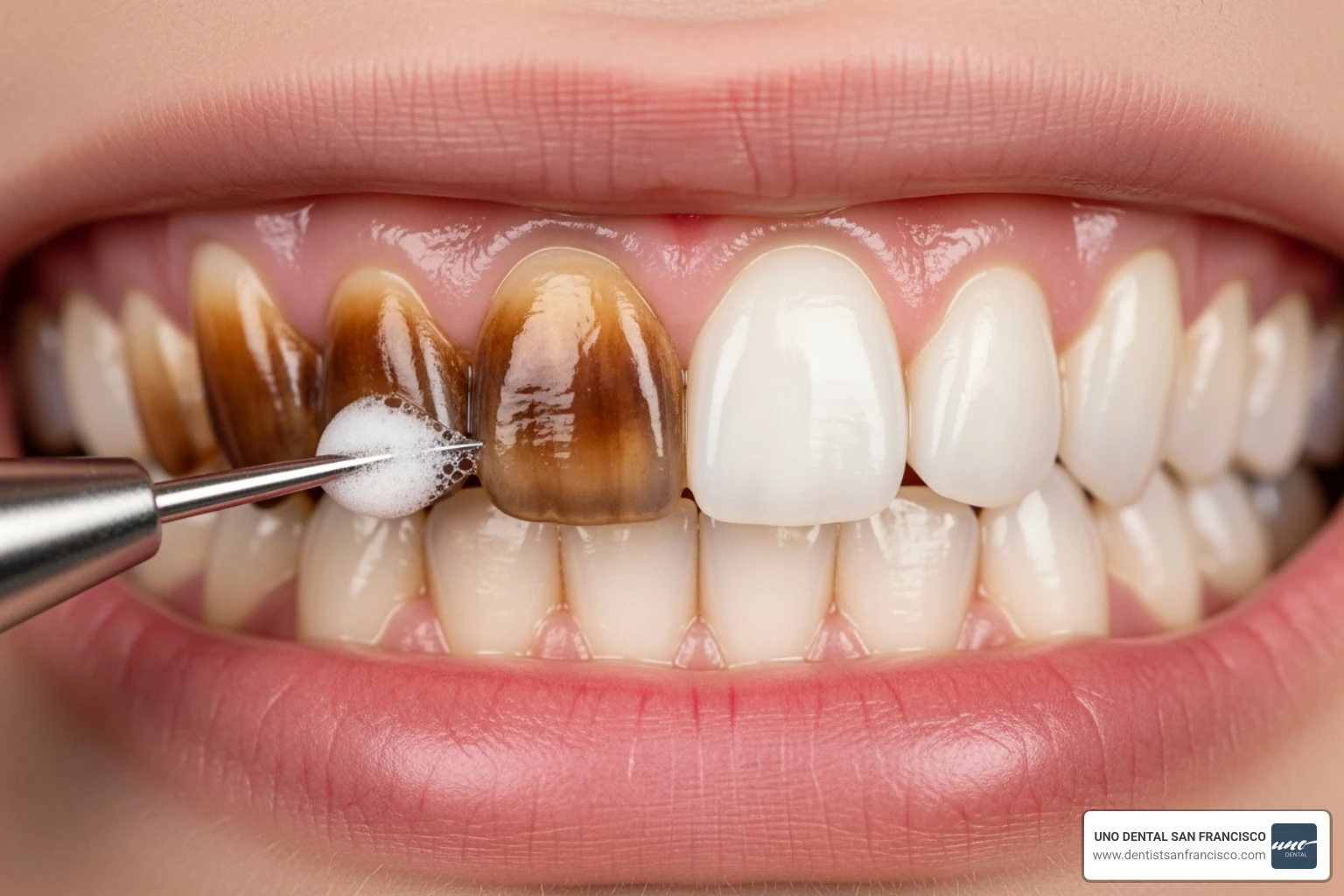
Coffee stain remover for teeth solutions are essential for the millions who love coffee but not the discoloration it leaves behind. While coffee gets you going, it won't make your teeth whiter without the right care.
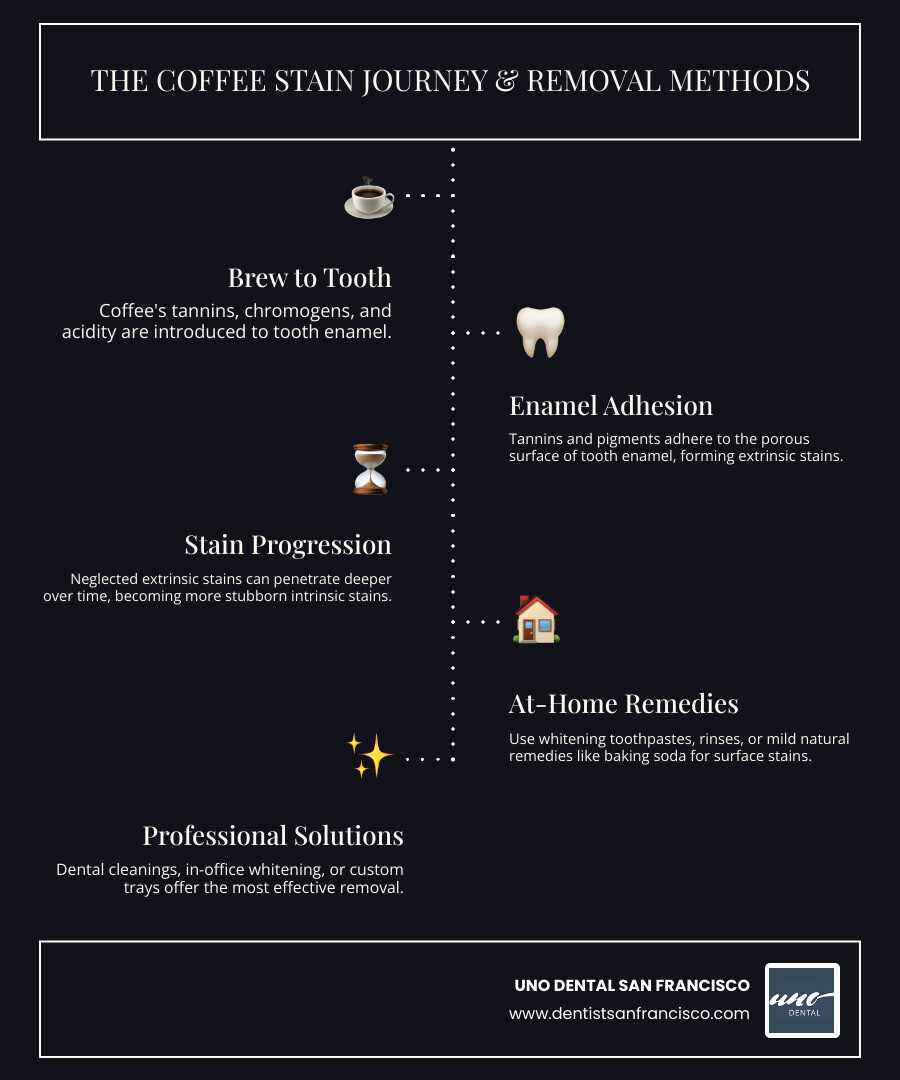
Coffee contains pigments called tannins that stick to the tiny pores in your tooth enamel. The beverage's acidity also weakens enamel, making it easier for stains to set. The good news is that most coffee stains are surface-level (extrinsic) and removable. However, if neglected, they can penetrate deeper, becoming harder to eliminate.
I'm Dr. Mohammad Aghiad Kandar, and with over 15 years in dentistry at UNO DENTAL SAN FRANCISCO, I've helped countless patients find effective coffee stain remover for teeth solutions. My experience shows that a combination of professional guidance and proper at-home care delivers the best, most lasting results.
At UNO DENTAL SAN FRANCISCO, we combine high-tech whitening options with holistic, individualized care. We offer free virtual smile consultations to help you choose the safest, most effective path for removing coffee stains without disrupting your lifestyle. If you are considering professional whitening, explore our options: More info about our teeth whitening services.
Why Your Morning Brew Stains Your Pearly Whites
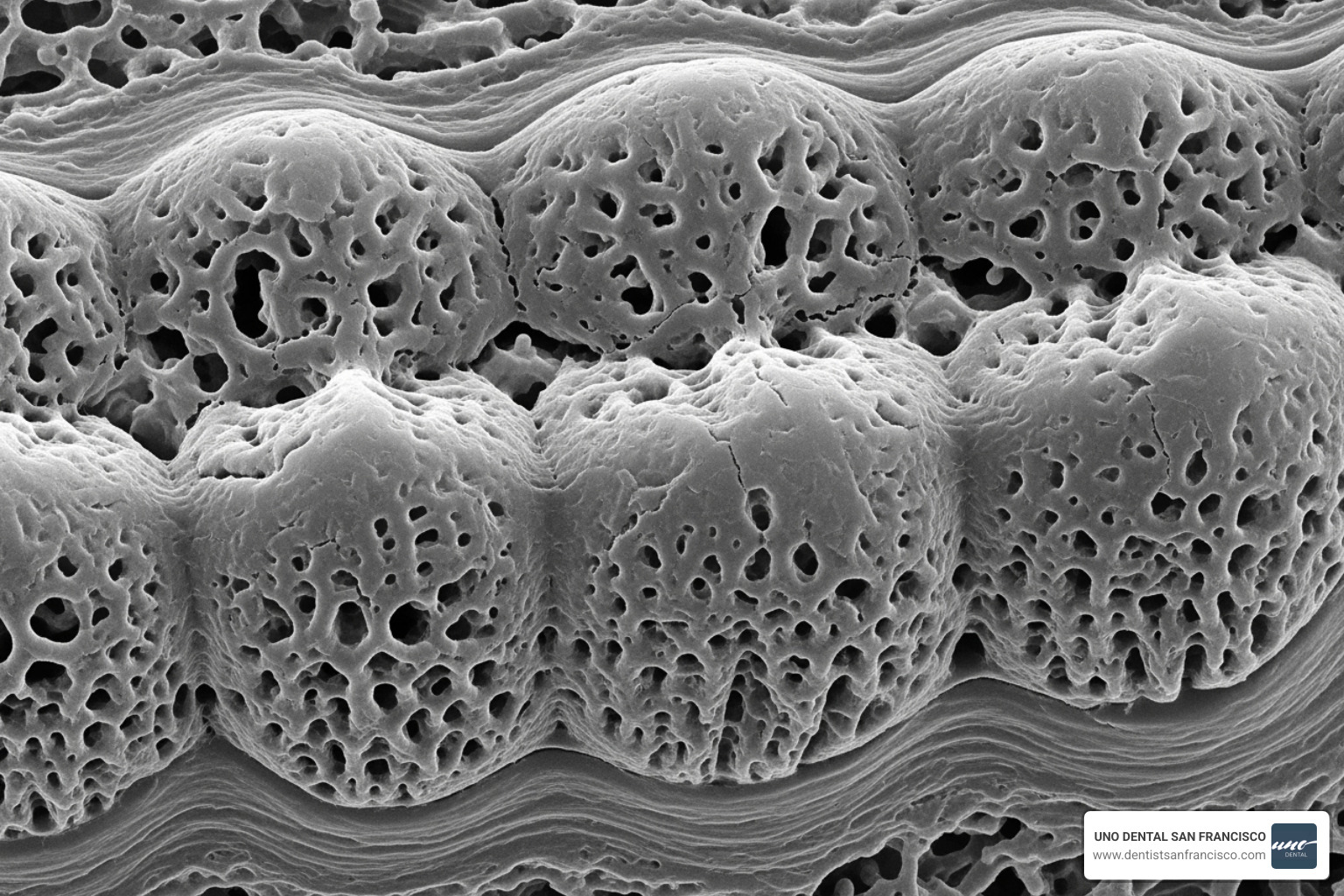
Understanding why coffee stains is the first step to preventing it. Your tooth enamel seems smooth, but it's microscopically porous, with tiny pits that trap staining compounds. Coffee's natural acidity worsens this by temporarily softening the enamel, making it more susceptible to stains.
The Science Behind Coffee Stains
The main culprits are tannins and chromogens. Tannins are natural compounds that help pigments bind to your tooth enamel. Chromogens are the pigment molecules that give coffee its dark color. Together, they create the familiar yellowish-brown discoloration that builds up gradually with each cup.
Extrinsic vs. Intrinsic Stains: What's the Difference?
It's crucial to know what type of stain you're dealing with.
- Extrinsic stains are on the surface of the enamel. They are caused by coffee, tea, and wine and are the easiest to remove with a good coffee stain remover for teeth.
- Intrinsic stains are deeper, originating inside the tooth. They are often caused by medication, trauma, or genetics.
The catch is that neglected extrinsic stains can become intrinsic over time as the pigments seep deeper into the tooth. This makes early intervention key. Darker roasts and longer sipping times can increase staining, as they expose your teeth to more pigments and acid for a longer duration.
Proactive Prevention: How to Keep Coffee Stains at Bay
The best coffee stain remover for teeth is preventing stains before they start. A few simple adjustments to your routine can protect your smile without giving up your daily brew.

Simple Lifestyle Adjustments
- Use a straw: Drinking through a straw helps coffee bypass your front teeth, reducing direct contact and staining.
- Rinse with water: Swishing water in your mouth after drinking coffee washes away staining pigments and neutralizes acid before it can do damage.
- Drink quickly: Sipping coffee over several hours bathes your teeth in staining agents. Drinking it in a shorter period limits this exposure.
The Power of Good Oral Hygiene
A solid oral hygiene routine is your primary defense against stains.
- Wait 30 minutes to brush: Coffee's acidity softens enamel. Brushing immediately can cause erosion. Wait at least 30 minutes for your saliva to neutralize the acid.
- Brush and floss daily: Brushing twice a day removes surface stains, while flossing clears plaque from between teeth where stains can accumulate.
- Use an ADA-approved toothpaste: These products are proven safe and effective for cleaning your teeth. Following good oral hygiene practices is foundational.
Dietary Tricks to Fight Stains
- Add milk to your coffee: The casein protein in milk binds to tannins, preventing them from sticking to your teeth.
- Eat crunchy fruits and veggies: Foods like apples and carrots act as natural toothbrushes, scrubbing away plaque and stimulating cleansing saliva.
- Be mindful of other staining foods: Foods that stain teeth like red wine, dark berries, and soy sauce can also cause discoloration. Rinsing with water after consuming them helps minimize their effect.
If you want guidance custom to your routine, UNO DENTAL SAN FRANCISCO can personalize prevention strategies during a free virtual smile consultation or an in-office visit in San Francisco.
At-Home Coffee Stain Remover for Teeth: DIY and OTC Options
For a coffee stain remover for teeth that you can use at home, there are many over-the-counter (OTC) and DIY options. These methods work best on surface-level (extrinsic) stains. However, caution is advised; statistics show that about one in twenty-five people who use OTC whiteners experience discomfort requiring a dental visit.
The Best At-Home Coffee Stain Remover for Teeth: Whitening Toothpastes and Rinses
Whitening toothpastes are a great first step. They work in two ways:
- Mild abrasives: Ingredients like hydrated silica gently polish the tooth surface to scrub away stains.
- Chemical agents: Peroxides, such as hydrogen peroxide, break down the chemical bonds of stains, lifting discoloration from the enamel. Toothpastes with these ingredients can show results in as little as a week with consistent use.
Whitening mouthwashes can supplement your routine by rinsing away loose particles and providing a mild, gradual whitening effect. These products improve brushing and flossing but don't replace them.
Natural Remedies: Fact vs. Fiction
Many DIY remedies are popular, but their effectiveness and safety vary.
| Remedy | Effectiveness (for extrinsic stains) | Risks | Recommended Frequency |
|---|---|---|---|
| Baking Soda Paste | Mildly Effective: Can remove superficial stains through gentle abrasive action. | Moderate Risk: Overuse can erode enamel and cause sensitivity or gum irritation. | 1-2 times per week maximum. |
| Activated Charcoal | Limited Evidence: May remove some surface stains, but scientific backing is weak. | Higher Risk: Highly abrasive and can damage enamel. Particles can get stuck in dental work. | Use with extreme caution, if at all. |
| Oil Pulling | Minimal Whitening: More beneficial for overall oral health than for significant stain removal. | Low Risk: Generally safe but time-consuming. Won't remove existing deep stains. | Daily if desired for oral health benefits. |
Over-the-Counter Whitening Kits
Whitening strips and gels contain higher concentrations of peroxide than toothpastes for more noticeable results. However, they come with risks:
- Uneven results: One-size-fits-all strips and trays may not conform perfectly to your teeth, leading to patchy whitening.
- Increased sensitivity: The stronger chemicals are more likely to cause temporary tooth and gum sensitivity.
It is crucial to follow the package instructions exactly to minimize risks. If you experience significant sensitivity, stop use and consult a dental professional.
If you are unsure which at-home option fits your needs, UNO DENTAL SAN FRANCISCO can evaluate your stain type, enamel condition, and sensitivity risk, then design a safe, stepwise plan. Start with a free virtual smile consultation or learn about our professional and custom take-home whitening options here: teeth whitening services.
When to See a Professional: The Ultimate Stain Removal Solution
When at-home methods aren't delivering the results you want, professional treatment offers the most effective coffee stain remover for teeth solutions. Professional care provides superior results with greater safety and longer-lasting effects.
Professional Dental Cleanings for Surface Stain Removal
Regular professional cleanings are your first line of defense against stubborn coffee stains. During a cleaning, your dental hygienist uses specialized tools and techniques:
- Scaling: Removes hardened plaque (tartar) that traps stains and can't be removed by brushing alone
- Polishing: Uses professional-grade polishing paste to remove surface stains and smooth the tooth surface
- Air polishing: Some offices use air-powder polishing systems that gently blast away stains with a fine powder stream
These cleanings not only remove fresh extrinsic stains but also create a clean foundation for any additional whitening treatments. Most dental professionals recommend cleanings every six months, though coffee drinkers may benefit from more frequent visits.
Professional Treatments: The Most Effective Coffee Stain Remover for Teeth
In-office whitening delivers the most dramatic results in the shortest time. At UNO DENTAL SAN FRANCISCO, we offer advanced whitening procedures that can lighten teeth by several shades in a single visit:
- High-concentration bleaching agents: Professional treatments use stronger whitening agents than any at-home option, carefully applied to protect your gums
- Light activation technology: Some systems use special lights to accelerate the whitening process
- Immediate results: Most patients see significant improvement in just 60-90 minutes
- Professional monitoring: Your dentist ensures even coverage and monitors for any sensitivity
For example, a popular 90-minute in-office treatment can dramatically brighten your smile. These professional treatments penetrate deeper than surface-level solutions, addressing both extrinsic and some intrinsic staining.
Custom Take-Home Trays: Professional Whitening on Your Schedule
For those who prefer gradual whitening or want to maintain professional results, custom take-home trays offer an excellent middle ground:
- Dentist-made custom trays: Perfectly fitted to your teeth for even gel distribution
- Professional-grade whitening gel: Stronger than OTC products but gentler than in-office treatments
- Reduced gum irritation: Custom fit prevents gel from leaking onto gums
- Flexibility: Whiten on your own schedule, typically wearing trays for 30 minutes to overnight
Custom trays are safer and more effective than one-size-fits-all OTC trays, providing professional results with the convenience of at-home treatment.
At UNO DENTAL SAN FRANCISCO, we combine high-tech whitening options with our holistic, patient-centered approach. We'll evaluate your specific staining patterns, enamel health, and sensitivity concerns to recommend the most appropriate treatment. Learn more about our professional whitening options: teeth whitening services.
Frequently Asked Questions about Coffee Stain Removal
Are coffee stains on teeth permanent?
No, most coffee stains are not permanent. The majority of coffee stains are extrinsic (surface-level) and can be effectively removed with proper oral hygiene, at-home whitening treatments, or professional dental procedures. Even if stains have been neglected and have penetrated deeper into the tooth structure (becoming intrinsic), they can still be treated with professional whitening methods. The key is addressing stains early before they have a chance to set deeply into the enamel.
How long does professional teeth whitening last?
Professional teeth whitening results typically last from several months up to a few years, depending on several factors. The longevity of your results depends heavily on:
- Your dietary habits (continued coffee consumption, red wine, etc.)
- Your oral hygiene routine
- Whether you smoke
- Your natural tooth color and enamel thickness
- Use of maintenance treatments or touch-ups
Many patients at UNO DENTAL SAN FRANCISCO maintain their bright smiles longer by combining professional treatment with good oral hygiene and periodic touch-ups using custom take-home trays.
What are the risks of teeth whitening?
Teeth whitening is generally safe when done properly, but there are some potential side effects to be aware of:
- Temporary tooth sensitivity: The most common side effect, usually lasting a few days after treatment
- Gum irritation: Can occur if whitening gel contacts the gums, more common with ill-fitting OTC products
- Uneven results: May happen with OTC products or if existing dental work doesn't respond to whitening
These risks are significantly minimized under professional supervision at UNO DENTAL SAN FRANCISCO. We carefully evaluate your teeth before treatment, use protective barriers for your gums, and monitor the process to ensure safety and comfort. Professional treatment also allows us to adjust the concentration and application time based on your individual response.
Conclusion: Reclaim Your Bright, Confident Smile
Finding the right coffee stain remover for teeth doesn't mean choosing between your daily brew and a bright smile. With the comprehensive strategies we've covered - from simple prevention techniques to professional treatments - you can continue enjoying your coffee while maintaining teeth you're proud to show off.
The journey to a whiter smile starts with understanding why coffee stains occur and implementing smart prevention strategies. Simple adjustments like using a straw, rinsing with water, and maintaining excellent oral hygiene can significantly reduce staining. For existing stains, you have multiple options ranging from whitening toothpastes and natural remedies to professional treatments that deliver dramatic results.
While at-home methods can be effective for mild surface stains, professional treatment remains the gold standard for the most effective and safest results. Professional whitening not only addresses deeper stains but also provides longer-lasting results under expert supervision, minimizing the risk of sensitivity or damage to your teeth.
At UNO DENTAL SAN FRANCISCO, we understand that every smile is unique. Our holistic approach combines cutting-edge whitening technology with personalized care, ensuring you receive the treatment that's right for your specific needs, lifestyle, and goals. We're committed to helping you achieve the bright, confident smile you deserve without compromising your coffee enjoyment.
Ready to transform your coffee-stained smile? Take the first step toward brighter teeth with a free virtual smile consultation. Our team will assess your specific situation and recommend the most effective path forward, whether that's preventive guidance, at-home solutions, or professional whitening treatments.
Don't let coffee stains dim your confidence any longer. Schedule your consultation today and find how UNO DENTAL SAN FRANCISCO can help you achieve and maintain the brilliant smile you've always wanted: Schedule your teeth whitening consultation today.
At-Home Coffee Stain Remover for Teeth: DIY and OTC Options
For a coffee stain remover for teeth that you can use at home, there are many over-the-counter (OTC) and DIY options. These methods work best on surface-level (extrinsic) stains. However, caution is advised; statistics show that about one in twenty-five people who use OTC whiteners experience discomfort requiring a dental visit.
The Best At-Home Coffee Stain Remover for Teeth: Whitening Toothpastes and Rinses
Whitening toothpastes are a great first step. They work in two ways:
- Mild abrasives: Ingredients like hydrated silica gently polish the tooth surface to scrub away stains.
- Chemical agents: Peroxides, such as hydrogen peroxide, break down the chemical bonds of stains, lifting discoloration from the enamel. Toothpastes with these ingredients can show results in as little as a week with consistent use.
Whitening mouthwashes can supplement your routine by rinsing away loose particles and providing a mild, gradual whitening effect. These products improve brushing and flossing but don't replace them.
Natural Remedies: Fact vs. Fiction
Many DIY remedies are popular, but their effectiveness and safety vary.
| Remedy | Effectiveness (for extrinsic stains) | Risks | Recommended Frequency |
|---|---|---|---|
| Baking Soda Paste | Mildly Effective: Can remove superficial stains through gentle abrasive action. | Moderate Risk: Overuse can erode enamel and cause sensitivity or gum irritation. | 1-2 times per week maximum. |
| Activated Charcoal | Limited Evidence: May remove some surface stains, but scientific backing is weak. | Higher Risk: Highly abrasive and can damage enamel. Particles can get stuck in dental work. | Use with extreme caution, if at all. |
| Oil Pulling | Minimal Whitening: More beneficial for overall oral health than for significant stain removal. | Low Risk: Generally safe but time-consuming. Won't remove existing deep stains. | Daily if desired for oral health benefits. |
Over-the-Counter Whitening Kits
Whitening strips and gels contain higher concentrations of peroxide than toothpastes for more noticeable results. However, they come with risks:
- Uneven results: One-size-fits-all strips and trays may not conform perfectly to your teeth, leading to patchy whitening.
- Increased sensitivity: The stronger chemicals are more likely to cause temporary tooth and gum sensitivity.
It is crucial to follow the package instructions exactly to minimize risks. If you experience significant sensitivity, stop use and consult a dental professional.
For clearer, longer-lasting results with fewer surprises, UNO DENTAL SAN FRANCISCO can guide you on when to use OTC options and when to transition to professional whitening. Get started with a free virtual smile consultation or explore our offerings: teeth whitening services.