

Why Dental Insurance for Seniors Is More Important Than Ever
Dental insurance for seniors is a critical but often overlooked part of retirement planning. Here's what you need to know:
Quick Answer: Your Main Coverage Options
- Medicare Advantage (Part C) Plans - Bundles dental, vision, and hearing with your medical coverage through private insurers
- Standalone Dental Insurance - Separate policies you purchase to supplement Original Medicare
- Dental Discount Plans - Membership programs offering reduced rates instead of traditional insurance
- In-House Membership Plans - Direct payment arrangements with your dental practice
The Reality: 65% of Medicare beneficiaries lack dental coverage, and 19% spend more than $1,000 out-of-pocket each year on dental care. Original Medicare (Parts A and B) covers almost no routine dental services—no cleanings, fillings, crowns, or dentures.
This gap comes at a critical time. About two-thirds of adults aged 65 or older have gum disease, and more than a quarter have untreated tooth decay. Poor oral health isn't just about your teeth—it's linked to serious conditions like diabetes, heart disease, and Alzheimer's.
The good news? You have options. This guide will walk you through each one in plain language, so you can choose coverage that actually fits your needs and budget.
As Dr. Mohammad Aghiad Kandar at UNO DENTAL SAN FRANCISCO, I've spent over 15 years helping patients steer the complexities of dental insurance for seniors, from understanding Medicare limitations to finding affordable alternatives that provide comprehensive care. I've seen how the right coverage can transform a senior's quality of life and prevent costly emergency treatments down the road.
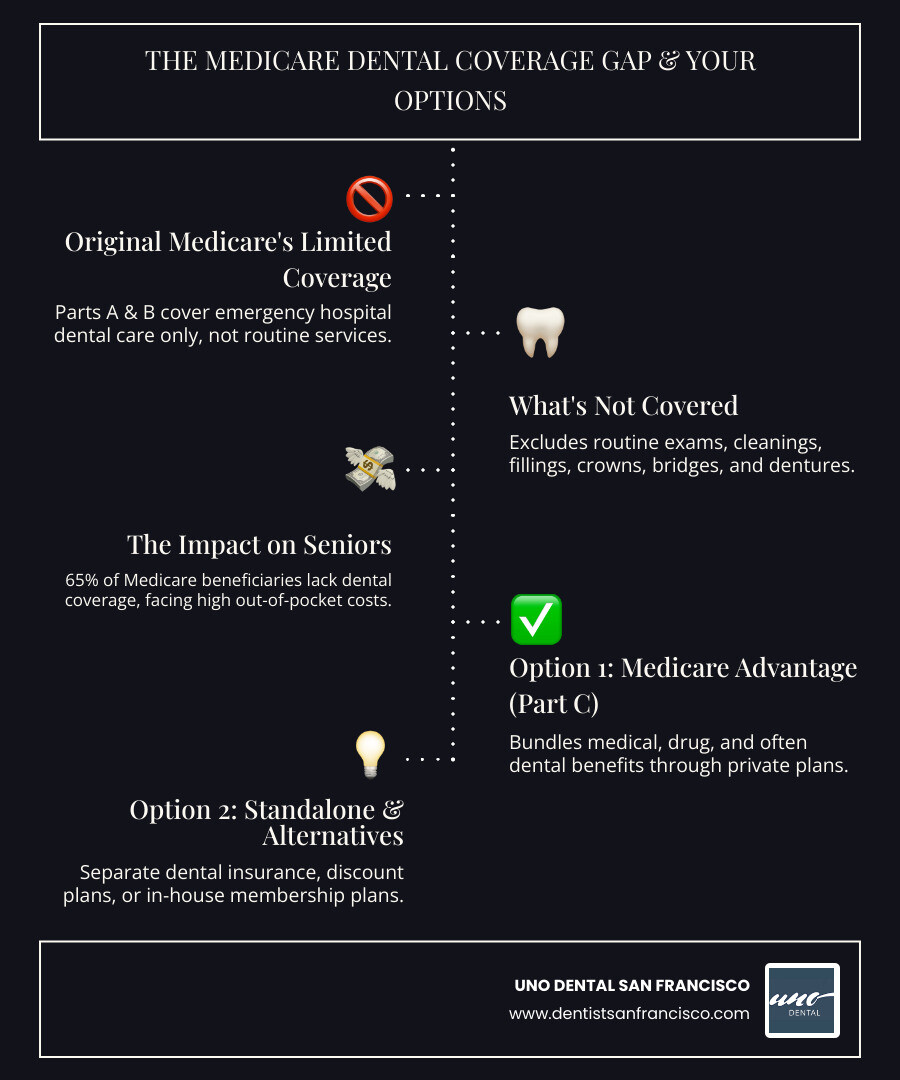
The Medicare and Dental Coverage Gap
Many seniors automatically qualify for Medicare, the federal health insurance program for people aged 65 or older, younger individuals with disabilities, and those with End-Stage Renal Disease. Medicare is divided into different parts, with Original Medicare consisting of Part A (Hospital Insurance) and Part B (Medical Insurance). Part A primarily covers inpatient hospital stays, skilled nursing facility care, hospice care, and some home health services. Part B covers doctor's services, outpatient care, medical supplies, and preventive services.
However, a crucial point for seniors to understand is what Original Medicare does not cover. Unfortunately, routine dental care falls squarely into this gap. Original Medicare (Parts A and B) does not include coverage for essential dental services like dental exams, cleanings, fillings, crowns, bridges, plates, or dentures. This means that for the vast majority of your dental needs, Original Medicare offers no financial assistance.
There are very limited exceptions. Medicare might cover certain dental services if they are medically necessary as part of a covered medical procedure. For instance, if you need a dental exam before a heart valve replacement or an organ transplant, Medicare might cover that specific exam. However, this is far from comprehensive dental coverage. For more details on these limited scenarios, you can refer to the official Medicare guide on Dental services covered by Medicare.
The financial risk of this coverage gap for seniors is significant. With 65% of Medicare beneficiaries lacking any form of dental coverage, many are left to pay for dental care entirely out-of-pocket. This can lead to substantial expenses, with 19% of Medicare beneficiaries spending more than $1,000 on out-of-pocket dental care in a single year. These costs often deter seniors from seeking necessary dental treatment, leading to a concerning statistic: more than 1 in every 4 seniors have not visited their dentist in the last five years. This can have serious repercussions for both oral and overall health, which we'll explore further below.
Navigating Your Primary Dental Coverage Options
Given the significant limitations of Original Medicare, we understand that finding adequate dental insurance for seniors becomes a top priority. Fortunately, you have clear paths to securing the coverage you need. Essentially, there are two main routes for primary dental coverage, whether you're looking for bundled benefits or a standalone plan.

It's also worth noting that many of these options, especially standalone plans, offer the flexibility to add vision and hearing coverage, creating a more comprehensive health benefits package custom to the needs of seniors.
Option 1: Medicare Advantage (Part C) Plans
Medicare Advantage Plans, sometimes called "Part C" or "MA Plans," are offered by Medicare-approved private companies. If you choose a Medicare Advantage Plan, it essentially replaces your Original Medicare (Parts A and B) and must cover all the services that Original Medicare covers. However, the real appeal for many seniors is that these plans often offer additional benefits that Original Medicare doesn't.
A significant benefit of Medicare Advantage plans is their ability to bundle various coverages. Many MA plans include health, prescription drug (Part D), vision, hearing, and dental benefits all in one package. This all-in-one approach can simplify your healthcare management and potentially lead to lower overall costs. Some Medicare Advantage plans even boast $0 monthly premiums, though you still need to pay your Part B premium. Even with a $0 premium MA plan, there will likely be premiums, deductibles, copays, or coinsurance specific to the dental benefits.
While convenient, Medicare Advantage plans often come with network restrictions. Many operate as Health Maintenance Organizations (HMOs) or Preferred Provider Organizations (PPOs), meaning you might need to choose dentists within the plan's network for maximum coverage, or get referrals for specialists.
Option 2: Standalone Dental Insurance Plans
Standalone dental insurance plans are separate policies that you purchase directly from private insurers. These plans are designed to complement Original Medicare by filling the dental coverage gap. They are an excellent choice for seniors who want to keep their Original Medicare or who find that Medicare Advantage plans in their area don't offer the comprehensive dental benefits they need.
Standalone plans typically come in a few forms:
- PPO (Preferred Provider Organization) Plans: These plans offer flexibility. You can usually choose any licensed dentist, but you'll pay less if you visit a dentist within the plan's network. We at UNO DENTAL SAN FRANCISCO are in-network preferred providers for many major PPO plans. We also accept a wide range of other PPO plans as out-of-network providers, meaning you have choices and can often maximize your benefits with us.
- DHMO (Dental Health Maintenance Organization) Plans: These plans typically have lower monthly premiums and predictable copayments for services. However, they require you to choose a primary care dentist within the plan's network, and you'll need a referral to see a specialist. It's worth noting that we do not accept HMO plans at UNO DENTAL.
The choice between a PPO and DHMO plan often comes down to flexibility versus cost predictability. PPO plans offer more choice in dentists but may have higher out-of-pocket costs if you go out-of-network. DHMO plans offer lower, fixed costs but with stricter network requirements.
To help you visualize the differences, here's a quick comparison:
| Feature | Medicare Advantage Dental Benefits | Standalone Dental Insurance Plans |
|---|---|---|
| Integration | Bundled with medical, drug, vision, and hearing coverage | Purchased separately; complements Original Medicare |
| Premiums | Often integrated into MA plan premium; some MA plans have $0 premium, but dental benefits may have separate costs | Separate monthly premium for dental coverage |
| Networks | Often restricted to specific networks (HMO, PPO) | PPO plans offer more flexibility; DHMO plans are network-restricted |
| Annual Maximums | Typically lower annual maximums | Generally offer higher annual maximums |
| Flexibility | Less flexibility in choosing dentists, particularly with HMOs | PPO plans offer greater choice; DHMO plans are more restrictive |
| Scope of Coverage | Often focused on preventive; limited basic/major coverage | Can offer comprehensive coverage for preventive, basic, and major services |
What's Covered? A Look at Typical Dental Services
Understanding what your dental insurance actually covers is key to making an informed decision. Most dental plans categorize services into tiers, often following a 100-80-50 structure:
- Preventive Care: Typically covered at 100%. This includes routine exams, cleanings, and X-rays.
- Basic Services: Often covered at 80%. This tier usually includes fillings, simple extractions, and sometimes root canals.
- Major Services: Usually covered at 50%. This can include crowns, bridges, dentures, and oral surgery.
Coverage in Medicare Advantage Plans
Dental coverage in Medicare Advantage plans can vary significantly from plan to plan. Generally, MA dental benefits tend to focus heavily on preventive services. This means you can typically expect coverage for:
- Routine dental exams
- X-rays
- Professional cleanings
While some MA plans may offer limited coverage for basic or even major services, it's often with higher cost-sharing (copays or coinsurance) and lower annual coverage limits. For example, a plan might cover only a small percentage of a filling or a partial denture, and you might quickly reach your annual maximum benefit. This means that if you anticipate needing more than just preventive care, you'll need to scrutinize the plan's details carefully.
Coverage in Standalone Dental Plans
Standalone dental plans generally offer more comprehensive coverage than what's typically found in Medicare Advantage plans. These plans are specifically designed to address a wider range of dental needs, often providing:
- Higher annual maximums, allowing for more extensive treatment over the year.
- Lower deductibles for major work, making costly procedures more affordable.
- Coverage for crowns, bridges, root canals, and dentures, which are common needs for seniors.
- Some plans may even cover more complex procedures like implants.
For those considering significant dental work, standalone plans can provide better financial protection. We understand that even with good insurance, there can be out-of-pocket expenses. At UNO DENTAL SAN FRANCISCO, we want to ensure you have clear options for managing these costs. You can find More info about our financing options on our website.
What About Braces and Cosmetic Procedures?
When it comes to specialized treatments, coverage can get a bit trickier. Orthodontic coverage for adults, including braces, is often limited or comes with specific conditions, such as significant waiting periods (e.g., 12 months) before coverage kicks in. This is an important consideration if you or a loved one are looking into adult orthodontics. For more information on navigating coverage for alignment treatments, you can explore our guide on Dental Plan for Braces.
Cosmetic dentistry, which includes procedures like veneers and teeth whitening, is typically considered elective and is often excluded from standard dental insurance plans. While some premium standalone plans might offer partial coverage for certain cosmetic procedures, it's not the norm. If cosmetic improvements are a priority for you, it’s crucial to review plan details closely or discuss alternative financing options with us. To learn more about what might be covered, consult our Cosmetic Dental Insurance Complete Guide.
Understanding the Costs and Key Factors of Dental Insurance for Seniors
Navigating the costs of dental insurance for seniors involves understanding several key financial terms. It’s also about evaluating the true value of a plan against your individual needs, rather than just looking at the lowest premium. We know that managing out-of-pocket expenses is a major concern, especially when we consider that 19% of Medicare beneficiaries spent over $1,000 on dental care in a year. This highlights the importance of choosing a plan that genuinely helps mitigate these costs. For a deeper dive into the financial landscape for seniors, you can read more at Drilling Down on Dental Coverage and Costs for Medicare Beneficiaries.

Common Costs: Premiums, Deductibles, and Copays
When considering dental insurance for seniors, you'll encounter these common cost terms:
- Monthly Premiums: This is the regular fee you pay to keep your insurance policy active, regardless of whether you use any dental services.
- Annual Deductible: This is the amount you must pay out-of-pocket for covered services before your insurance plan starts to pay. For example, if your deductible is $50, you pay the first $50 of your dental costs, and then your insurance kicks in. Many plans waive the deductible for preventive services like cleanings.
- Coinsurance Percentages: After you've met your deductible, coinsurance is the percentage of the cost for covered services that you are responsible for. If your plan covers basic services at 80%, and the cost is $100 after your deductible, you pay $20 (20% coinsurance), and the plan pays $80.
- Copayments for Services: Some plans, especially DHMOs, use fixed copayments. This means you pay a set dollar amount for each specific service (e.g., $15 for a cleaning, $50 for a filling), and the plan covers the rest.
- Annual Maximum Benefit Limit: This is the maximum dollar amount your dental insurance plan will pay for covered dental care within a benefit period, usually a calendar year. Once you reach this maximum (e.g., $1,000 or $2,000), you are responsible for all further costs until the next benefit period. This is a critical factor for seniors, who often require more extensive and costly treatments.
Key considerations when choosing dental insurance for seniors
Choosing the right dental insurance for seniors requires careful thought. Here are crucial factors we advise our patients to consider:
- Current Dental Health: If you anticipate needing major work soon (e.g., crowns, dentures, implants), look for plans with higher annual maximums and lower waiting periods for major services.
- Anticipated Future Needs: Seniors often face a higher risk of gum disease, tooth decay, and tooth loss. Consider plans that offer good coverage for restorative procedures like root canals, bridges, and dentures.
- Dentist Network: Check if your preferred dentist, like us at UNO DENTAL SAN FRANCISCO, is in-network with the plans you're considering. We are in-network preferred providers for many major PPO plans and also accept a wide range of other PPO plans as out-of-network providers, meaning we can submit claims for you. We do not accept HMO plans.
- Annual Maximums vs. Premiums: A low premium might seem attractive, but if the annual maximum is too low, you could quickly pay a significant amount out-of-pocket. Balance the monthly cost with the potential coverage you'll receive.
- Waiting Periods: Many plans have waiting periods (e.g., 6 months for basic services, 12 months for major services) before certain benefits become active. This can be a deal-breaker if you need immediate care. However, some providers may waive waiting periods if you can provide proof of prior continuous dental coverage (e.g., no more than a 63-day break).
How dental insurance for seniors differs from other plans
Dental insurance for seniors often has unique characteristics compared to plans for younger individuals:
- Focus on Restorative Care: While preventive care is essential at any age, senior plans often place a greater emphasis on coverage for restorative procedures due to the increased prevalence of issues like tooth decay and gum disease.
- Coverage for Dentures and Implants: With more than 10% of people between 65 and 74 having lost all their teeth, and that number increasing to nearly a quarter for those over 75, coverage for dentures, bridges, and dental implants becomes a more prominent feature in senior-focused plans.
- Higher Prevalence of Pre-existing Conditions: Seniors may have a longer dental history, which can sometimes influence waiting periods or specific coverage limitations.
- Potential for No Waiting Periods with Proof of Prior Coverage: As mentioned, some plans are designed to accommodate seniors transitioning from employer-sponsored plans by waiving waiting periods if they can demonstrate continuous coverage.
The Critical Link Between Oral Health and Overall Wellness
The risks of not having dental insurance for seniors extend far beyond just your mouth. Poor oral health in older adults is not merely a cosmetic or comfort issue; it's intricately linked to overall systemic health, and neglecting it can lead to serious consequences.
Consider these statistics:
- 1 in 5 adults over 65 have untreated tooth decay. More than a quarter of people aged 65 or older have untreated tooth decay.
- About 2 in 3 adults aged 65 or older have gum disease. About two-thirds of people 65 and older have some form of gum disease, which is often the leading cause of tooth loss in seniors.
- More than 10% of people between 65 and 74 have lost all their teeth.
These issues are not isolated. For comprehensive information on this topic, refer to the CDC's insights on Oral health in older adults.
The connection between oral health and overall health is profound. Oral health conditions like gum disease are linked to major health issues such as diabetes, heart disease, and Alzheimer’s. Chronic inflammation from gum disease can affect blood sugar control in people with diabetes, increase the risk of cardiovascular events, and has even been associated with cognitive decline. Furthermore, poor oral hygiene can lead to aspiration pneumonia, particularly in frail seniors, as bacteria from the mouth can be inhaled into the lungs.

This is why preventive care is so incredibly important for seniors. Regular dental exams and cleanings can help catch problems early, prevent the progression of gum disease, and maintain good oral hygiene, which in turn supports your overall well-being. At UNO DENTAL SAN FRANCISCO, we emphasize this holistic approach to care, understanding that a healthy mouth contributes to a healthy body and a higher quality of life.
Are There Alternatives to Traditional Insurance?
We understand that traditional dental insurance for seniors isn't always the perfect fit for everyone. High premiums coupled with low annual maximums can sometimes make the numbers not add up, especially if you rarely need extensive work. As some dental professionals point out, "patients may be better off paying out-of-pocket or using an in-office dental plan rather than traditional dental insurance."
If you find that traditional insurance isn't the right solution for you, several alternatives can still help you manage dental costs:
- Dental Discount Plans: These are not insurance but rather membership programs where you pay an annual fee and in return receive reduced rates on dental services from participating dentists. You pay the dentist directly at the discounted rate.
- In-House Membership Plans: Many dental practices, including UNO DENTAL SAN FRANCISCO, offer our own in-house dental membership plans. These plans are designed to make quality dental care accessible and affordable for our uninsured patients. Our plans typically cover preventive care (exams, cleanings, X-rays) at 100% and offer significant discounts on other procedures, without the hassle of deductibles, annual maximums, or waiting periods. This can be a straightforward and cost-effective solution for many seniors in San Francisco.
- Paying Directly for Care: For some, especially those who only need occasional preventive care, paying directly out-of-pocket might be the most economical option. You can also use Health Savings Accounts (HSAs) or Flexible Spending Accounts (FSAs) to pay for dental expenses with pre-tax dollars.
- Making Dental Care Affordable: Alternatives to Dental Insurance: This resource provides more details on various ways to make dental care affordable.

Conclusion
Navigating dental insurance for seniors can seem daunting, but as we've explored, you have several viable options to ensure your oral health remains a priority. We've seen that Original Medicare leaves a significant gap in routine dental coverage, making supplemental options essential. Whether you choose the bundled convenience of a Medicare Advantage plan, the comprehensive benefits of a standalone dental plan, or an alternative like a dental discount or an in-house membership plan, the key is to be proactive.
Maintaining excellent oral health is not just about a bright smile; it's fundamentally linked to your overall wellness and quality of life in your senior years. At UNO DENTAL SAN FRANCISCO, we are committed to providing patient-centered solutions, offering high-tech, holistic care, and individualized treatments. We encourage you to take control of your dental care and costs. Our team is always here to help you understand your options and find the best fit for your needs.
Don't let the complexities of insurance deter you from getting the dental care you deserve. We invite you to explore our simple and affordable in-house option: Explore our simple and affordable Dental Savings Plan.