
Understanding Impacted Wisdom Teeth: Causes, Symptoms, and Risks
Experiencing pain in the back of your jaw? It could be an impacted wisdom tooth. Impacted wisdom tooth surgery is a common procedure to remove third molars that are trapped in the jawbone and unable to erupt properly. This surgery prevents a host of potential oral health problems.
At UNO DENTAL SAN FRANCISCO, Dr. Mohammad Aghiad Kandar and our team specialize in advanced procedures like impacted wisdom tooth surgery. With over 15 years of experience and training from UCSF, we provide patient-focused care to ensure your comfort and optimal results. The process generally involves diagnosis with X-rays, anesthesia for comfort, surgical extraction of the tooth, and a one-to-two-week recovery period.

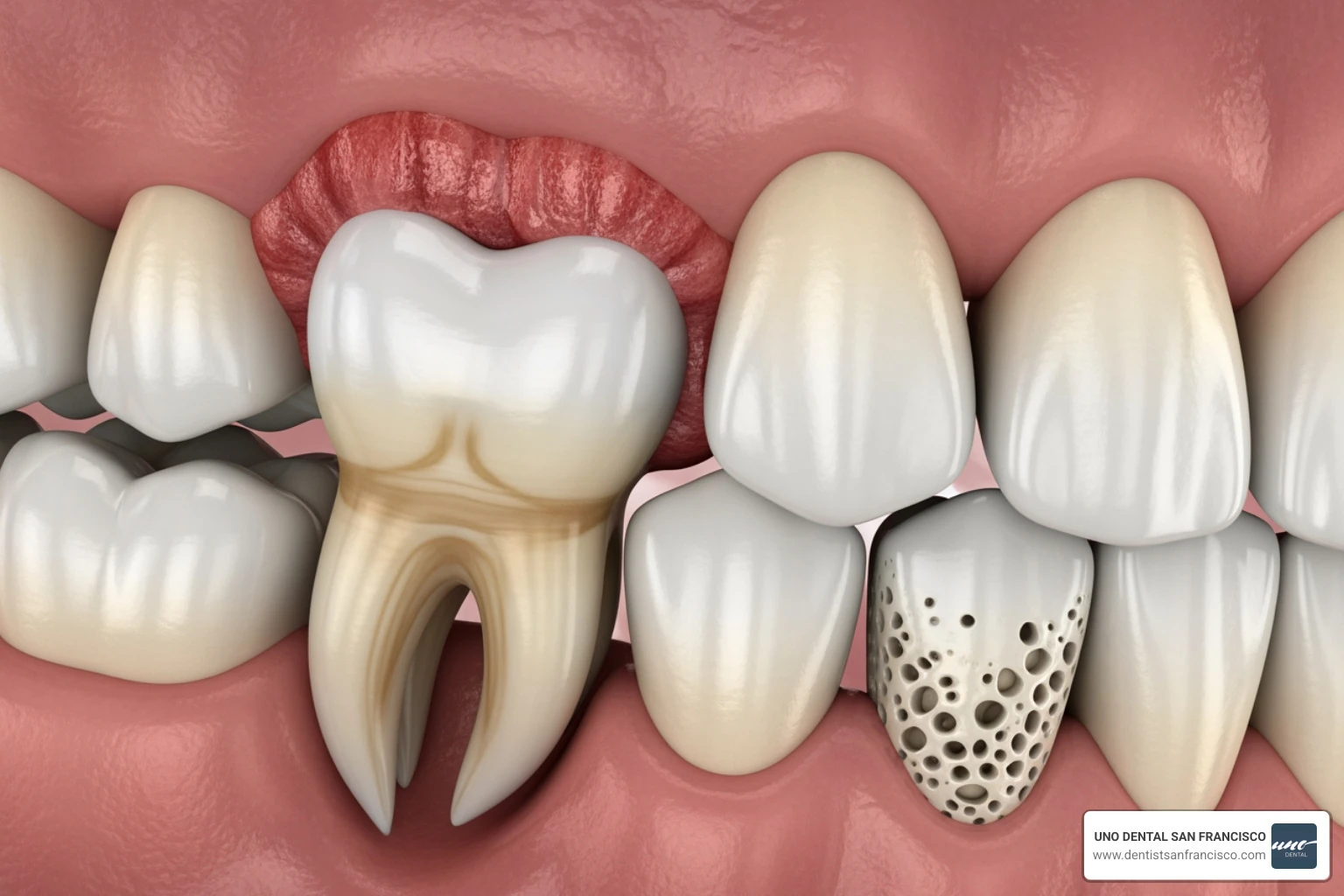
Wisdom teeth, or third molars, are the last to emerge, typically between ages 17 and 25. Impaction occurs when there isn't enough room for them, a common issue affecting up to 90% of people. This is often due to modern jaws being smaller than our ancestors'. A tooth can be fully trapped in bone (bony impaction) or partially erupted through the gums (partial impaction), making it hard to clean. They can also be angled forward (mesial), backward (distal), or even sideways (horizontal). Our team at UNO DENTAL SAN FRANCISCO uses this understanding, along with our general dentistry services, to provide thorough evaluations.

Common Symptoms and Potential Risks
While some impacted teeth are asymptomatic, many cause noticeable problems. If you experience any of the following, it's time to seek professional help:
- Pain, swelling, or redness in the jaw and gums
- Bleeding gums, especially when brushing
- Bad breath or an unpleasant taste
- Difficulty opening your mouth or chewing
- Headaches or radiating facial pain
Ignoring these symptoms can be risky. An impacted tooth can lead to serious complications, including:
- Infection (Pericoronitis): Bacteria trapped under a gum flap can cause painful, recurrent infections.
- Damage to Adjacent Teeth: The impacted tooth can push against the next molar, causing decay, gum disease, or root damage.
- Cysts or Tumors: Though less common, a fluid-filled sac can form around the tooth, damaging the jawbone and nearby teeth.
- Crowding: Pressure from an impacted tooth may contribute to the misalignment of other teeth.
If you're experiencing persistent pain, it's important to know when to see an emergency dentist. Proactively addressing an impacted wisdom tooth is a key part of preventive dentistry that safeguards your long-term oral health.
This article has been clinically reviewed for accuracy by Dr. Mohammad Aghiad Kandar, DDS, UNO DENTAL SAN FRANCISCO.
The Path to Relief: Diagnosis and Treatment Options
At UNO DENTAL SAN FRANCISCO, we begin with a thorough diagnosis to understand your unique situation. A comprehensive dental examination, combined with advanced 3D scanning and X-rays, allows us to see the precise position, angle, and condition of your impacted wisdom teeth. This imaging is crucial for assessing their proximity to vital nerves, which helps us plan the safest, most effective treatment.
This detailed evaluation is a core part of our comprehensive dental checkup. Based on these findings, your symptoms, and your overall health, we'll create an individualized treatment plan that prioritizes your long-term well-being.
Non-Surgical Management
Not every impacted wisdom tooth requires immediate removal. If your teeth are asymptomatic and not causing problems, we may recommend a watchful waiting approach. This involves monitoring them with regular check-ups and X-rays to catch any issues early. For minor irritation from a partially erupted tooth, improved oral hygiene, medicated rinses, and over-the-counter pain relievers can help manage symptoms. These methods don't resolve the impaction but can delay the need for surgery.
Surgical Treatment: When Extraction is Necessary
Surgical extraction is often the best solution, especially when impacted teeth are causing problems or are likely to in the future. We typically recommend impacted wisdom tooth surgery in these cases:
- Persistent Symptoms: You're experiencing ongoing pain, swelling, infection, or difficulty opening your mouth.
- Evidence of Disease: Our imaging reveals decay, gum disease, cysts, or damage to adjacent teeth, even without symptoms.
- Preventive Removal: For younger adults (late teens to early twenties), removing impacted teeth can be simpler, with a faster recovery and fewer complications. This prophylactic approach prevents future pain and damage.
- Orthodontic Needs: Removal may be necessary to create space for orthodontic treatment and prevent future crowding.
Every decision is made with you, after a thorough evaluation and a clear conversation about your options. Learn more about our approach to tooth extraction procedures and how we ensure patient comfort and safety.
Your Guide to Impacted Wisdom Tooth Surgery
At UNO DENTAL SAN FRANCISCO, our experienced oral surgeons perform impacted wisdom tooth surgery with precision and care. This outpatient procedure is often the best solution for complex impactions. While the duration varies based on complexity, our use of advanced technology ensures the process is as efficient and comfortable as possible. You can learn more about our specialized oral surgery services and our commitment to patient comfort.

Anesthesia Options for a Comfortable Experience
Your comfort is our priority. We offer several anesthesia options to ensure a pain-free and relaxed experience, which we will discuss with you to determine the best fit for your needs and anxiety level.
- Local Anesthesia: Numbing medication is injected at the site. You remain awake but feel no pain.
- Nitrous Oxide (Laughing Gas): Inhaled gas helps you relax during the procedure while remaining conscious.
- IV Sedation: A sedative administered through an IV puts you in a drowsy, sleep-like state. You'll have little to no memory of the surgery.
- General Anesthesia: For complex cases or high anxiety, you will be completely unconscious.
Our team is skilled in managing dental anxiety. Explore our complete guide to sedation dentistry to see how we can help you feel at ease.
What to Expect During the Surgery
Once you are comfortable and numb, the surgeon will:
- Make a small gum incision to access the tooth.
- Remove any bone that is blocking the tooth's path.
- Section the tooth into smaller, more manageable pieces if necessary for easier removal.
- Gently extract the tooth pieces and thoroughly clean the socket.
- Close the site with stitches (sutures), which often dissolve on their own, and place gauze to control bleeding.
Potential Risks of Surgery
While impacted wisdom tooth surgery is a common and safe procedure, all surgeries have potential risks. Our team minimizes these through careful planning and advanced techniques. We will discuss these with you in detail, but they can include:
- Dry Socket: The most common complication, where the blood clot in the socket is dislodged, causing pain.
- Infection: Minimized with sterile techniques and sometimes antibiotics.
- Nerve Damage: A rare risk of temporary or permanent numbness in the lip, chin, or tongue, as nerves are close to lower wisdom teeth.
- Sinus Issues: An opening into the sinus cavity can occur with upper wisdom teeth, which usually heals on its own.
Other extremely rare risks include jaw fracture or damage to adjacent teeth.
Recovery and Aftercare: Ensuring a Smooth Heal
Your recovery after impacted wisdom tooth surgery is our priority at UNO DENTAL SAN FRANCISCO. Healing typically takes one to two weeks. Expect some pain, swelling, and bruising, which usually peaks around the third day and then gradually improves. Jaw stiffness is also normal. Following our post-operative instructions is the key to a smooth, comfortable recovery.

Post-Operative Care Instructions
Following our aftercare advice is crucial for preventing complications like dry socket. Here are the key do's and don'ts:
- Bleeding: Bite gently on gauze for 30-60 minutes after surgery to control bleeding. Light oozing for 24 hours is normal.
- Pain Management: Take prescribed pain medication as directed. Over-the-counter options like ibuprofen can also help. Find more pain relief tooth extraction tips on our site.
- Swelling: Apply an ice pack to your cheek for 20-minute intervals during the first 24-48 hours to reduce swelling.
- Rest: Plan to rest for at least 24 hours. Avoid strenuous activity for about a week to allow your body to heal.
- Oral Hygiene: Do not brush, rinse, or spit for the first 24 hours. After that, you can gently rinse with warm salt water after meals. Brush other teeth carefully, avoiding the surgical site.
- What to Avoid: Do NOT use straws, smoke, or use tobacco for at least 72 hours, as this can dislodge the blood clot and cause a painful dry socket. Also avoid alcohol for at least 5 days.
For a complete guide, please refer to our tooth extraction aftercare instructions.
Your Post-Surgery Diet
Eating the right foods protects the surgical site. For the first few days, stick to a soft-food diet.
- Recommended Foods: Eat lukewarm or cold soft foods like applesauce, yogurt, pudding, smoothies (no straw!), mashed potatoes, and blended soups.
- Foods to Avoid: Stay away from anything hard, crunchy, chewy, spicy, or acidic. Avoid small seeds or grains that could get stuck in the socket. Do not eat hot foods for the first 24 hours.
- Hydration: Drink plenty of water. Avoid alcohol, caffeine, and carbonated drinks for the first 24-48 hours.
As you feel better, you can gradually reintroduce firmer foods. Listen to your body and avoid anything that causes discomfort.
Frequently Asked Questions about Impacted Wisdom Tooth Surgery
Facing impacted wisdom tooth surgery can bring up many questions. At UNO DENTAL SAN FRANCISCO, we believe in providing clear, honest answers. Here are some of the most common questions we hear.
How much does impacted wisdom tooth surgery cost?
The cost of impacted wisdom tooth removal varies based on the complexity of the impaction, the number of teeth being removed, and the type of anesthesia used. Nationally, the cost can range from $281 to $702 per tooth. IV sedation or general anesthesia will increase the total cost compared to local anesthesia.
At UNO DENTAL SAN FRANCISCO, we provide a detailed, personalized cost estimate during your consultation and work with insurance providers to maximize your benefits. For more local pricing information, see our guide on how much wisdom tooth extraction costs in San Francisco.
Is the surgery painful?
No, the surgery itself is not painful. Thanks to effective anesthesia, you will not feel any pain during the procedure. Afterward, some discomfort, swelling, and soreness are normal parts of healing. This post-operative pain is manageable with prescribed medication and over-the-counter pain relievers. Pain typically peaks around day three or four and then subsides. Following our aftercare instructions is the best way to minimize discomfort. You can find more pain relief tooth extraction tips on our blog.
Can I prevent my wisdom teeth from becoming impacted?
Unfortunately, you cannot prevent impaction. It is determined by genetics and the size of your jaw—factors that are out of your control. However, you can prevent the complications associated with impacted wisdom teeth. Excellent oral hygiene can reduce the risk of infection and decay around a partially erupted tooth.
Most importantly, regular dental check-ups allow for early detection. At UNO DENTAL SAN FRANCISCO, we monitor your wisdom teeth with X-rays, allowing us to intervene before problems become severe. This preventive management is key to long-term oral health. We encourage you to schedule your next dental checkup to keep your smile healthy.
Your Next Steps for a Healthier Smile in San Francisco
Understanding impacted wisdom tooth surgery is the first step toward relief. At UNO DENTAL SAN FRANCISCO, we believe informed patients make the best decisions for their oral health. Taking timely action can prevent significant pain and more complex problems, ensuring your smile stays healthy for years to come.
If you're experiencing symptoms or suspect you have impacted wisdom teeth, your next step is a professional evaluation. Our team uses a high-tech, holistic approach, creating individualized treatment plans that consider your complete well-being. Your comfort and health are our top priorities, from the initial consultation through your full recovery.
Don't let wisdom tooth pain disrupt your life. We are here to provide comprehensive, compassionate care in the heart of San Francisco. Let us guide you toward lasting relief and a healthier smile.
Ready to take control of your oral health? Schedule your oral surgery consultation in San Francisco today to discuss your options and start your path to comfort.