

Why Comparing Tooth Extraction Bay Area Options Matters Before You Commit
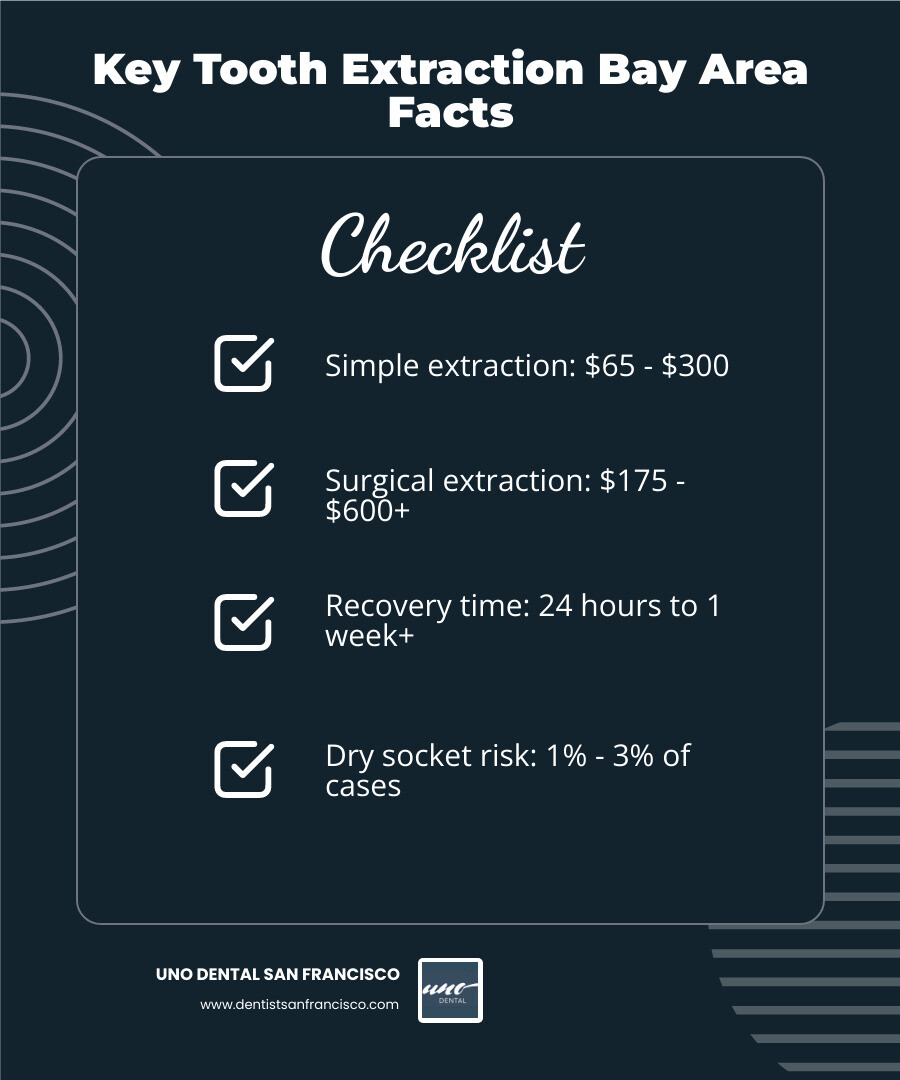
If you're looking for a quick overview of tooth extraction in the Bay Area, here's what you need to know:
| Factor | Key Details |
|---|---|
| Simple extraction cost | $65 - $300 |
| Surgical extraction cost | $175 - $600+ |
| Minimum out-of-pocket (with insurance) | ~$100 |
| Recovery time | 24 hours to 1 week+ |
| Dry socket risk | 1% - 3% of cases |
| Common providers | General dentists, oral surgeons |
Tooth extraction Bay Area patients face a real challenge: costs vary widely, providers range from general dentists to board-certified oral surgeons, and not every office handles complex cases. The decision feels heavy — and it should. Even a routine extraction is still a surgical procedure.
Whether you're dealing with a painful wisdom tooth, severe decay, or crowding ahead of orthodontic treatment, knowing your options upfront saves you time, money, and stress. This guide breaks it all down clearly, so you can make a confident choice.
I'm Dr. Mohammad Kandar, DDS, practicing at UNO DENTAL SAN FRANCISCO, with over 15 years of clinical experience helping Bay Area patients navigate tooth extraction procedures with comfort and confidence. My background in sedation dentistry and personalized treatment planning means I understand exactly what patients need when facing a tooth extraction Bay Area decision.
For readers who want a broader overview of when extraction may be necessary, the National Institute of Dental and Craniofacial Research offers reliable general dental health information.
Simple guide to tooth extraction Bay Area:
- Wisdom Tooth Extraction Cost in San Francisco
- Painless Wisdom Tooth Removal
- Pain Relief Tooth Extraction Tips
Understanding Tooth Extraction Bay Area Procedures

At UNO DENTAL, we believe the best tooth is your natural tooth. We do everything in our power to save your smile through conservative treatments. However, there are moments when keeping a tooth does more harm than good. A tooth extraction Bay Area procedure becomes necessary when a tooth is so damaged or positioned so poorly that it threatens your overall oral health.
We typically categorize extractions into two main types:
- Simple Extractions: These are performed on teeth that are visible in the mouth. We use local anesthesia to numb the area, then gently loosen the tooth with an instrument called an elevator before removing it with forceps.
- Surgical Extractions: These are for teeth that aren't easily accessible -- perhaps they've broken off at the gum line or haven't fully erupted (like many wisdom teeth). This involves a small incision in the gum and sometimes removing a tiny bit of bone to reach the tooth.
Why might you need one? The most common reasons we see in our San Francisco practice include:
- Severe Decay: When a cavity is so large that a filling or crown can't fix it.
- Impacted Teeth: Usually wisdom teeth that are stuck under the bone or gums.
- Advanced Gum Disease: When periodontal disease destroys the bone supporting the tooth.
- Orthodontic Crowding: Sometimes we need to make room for your other teeth to align perfectly.
- Trauma: A badly fractured tooth that cannot be bonded or capped.
If you are experiencing pain, you might be wondering if you can get help today. Learn more about tooth extraction services and how we prioritize your comfort. Our team is dedicated to providing clear clinical guidance on why an extraction may be the best choice for your long-term health.
Step-by-Step: What to Expect During Your Tooth Extraction Bay Area Visit
We know the word "extraction" can trigger a bit of anxiety. Our goal is to make the process as boring as possible -- in a good way! Here is how a typical visit at UNO DENTAL unfolds:
- The Numbing Phase: We start by applying a topical gel, followed by local anesthesia. You'll feel a slight pinch, and then... nothing. We wait until you are completely numb before we even pick up a tool.
- Sedation Options: If you're feeling extra nervous, we offer various sedation for tooth removal to help you drift through the appointment.
- The Loosening: You might feel some pressure, but you shouldn't feel pain. We use specialized tools to gently expand the socket and loosen the tooth.
- The Removal: Once loose, the tooth is removed.
- Socket Cleaning and Gauze: We clean the area to ensure no debris remains and place a gauze pack to help a healthy blood clot form.
Holistic and Minimally Invasive Techniques
Modern dentistry has come a long way. At UNO DENTAL, we use high-tech tools like digital X-rays and 3D imaging to plan the most minimally invasive path possible. This isn't just about the extraction; it's about what happens next.
We often recommend socket preservation or bone grafting at the time of extraction. Why? Because as soon as a tooth is gone, the jawbone starts to shrink. By placing a small amount of bone grafting material into the empty socket, we keep the bone strong and healthy. This is crucial if you plan on getting a dental implant later. Explore holistic extraction options to see how we protect your long-term facial structure.
The Cost of Tooth Extraction in the Bay Area
Let's talk numbers. The Bay Area is known for its high cost of living, and dental care is no exception. However, understanding the price range helps you budget effectively.
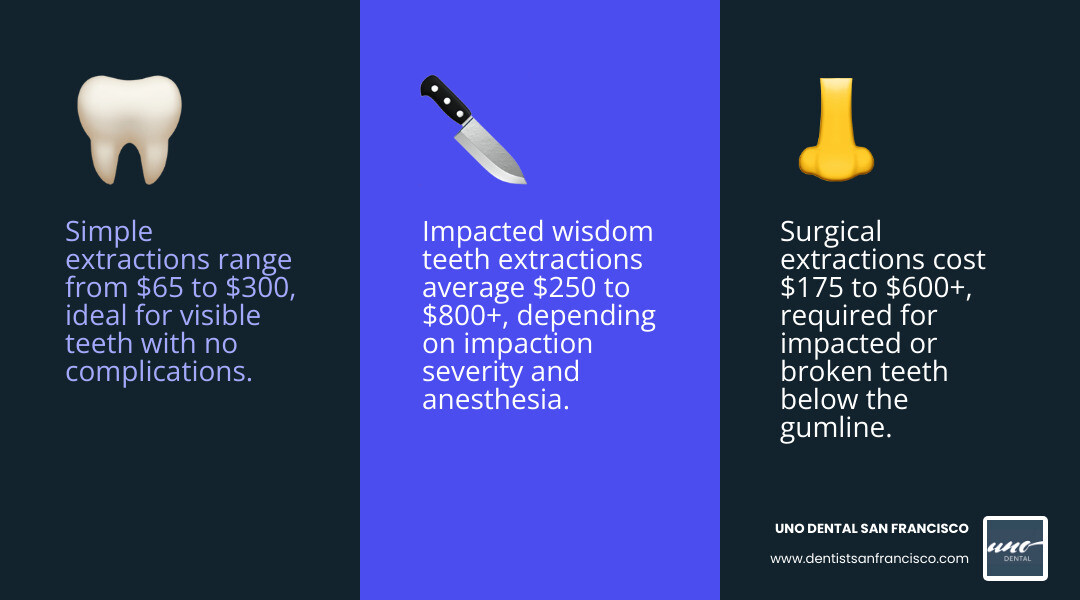
| Extraction Type | Estimated Cost Range (Bay Area) |
|---|---|
| Simple Extraction | $65 - $300 |
| Surgical Extraction | $175 - $600+ |
| Wisdom Tooth (Impacted) | $250 - $800+ |
Dental Insurance and Out-of-Pocket Expenses Most dental insurance plans cover a significant portion of extractions, often between 50% and 80%, because they are considered "basic" or "major" restorative services. Even with great insurance, expect to pay at least $100 out-of-pocket for the procedure and associated fees like X-rays or exams.
If you don't have insurance, don't panic. Many offices, including ours, offer financing options. You can also find more information on extractions without insurance to help navigate the financial side. We work closely with you to ensure that even complex surgical needs are handled with the highest level of expertise right here in the San Francisco area.
Factors Influencing Your Investment
Why is one tooth $100 and another $500? Several factors play into the final bill:
- Tooth Location: Back molars are harder to reach and often have more roots than front teeth.
- Complexity: Is the tooth erupted or buried under bone? Is it broken into pieces?
- Anesthesia Type: Local anesthesia is the most affordable. If you opt for IV sedation or general anesthesia, the cost will increase significantly.
- Urgency: Emergency or same-day appointments may carry additional fees.
Curious about the specifics of third molars? How much does wisdom tooth removal cost? provides a deeper dive into those specific numbers.
Wisdom Teeth and Complex Surgical Extractions
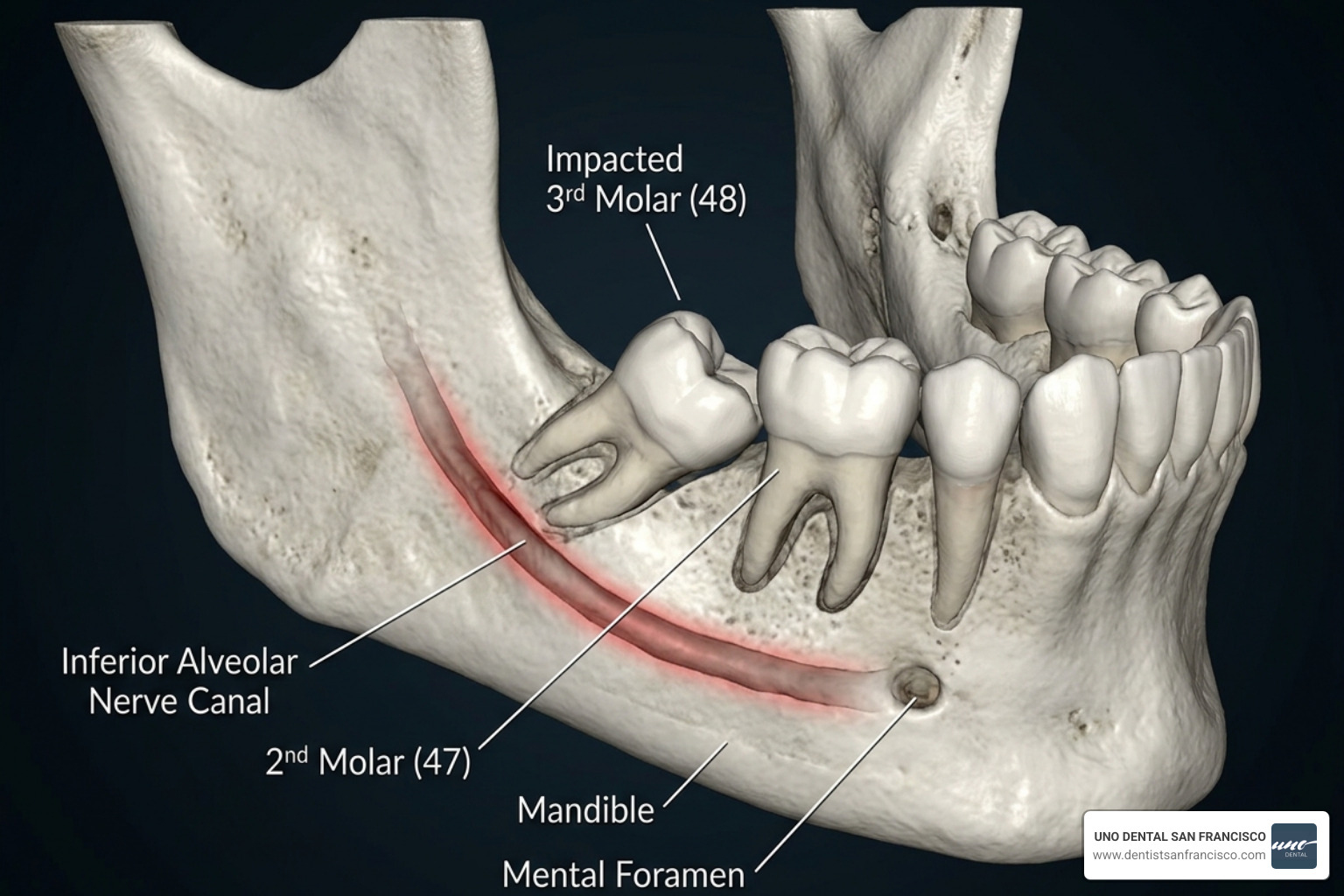
Wisdom teeth, or "third molars," are the late bloomers of the dental world, usually appearing between ages 17 and 25. Because our jaws have evolved to be smaller, these teeth often don't have enough room to grow.
When they get stuck, we call them impacted. Impacted wisdom teeth can lead to:
- Pericoronitis: A painful infection of the gum tissue around the tooth.
- Cysts: Fluid-filled sacs that can damage the jawbone and roots of nearby teeth.
- Crowding: Pushing your other teeth out of alignment.
We use 3D CBCT scans to see exactly where the roots are in relation to your nerves. This high-tech approach minimizes risk and ensures a smoother surgery. For a comprehensive look, check out our guide to wisdom teeth removal in SF to understand how we manage even the most complex cases with precision and care.
Painless Wisdom Tooth Removal Options
"Painless" isn't just a marketing buzzword; it's our standard. For complex surgical cases, we offer several ways to ensure you don't feel a thing:
- IV Sedation: You'll be in a "twilight" state -- deeply relaxed and unlikely to remember the procedure.
- Oral Conscious Sedation: A pill taken before the appointment to take the edge off.
- Nitrous Oxide: "Laughing gas" to help you feel calm and euphoric.
- Advanced Medications: We often use anti-inflammatory and long-acting numbing agents to ensure the pain doesn't rush back the moment you leave the chair.
Ready to find relief? Say goodbye to wisdom tooth pain with our specialized approach.
Recovery and Aftercare: Ensuring a Smooth Healing Process

The surgery is only half the battle; the other half is how you treat the site at home. Most patients return to their normal routine within 48 hours, but full healing of the bone and tissue takes a few weeks.
The Golden Rule: Protect the Blood Clot After a tooth extraction Bay Area procedure, a blood clot forms in the socket. This clot acts like a biological bandage that protects the bone and nerves while they heal. If that clot is dislodged, you end up with a very painful condition called dry socket.
Our Top Aftercare Tips:
- Bite on Gauze: Keep firm pressure on the gauze for 30-45 minutes post-op.
- Ice Your Cheek: Apply an ice pack to your cheek in 20-minute intervals for the first 24 hours to keep swelling down.
- Soft Foods Only: Think yogurt, mashed potatoes, and smoothies (but no straws!).
- Salt Water Rinses: After 24 hours, gently rinse with warm salt water to keep the area clean.
For a printable checklist, see our detailed aftercare instructions.
Avoiding Complications Like Dry Socket
Dry socket occurs in about 1% to 3% of extractions. To stay out of that percentage, avoid anything that creates suction in your mouth for at least 72 hours:
- No Straws: The sucking motion can pull the clot right out.
- No Smoking: The chemicals and the physical act of inhaling are the leading causes of dry socket.
- No Spitting: Let the water fall out of your mouth gently when brushing.
- Take it Easy: Avoid vigorous exercise, which increases blood pressure and can cause the socket to bleed.
If you're worried about your progress, learn when does dry socket really start? to debunk common myths.
Replacing Your Tooth After an Extraction Bay Area Procedure
Once the tooth is gone, you have a decision to make. Leaving a gap might seem fine, but over time, your other teeth will begin to shift into the empty space. This can ruin your bite, cause jaw pain, and make it harder to chew.
We offer several modern solutions to restore your smile:
- Dental Implants: The gold standard. A titanium post acts as a new root, topped with a custom crown. It’s the only option that prevents bone loss.
- Dental Bridges: A prosthetic tooth held in place by crowns on the neighboring teeth.
- Partial Dentures: A removable option for replacing one or more teeth.
Timing is everything. How soon can you replace a tooth? varies based on your bone health and the reason for extraction.
Restoring Your Smile with Modern Solutions
In some cases, we can perform a "same-day" implant, where the tooth is removed and the implant is placed in a single visit. If that’s not an option, we can provide a temporary bridge or "flipper" so you never have to walk out with a missing front tooth.
Ridge preservation techniques ensure that when you are ready for a permanent fix, the foundation is solid. Check out our guide to extraction and temporary bridges for more details.
Frequently Asked Questions about Tooth Extractions
Does a tooth extraction hurt during the procedure?
With modern numbing agents and sedation, you should not feel pain. You will feel pressure—a sensation of pushing or pulling—but the "sharp" pain nerves are completely turned off. If you feel anything sharp, we stop immediately and add more anesthetic. Our pain-free extraction guide explains how we manage patient comfort.
Can I get a tooth extracted on the same day as my exam?
Often, yes! If you are in pain from an abscess or a severe fracture, we prioritize same-day extraction availability. We’ll perform a quick exam and X-ray first to ensure extraction is the right move, then get to work on relieving your pain.
How long is the typical recovery timeline?
- First 24 Hours: Rest and clot formation.
- 2-3 Days: Swelling peaks and then starts to subside. Most people return to work.
- 7 Days: Stitches (if any) are usually dissolved or removed. You can start eating more solid foods.
- 2 Weeks: The gum tissue has largely closed over the site.
For more help, read our tips for faster healing.
Conclusion
Navigating a tooth extraction Bay Area doesn't have to be a daunting experience. By understanding the types of procedures available, the realistic costs, and the importance of proper aftercare, you are already ahead of the curve.
At UNO DENTAL SAN FRANCISCO, we pride ourselves on a patient-centered, high-tech approach. Whether it's a simple removal or a complex wisdom tooth case, we focus on individualized care and holistic health. We even offer free virtual smile consultations to help you explore your options from the comfort of your home.
Ready to take the next step toward a pain-free smile? Schedule your oral surgery consultation in San Francisco with our expert team today.