
Introduction: Restoring Function, Health, and Confidence
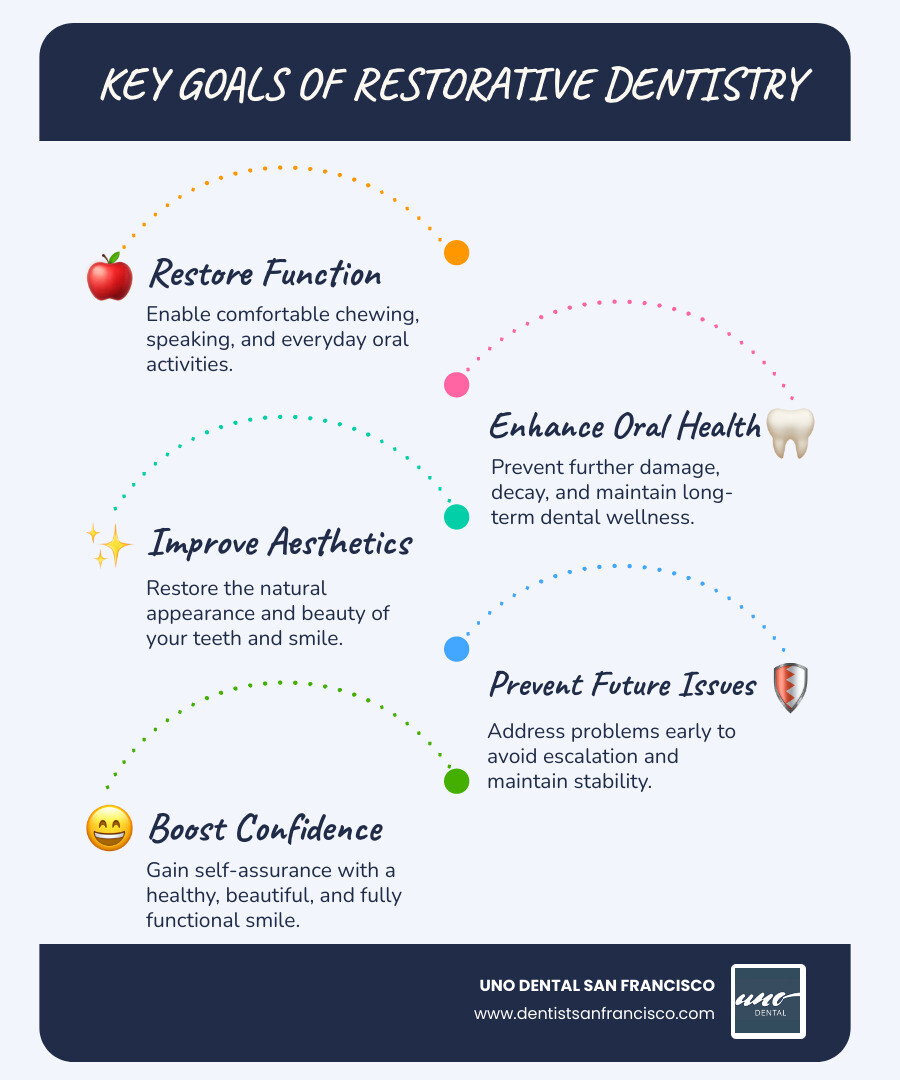
A restorative dentist focuses on repairing and rebuilding teeth that are damaged, decayed, or missing. The primary goal is to restore your smile's health, function, and natural beauty by making it comfortable to chew and speak, enhancing oral health, improving aesthetics, and preventing future problems.
When dental issues arise from accidents or disease, it can cause significant discomfort and make it hard to eat or smile confidently. Restorative dentistry addresses these problems, giving you back your comfort and a healthy mouth.
I’m Dr. Mohammad Aghiad Kandar, and with over 15 years of experience, my focus as a restorative dentist is on combining advanced techniques with a patient-centered approach to restore both the function and beauty of your smile.
To understand more about how a restorative dentist helps:
Restorative dentist terms simplified:
When is Restorative Dentistry Necessary?
Restorative dentistry is necessary when your teeth or their supporting structures are compromised by decay, trauma, or other conditions. The goal is to repair damaged teeth or replace missing ones, preserving natural teeth whenever possible and providing replacements that look, feel, and function like your own. If you have difficulty chewing, speaking, or smiling confidently due to damaged or missing teeth, restorative care can bring back that functionality and improve your quality of life.
Signs You Might Need Restorative Care
Your body often signals when something is wrong. Look out for these signs that you may need restorative care:
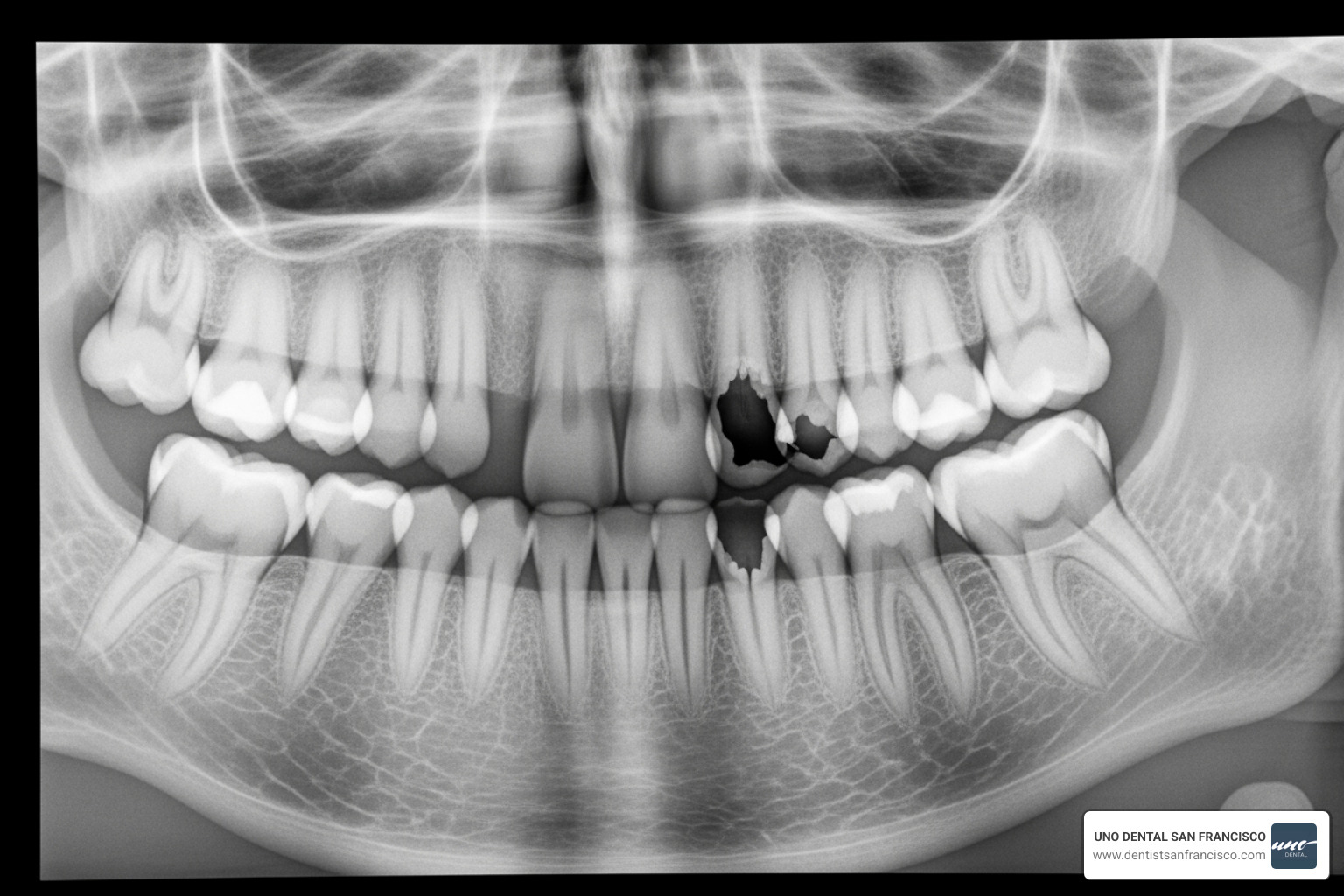
- Visible holes or dark spots: Classic indicators of tooth decay that may require a filling.
- Fractured or chipped teeth: Even minor cracks can worsen over time and compromise the tooth.
- Loose or failing fillings: An old filling that is loose or has fallen out needs replacement to prevent new decay.
- Persistent toothache or sensitivity: Sharp or throbbing pain, especially when chewing, can signal decay, a crack, or an infection.
- Gaps or shifting teeth: Missing teeth can cause others to drift, leading to bite issues. Restorations like bridges or implants maintain proper alignment.
- Difficulty chewing or speaking: Damaged or missing teeth can impair function, which restorative procedures can improve.
- Chronic jaw or face pain (TMJ disorder): Restorative dentistry can help by addressing bite alignment issues.
Conditions Treated by a Restorative Dentist
A restorative dentist handles a wide array of conditions to rehabilitate your smile's function and aesthetics:
- Tooth decay (caries): The most common issue, treated by removing decay and placing a filling.
- Maxillofacial trauma: Injuries to the face and jaw may require complex solutions to rebuild teeth.
- Periodontal disease (gum disease): A restorative dentist often works with a periodontist to address tooth loss or bone degradation resulting from gum disease.
- Tooth wear: Caused by grinding (bruxism) or acid erosion, requiring restorations to rebuild lost tooth structure.
- Congenital defects: Conditions like missing teeth from birth (hypodontia) require specialized care.
- Post-root canal restoration: A tooth often needs a crown after a root canal to protect it from fracture.
- Replacement of old restorations: Worn-out fillings, crowns, or bridges need replacement to maintain oral health.
- Head and neck oncology cases: A restorative dentist is part of a team helping to rehabilitate patients before and after cancer treatment.
A Guide to Common Restorative Procedures and Materials
At UNO DENTAL SAN FRANCISCO, we use a variety of treatments and materials to restore your smile. Modern restorative dentistry allows us to tailor each treatment, from fixing small cavities with dental fillings or dental bonding to replacing teeth with dental crowns, bridges, or dental implants. Other common procedures include inlays and onlays, dentures, and root canal therapy.
Fillings, Inlays, and Onlays
For small cavities, dental fillings are the standard solution. We primarily use composite resin, a tooth-colored material that bonds directly to the tooth, strengthening it and blending seamlessly with your smile. While amalgam (silver) fillings are safe, we prefer a metal-free approach for its aesthetic and biocompatible benefits.
For larger areas of decay that don't require a full crown, we use inlays and onlays. These are custom-made restorations, often from porcelain, that are bonded to the tooth. Inlays fit within the tooth's chewing surface, while onlays cover one or more of the cusps (the pointed parts). They are highly durable and can last for decades.
Crowns and Bridges
When a tooth is significantly weakened or damaged, crowns and bridges offer robust, aesthetic solutions.
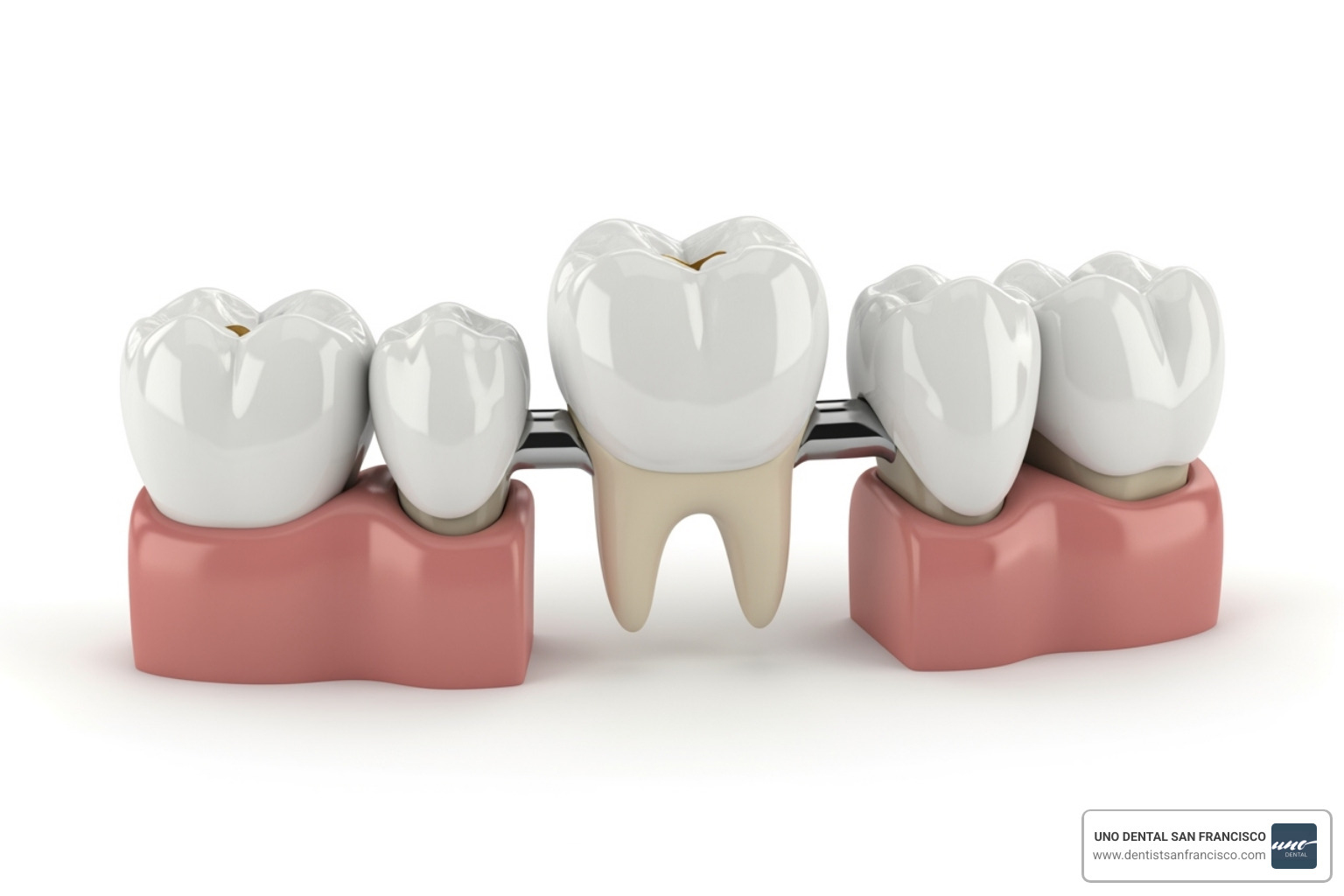
Dental crowns act as protective caps for teeth weakened by large cavities, trauma, or a root canal. Using CEREC® technology, we can design, create, and place your permanent, high-precision crown in a single visit. These same-day crowns can last 30 years or more with proper care.
Dental bridges replace missing teeth by anchoring artificial teeth (pontics) to crowns on the adjacent natural teeth or dental implants. Bridges restore your ability to chew and speak properly, maintain your facial shape, and prevent remaining teeth from shifting. We craft them from durable, tooth-colored materials like porcelain or zirconia.
Dental Implants and Dentures
For replacing missing teeth, implants offer a permanent solution, while dentures are a removable option.
Dental implants are the gold standard for tooth replacement. These small titanium or ceramic zirconia posts are surgically placed in the jawbone, where they fuse with the bone to act as artificial tooth roots. Once integrated, we can attach a crown, bridge, or denture, resulting in a replacement that functions just like a natural tooth.
Dentures are removable prosthetics for replacing multiple teeth. Full dentures replace an entire arch, while partial dentures fill in gaps, often using clasps for stability. For a significant upgrade in comfort and stability, implant-supported dentures snap securely onto dental implants, eliminating slipping.
Caring for Your Dental Restorations
Proper care ensures your restorations last for many years. Maintain excellent oral hygiene by brushing twice daily and flossing, paying special attention to the gum line around restorations. Bridges and implants require specific flossing techniques, which we will demonstrate.
Regular check-ups are crucial for monitoring your restorations. Avoid hard foods like ice or nuts, and if you grind your teeth (bruxism), a nightguard can protect your investment. Your diligence is key to the longevity of your dental work. For more guidance, visit Learning About Restorative Dentistry.
Restorative vs. Cosmetic Dentistry: Function Meets Aesthetics
While there is often an overlap, it's important to understand the different primary goals of restorative and cosmetic dentistry.
A restorative dentist focuses on function and health. Their work is medically necessary to fix problems like decay, broken teeth, or missing teeth that affect how you chew, speak, or maintain oral health.
Cosmetic dentistry, in contrast, focuses on aesthetics. These procedures are typically elective, chosen to improve the appearance of your smile, such as teeth whitening or changing a tooth's shape for purely cosmetic reasons.
The two fields often intersect. For example, a restorative dentist placing a crown on a fractured tooth is a medical necessity. However, that crown is also crafted to look natural and beautiful, providing a cosmetic benefit. The key difference is the primary reason for the treatment—health versus appearance.
At UNO DENTAL SAN FRANCISCO, we believe your smile should be both strong and beautiful. Our focus as restorative dentists is on your oral health and function, but we always ensure the final result is aesthetically pleasing.
Here's a quick comparison:
| Feature | Restorative Dentistry | Cosmetic Dentistry |
|---|---|---|
| Primary Goal | Restore function, health, and integrity of teeth. | Improve aesthetics and appearance of teeth. |
| Necessity | Medically necessary (treats disease, damage, or missing teeth). | Elective (chosen for aesthetic improvement). |
| Motivation | Address health issues, pain, or functional impairment. | Improve smile appearance, boost confidence. |
| Common Procedures | Fillings, crowns, bridges, implants, dentures, root canals. | Teeth whitening, veneers (for aesthetic purposes), gum recontouring. |
| Overlap | Can significantly improve aesthetics as a byproduct of restoring health/function. | May involve minor functional improvements but primary goal is aesthetic. |
The Benefits and What to Expect from Your Restorative Dentist
Choosing restorative dental care offers benefits that improve your overall quality of life.
How a Restorative Dentist Contributes to Overall Health
Your oral health is deeply connected to your general well-being, a concept known as the oral-systemic health link. Untreated oral infections and inflammation have been linked to serious conditions like heart disease and strokes. By restoring your teeth and gums, a restorative dentist helps reduce these risks.
Restorative care also improves nutrition by restoring your ability to chew healthy foods. A complete, functional smile boosts confidence, social interaction, and mental well-being. It can also improve speech clarity. Dental implants, in particular, preserve jawbone density, preventing the sunken facial appearance that can follow tooth loss.
A restorative dentist with advanced training in prosthodontics is an expert in rebuilding and replacing teeth, handling even the most complex cases. Learn more about this specialty at More on the role of a prosthodontist.
Your Restorative Consultation Process
Your consultation at UNO DENTAL SAN FRANCISCO is the first step toward a personalized treatment plan. We even offer free virtual smile consultations to get you started.
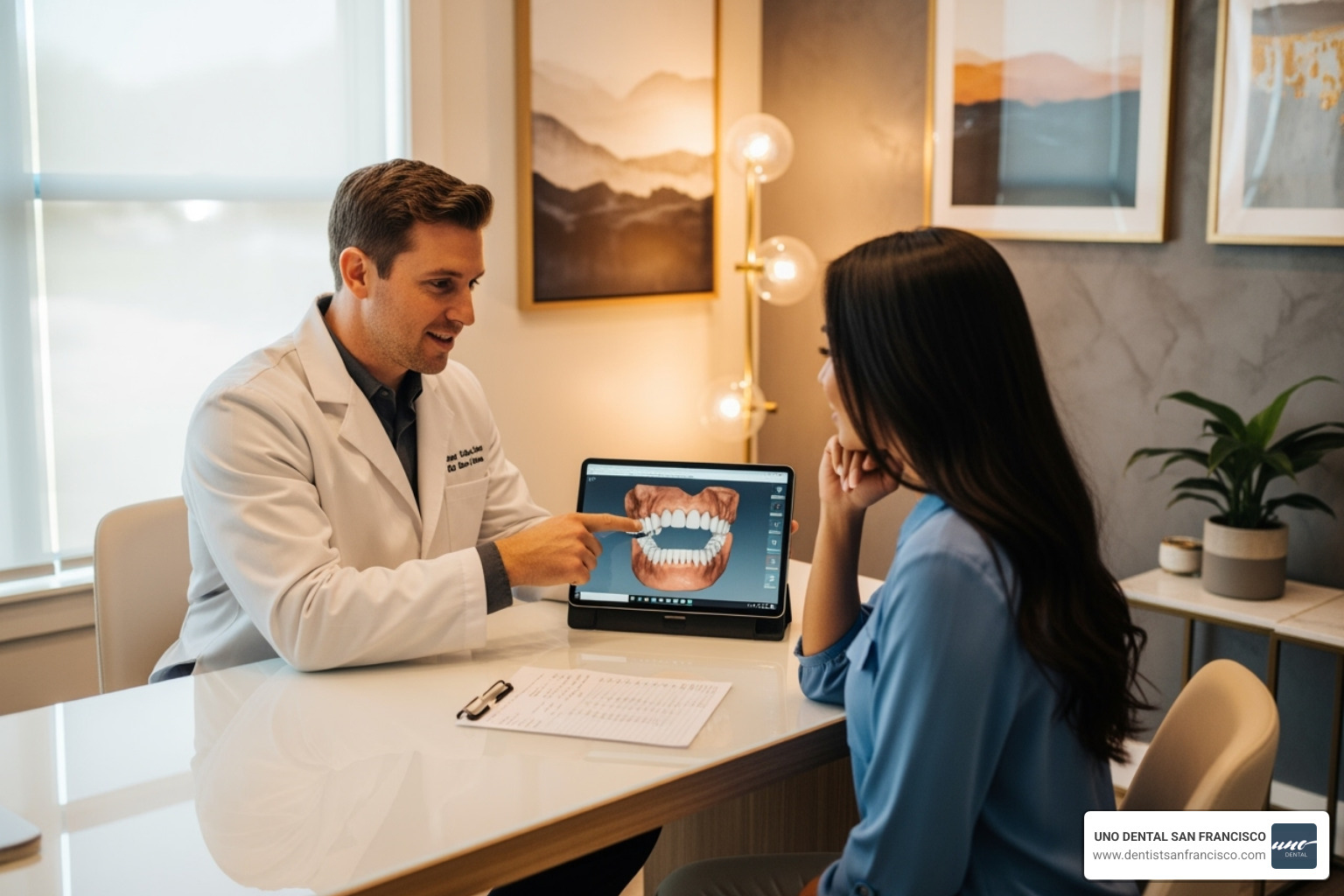
Here’s what to expect:
- Comprehensive Examination: We'll thoroughly assess your teeth, gums, and bite to identify any decay, damage, or disease.
- Advanced Diagnostics: We use tools like digital X-rays and 3D imaging (CBCT scans) for a complete view of your oral structures. Intraoral cameras allow you to see what we see, helping you understand your health.
- Discussion of Goals: We'll listen to your concerns and what you hope to achieve with your smile.
- Personalized Treatment Plan: Based on our findings and your goals, we'll present a custom plan. We'll explain the recommended procedures, biocompatible materials, timeline, and what to expect.
- Patient Education & Costs: We ensure you understand all your options and answer your questions. We'll also provide a clear breakdown of costs and help you steer insurance coverage.
Our holistic approach means we view your oral health as a vital part of your overall well-being, ensuring your care supports your total health.
Frequently Asked Questions about Restorative Dentistry
It's natural to have questions about dental work. Here are answers to some common concerns.
Is restorative dentistry painful?
Modern restorative dentistry prioritizes your comfort. We use highly effective local anesthesia to numb the treatment area, so you won't feel pain, only perhaps some light pressure. For anxious patients, we offer sedation options like nitrous oxide or oral conscious sedation to help you relax completely.
Our high-tech, minimally invasive techniques preserve more of your natural tooth, which often leads to less discomfort and faster healing. It's normal to have mild sensitivity after a procedure, which can typically be managed with over-the-counter pain relievers.
How long do dental restorations last?
The longevity of dental restorations is impressive. While not permanent, their lifespan depends on the material and your care.
- CEREC® crowns made from high-quality porcelain or zirconia can last 30 years or more.
- Composite fillings typically last 5-10 years.
- Dental implants are designed to be a permanent solution and can last a lifetime.
Your daily oral hygiene is the most critical factor. Brushing, flossing, and attending regular check-ups will dramatically extend the life of your restorations. Lifestyle factors, like avoiding hard foods and using a nightguard if you grind your teeth, also play a significant role.
Does insurance cover restorative dentistry?
Most dental insurance plans offer partial coverage for restorative procedures. They often categorize treatments as preventive, basic, or major. Restorative work like fillings, crowns, and bridges typically falls under basic or major services, with coverage ranging from 50-80% after your deductible.
Insurance distinguishes between medically necessary and cosmetic procedures. A crown needed for a fractured tooth is usually covered, while veneers for purely aesthetic reasons are not. For extensive treatments, we may seek pre-authorization from your insurer to clarify your coverage beforehand.
We understand costs can be a concern and offer various payment options and financing solutions. Our team is experienced in working with insurance companies to help you maximize your benefits.
Conclusion: Rebuild Your Smile with Expert Care
A restorative dentist is a partner in reclaiming your health, confidence, and quality of life. Damaged, decayed, or missing teeth affect how you eat, speak, and feel, but modern dentistry offers solutions to restore your smile's strength, function, and natural beauty.
The benefits are life-changing. Restoring your smile improves not only your ability to chew and speak but also your overall well-being, thanks to the oral-systemic health connection. The long-term value of quality restorative care is an investment in preventing future problems and maintaining your health for decades.
At UNO DENTAL SAN FRANCISCO, our holistic approach combines high-tech solutions like CEREC same-day crowns with personalized, patient-centered care. We treat the whole person, ensuring you feel comfortable and informed.
If you are struggling with dental issues, you don't have to face them alone. Restorative dentistry offers proven solutions to transform your smile and quality of life.
Ready to take the first step? We're here to guide you. Take the first step to a healthier smile by exploring our services and find how we can help you rebuild your smile with expert care.