

Your Guide to Sedation Dental
For many, the thought of a dental appointment brings feelings of worry or fear. Fortunately, sedation dental offers a way to make your visit comfortable and calm.
What is sedation dental?
Sedation dental uses medication to help you relax deeply during your dental treatment. This means you can get the care you need without stress or discomfort.
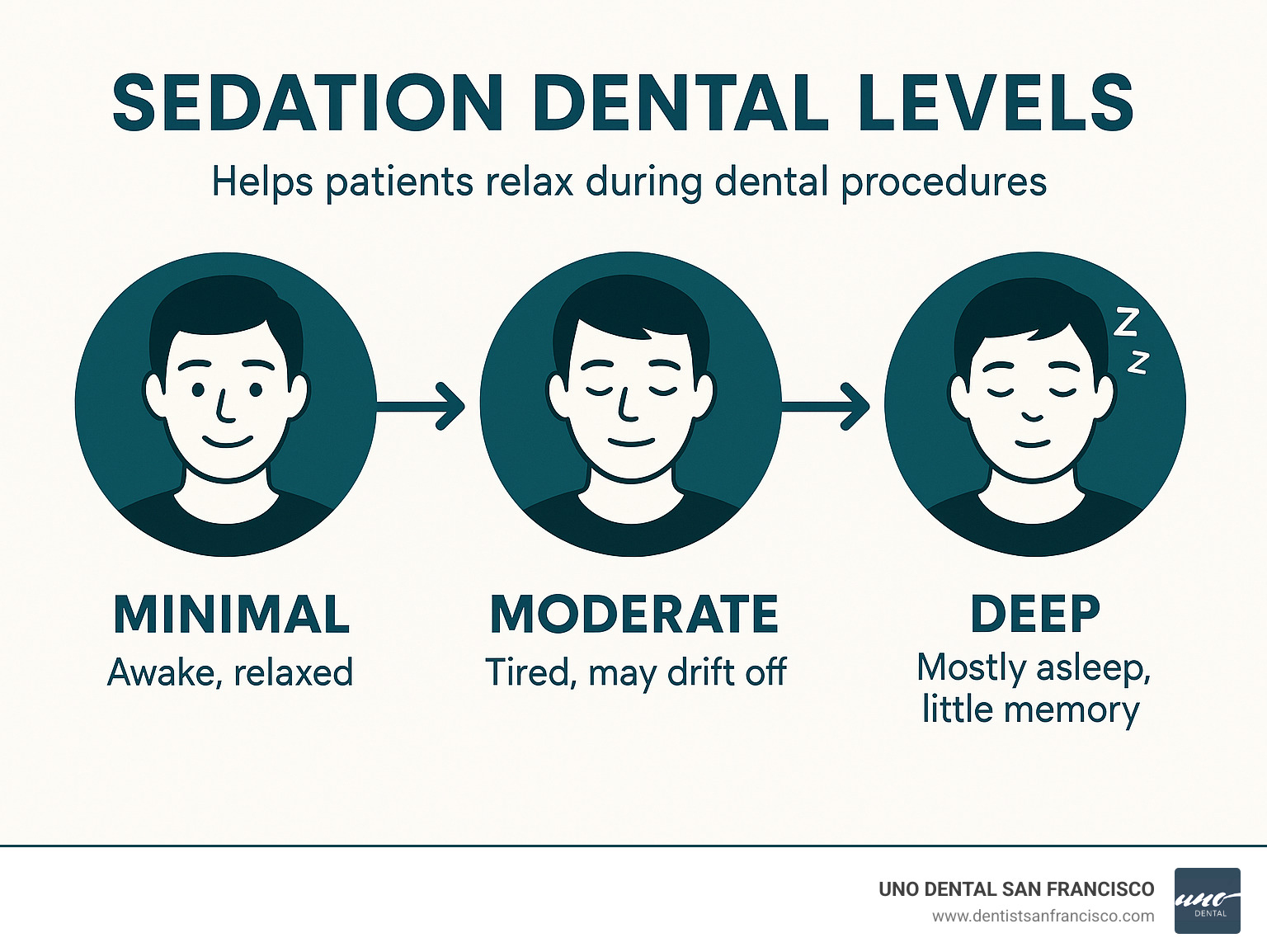
Here are the main levels of sedation dental:
- Minimal Sedation: You feel calm and relaxed but are awake and can talk to your dentist.
- Moderate Sedation: You become very tired and might doze off, with little memory of the appointment.
- Deep Sedation: You are mostly asleep but can be gently woken up, though you'll remember very little.
Dental anxiety can prevent people from getting important dental care. Our goal is to help you overcome this so you can feel relaxed and at ease throughout your visit.
As Mohammad Aghiad Kandar DDS, I have over 15 years of experience helping patients achieve comfortable, fear-free dental experiences. My goal is to ensure every patient receives compassionate care custom to their unique needs.
Sedation dental helpful reading:
Understanding the Different Types of Sedation Dental Options
When we talk about sedation dental, we're referring to a spectrum of relaxation. The American Dental Association (ADA) has established guidelines for these levels, ensuring patient safety and effective care. You can find more details on the American Dental Association's guidelines on sedation and anesthesia.
Let's explore the different levels and types of sedation dental we offer:
- Minimal Sedation: This is the lightest form. You remain awake and fully responsive but feel more relaxed. It’s perfect for easing mild anxiety.
- Moderate Sedation: Often called "conscious sedation," this level makes you feel very tired. You might drift off to sleep but can be easily awakened. You may not remember much of the procedure.
- Deep Sedation: You will be mostly asleep but can still respond to a repeated sharp touch. You will likely have little to no memory of the experience. This level is for more complex procedures or significant anxiety.
- General Anesthesia: This renders you completely unconscious. Unlike conscious sedation, it often requires a breathing tube and is typically administered in a hospital setting. We focus on conscious sedation dental options in our practice to keep you comfortable and safe.
We are here to guide you in choosing the right level of sedation. For more information, visit our page on Types of Dental Sedation.
Inhaled Sedation: Nitrous Oxide
Perhaps the most well-known form of sedation dental is nitrous oxide, or "laughing gas." This gentle method has been used for over a century to help patients relax.
How it works: You breathe the colorless, odorless gas through a small nosepiece. The calming effects begin within minutes, inducing a relaxed state that helps fear and anxiety melt away.
Fast-acting with quick recovery: A major advantage of nitrous oxide is its rapid onset and equally swift recovery. Once we remove the mask, the effects wear off quickly. In most cases, you can drive yourself home and resume your daily activities almost immediately.
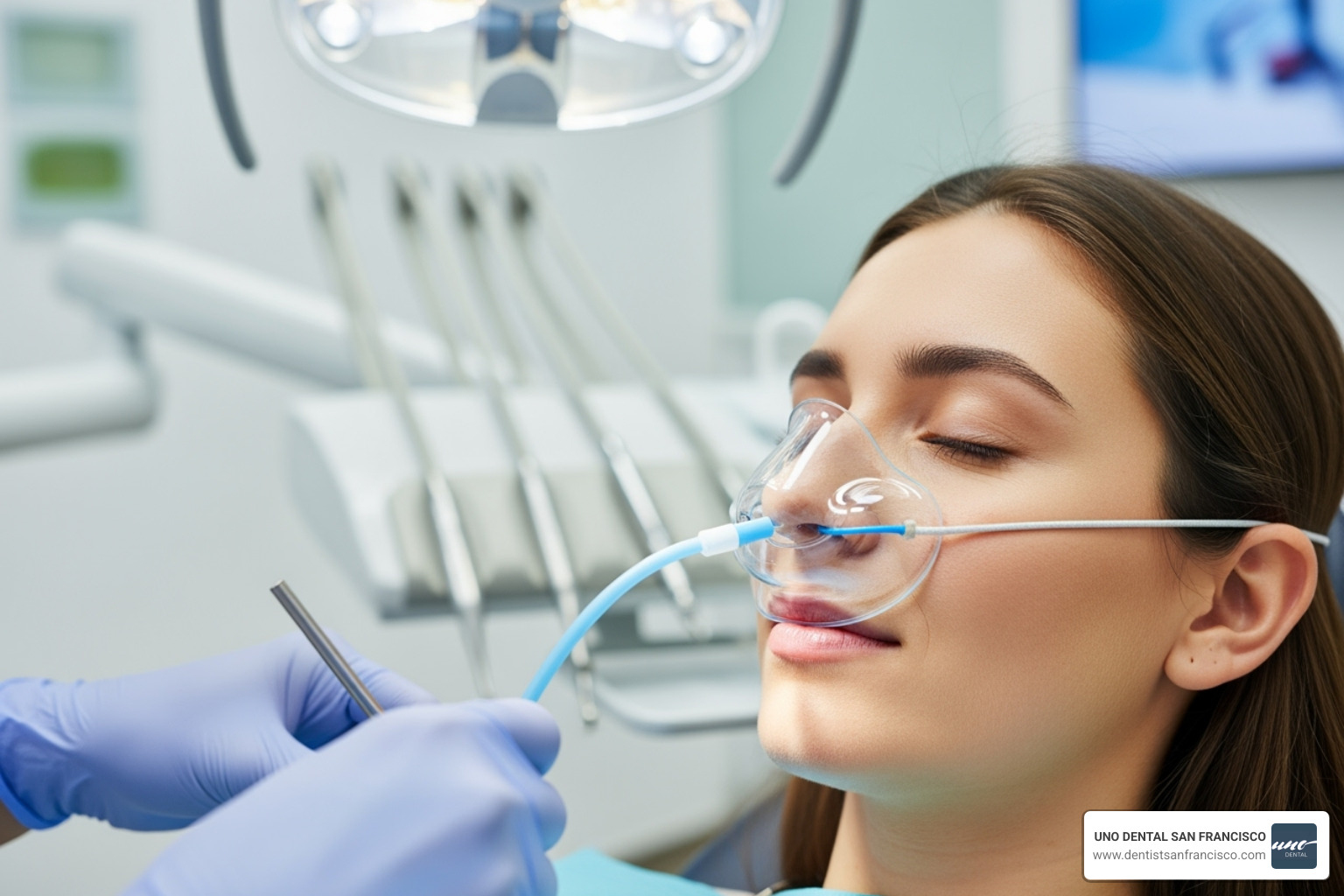
Safe for children: Nitrous oxide is a wonderful and safe tool for younger patients who are anxious, helping them feel more comfortable and cooperative. This allows us to complete necessary treatments efficiently.
Benefits of nitrous oxide:
- Simple to administer
- Fast onset and recovery
- Reduces fear and anxiety
- Allows you to remain conscious and comfortable
- Versatile for most dental procedures
Oral Conscious Sedation
For patients needing deeper relaxation than nitrous oxide provides, oral conscious sedation is an excellent choice. This method involves taking a sedative pill about an hour before your appointment.
How it works: The pill puts you in a light state of sedation, making you feel groggy and sleepy. While you might doze off, you can still communicate with our team. Many patients feel like they "sleep" through the appointment and awaken with little to no memory of the procedure. This amnesia is a significant benefit for those with dental fear.
Deeper relaxation: Oral conscious sedation provides deeper relaxation than nitrous oxide, making long or complex procedures seem shorter. This allows us to complete extensive dental work in one or two comfortable visits.
Designated driver required: The effects of oral sedation can linger, so you must arrange for someone to drive you to and from your appointment. You cannot operate a vehicle until the medication has fully worn off.
For more detailed information, you can check out More info about oral sedation.
IV Sedation
Intravenous (IV) sedation is the deepest form of conscious sedation dental available in a dental office. It's an excellent option for patients with severe dental anxiety or those undergoing lengthy, complex treatments.
How it works: Sedative medications are delivered directly into your bloodstream through an IV line. This allows for a very rapid onset and gives us precise control over your level of sedation throughout the procedure.
Continuous monitoring: Your safety is our top priority. During IV sedation, we continuously monitor your heart rate, blood pressure, and oxygen levels with state-of-the-art equipment to ensure you are safe and stable.
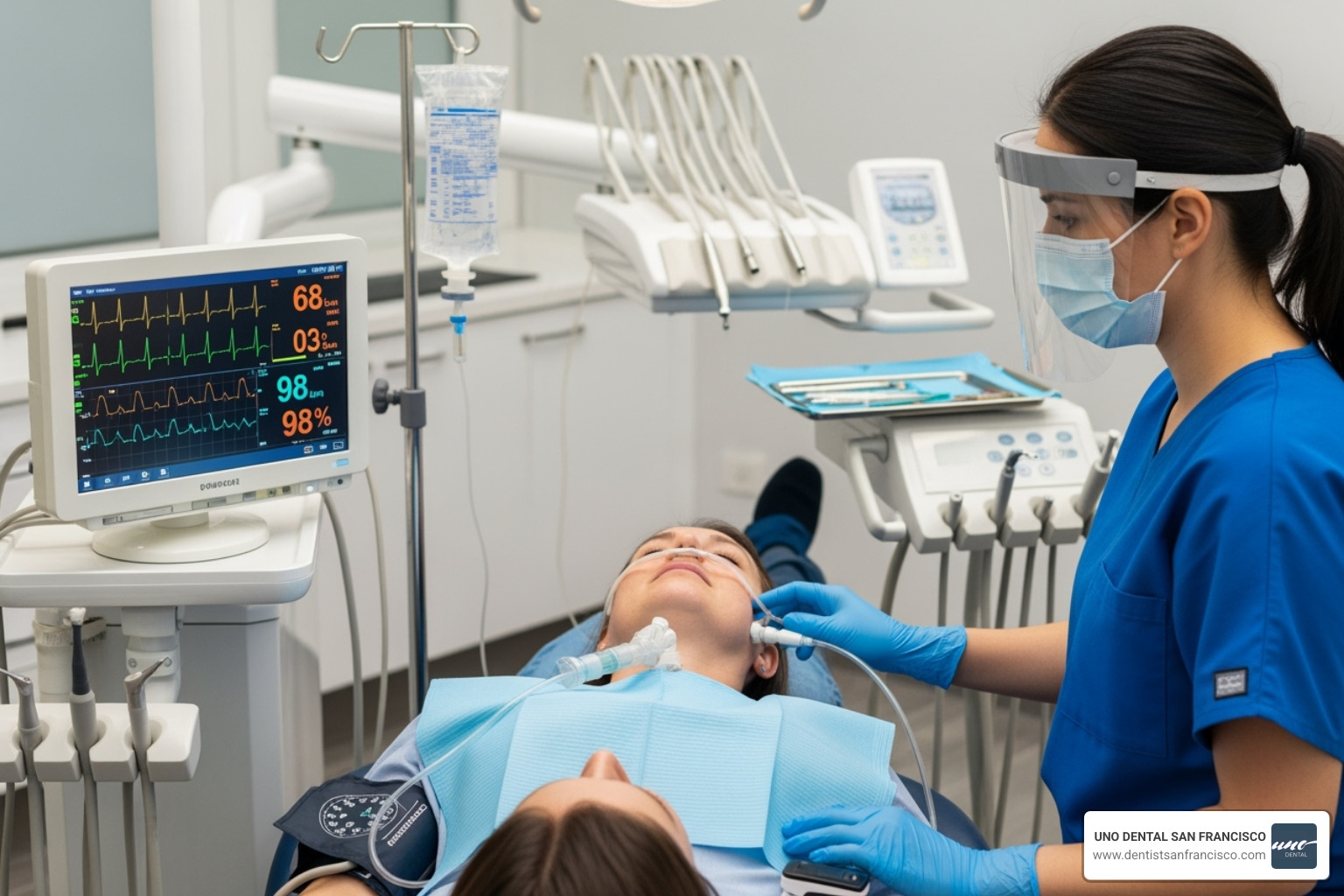
Ideal for complex procedures: IV sedation is particularly beneficial for extensive dental work like implant dentistry or wisdom teeth extraction. Patients often fall asleep and have little to no memory of the treatment, making it seem as though they simply blinked and the procedure was over.
Is Sedation Dentistry Right for You?
Dental anxiety is more common than you might think. About 20% of both children and adults experience it, and for around 5%, the fear is so intense it prevents them from getting necessary dental care. Avoiding the dentist can seriously impact your oral and overall health, as untreated issues like gum disease have been linked to conditions like heart disease.
Our goal with sedation dental is to remove these barriers. We want to empower you to overcome fear and receive essential treatment. By making your experience comfortable, we can often complete complex treatments that might normally take many appointments in just one or two visits. This makes the process more efficient and far less intimidating.
To learn more, visit our page on the Benefits of Sedation Dentistry.
Who is a Good Candidate for Sedation Dental Care?
While sedation dental can make almost any patient more comfortable, it can be a game-changer for some. You might be an ideal candidate if you have:
- Dental phobia or severe anxiety that has caused you to delay care.
- A low pain threshold or find dental procedures uncomfortable.
- A sensitive gag reflex that makes treatment difficult.
- A fear of needles (Aichmophobia), as sedation can help you relax before any anesthetic is administered.
- Claustrophobia or feel confined in the dental chair.
- A need for lengthy or complex procedures, such as implants or wisdom teeth removal.
- Special needs that make it difficult to remain still or comfortable during treatment.
- Difficulty getting numb with local anesthesia alone.
Key Benefits for Anxious Patients
Sedation dental transforms your dental experience into a positive one. For anxious patients, the benefits are profound.
First is the incredible stress reduction. You'll feel a deep sense of calm throughout your procedure. While we still use local anesthetic to numb the area, sedation ensures you are so relaxed that you can receive care free of fear and pain.
Another major advantage is the ability to complete multiple treatments in one visit. This efficiency is a huge relief for many patients. By making each visit comfortable, sedation dental helps build positive memories, which can change your perception of dental care and make future appointments less daunting. This empowers you to break the cycle of avoidance, leading to improved oral health—the most important benefit of all.
The Sedation Process: Before, During, and After
We understand that visiting the dentist can be overwhelming, especially if you're anxious. Our sedation dental process is designed to be as smooth and reassuring as possible, with our experienced team guiding you every step of the way.
We follow strict safety protocols and use continuous monitoring to ensure you feel completely secure in our care. For more information on whether this approach is right for you, visit Is Sedation Dentistry Right for You?.
Preparation for Your Appointment
Your sedation dental experience begins before you even sit in the dental chair. Proper preparation is key to a successful, comfortable treatment.
- Initial Consultation: We'll sit down to discuss your anxieties, review your dental and medical history, and determine the best sedation option for you. This health assessment is crucial for your safety, so it's important to disclose all medications, allergies, and health conditions, including pregnancy.
- Pre-Procedure Instructions: Following our instructions is vital. Depending on the type of sedation, we may provide specific fasting guidelines. We'll give you clear, written instructions to avoid any confusion.
- Arrange for a Driver: If you're having oral or IV sedation, you must arrange for someone to drive you. These sedatives affect coordination and memory for several hours, making it unsafe for you to drive.
What to Expect from Your Sedation Dental Appointment
On the day of your appointment, our team will welcome you and help you get comfortable. If you're having oral sedation, you'll take a pill about an hour beforehand. For nitrous oxide or IV sedation, we'll administer it once you're settled in the chair.
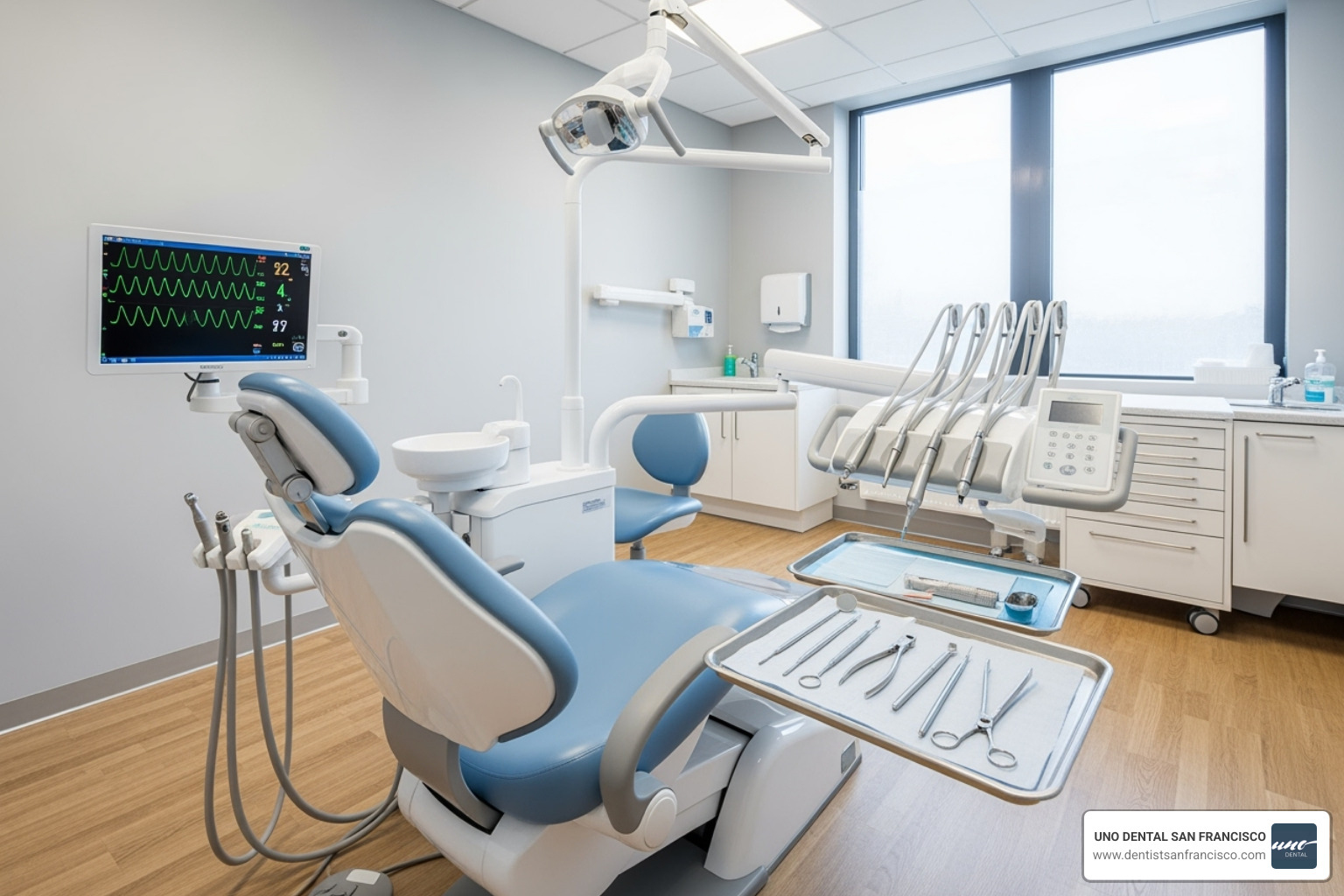
As the sedative takes effect, you'll feel a sense of calm wash over you. Your safety is our top priority, so we will continuously monitor your vital signs—heart rate, blood pressure, and oxygen levels—throughout the entire procedure.
We will still use local anesthetic to numb the treatment area. Sedation reduces anxiety, but the local anesthetic is what prevents you from feeling any pain. Our team is specially trained and certified to provide sedation dental safely, always ensuring the proper number of qualified professionals are present.
Post-Procedure Care and Recovery
Your recovery is just as important as the procedure itself. The time it takes to feel normal again depends on the type of sedation you received.
- Nitrous Oxide: You'll feel back to normal within minutes and can typically drive home and resume your regular activities right away.
- Oral and IV Sedation: You will feel groggy and drowsy for several hours. Your reflexes will be slower, and you may feel unsteady. This is completely normal.
We will provide detailed aftercare instructions for your specific procedure and sedation type. If you had oral or IV sedation, you absolutely cannot drive. You should not operate machinery or make important decisions until the sedative has completely worn off, which may not be until the next day. Most patients feel refreshed and ready to resume normal activities the following morning.
Safety, Risks, and Financial Considerations
Your safety is our absolute top priority at UNO DENTAL SAN FRANCISCO. We take every precaution and follow the highest standards of care to ensure you feel secure and well-cared for during your sedation dental experience.
Are There Risks or Side Effects?
While sedation dental is very safe when administered by trained professionals, it's good to know what to expect. Most side effects are mild and temporary. You might feel a little nauseous, dizzy, or drowsy. Some patients experience a mild headache or have some amnesia, meaning they don't remember much of their appointment—often a welcome effect for anxious patients.
Serious complications are extremely rare. Our careful monitoring and thorough review of your medical history help us choose the safest option for you and prevent issues. We always have emergency equipment and medications readily available, ensuring your well-being is in expert hands.
Cost of Sedation and Insurance Coverage
The cost of sedation dental can vary based on a few factors, including the type of sedation used (nitrous oxide is typically the most affordable), the length of your procedure, and our geographic location.
Whether it's covered by insurance depends entirely on your plan. Many plans consider sedation an add-on service and may not cover it. However, some may offer coverage if it's deemed "medically necessary," for instance, due to extreme anxiety or special needs.
We encourage you to discuss costs with our office during your consultation for a clear breakdown of fees. It's also a good idea to contact your insurance provider directly for the most accurate information about your plan. If cost is a concern, please talk to us about potential financing options.
Here’s a quick comparison of the different sedation dental options:
| Type of Sedation | Typical Risks/Side Effects | General Recovery Time | Relative Cost |
|---|---|---|---|
| Nitrous Oxide | Mild nausea, dizziness | Minutes | Low |
| Oral Sedation | Drowsiness, grogginess, mild amnesia, nausea | Several hours (until next day) | Medium |
| IV Sedation | Deep drowsiness, significant amnesia, nausea, dizziness | Several hours (until next day) | High |
For a more in-depth look at how medical professionals classify patient health status, you can explore the American Society of Anesthesiologists (ASA) classifications.
Frequently Asked Questions about Sedation Dentistry
Choosing sedation dental care brings up many questions. Here are answers to the most common concerns we hear. For more details, please visit our Frequently Asked Questions about Sedation Dentistry page.
Will I be completely asleep during sedation?
It depends on the type of sedation dental we choose. With minimal and moderate sedation, you are not completely asleep. You'll be in a state of deep relaxation but still technically awake and able to respond to us. However, sedation often has an amnesic effect, meaning you may have little to no memory of the procedure afterward. Only general anesthesia renders you completely unconscious.
Is sedation dentistry safe for everyone?
While sedation dental has an excellent safety record, it's not a one-size-fits-all solution. We conduct a thorough health assessment to ensure it's the right choice for your unique situation. We are extra cautious with certain conditions. For example, we generally avoid sedation during pregnancy. It's crucial to discuss your full medical history, including any allergies or health conditions, with us during your consultation so we can ensure your safety.
How long do the effects of sedation last?
The recovery timeline depends on the method used.
- Nitrous oxide is very short-acting. The effects wear off within minutes of removing the mask, and you can typically drive and resume your day as normal.
- Oral and IV sedation have longer-lasting effects. You will likely feel drowsy for several hours after your appointment. This post-procedure impairment is why you must have someone drive you home. You should plan to rest for the remainder of the day, and by the next morning, most patients feel completely back to normal.
Conclusion: A Fear-Free Path to a Healthy Smile
We understand that dental anxiety is a real challenge that can prevent you from getting the care you need. But your next dental visit can be different—it can be calm, comfortable, and easy.
Sedation dental is the key to changing your dental experience. We offer a gentle hand and the right tools to ease your worries, empowering you to overcome fear. With a range of options—from gentle nitrous oxide to calming oral conscious sedation and advanced IV sedation—we have a solution custom to your needs. This allows you to access high-quality dental care without stress, leading to better oral health.
At UNO DENTAL SAN FRANCISCO, your comfort and well-being are our top priorities. We combine high-tech, holistic care with individualized treatment plans to provide a positive dental experience built on trust and comfort.
Don't let dental fear stand in the way of your healthy, confident smile any longer. We are here to guide you on a truly fear-free path to optimal oral health.
Ready to take the first step? Explore our comprehensive dental services and find out how we can make your next dental visit your best one yet.