
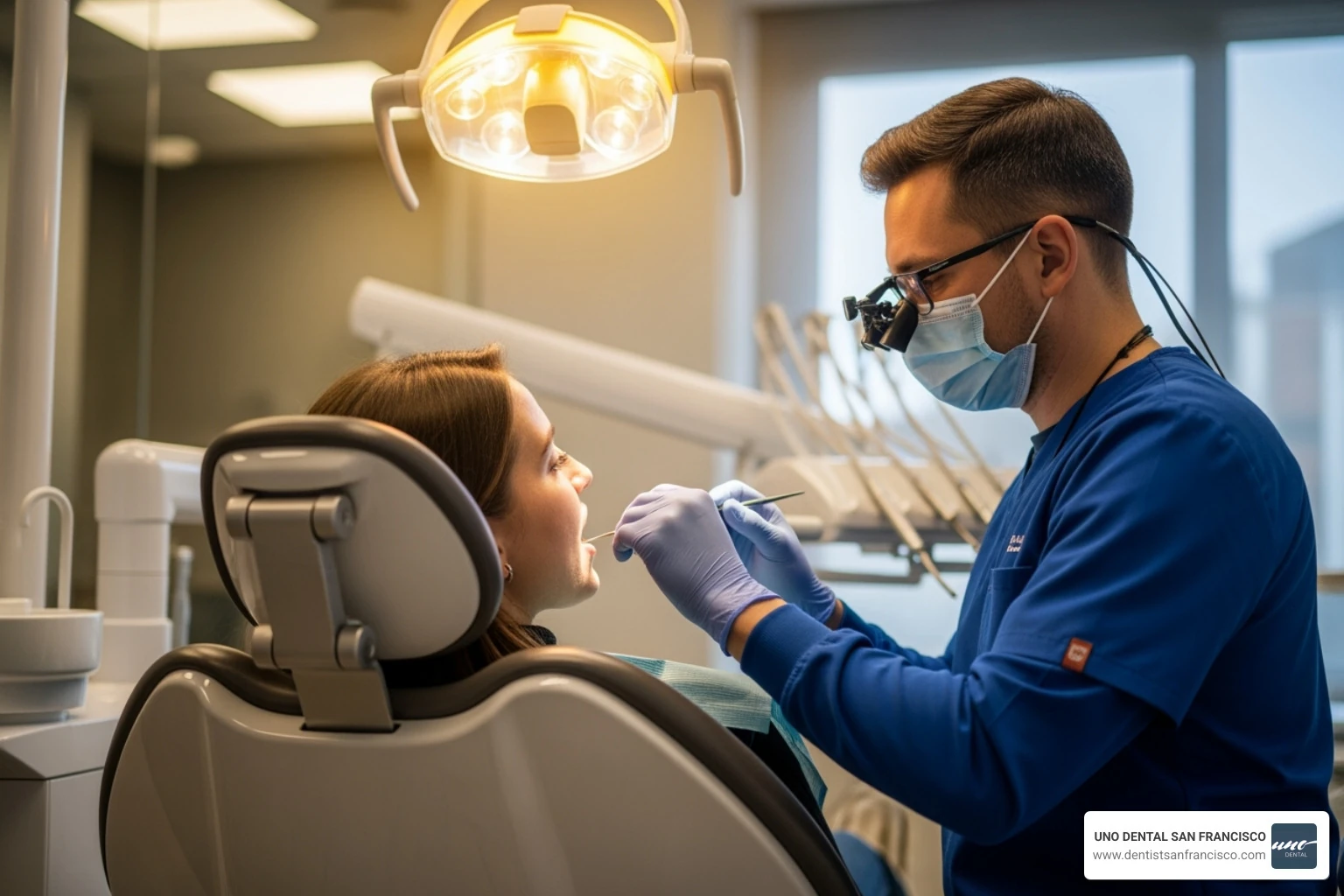
Overcoming Dental Anxiety for a Healthier Smile
Sedation dentistry uses medication to help patients relax during dental procedures, making treatment comfortable and stress-free. Here's what you need to know:
Types of Sedation:
- Minimal Sedation - Nitrous oxide (laughing gas) keeps you awake but relaxed
- Moderate Sedation - Oral pills or IV medication make you drowsy with limited memory
- Deep Sedation - You're on the edge of consciousness but can be awakened
- General Anesthesia - Complete unconsciousness for complex procedures
Who Benefits:
- Patients with dental anxiety or phobia
- Those with low pain tolerance or sensitive teeth
- People with strong gag reflexes
- Anyone needing extensive dental work
If you're among the 20% of people with dental anxiety or the 30% who avoid the dentist due to fear, sedation dentistry can transform your experience. It's a proven solution for the 7.6% of people who miss appointments due to anxiety.
Modern sedation techniques allow you to receive necessary care while feeling calm. Whether you need a simple cleaning or complex treatment, the right sedation option helps you maintain your oral health without stress.
I'm Dr. Mohammad Aghiad Kandar, and at UNO DENTAL SAN FRANCISCO, I've helped countless patients overcome their dental fears with safe and effective sedation dentistry. With over 15 years of experience and specialized training, I'm committed to providing compassionate, anxiety-free care.

Key terms for sedation dentistry:
Are You a Good Candidate for Dental Sedation?

If the thought of a dental appointment makes your heart race, you're not alone. At UNO DENTAL, we help many patients who have put off important care due to fear. Sedation dentistry might be the solution you need.
Most people with dental anxiety are excellent candidates for sedation. Whether you have severe dental fear or a low pain threshold that makes even cleanings uncomfortable, we have options to help. If anxiety causes you to cancel appointments, sedation can turn a stressful experience into a manageable one.
Sedation is also ideal for patients with a strong gag reflex or a fear of needles, as it helps the body relax naturally. For those needing extensive dental work, sedation allows us to complete more treatment in fewer visits, potentially combining multiple procedures into one or two comfortable sessions.
Special needs patients, including those with physical or cognitive challenges or conditions causing involuntary movements, benefit greatly from sedation, as it helps them remain still and comfortable. It can also help those with claustrophobia or fear from past traumatic dental experiences, helping to create new, positive associations with dental care.
It's also effective for patients who have difficulty getting numb or are sensitive to the sights and sounds of a dental office. For patients with medical conditions like epilepsy or high blood pressure that are worsened by stress, sedation helps maintain stability during treatment.
During your consultation, we'll review your medical history and discuss your specific concerns to determine the best approach for you. Our goal is always to provide individualized care that puts your comfort and well-being first.
Understanding the Types and Levels of Sedation Dentistry
Choosing the right sedation dentistry involves understanding a spectrum of options, from minimal relaxation to being unaware of the procedure. The goal is to match the sedation level to your comfort needs and treatment complexity. Sedation calms the nervous system for relaxation, not pain relief. We still use local anesthetic to numb the treatment area, ensuring you are both comfortable and pain-free.
Minimal Sedation: Nitrous Oxide ("Laughing Gas")
Nitrous oxide, or "laughing gas," is a popular form of minimal sedation dentistry. You breathe the gas through a small nasal mask and feel relaxed within 3-5 minutes. You remain fully conscious and able to respond, but feelings of anxiety fade. We can adjust the concentration (typically 30-40% nitrous oxide) to fine-tune your comfort. The mild euphoria makes procedures more pleasant.
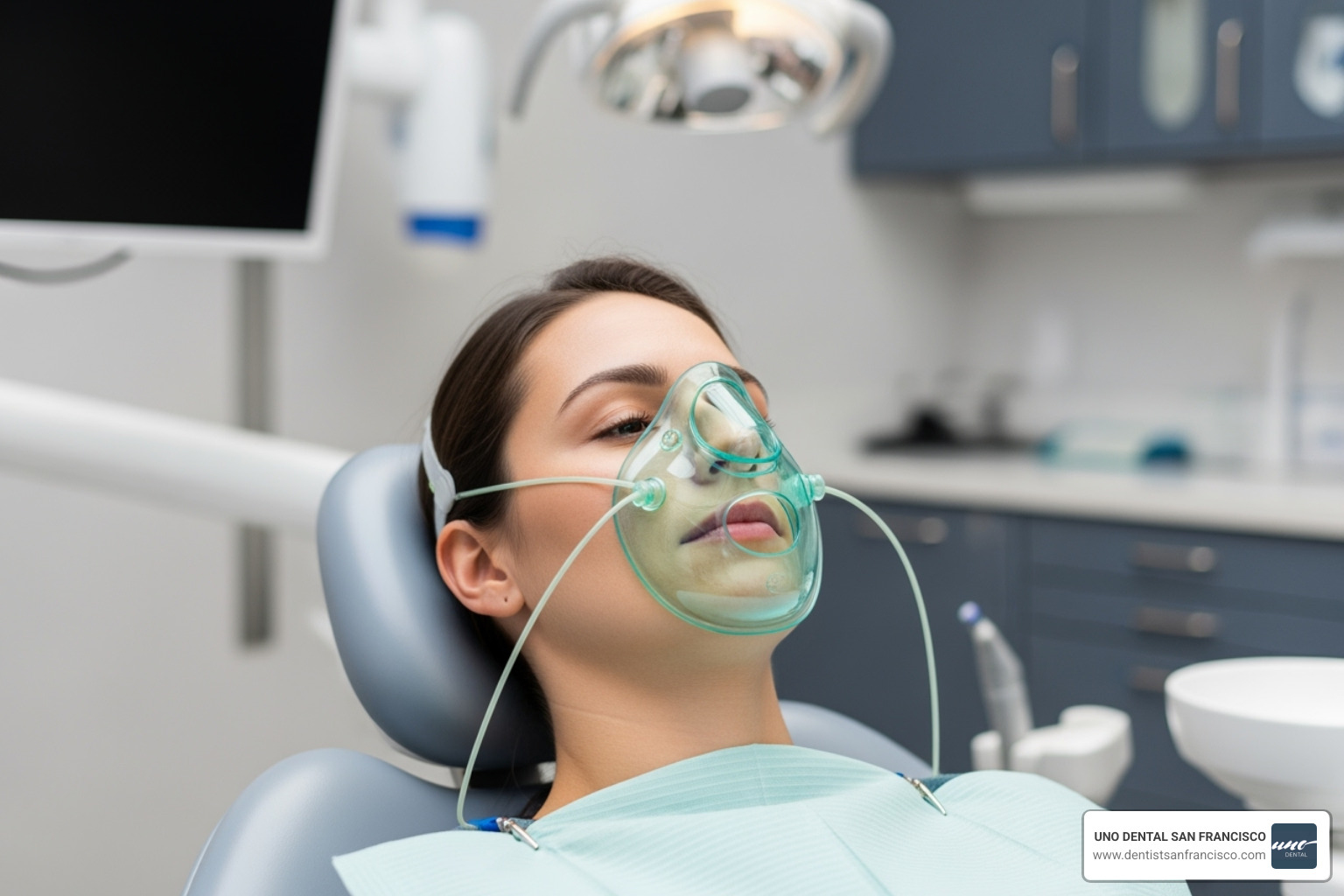
Recovery is almost instant; after breathing pure oxygen for a few minutes, the effects are gone, and you can drive yourself home. This makes nitrous oxide safe for most patients and convenient. At around $50-$60, it offers excellent value.
Scientific research on nitrous oxide
Moderate Sedation: Oral Conscious Sedation
Oral sedation offers deeper relaxation for moderate anxiety using a sedative pill (like triazolam (Halcion®) or diazepam (Valium®)) taken about an hour before your appointment. The onset time is 15 to 60 minutes. You'll feel very drowsy and relaxed, and may even doze off. A key benefit is its anterograde amnesia effect, meaning you'll have little to no memory of the procedure.
Because the effects last for hours, you must have an escort required to drive you to and from your appointment. This needle-free option is ideal for those with a fear of needles. At approximately $175, it provides significant anxiety relief. Our team has completed specialized training (18-25 hours of education) to administer it safely.
More info about our comprehensive services
Moderate to Deep Sedation: Intravenous (IV) Sedation
IV sedation is the deepest level of conscious sedation we offer. Medication is administered through a vein for rapid onset and precise control. Often called "twilight sleep," you'll be in a peaceful, dream-like state with little awareness of the procedure. The amnesia effect is profound, which is ideal for severe dental anxiety.
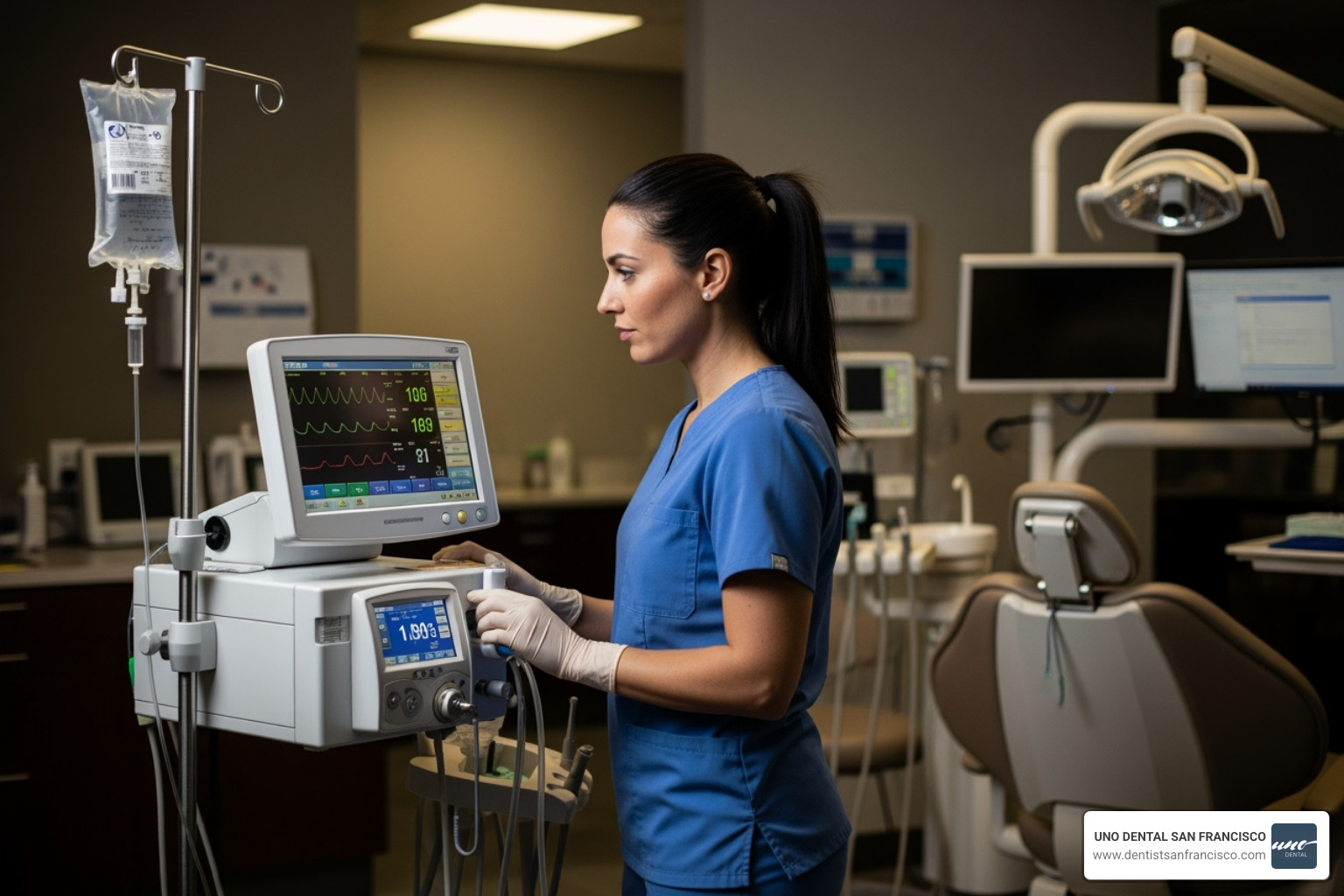
We use medications like midazolam and carefully titrate the dose for optimal comfort and safety. We continuously monitor your vital signs (oxygen levels, blood pressure, heart rate) throughout the procedure. IV sedation is perfect for patients with high anxiety or those needing long procedures. An escort is required for 24 hours post-procedure. The cost is typically $290-$340 for the first 30 minutes, with additional fees for more time.
Unconscious Sedation: General Anesthesia
General anesthesia induces complete unconsciousness, or true "sleep dentistry." You are unaware of the procedure and will have no memory of it. This is reserved for complex surgery or patients with severe medical conditions and is typically performed in a hospital setting due to the need for breathing assistance and intensive monitoring.
It is administered by highly trained specialists like anesthesiologists or dental anesthesiologists. While comprehensive, it is the most expensive option, starting around $180 for the first 30 minutes. For most dental needs, conscious sedation dentistry in our office is a safer and more cost-effective alternative.
[TABLE] Comparing Sedation Dentistry Options
| Level of Sedation | How It's Administered | How You'll Feel | Recovery Time | Best For |
|---|---|---|---|---|
| Minimal Sedation | Inhaled (Nitrous Oxide) | Awake, relaxed, mild euphoria | Very quick (minutes) | Mild anxiety, short procedures |
| Moderate Sedation (Oral) | Pill (Oral) | Drowsy, relaxed, may doze, limited memory | Several hours (need escort) | Moderate anxiety, aversion to needles |
| Moderate to Deep Sedation (IV) | Injected into vein (IV) | Sleep-like state, deeply relaxed, little to no memory | Several hours (need escort) | Moderate to severe anxiety, long/complex procedures |
| Unconscious Sedation (General Anesthesia) | Inhaled/IV (by specialist) | Completely unconscious, no memory or sensation | Longer (days, hospital setting) | Highly complex surgery, severe medical conditions, extreme phobia |
The Sedation Dentistry Procedure: Safety, Risks, and What to Expect
Understanding the process from start to finish ensures a smooth and worry-free experience with sedation dentistry. At UNO DENTAL, our approach is designed to make every step comfortable for you.
Before Your Sedation Appointment
Preparation is key for a successful experience. Your appointment will begin with a thorough medical history review, where we discuss all medications and health conditions, such as obesity or sleep apnea. This helps us select the safest sedation method for you. You will receive detailed pre-procedure instructions, which may include fasting requirements for 6-8 hours before IV sedation. Arranging an escort is crucial for oral and IV sedation, as you will need a responsible adult to drive you home and stay with you. Finally, a pre-assessment including vital signs and an airway check (using the ASA classification system) establishes a baseline for monitoring during your procedure.
During and After Your Procedure
During the procedure, your safety is our priority. Continuous monitoring is standard; we use a pulse oximeter to track your oxygen levels and monitor your blood pressure and heart rate. Oxygen and reversal agents like Flumazenil are always on hand. A common benefit is the amnesia effect; most patients have little to no memory of the treatment. Your recovery period begins in our office, where we monitor you as the sedation wears off. We provide detailed post-procedure care instructions, including 24-hour restrictions on driving, operating machinery, or consuming alcohol after oral or IV sedation.
Is sedation dentistry safe and who is qualified to administer it?
Sedation dentistry is very safe when performed by trained professionals. While risks exist, serious complications are rare. We mitigate risks through careful screening and monitoring, paying special attention to patients with conditions like obesity or sleep apnea. Practitioner qualifications are regulated by state dental board regulations. Minimal sedation (nitrous oxide) training is part of dental school. Moderate sedation requires additional education (18 to 25 hours). Deep sedation and general anesthesia require extensive residency training through programs accredited by the Commission on Dental Accreditation (CODA) and are performed by specialists like oral surgeons or dental anesthesiologists. At UNO DENTAL, our team meets the highest standards of training and certification, ensuring you receive safe, comfortable care based on the proven clinical significance of conscious sedation.
Cost and Insurance Coverage for Dental Sedation
Financial considerations are an important part of planning your dental care. At UNO DENTAL, we believe in transparency when it comes to sedation dentistry costs.
How Much Does Sedation Cost?
The cost of sedation dentistry depends on the type and duration of the procedure. We provide a clear estimate before your appointment.
- Nitrous oxide: The most affordable option at $50 to $60 per appointment.
- Oral conscious sedation: Typically costs around $175 per appointment.
- Intravenous (IV) sedation: Costs range from $290 to $340 for the first 30 minutes, plus $100 for each subsequent 15 minutes.
- Deep sedation and general anesthesia: The most expensive options, starting around $180 for the first 30 minutes and $115 for each additional 15 minutes, plus facility fees.
The final cost is influenced by sedation duration, medications used, and procedure complexity.
Will My Dental Insurance Cover Sedation?
Insurance coverage for sedation dentistry varies. Most plans consider it a comfort measure and offer limited or no coverage. However, coverage may be possible if sedation is deemed medically necessary for specific health conditions or extreme phobia. Some plans may also cover a portion for complex procedures that can be completed in fewer visits with sedation.
Check with your insurance provider about coverage for specific procedure codes. Our team at UNO DENTAL can provide the necessary documentation to help you with your claim. Investing in your comfort is often invaluable for your long-term oral health, even without insurance coverage.
Frequently Asked Questions about Sedation Dentistry
We understand that you might have many questions about sedation dentistry. Here are some of the most common ones we hear at UNO DENTAL.
Will I be completely asleep during the procedure?
A common misconception is that you'll be completely asleep. With minimal and moderate sedation, you remain awake but deeply relaxed. You can respond to us, though you may doze off. You are only on the edge of consciousness with deep sedation, and only completely "asleep" with general anesthesia, which is true "sleep dentistry." Our goal with conscious sedation dentistry is to make you calm and comfortable, not unconscious.
Is it possible to feel pain during sedation dentistry?
Sedation dentistry focuses on anxiolysis (anxiety reduction), not analgesia (pain relief). Therefore, we still use local anesthetic to numb the treatment area, ensuring you don't feel pain. You'll be so relaxed you may not even notice the injection. While pain perception is significantly reduced with all forms of sedation, the combination with local anesthetic is what makes the procedure pain-free. Your comfort is our priority.
How long do the effects of dental sedation last?
The duration of effects varies by sedation type:
- Nitrous oxide: Effects begin in three to five minutes and wear off just as quickly once you breathe pure oxygen. You can drive home immediately.
- Oral conscious sedation: Effects from pills like triazolam or diazepam (which take 15 to 60 minutes to work) last for several hours. You will feel groggy for the rest of the day and require an escort for at least 24 hours.
- Intravenous (IV) sedation: Effects from drugs like midazolam last for 1 to 2 hours, but you will feel drowsy for up to 24 hours and need an escort. It's important to be monitored as reversal agents like Flumazenil can wear off before the sedative does.
We provide detailed recovery instructions for each type of sedation.
Conclusion: Making an Informed Choice for Your Comfort
Sedation dentistry transforms the dental experience, making feared procedures comfortable and manageable. As we've explored, options from gentle nitrous oxide to deeper IV sedation can be custom to your specific anxiety level and procedural needs. The key is working with a qualified dental team to find the safest, most effective approach for you.
At UNO DENTAL, we've seen sedation dentistry empower patients who have avoided care for years due to fear. Our commitment is to a high-tech, holistic approach that provides individualized treatment for your complete well-being.
Sedation isn't just about managing fear; it's about enabling better oral health. By overcoming anxiety, you can address problems early and maintain a healthy, confident smile.
Don't let dental anxiety hold you back from the care you deserve. Our expertise in various sedation dentistry techniques can make your journey stress-free. Your path to anxiety-free dental care starts with a simple conversation about your concerns and goals.