

What is Restorative Dentistry?
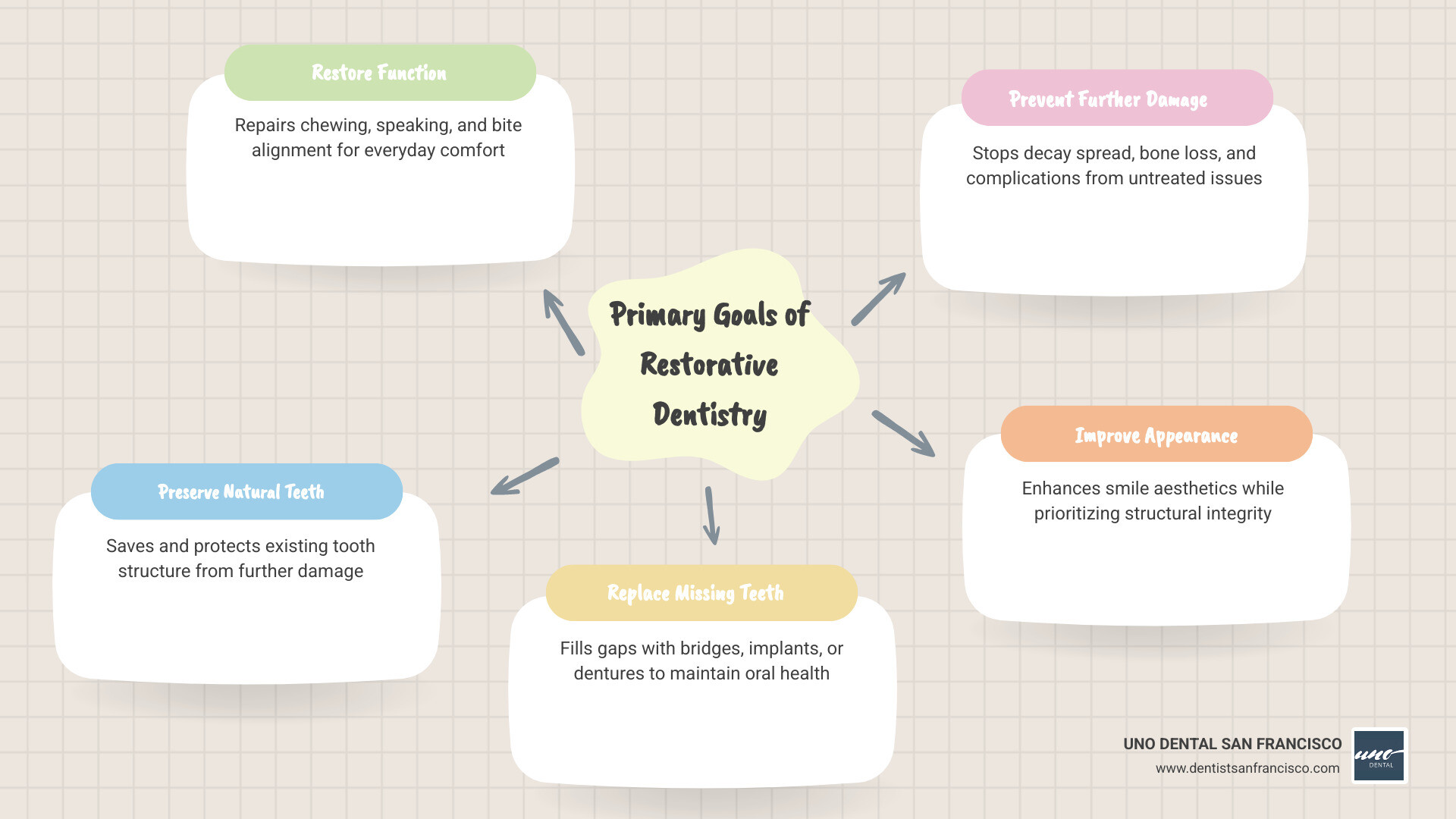
What is restorative dentistry? It is the branch of dentistry focused on repairing or replacing damaged and missing teeth to restore their function, structure, and appearance. In short, it helps your mouth work the way it should -- and look good doing it.
Quick answer:
- What it is: A field of dentistry that repairs or replaces teeth damaged by decay, trauma, or wear
- What it treats: Cavities, cracked teeth, missing teeth, infected pulp, and more
- Common procedures: Fillings, crowns, bridges, implants, root canals, dentures
- Main goal: Restore normal bite function, prevent further damage, and preserve natural teeth wherever possible
- Who needs it: Anyone with damaged, decayed, or missing teeth affecting their oral health or daily life
Think about how much you rely on your teeth every day -- chewing, speaking, smiling. When something goes wrong, everything feels harder. Dental problems don't fix themselves. Left untreated, a small cavity can become an infection. A missing tooth can lead to bone loss. The effects reach further than most people expect.
That's exactly what restorative dentistry is designed to address -- not just the visible damage, but the underlying health of your entire mouth.
I'm Mohammad Aghiad Kandar, DDS, and with over 15 years of clinical experience -- including advanced training -- I've helped hundreds of patients understand what is restorative dentistry and how the right treatment plan can genuinely change their quality of life. At UNO DENTAL SAN FRANCISCO, I craft personalized restorative solutions that go beyond fixing teeth, focusing on long-term oral health tailored to each patient's unique needs.
To better understand your options, you may want to explore specific treatments such as dental bonding near me, the process of a dental filling restoration, or what is involved in a complete dental restoration.
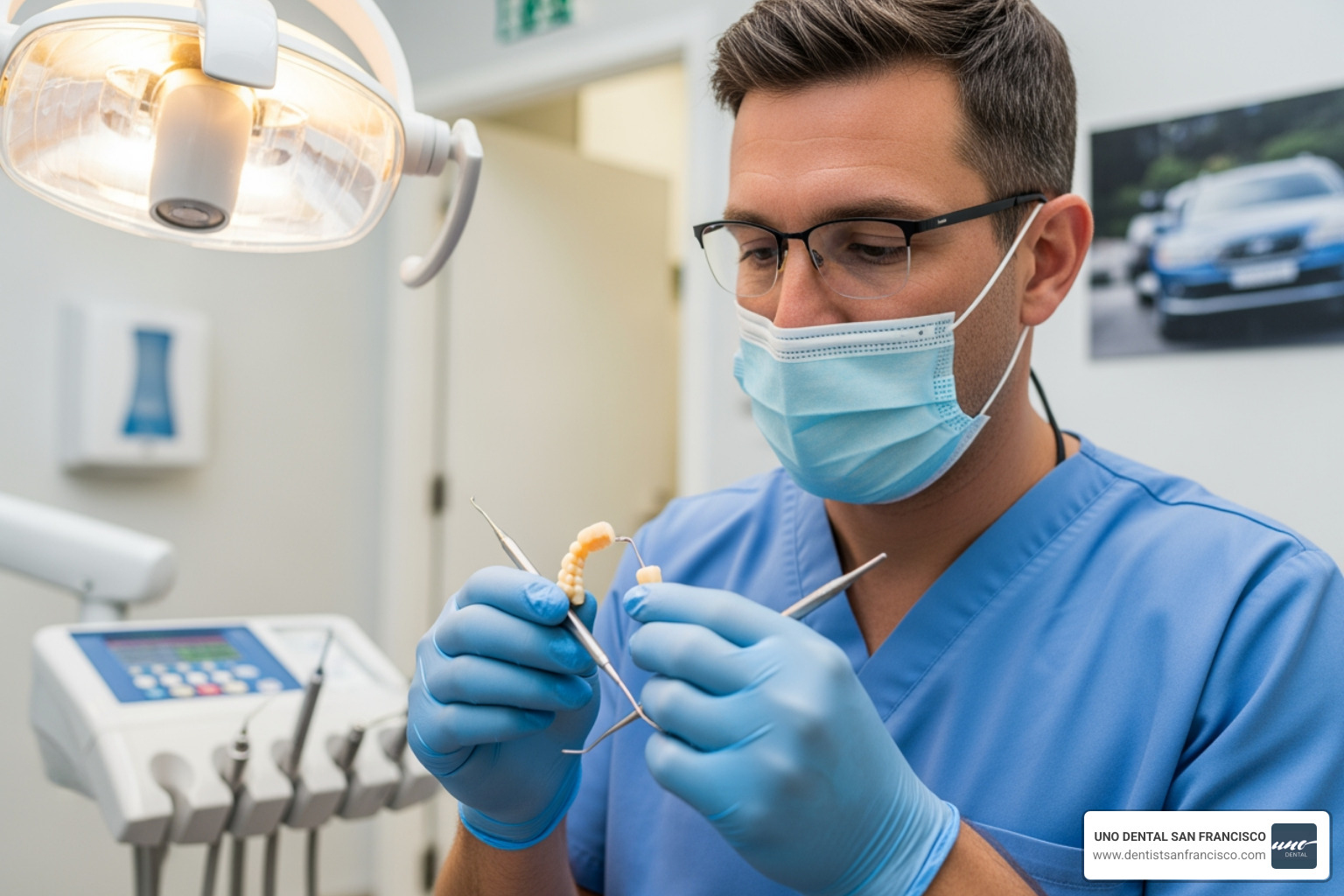
At its core, what is restorative dentistry? It is the study, diagnosis, and integrated management of diseases of the teeth and their supporting structures. While the term might sound technical, the goal is simple: tooth rehabilitation. We want to bring your mouth back to a state where it functions perfectly and looks natural.
In the past, restorative care was often a "patch-and-repair" job. Today, it is a sophisticated field that focuses on integrated care. This means we don't just look at one tooth in isolation. We look at your bite, your gums, and the way your jaw moves. Scientific research on the scope of reconstructive dentistry highlights that this branch of medicine may also involve the replacement of other tissues in the mouth to ensure a comprehensive recovery.
Common conditions treated by what is restorative dentistry
We use restorative techniques to address a wide range of issues that can compromise your oral health. These include:
- Dental Caries (Cavities): The most common reason for restoration. Decay destroys the enamel and can reach the inner pulp if not treated.
- Tooth Fractures: Chips or cracks caused by trauma, biting on hard objects, or old, failing fillings.
- Hypodontia: A condition where teeth are congenitally missing, requiring us to fill the gaps for proper function.
- Maxillofacial Trauma: Injuries to the face and jaw that result in broken or lost teeth.
- Severe Tooth Wear: Often caused by acid reflux or chronic grinding (bruxism).
Understanding what restoration means in dentistry is about recognizing that we are building back what was lost to ensure your mouth remains a healthy environment.
The integration of dental specialties
One of the reasons restorative dentistry is so effective is that it integrates several specialized fields:
- Endodontics: Focusing on the "inside" of the tooth (root canals) to save a tooth from extraction.
- Periodontics: Ensuring the gums and bone (the foundation) are healthy enough to support restorations.
- Prosthodontics: The design and placement of artificial replacements like crowns, bridges, and dentures.
This multidisciplinary approach ensures that when we fix a tooth, we aren't just putting a "cap" on a problem; we are ensuring the entire system is stable and healthy.
Restorative vs. Cosmetic and Preventive Care
It is easy to get confused between the different "branches" of dentistry. While they often overlap, they serve very different primary purposes.
| Feature | Preventive Dentistry | Restorative Dentistry | Cosmetic Dentistry |
|---|---|---|---|
| Primary Goal | Avoid disease/damage | Repair damage/replace teeth | Enhance appearance |
| Common Procedures | Cleanings, fluoride, sealants | Fillings, crowns, implants | Whitening, veneers |
| Necessity | Essential for maintenance | Medically necessary for health | Usually elective |
| Structural Focus | Protecting enamel | Restoring structural integrity | Improving shape/color |
To learn more about how we categorize these treatments, you can explore our restorative dentistry services.
Distinguishing function from aesthetics
The biggest difference lies in "need" versus "want." Preventive care (oral prophylaxis) is about stopping problems before they start. Cosmetic dentistry is often elective, focusing on aesthetic enhancement.
What is restorative dentistry's unique lane? It focuses on medical necessity. If you have a cavity, you need a filling to stop the infection. If you have a missing tooth, you need a replacement to maintain bite alignment and prevent your other teeth from shifting. While we always want the result to look beautiful, the priority is always function and tooth preservation.
Overlapping benefits in modern care
In modern dentistry, the line between restorative and cosmetic care is beautifully blurred. We don't use silver or gold as often as we used to (unless a patient specifically requests it). Instead, we use high-tech porcelain materials and composite bonding that mimic the natural translucency of real teeth. This means that a direct restoration -- like a tooth-colored filling -- provides both the structural repair you need and the natural appearance you want.
Common Types of Restorative Dental Procedures
When you visit us at UNO DENTAL SAN FRANCISCO, we evaluate the extent of the damage to recommend the most conservative yet effective treatment.
Fillings and Crowns
- Composite Fillings: Used for smaller cavities. We remove the decayed tissue and fill the space with a resin that bonds directly to the tooth.
- Dental Crowns: When a tooth is too damaged for a filling, a dental crown acts as a "cap" to cover the entire visible portion of the tooth. This restores its shape, size, and strength.
Inlays and Onlays
Think of these as the "middle ground" between a filling and a crown.
- Inlays: Fit inside the cusps (the bumps) of the tooth.
- Onlays: Cover one or more cusps. They are often called "partial crowns" because they preserve more of your natural tooth structure than a full crown would.
Root Canal Therapy
If decay reaches the pulp (the nerves and blood vessels inside your tooth), a root canal is necessary. We remove the infected pulp, clean the canals, and seal them. According to research on tooth preservation, a root canal followed by a crown is one of the most effective ways to save a natural tooth that would otherwise need to be pulled.
Tooth replacement solutions
If a tooth is already gone, we have several ways to "bridge" the gap:
- Dental Bridges: A set of artificial teeth anchored by crowns on the healthy teeth on either side of the gap.
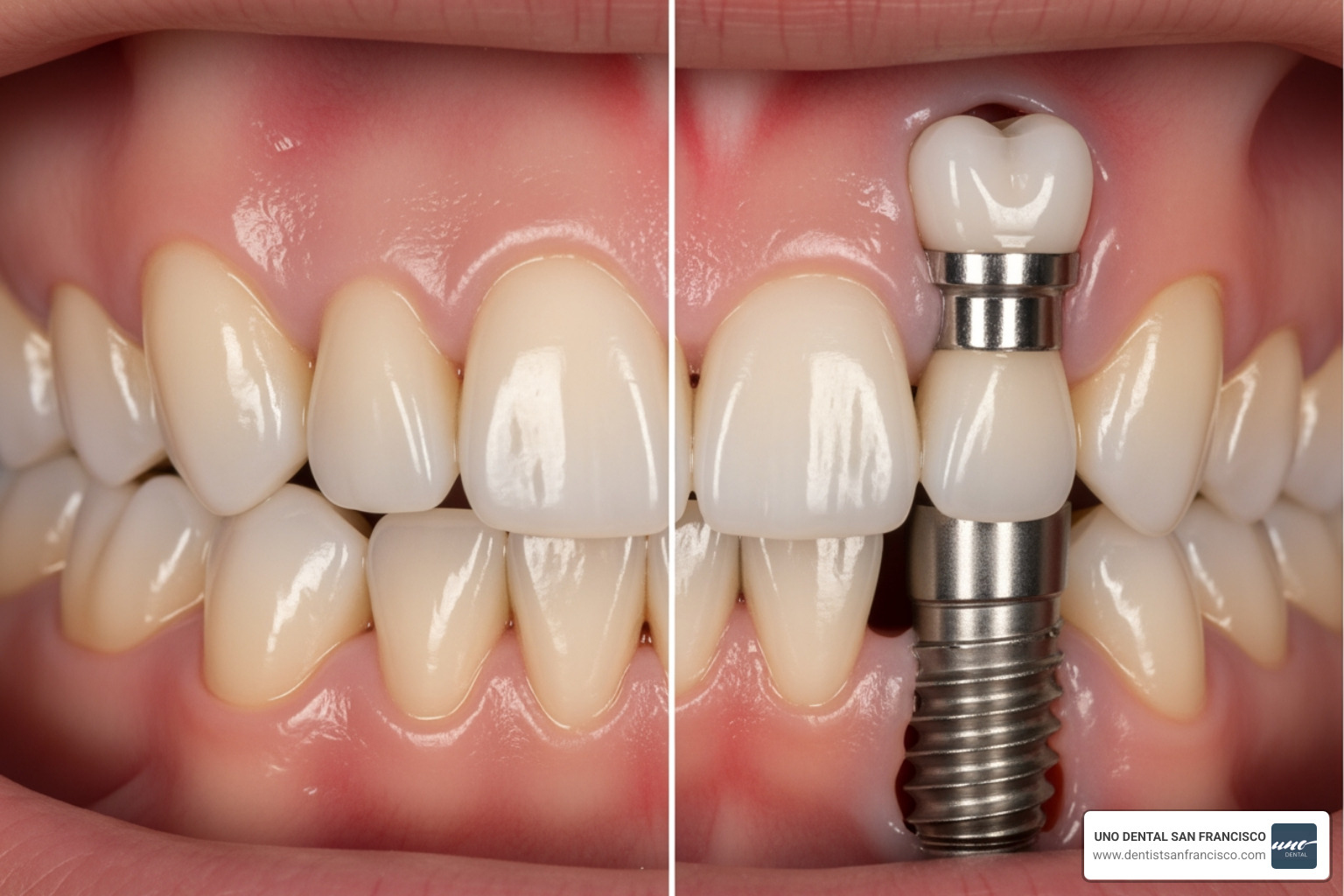
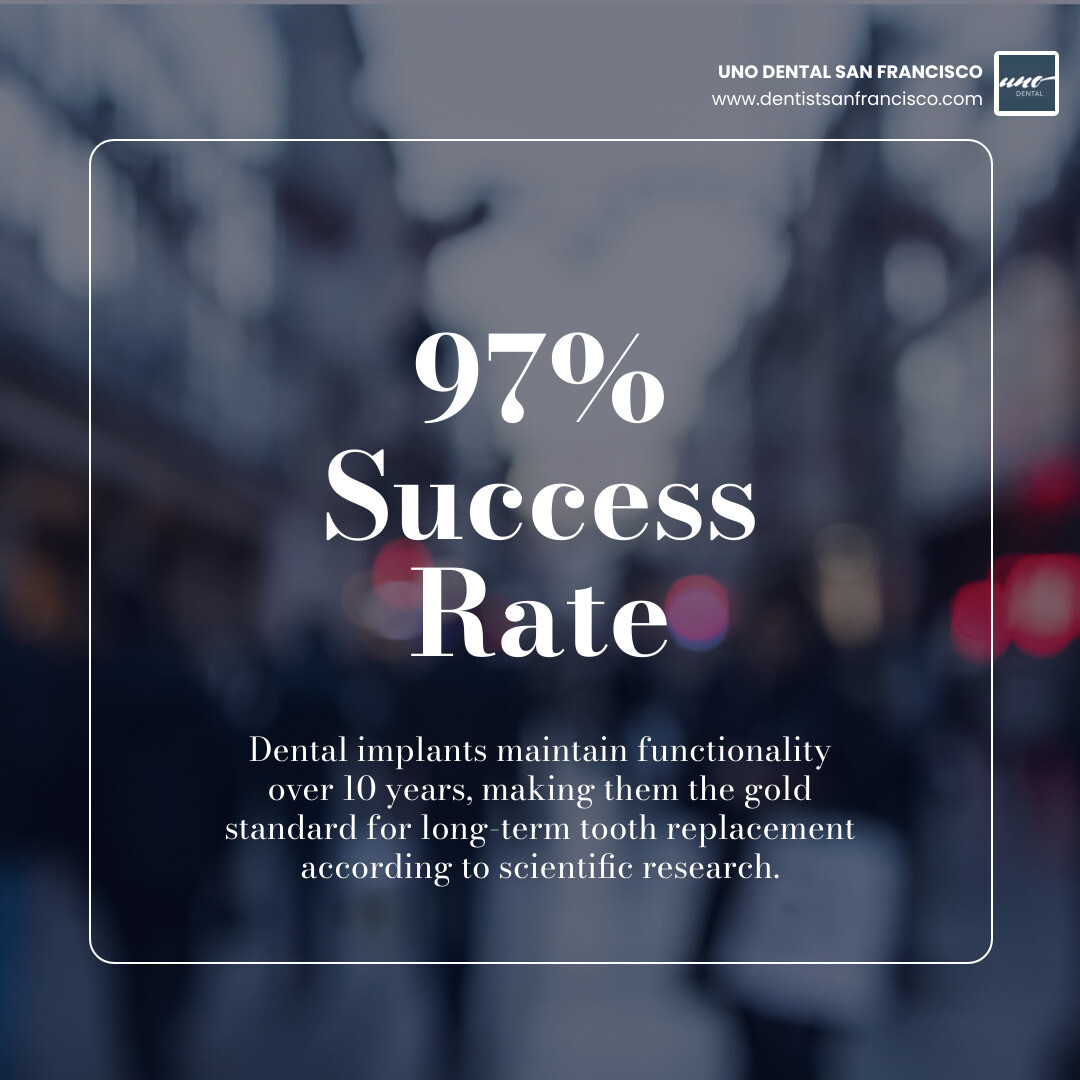
- Dental Implants: The "gold standard." These are titanium posts surgically placed into the jawbone. Scientific research on dental implant success rates shows a staggering 97% success rate over 10 years.
- Dentures: Removable appliances that replace multiple teeth (partial dentures) or a full arch.
Conservative restoration options
At UNO DENTAL, we believe in "minimally invasive" care. This includes protective restorations and dental bonding. These procedures allow us to repair minor chips and cracks using mercury-free materials that preserve as much of your natural enamel as possible.
Procedure, Recovery, and Maintenance

The process for restorative dentistry procedures has changed significantly thanks to technology. At UNO DENTAL, we use digital impressions instead of messy putties, and local anesthesia ensures you remain comfortable throughout.
What to expect during recovery
Recovery times vary depending on the complexity of the work:
- Fillings/Crowns: Usually, you can eat normally as soon as the numbness wears off. You might experience some temporary post-operative sensitivity to hot or cold for a few days.
- Dental Implants: While the initial healing of the gums happens quickly, scientific research on dental implant recovery times notes that osseointegration (the bone bonding to the implant) takes about 3 to 6 months.
For a deeper dive into what to expect this year, check out our restorative dentistry guide 2025.
Long-term care for dental work
Just because a tooth is "restored" doesn't mean it's invincible. Plaque can still build up at the margin where the restoration meets the natural tooth. To ensure the longevity of your restorations:
- Brush twice a day with non-abrasive toothpaste.
- Floss daily. This is critical for bridges and crowns to prevent gum disease.
- Avoid "ice-chewing" or using your teeth as tools to open packages.
Ensuring the longevity of restorations
With proper care, most dental restorations can last more than 10 years. Over time, a crown might need re-cementing, or a filling might show signs of wear. Regular checkups allow us to perform structural monitoring, catching small issues before they require a full replacement. You can find more tips in our complete dental guide.
Frequently Asked Questions about Restorative Care
How much does restorative dentistry cost and does insurance cover it?
The cost depends entirely on the material used and the complexity of the procedure. For example, a single tooth replacement can range from $3,000 to $4,500.
The good news? Because restorative dentistry is often considered "medically necessary," most insurance plans cover a significant portion of fillings, root canals, and crowns. However, coverage for implants or dentures can be limited. We provide detailed info about restorative dentistry costs and offer flexible financing options to help make your care affordable.
What are the risks of what is restorative dentistry?
While these procedures are very safe, potential side effects include:
- Temporary Sensitivity: Common for a few days after a filling or crown.
- Allergic Reactions: Rare, but possible with certain metals (which is why we prefer mercury-free, biocompatible materials).
- Infection: A small risk with any surgical procedure like an implant, though high success rates suggest this is uncommon.
What are the latest advancements in what is restorative dentistry?
We are in a "Golden Age" of dental tech. At UNO DENTAL SAN FRANCISCO, we utilize:
- 3D Imaging: For precise implant placement.
- CAD/CAM Technology: Which allows for highly accurate, custom-fitted crowns.
- Bioceramics: Materials that are more compatible with human tissue.
- Personalized Workflows: Tailoring the entire process to your specific jaw structure and health history.
Conclusion
Restorative dentistry is about more than just "fixing a hole." It is about restoring your quality of life. Whether you are dealing with a painful cavity, a missing tooth that affects your confidence, or a bite that does not feel right, there is a solution.
At UNO DENTAL SAN FRANCISCO, we combine high-tech dentistry with a warm, holistic approach. We believe that every patient deserves an individualized treatment plan that respects their time, comfort, and overall health. By offering comprehensive services under one roof, we help make your path to a healthier smile seamless and personalized.
You do not have to live with dental discomfort or embarrassment. We also offer free virtual smile consultations to help you explore your options from the comfort of your home. Ready to restore your smile? Schedule a consultation for restorative dentistry today.