

Why Digital Dental X-Rays Are Changing the Way We See Oral Health
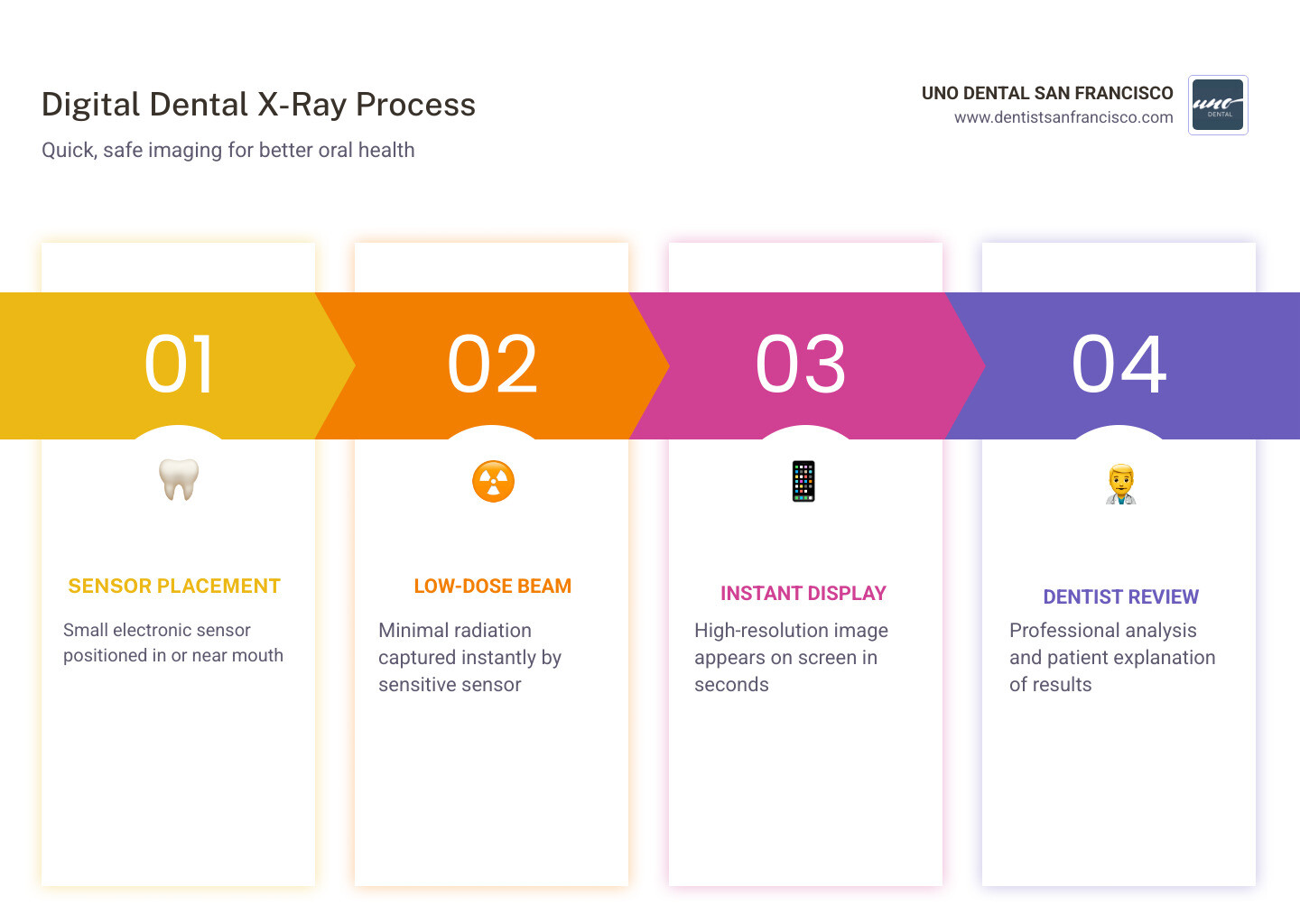
Digital dental x-rays are a modern imaging tool that uses electronic sensors - instead of traditional film - to capture detailed images of your teeth, gums, and jaw. Results appear on a screen within seconds, giving your dentist a clear, instant view of what's happening beneath the surface.
Here's what you need to know at a glance:
- What they are: Digital images of your teeth and jaw, captured by a small electronic sensor
- How they work: A sensor is placed in or near your mouth, and the image appears instantly on a computer screen
- Key benefit: They emit up to 90% less radiation than traditional film x-rays
- What they detect: Cavities, bone loss, infections, impacted teeth, and more - often before any symptoms appear
- Are they safe? Yes - a single digital dental x-ray exposes you to just around 35 microsieverts (uSv), far below the 5,000 uSv annual limit
- Does it hurt? No - the process is quick, painless, and non-invasive
Many dental issues develop silently. There's no pain, no visible sign - until the problem becomes serious. Digital x-rays make it possible to catch those issues early, when treatment is simpler and less costly.
I'm Dr. Mohammad Aghiad Kandar, DDS, and with over 15 years of clinical experience - including advanced clinical training - I've integrated digital dental x-rays into everyday practice at UNO DENTAL SAN FRANCISCO. Our high-tech, holistic approach allows us to provide individualized treatments and free virtual smile consultations, all under one roof. In this guide, I'll walk you through everything you need to know, from how the technology works to what to expect during your appointment.
Similar topics to digital dental x-rays:
What Are Digital Dental X-Rays and How Do They Work?
At its core, digital dental x-rays (also known as digital radiography) replace the old-fashioned plastic film packets with highly sensitive electronic sensors. If you remember biting down on those hard, sharp pieces of plastic that had to be developed in a darkroom for ten minutes, you will appreciate how much this technology has improved the patient experience.
Direct vs. Indirect Imaging
There are three primary ways we capture these images. In direct digital radiography, we place a sensor (often using CMOS or CCD technology) directly into your mouth. The sensor is connected to a computer, and as soon as the x-ray beam hits it, the image pops up on our monitor.
Indirect methods involve scanning traditional film into a digital format, while semi-indirect methods use photostimulable phosphor (PSP) plates. These plates are flexible like film but are "read" by a laser scanner to convert the data into a digital file. At UNO DENTAL, we prioritize the most advanced digital dental x-rays technology to ensure the highest resolution possible.
Types of Views
Depending on what we are looking for, we use different "views":
- Bitewing: Shows the crowns of the upper and lower teeth together to check for decay between teeth.
- Periapical: Captures the entire tooth from the crown to the end of the root where it anchors into the jaw.
- Panoramic: Provides a broad, flat view of the entire mouth, including all teeth, the upper and lower jaws, and the surrounding structures and tissues.
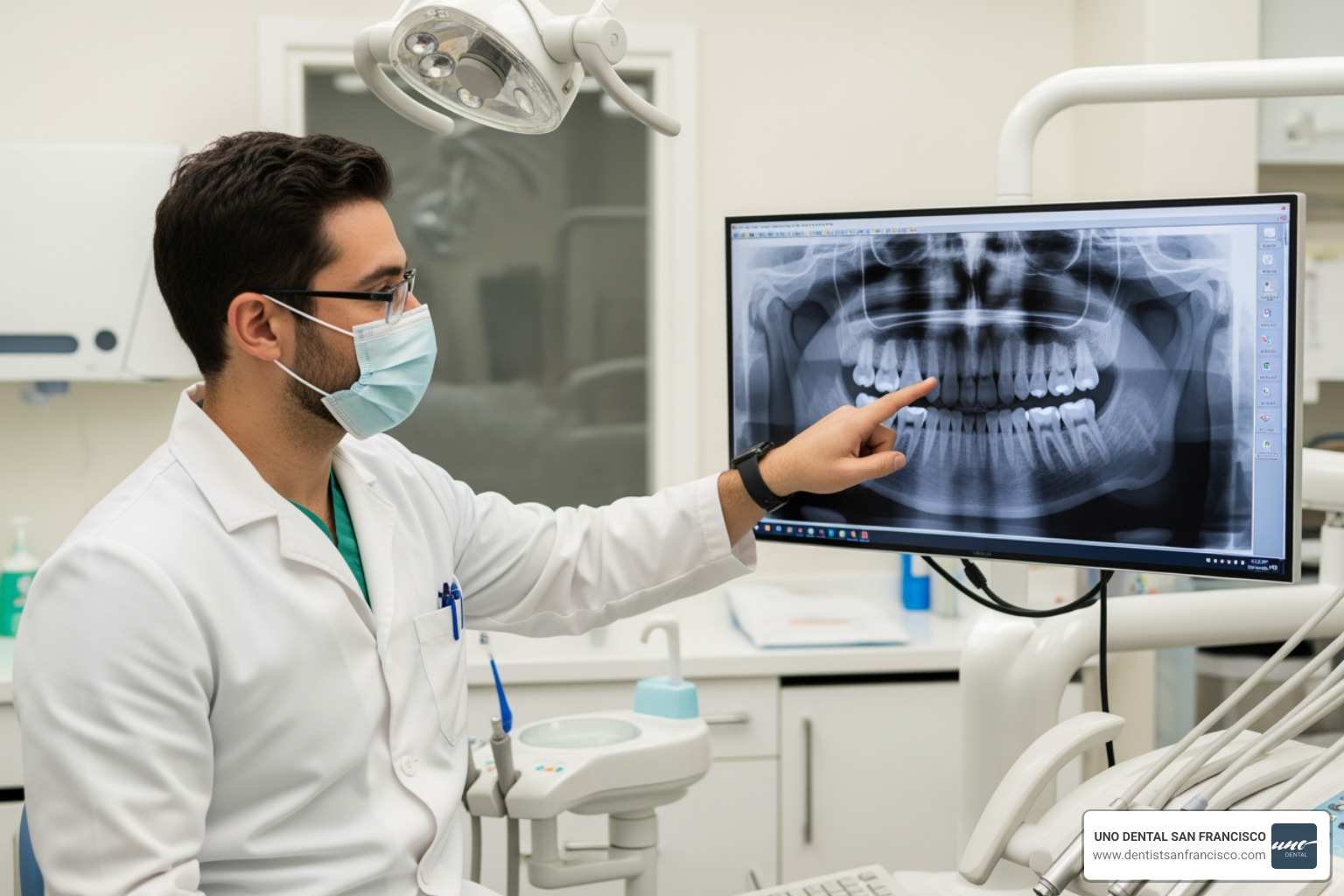
The real magic happens after the image is captured. Because the data is digital, we can use image manipulation software to zoom in on suspicious areas, adjust contrast to see bone density better, and even use digital subtraction radiography to compare your current x-ray with an old one, highlighting even the tiniest changes in your oral health.
The Evolution and Clinical Applications of Digital Imaging
The story of the x-ray began in 1895 when Wilhelm Roentgen discovered "X-light." For nearly a century, dentistry relied on physical film. However, the landscape shifted in 1987 when Dr. Francis Mouyen introduced the first digital radiography system. This was the birth of "filmless" imaging, a leap forward that has been extensively studied in scientific research on filmless imaging.
Clinical Applications: More Than Just Cavities
While most people think x-rays are just for finding "holes" in teeth, their clinical utility is vast:
- Caries Detection: Finding decay in small areas or under existing fillings.
- Periodontal Diagnosis: Measuring bone loss caused by gum disease.
- Endodontics: Visualizing the internal canals of a tooth during root canal therapy (we can see files as small as 0.06 mm!).
- Impacted Teeth: Checking the position of wisdom teeth before they cause pain.
- Forensic Dentistry: Assisting in identification and age determination through dental records.
By using digital dental x-rays, we can create a comprehensive treatment plan that addresses issues before they become emergencies.
Key Advantages of Digital Dental X-Rays Over Traditional Film
The transition from analog to digital isn't just about being "high-tech" - it's about better care. When you come in for a comprehensive oral exam, the difference is clear.
| Feature | Traditional Film X-Rays | Digital Dental X-Rays |
|---|---|---|
| Radiation Exposure | Standard | Up to 90% Less |
| Wait Time | 5-10 Minutes (Developing) | Instant (Seconds) |
| Image Quality | Fixed | Adjustable (Zoom/Contrast) |
| Environmental Impact | High (Chemicals/Lead) | Low (Eco-friendly) |
| Storage | Physical Cabinets | Secure Digital Servers |
Superior Precision in Digital Dental X-Rays
One of the greatest benefits is the ability to enhance the image. If we see a faint shadow that might be early decay, we can zoom in 400x or use contrast enhancement to confirm. This level of precision allows for "micro-dentistry," where we treat problems while they are still tiny, preserving more of your natural tooth structure.
Environmental and Efficiency Benefits
We are proud to be a "green" office. Traditional x-rays required toxic developer chemicals and lead foil backings that ended up in landfills. Digital dental x-rays eliminate this waste entirely. Furthermore, because the images are instant, your appointments are faster. We can share your files with specialists or insurance companies at the click of a button, streamlining your entire healthcare journey.
Safety First: Radiation Exposure and Patient Protection
Safety is the number one question we get asked. "Is this much radiation safe?" The short answer is: Yes.
Modern digital dental x-rays are designed around the ALARA principle - As Low As Reasonably Achievable. Because digital sensors are significantly more sensitive to x-rays than film, they require a much lower "dose" to produce a clear image.
Understanding Radiation in Digital Dental X-Rays
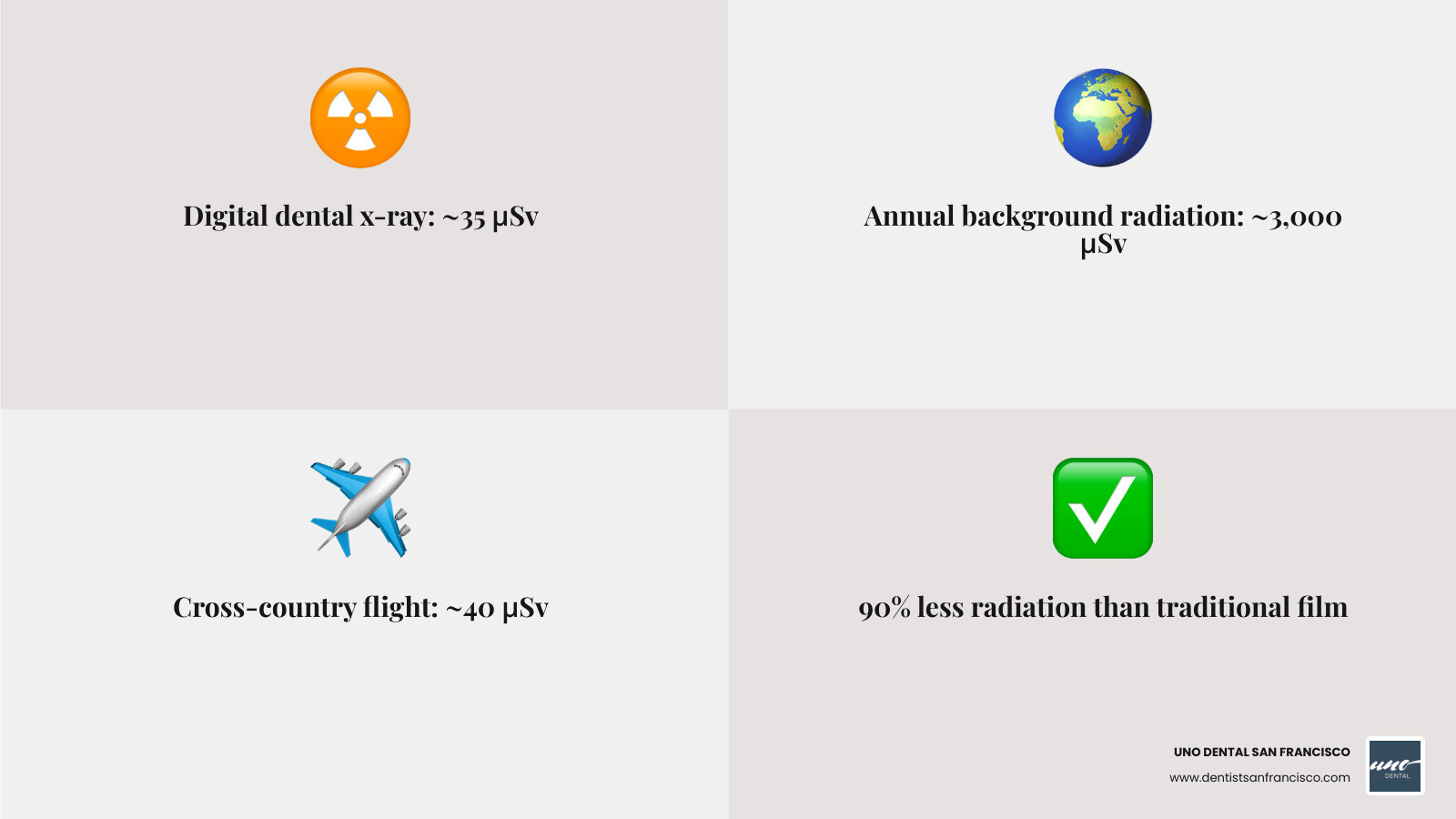
To put it in perspective, radiation is measured in microsieverts (uSv).
- Digital dental x-ray: ~35 uSv
- Average annual background radiation (from the sun/earth): ~3,000 uSv
- Cross-country flight (NY to LA): ~40 uSv (due to high altitude exposure)
You actually receive more radiation from a round-trip flight than from a set of dental x-rays! According to ADA recommendations on dental radiographs, the risk is minimal, making digital imaging one of the safest tools in modern medicine.
Special Considerations for Children and Pregnancy
We take extra precautions for our most sensitive patients.
- Children: Because their cells are dividing rapidly, we are extremely selective. We use x-rays to monitor developing jaws and permanent tooth eruption, but only when necessary. You can read more in our guide to pediatric dental x-rays.
- Pregnancy: While the radiation dose is incredibly low and focused only on the mouth, we generally postpone elective x-rays until after delivery. If an emergency arises, we use leaded aprons and thyroid collars to ensure total peace of mind for the mother and baby.
What to Expect During Your Digital X-Ray Procedure
If it's your first time getting a digital x-ray at UNO DENTAL, don't worry - it's the easiest part of your visit!
- Preparation: We'll ask you to remove any metal objects like large earrings, glasses, or removable dentures, as these can create "ghost images" on the scan.
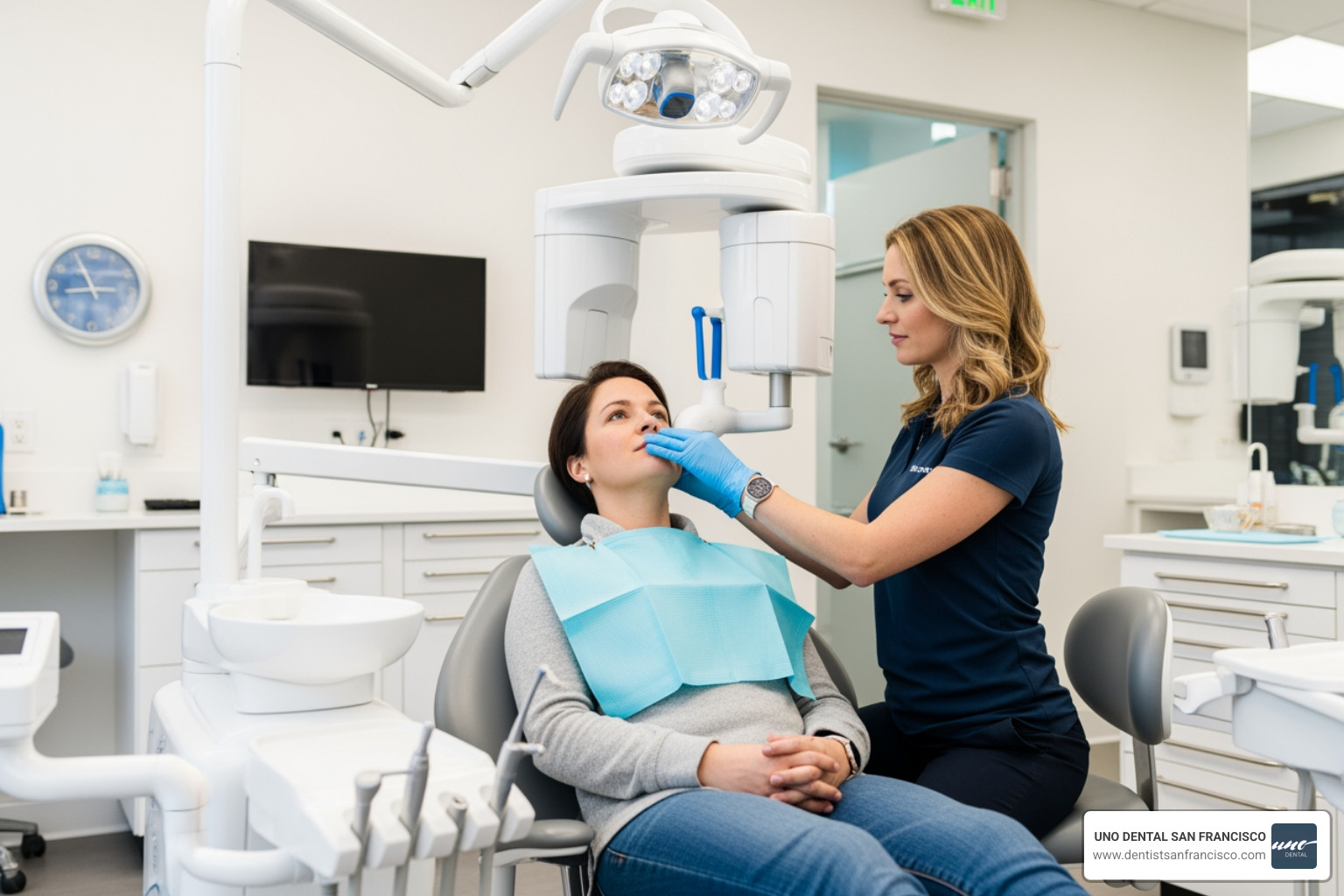
- Positioning: We place a small, sleek sensor inside your mouth. Unlike the old sharp films, these sensors are designed with rounded edges for comfort.
- The Scan: You'll hear a quick "beep," and that's it! The image is captured in a fraction of a second.
- Review: Before you even have a chance to rinse, the image is on the screen. We'll walk you through what we see during your comprehensive dental checkup, allowing you to be an active participant in your oral health.
Frequently Asked Questions about Digital Dental X-Rays
How often do I need digital x-rays?
There is no "one size fits all" answer. We follow the latest ADA guidelines, which state that x-rays should only be taken when diagnostically necessary. If you have a history of frequent cavities or gum disease, we might recommend them every 6-12 months. If your mouth is healthy and stable, you might only need them every 2 years.
Are digital x-rays safe for children?
Absolutely. In fact, they are safer for children than the old film versions because of the 90% reduction in radiation. They are vital for checking if adult teeth are coming in straight and for catching "hidden" cavities that can spread quickly in soft primary (baby) teeth.
Why does my dentist need x-rays if I have no pain?
Pain is often the last symptom of a dental problem. By the time a tooth hurts, you might need a root canal or an extraction. Digital dental x-rays allow us to see "interproximal" decay (between teeth) and silent infections at the root tip before they ever cause a throb.
Conclusion
At UNO DENTAL SAN FRANCISCO, we believe that the best dentistry is proactive, not reactive. By utilizing the latest digital dental x-rays, we provide our patients with the safest, fastest, and most accurate diagnostic care available today.
Our holistic approach means we look at the big picture of your health, using technology to minimize risks and maximize your comfort. We are proud to offer individualized treatments and free virtual smile consultations, all under one roof. Whether you are coming in for a routine checkup or looking for a transformative change, we are here to guide you every step of the way.
Ready to see your smile in high definition? Schedule a consultation with a dentist in San Francisco today and experience the future of dental care.