

Understanding Scaling and Root Planing
Before we dive into the nitty-gritty of deep cleaning dental aftercare, it is helpful to understand exactly what happened during your appointment. Unlike a routine cleaning that focuses on the surfaces of your teeth above the gum line, a deep cleaning—medically known as scaling and root planing—goes much deeper.
During the "scaling" phase, we remove plaque and tartar (calculus) from the tooth surface and the pockets between your teeth and gums. The "root planing" phase involves smoothing out the roots of your teeth. This helps your gums reattach to the teeth and makes it harder for bacteria to colonize those areas in the future.
Why Deep Cleaning is Necessary
You might be wondering why a standard cleaning wasn't enough. When plaque and tartar build up below the gum line, they create an infection. This is the hallmark of periodontal disease. If left untreated, this infection causes the gums to pull away from the teeth, leading to bone loss and, eventually, tooth loss.
By performing a deep cleaning, we are essentially "resetting" your oral health. We remove the source of the infection so your body can begin the healing process. Because this procedure involves working deep within the gum tissues, the area will be sensitive, which is why periodontal treatment requires a dedicated aftercare plan.
Essential Steps for Deep Cleaning Dental Aftercare
The goal of deep cleaning dental aftercare is twofold: to keep you comfortable and to prevent a reinfection while your gums are in a vulnerable state. Think of your gums as a healing wound; they need a clean, gentle environment to close up those "pockets" that the bacteria created.
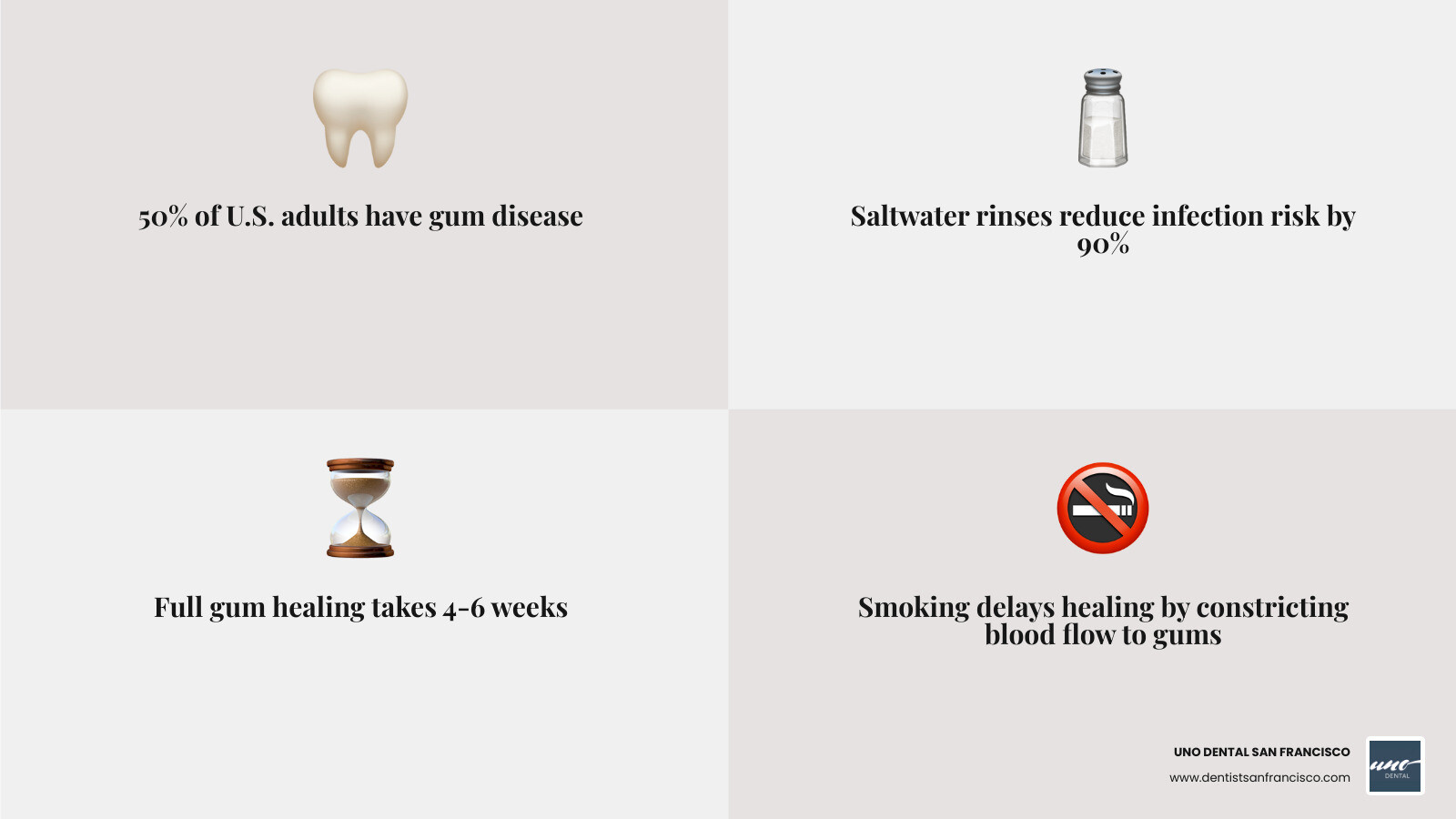
Following aftercare instructions diligently can reduce your risk of post-procedure infection by up to 90%. Here is how to steer the first few days.
Immediate Recovery and Anesthesia Management
Most deep cleanings involve a local anesthetic to ensure you don't feel pain during the procedure. This numbness usually lasts for 2 to 3 hours.
- The "No-Chew" Rule: Do not attempt to eat until the numbness has completely worn off. It is incredibly easy to accidentally bite your tongue, cheek, or lip with significant force when you can't feel them.
- Activity Levels: Avoid strenuous physical activity for the first 24 hours. Increased heart rate can lead to more throbbing and bleeding in the treated gum areas.
- Vices to Avoid: It is critical to avoid smoking and alcohol for at least 72 hours. According to the American Dental Association (ADA), smoking significantly delays healing because nicotine constricts blood flow to the gum tissues. Alcohol can interfere with the healing process and may have adverse reactions with any prescribed medications.
Dietary Choices for Deep Cleaning Dental Aftercare
What you eat (and when you eat it) plays a massive role in your comfort.
- The Two-Hour Window: Even if you aren't numb, wait at least 2 hours before eating to allow the gum tissues to begin stabilizing.
- The 72-Hour Soft Food Diet: Stick to soft foods for the first three days. Great options include:
- Yogurt and smoothies (avoid using a straw, as the suction can disturb the gum line).
- Mashed potatoes or cauliflower.
- Scrambled eggs.
- Applesauce.
- Lukewarm soups (avoid piping hot liquids).
- Foods to Avoid: Steer clear of "sharp" foods like chips, popcorn, or nuts, which can get lodged in the healing gum pockets. Also, avoid spicy or highly acidic foods (like citrus), as these will sting your sensitive gums.
Managing Pain, Sensitivity, and Gum Soreness
It is perfectly normal to feel like you’ve gone a few rounds with a heavyweight boxer in the dental chair. Your gums may look red and feel "achy" for a day or two.
- Medication: Over-the-counter pain relief is usually all that's needed. We often recommend a combination of ibuprofen (Advil/Motrin) and acetaminophen (Tylenol) if your medical history allows it. A common effective dose is 400mg of ibuprofen with 500mg of acetaminophen every 6-8 hours.
- Cold Compresses: If you experience slight swelling, apply a cold compress to the outside of your face for 15-20 minutes on, then 15-20 minutes off.
- Bleeding: You might see "pink saliva" or minor oozing for the first 24-48 hours. This is a normal immune response. If bleeding seems heavy, you can apply pressure with a moistened gauze or even a damp tea bag (the tannic acid helps clots form) for 20 minutes.
Managing Tooth Sensitivity
As the inflammation in your gums goes down, the tissue may shrink slightly. This is actually a sign of healing, but it can expose parts of the tooth root that were previously covered by swollen gums or tartar. This leads to temporary sensitivity to cold, heat, or sweets.
- Desensitizing Toothpaste: Switch to a toothpaste like Sensodyne. For extra relief, you can smear a little bit of the toothpaste over the sensitive area before bed and leave it overnight.
- Fluoride Gels: We may prescribe a high-concentration fluoride gel to help seal the tubules in your teeth and block sensitivity.
- Avoid Whitening: Do not use whitening strips or whitening toothpaste for at least two weeks post-procedure, as these chemicals will exacerbate sensitivity.
Oral Hygiene and Infection Prevention
Keeping your mouth clean is the most important part of deep cleaning dental aftercare, but you have to be gentle. You want to remove new plaque without disrupting the healing tissue.
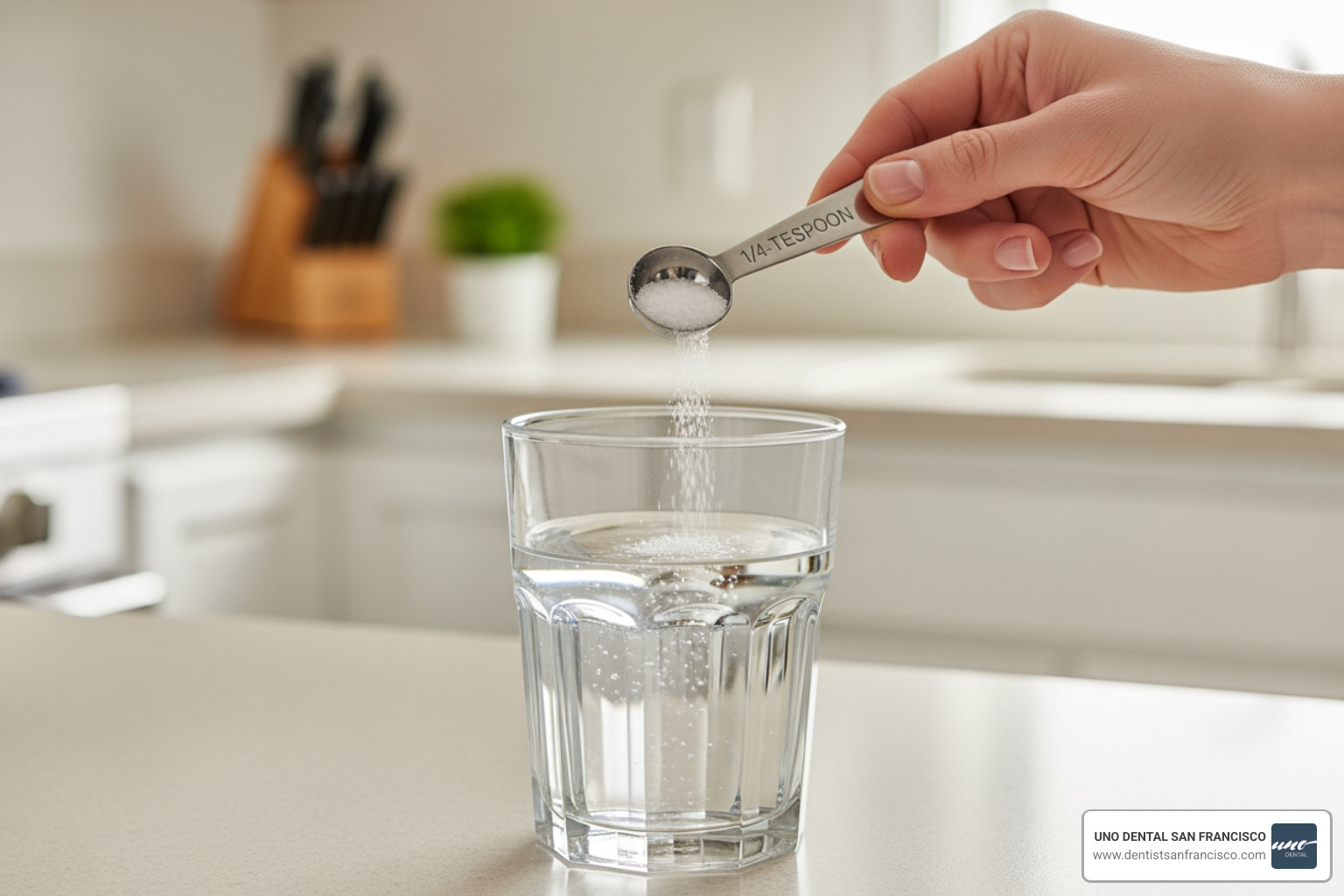
- The Saltwater Rinse: This is your best friend. Starting 24 hours after your procedure, rinse with warm saltwater 4-6 times a day.
- The Recipe: Mix 1/4 teaspoon of salt into an 8-ounce glass of warm water.
- The Technique: Swish gently for 30 seconds and let it spit out. Do not swish aggressively.
- Antibacterial Rinses: We may prescribe a rinse like Peridex (Chlorhexidine). Use this exactly as directed. Antibacterial rinses can lower infection risk by up to 90%.
- Antibiotics: If we placed an antibiotic like Arestin in the pockets or prescribed oral antibiotics, make sure you finish the entire course, even if you feel fine.
For more tips on maintaining your progress, check out our guide on gingivitis self-care.
Brushing Techniques for Deep Cleaning Dental Aftercare
You should resume brushing the evening of your procedure, but with a modified approach:
- The Brush: Use only a soft-bristled or extra-soft toothbrush.
- The Angle: Hold the brush at a 45-degree angle toward the gum line.
- The Motion: Use very gentle, circular strokes. Think of it as "massaging" the teeth rather than scrubbing them.
- Flossing: Wait at least 24 hours to floss, and be extremely gentle for the first 4-5 days. If you use a Waterflosser, keep it on the lowest pressure setting to avoid "power washing" the delicate gum attachments.
Long-Term Healing and Maintenance
While you will feel "back to normal" within a week, the biological process of gum reattachment takes longer.
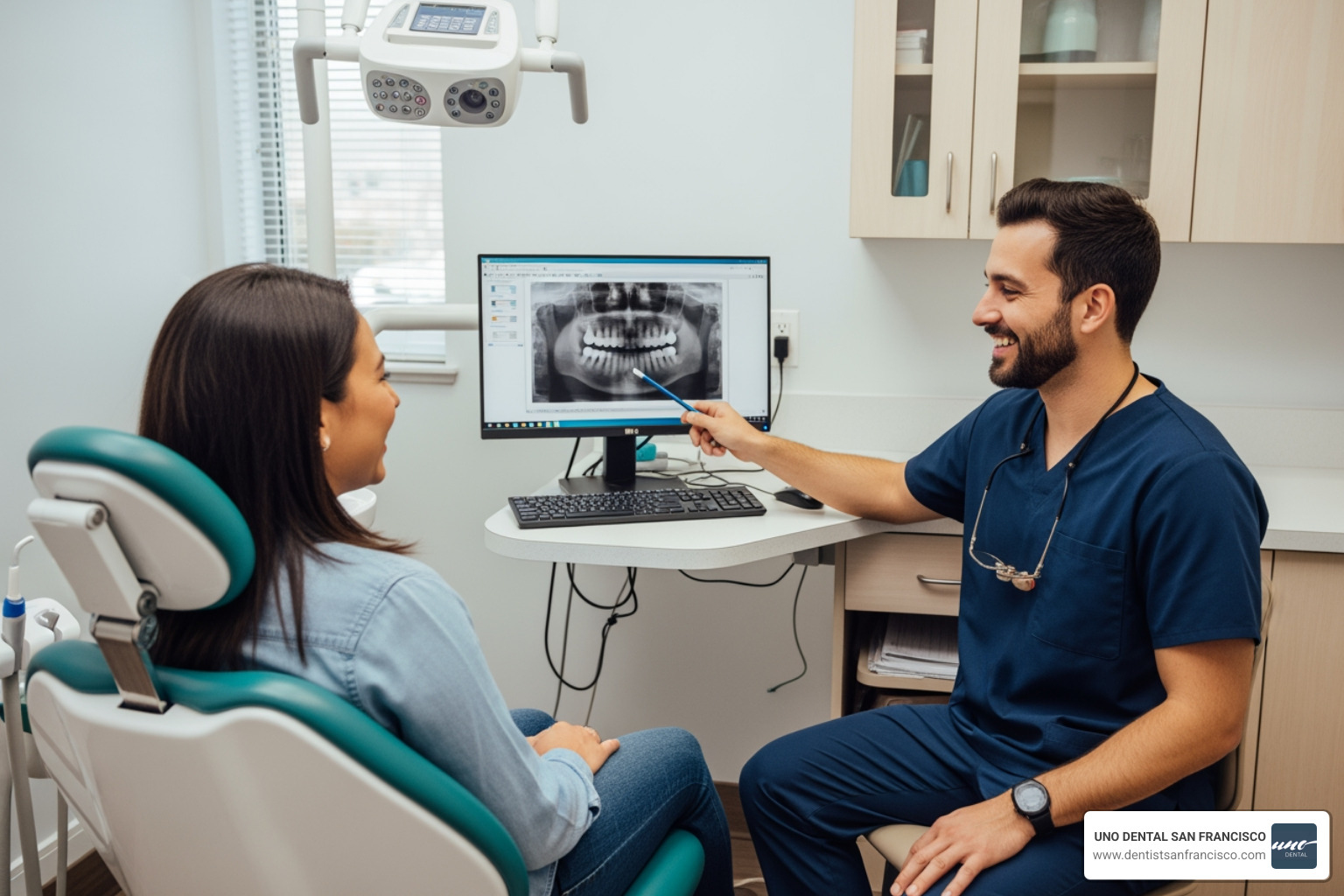
Full healing of the gum tissues typically takes 4 to 6 weeks. During this time, the "pockets" that were measured during your initial exam should begin to shrink. Regular professional teeth cleaning becomes even more important now to ensure that plaque doesn't find its way back into those healing areas.
When to Call Your Dentist
While discomfort is expected, certain symptoms are red flags that require a call to UNO DENTAL San Francisco:
- Severe Pain: Pain that is not controlled by OTC medication or gets worse after the third day.
- Fever or Chills: Signs that a systemic infection may be present.
- Pus: Any yellowish discharge from the gum line.
- Heavy Bleeding: Bleeding that does not stop with pressure.
- Allergic Reaction: Rashes or difficulty breathing after taking prescribed medication.
Frequently Asked Questions about Deep Cleaning Aftercare
Can deep cleaning cause teeth to feel loose?
Yes, and it can be a bit scary! However, it is usually temporary. Before the procedure, large deposits of tartar were essentially "splinting" your teeth together. Once that "bridge" of tartar is removed, the teeth may feel slightly mobile. As the gums heal, tighten, and reattach, the teeth should stabilize.
How long does full gum healing take?
According to ADA guidelines, while initial soreness fades in a few days, full tissue maturation and reattachment take 4-6 weeks. This is why we typically schedule your follow-up evaluation for about a month after the procedure.
Is bleeding normal after a deep cleaning?
Minor bleeding and "pink" saliva are completely normal for the first 24-48 hours. Because your immune system is sending blood and white blood cells to the area to repair the tissue, you may see occasional spotting for up to 10-14 days if you brush a little too hard.
Conclusion
At UNO DENTAL San Francisco, we believe that a deep cleaning is the first step toward a lifetime of better oral health. By following these deep cleaning dental aftercare steps, you are protecting your investment and ensuring that your gums have the best possible environment to heal.
Our team is dedicated to providing high-tech, holistic, and patient-centered care right here in the heart of San Francisco. If you have any questions during your recovery or are ready to schedule your follow-up, we are here to help. Visit The Ultimate Guide to Deep Cleaning Aftercare to learn more and book your next visit.