

Why Understanding Your Dental Crown Material Options Matters
Dental crown material options include porcelain, all-ceramic, zirconia, porcelain-fused-to-metal (PFM), gold alloys, and composite resin. Each material offers different benefits:
- All-Ceramic/Porcelain - Best for front teeth, natural appearance, metal-free
- Zirconia - Strongest ceramic option, works for front or back teeth
- Lithium Disilicate (E-max) - Superior translucency, excellent for visible areas
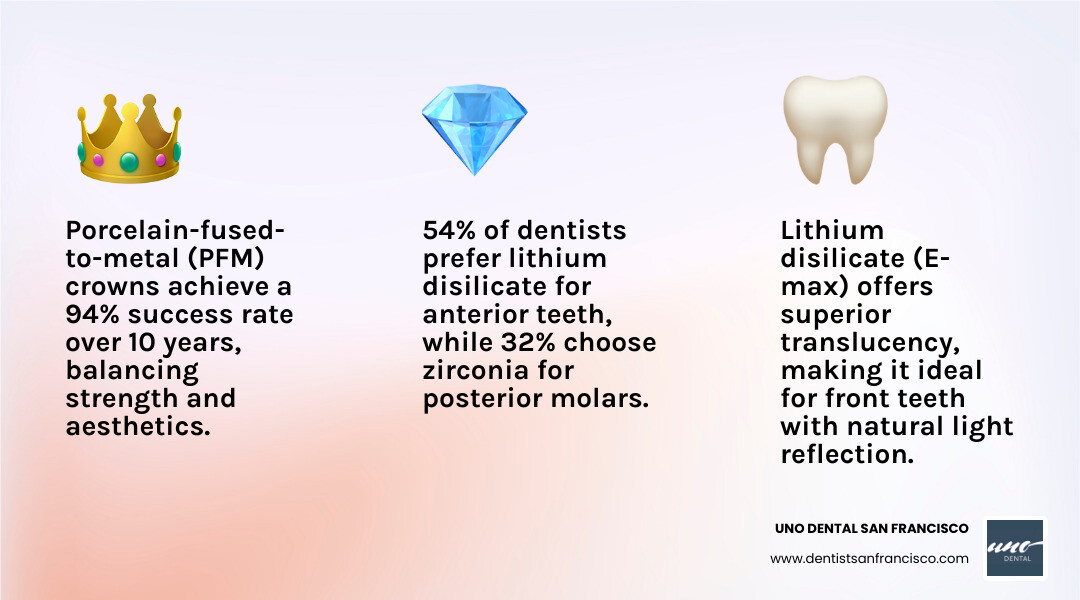
- Porcelain-Fused-to-Metal (PFM) - Balances strength and aesthetics, 94% success rate over 10 years
- Gold/Metal Alloys - Most durable for back molars, minimal tooth removal needed
- Composite Resin - Temporary or budget option, lasts 3-8 years
If you've been told you need a crown, you're probably wondering which material is right for you. The choice isn't always simple. Different materials work better for different teeth, and what's perfect for your friend might not be ideal for your situation.
Your front teeth need crowns that look natural and translucent. Your back molars need materials that can withstand heavy chewing forces. Some materials require removing more of your natural tooth structure than others. And if you have metal sensitivities, that eliminates certain options entirely.
Recent research from the National Dental Practice-Based Research Network surveyed over 1,777 dentists and found that material preferences vary significantly based on tooth location. For front teeth, 54% of dentists prefer lithium disilicate, while for back teeth, 32% choose all-zirconia and 31% select PFM crowns. This shows there's no one-size-fits-all answer.
The good news? Today's dental crown materials are more advanced than ever. Modern ceramics combine metal-like strength with natural tooth appearance. Same-day CEREC technology lets you skip temporary crowns. And with proper care, most crowns last 10-15 years or longer.
As Mohammad Aghiad Kandar, DDS at UNO DENTAL SAN FRANCISCO, I've spent over 15 years helping patients navigate dental crown material options to find the perfect balance of durability, aesthetics, and functionality for their unique needs. My training at UCSF and extensive experience with restorative and prosthodontic solutions has shown me that understanding your options is the first step to making a confident decision about your dental health.
Dental crown material options vocab to learn:
Understanding Your Dental Crown Material Options
When we talk about Dental crown material options, we are looking at the "ingredients" used to rebuild your tooth. Think of a crown as a custom-fitted helmet for a damaged tooth. It restores the shape, size, and strength while protecting what remains of your natural enamel.

The selection process isn't just about what looks best in a mirror. According to Scientific research on dentist material selection, dentists weigh clinical success against factors like bite force and the patient's biological response. At UNO DENTAL, we prioritize biocompatibility—ensuring the material we place in your mouth won't cause inflammation or allergic reactions.
To help you visualize the differences, here is a quick comparison of the most common materials we use in our San Francisco practice:
| Material | Strength (MPa) | Aesthetics | Best Use |
|---|---|---|---|
| Lithium Disilicate (E-Max) | 360–400 | Superior | Front Teeth (Anterior) |
| Monolithic Zirconia | 900–1200 | Good | Back Molars (Posterior) |
| PFM (Porcelain-Fused-to-Metal) | High (Metal Core) | Moderate | Bridges / Support |
| Gold Alloy | Exceptional | Low (Metallic) | Heavy Grinders / Molars |
Whether you need a simple dental crown service or a full smile makeover, the material is the foundation of your success.
All-Ceramic and Porcelain Dental Crown Material Options
For patients seeking the most natural look, all-ceramic and porcelain are the gold standard. These materials are entirely metal-free, making them an excellent choice for those with sensitivities or holistic health preferences.
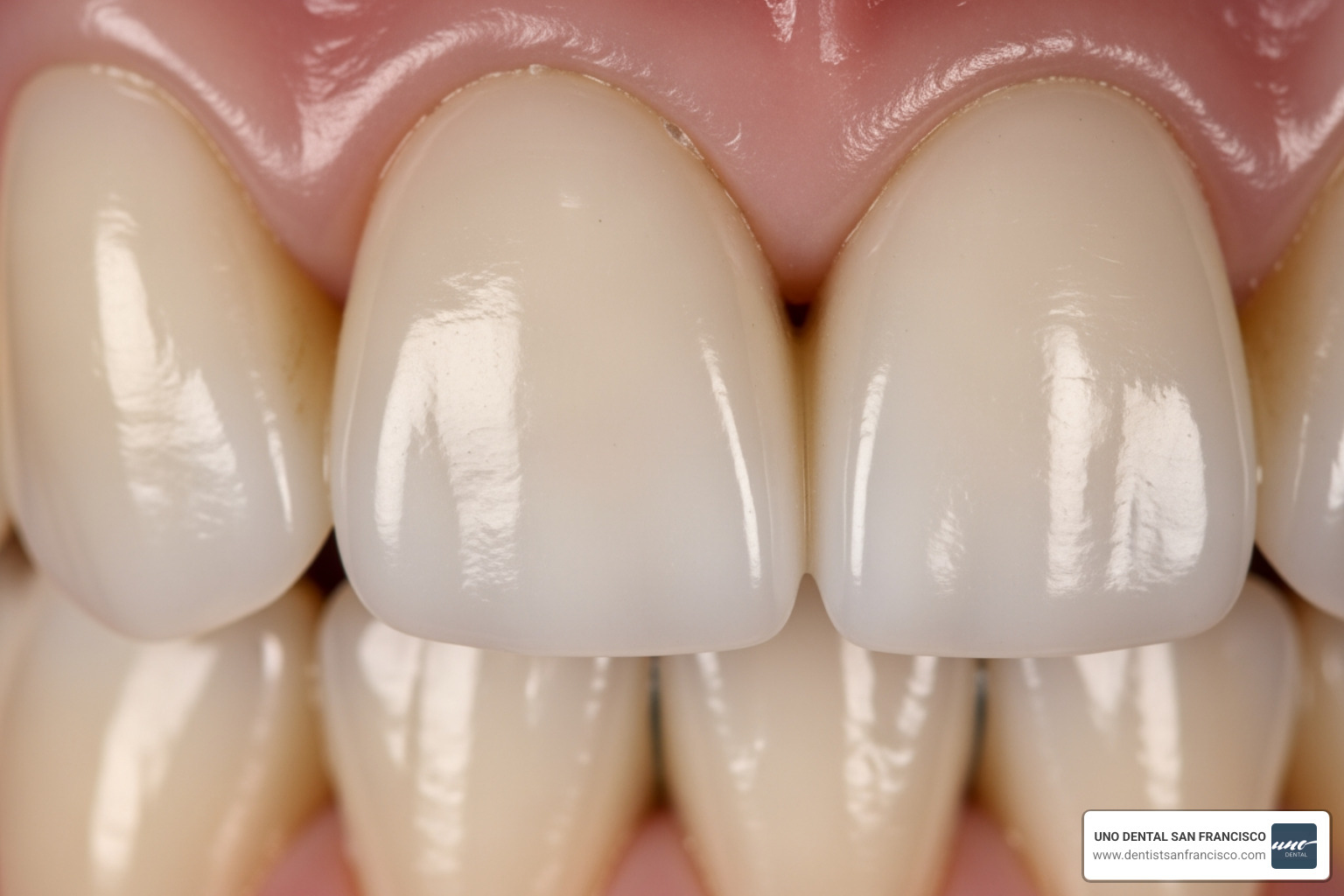
Lithium Disilicate (E-Max) is currently the "it" material for cosmetic dentistry. It mimics the light-reflecting properties of natural enamel better than almost any other substance. Because it is slightly translucent, it blends seamlessly with your surrounding teeth. However, because it has a lower flexural strength than zirconia, it is most commonly used for front teeth (where 54% of dentists prefer it) rather than heavy-duty molars.
On the other hand, San Francisco white zirconia crowns have revolutionized the industry. Zirconia is a "ceramic steel." It is incredibly tough—often reaching strengths of 1200 MPa—meaning it can withstand the immense pressure of chewing without cracking. Modern "layered zirconia" combines a strong zirconia core with a porcelain finish, giving you both the strength of a tank and the beauty of a natural tooth.
Metal and Porcelain-Fused-to-Metal (PFM) Dental Crown Material Options
While ceramics are popular, we shouldn't overlook the "old faithfuls." Porcelain-Fused-to-Metal (PFM) crowns have been a staple for over 50 years. They consist of a metal thimble (the coping) covered by a layer of baked-on porcelain.
The long-term success of metal-ceramic prostheses is well-documented, with a 94% success rate over a decade. They are often used for dental bridges because the metal framework provides the rigidity needed to span a gap. The downside? Over time, as gums naturally recede, a thin dark line (the metal edge) may become visible at the gumline.
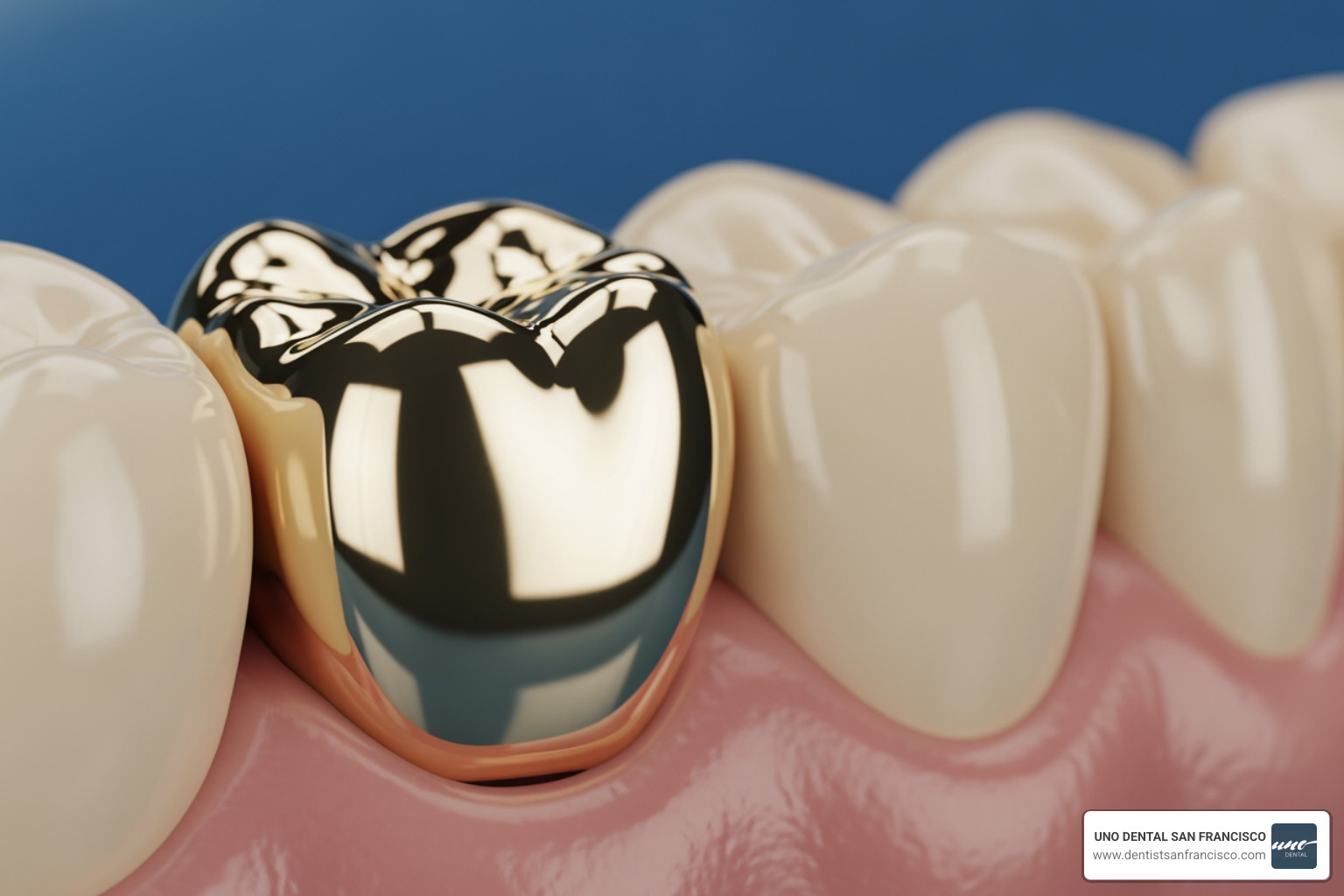
Full Metal Crowns (usually gold or high-noble alloys) remain the most durable option in existence. Gold is incredibly "kind" to opposing teeth; it wears down at a rate similar to natural enamel, so it won't damage the teeth it bites against. Because gold is so strong, we only need to remove a tiny amount of your natural tooth to fit the crown. It’s the perfect choice for out-of-sight molars or for patients who struggle with severe bruxism (teeth grinding).
Choosing Materials Based on Tooth Location and Bite Force
Where the tooth is located in your mouth dictates which Dental crown material options make the most sense.
The Anterior Zone (Front Teeth)
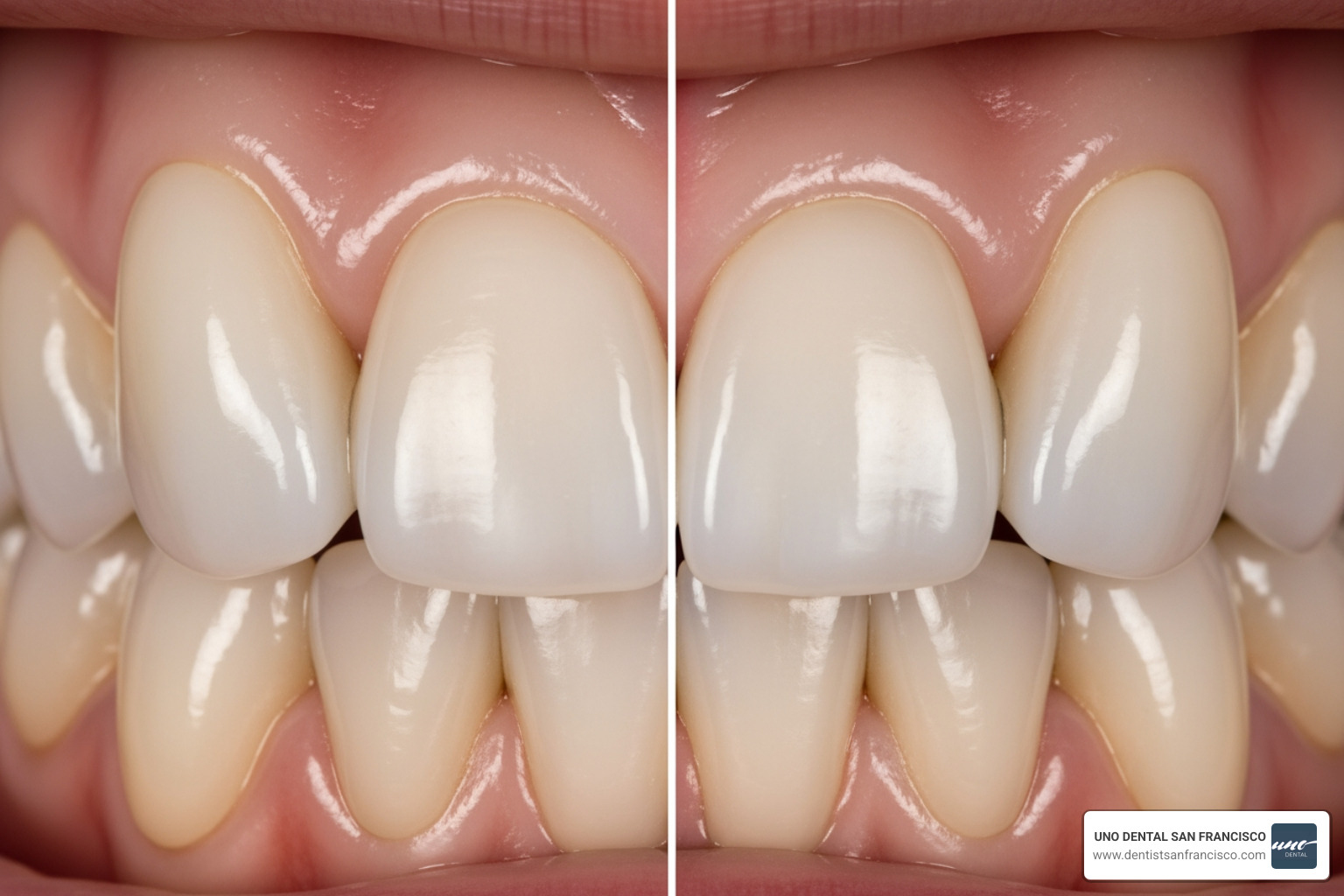
Your front teeth (incisors and canines) are your "social" teeth. They don't do much heavy lifting, but they are the stars of your smile. For these, we almost always recommend lithium disilicate or all-porcelain options. These materials allow light to pass through them just like real teeth, preventing that "flat, opaque" look that some older crowns have.
The Posterior Zone (Back Teeth)
Your molars are the workhorses. They endure hundreds of pounds of pressure every time you eat a steak or crunch on a carrot. This is where Crown and bridge San Francisco specialists often lean toward monolithic zirconia or gold.
If you are a "grinder," material choice is critical. Research on zirconia wear against enamel suggests that polished zirconia is actually very gentle on opposing teeth, contrary to popular belief. However, if you clench your teeth at night, a high-strength material like zirconia or PFM is necessary to prevent the crown from fracturing under the stress.
Same-Day vs. Traditional Lab-Made Crowns
In the past, getting a crown meant two appointments, messy putty impressions, and wearing a plastic temporary crown for two weeks. At UNO DENTAL, we’ve moved beyond that with high-tech CAD/CAM (Computer-Aided Design and Manufacturing) technology.
Through same-day crowns San Francisco technology, we use a digital scanner to create a 3D map of your mouth—no goopy impressions required! We then design your crown on a computer and mill it right here in our office from a solid block of high-quality ceramic.
The Benefits of Same-Day Crowns:
- Convenience: You leave with your permanent crown in about two hours.
- Precision: Digital scans are often more accurate than traditional molds.
- No Temporaries: You don't have to worry about a temporary crown falling out at dinner.
While some traditional lab-made crowns (like layered porcelain or gold) still require a two-week turnaround for maximum detail, same-day ceramic crowns are perfect for the majority of our busy San Francisco patients.
Longevity and Maintenance of Your Dental Restoration
A dental crown is an investment in your health. While the average lifespan is 10-15 years, it isn't uncommon for a well-maintained crown to last 25-30 years.
To ensure your dental crowns stand the test of time, follow these steps:
- Mind the Margin: The "margin" is where the crown meets your natural tooth at the gumline. This is the only place where a new cavity can form. Brush and floss this area diligently.
- Protect Against Pressure: If you wake up with a sore jaw, you might be grinding. A custom nightguard can protect your ceramic crowns from chipping.
- Avoid "Teeth as Tools": Don't use your crowns to open packages or chew on ice. Even the strongest zirconia can fracture under "shock" forces.
- Regular Checkups: If a crown feels loose or "high" when you bite, see a crown repair dentist immediately. A loose crown can trap bacteria underneath, leading to rapid decay of the supporting tooth.
For more information on how we can help you maintain a healthy, functional smile, explore our full range of restorative dentistry solutions.
Frequently Asked Questions about Dental Crowns
How much do different dental crown materials cost?
Cost varies based on the complexity of the case and the material used. Generally, PFM crowns are the mid-range option, while all-ceramic, zirconia, and gold are on the higher end due to the cost of materials and lab precision. Most insurance plans cover about 50% of the cost if the crown is medically necessary. For out-of-pocket costs, we offer various dental crown financing options to make high-quality care accessible.
Which material is best for front teeth?
For the best aesthetic results, lithium disilicate (E-Max) is almost always the winner. Its ability to mimic the translucency and light-scattering of natural enamel is unmatched, making it virtually indistinguishable from your other teeth.
Are there metal-free options for patients with allergies?
Absolutely. Many patients are sensitive to the nickel or base metals found in some PFM crowns. For a holistic and biocompatible approach, we recommend all-ceramic or zirconia options. These materials are chemically inert, meaning they won't react with your body or cause the "grey gum" look associated with metal.
Conclusion
Choosing between the many Dental crown material options doesn't have to be overwhelming. Whether you need the unmatched beauty of an E-Max crown for your front teeth or the industrial strength of zirconia for your molars, the key is individualized, patient-centered care.
At UNO DENTAL San Francisco, we combine high-tech tools like 3D digital scanning with a holistic philosophy to ensure your restoration is as healthy as it is beautiful. We believe in doing it right the first time, using only the highest grade of materials available in modern dentistry.
Ready to restore your smile with a crown that fits your life? Schedule a consultation for dental crowns in San Francisco or take advantage of our free virtual smile consultation today. We look forward to helping you shine!