Understanding the Investment in Your Smile
Cleaning and bleaching teeth cost varies widely depending on your chosen method and individual needs. Here's what you can expect to pay:
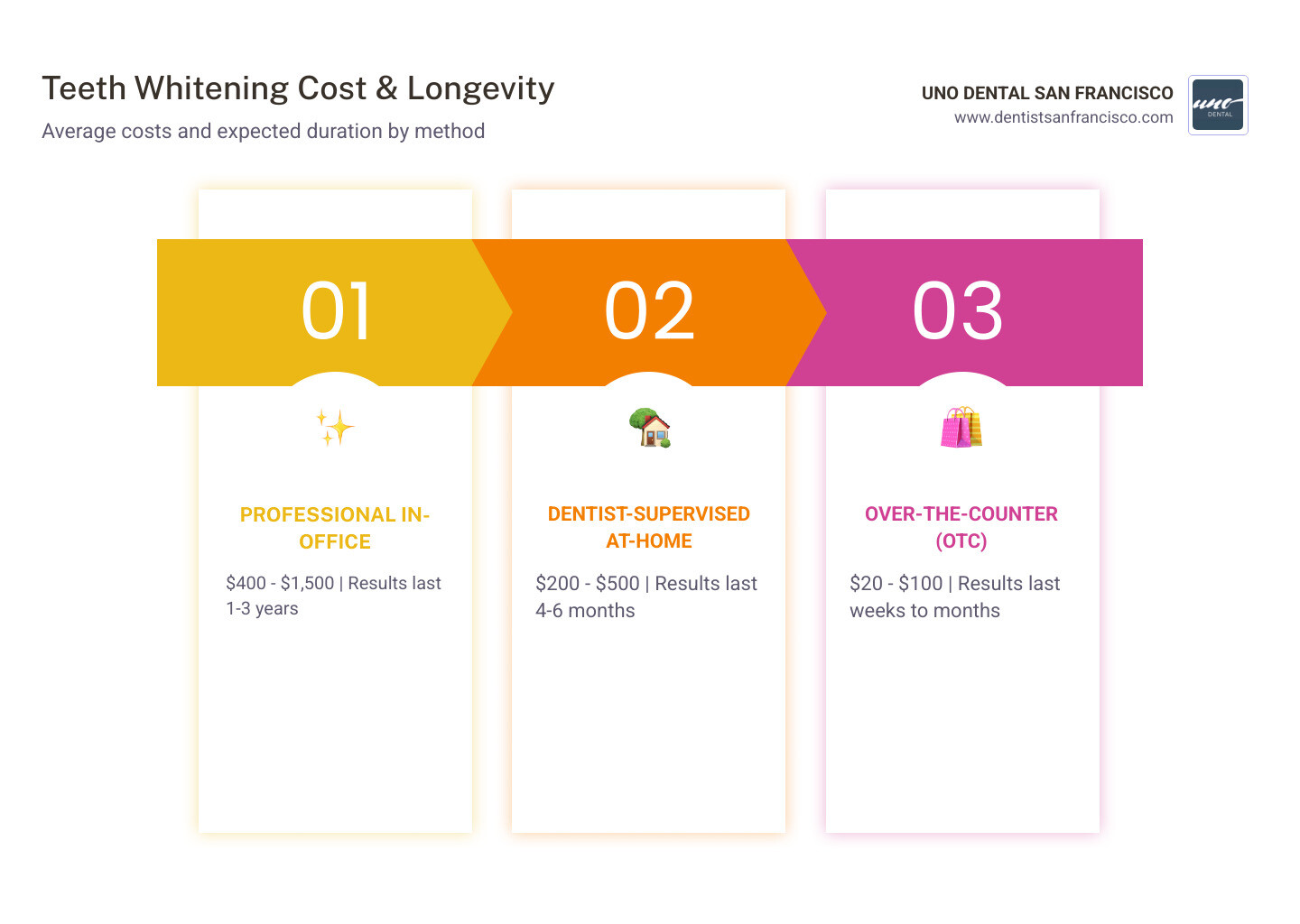
Quick Cost Overview:
- Professional In-Office Whitening: $400 - $1,500 per session (fastest results, typically 1-2 hours)
- Dentist-Supervised At-Home Kits: $200 - $500 (custom trays with professional gel, 1-2 weeks)
- Over-the-Counter Products: $20 - $100 (strips, gels, toothpastes, slowest results)
- Professional Teeth Cleaning: Typically performed before whitening, often covered by insurance
A radiant smile can make you feel like a million bucks. It's no wonder that Americans spend close to $2 billion annually on teeth whitening products and treatments. But if you've ever tried to figure out what you'll actually pay for a brighter smile, you've probably run into a confusing maze of prices.
The truth is that cleaning and bleaching teeth cost depends on many factors. Where do you live? What method do you choose? How stubborn are your stains? This guide cuts through the confusion.
We'll walk you through the real costs of professional teeth cleaning, in-office bleaching, take-home kits, and over-the-counter options. You'll learn what influences the price tag, whether insurance helps, and how long your results will last. We'll also explain the crucial difference between cleaning your teeth (removing plaque and surface stains) and bleaching them (using peroxide-based agents to lighten tooth color beyond its natural shade).
By the end, you'll know exactly what to budget for and which option makes sense for your goals and wallet. Learn more about our cosmetic dentistry services.
I'm Mohammad Aghiad Kandar, DDS, and over my 15+ years in dentistry, I've personally reviewed and refined the information in this guide to help patients make confident cleaning and bleaching teeth cost decisions. At UNO DENTAL SAN FRANCISCO, we create personalized treatment plans that balance your aesthetic goals with your budget, ensuring you get the best value for your investment.
Simple cleaning and bleaching teeth cost word guide:
The Foundation: Professional Cleaning vs. Teeth Bleaching
Before we dive into the specifics of cleaning and bleaching teeth cost, understand the fundamental difference between these two procedures. While both contribute to a brighter smile, they serve distinct purposes.
Professional cleaning, also known as a prophylaxis, is the bedrock of good oral health. During this routine visit, our skilled dental hygienists carefully remove plaque and tartar buildup from your teeth, both above and below the gum line. This process also involves polishing your tooth surfaces to remove extrinsic (surface) stains caused by coffee, tea, red wine, and other foods. A professional cleaning is crucial not only for maintaining healthy gums and preventing cavities but also for preparing your teeth for any subsequent whitening treatments. Without a clean slate, bleaching agents cannot penetrate effectively or evenly. You can learn more about this essential service on our Professional Teeth Cleaning page.
Bleaching, on the other hand, goes beyond surface stain removal. It involves using peroxide-based agents (typically hydrogen peroxide or carbamide peroxide) to lighten the actual color of your tooth enamel. These agents penetrate the enamel and break down intrinsic (deep) stains, which are often caused by aging, certain medications, or even genetics. For effective and safe bleaching, a thorough professional cleaning is almost always a prerequisite.
What is the difference between teeth whitening and bleaching?
The terms "whitening" and "bleaching" are often used interchangeably, but there's a subtle yet important distinction, particularly in dentistry.
According to the American Dental Association (ADA), "whitening" generally refers to restoring the natural color of a tooth by removing surface stains. This can be achieved through abrasive toothpastes or professional cleanings. Essentially, you're making your teeth appear whiter by cleaning away discoloration.
"Bleaching," however, refers to whitening teeth beyond their natural color. This process involves the use of peroxide-based chemicals that change the intrinsic color of the tooth enamel. If a product contains bleach (peroxide), it's considered a bleaching product. This distinction is important because only bleaching agents can alter the natural shade of your teeth.
At UNO DENTAL SAN FRANCISCO, when we talk about making your smile significantly brighter, we are generally referring to professional bleaching treatments that use these peroxide agents to achieve noticeable, long-lasting results.
A Spectrum of Choices: Professional and At-Home Whitening Costs
The journey to a brighter smile offers various paths, each with its own benefits, duration, and, of course, cost. Understanding these options is key to making an informed decision about your cleaning and bleaching teeth cost.
Professional In-Office Whitening: The Gold Standard
For those seeking the quickest and most dramatic results, professional in-office whitening is often considered the gold standard. This method involves the use of the strongest bleaching agents, applied and carefully monitored by our dental professionals.
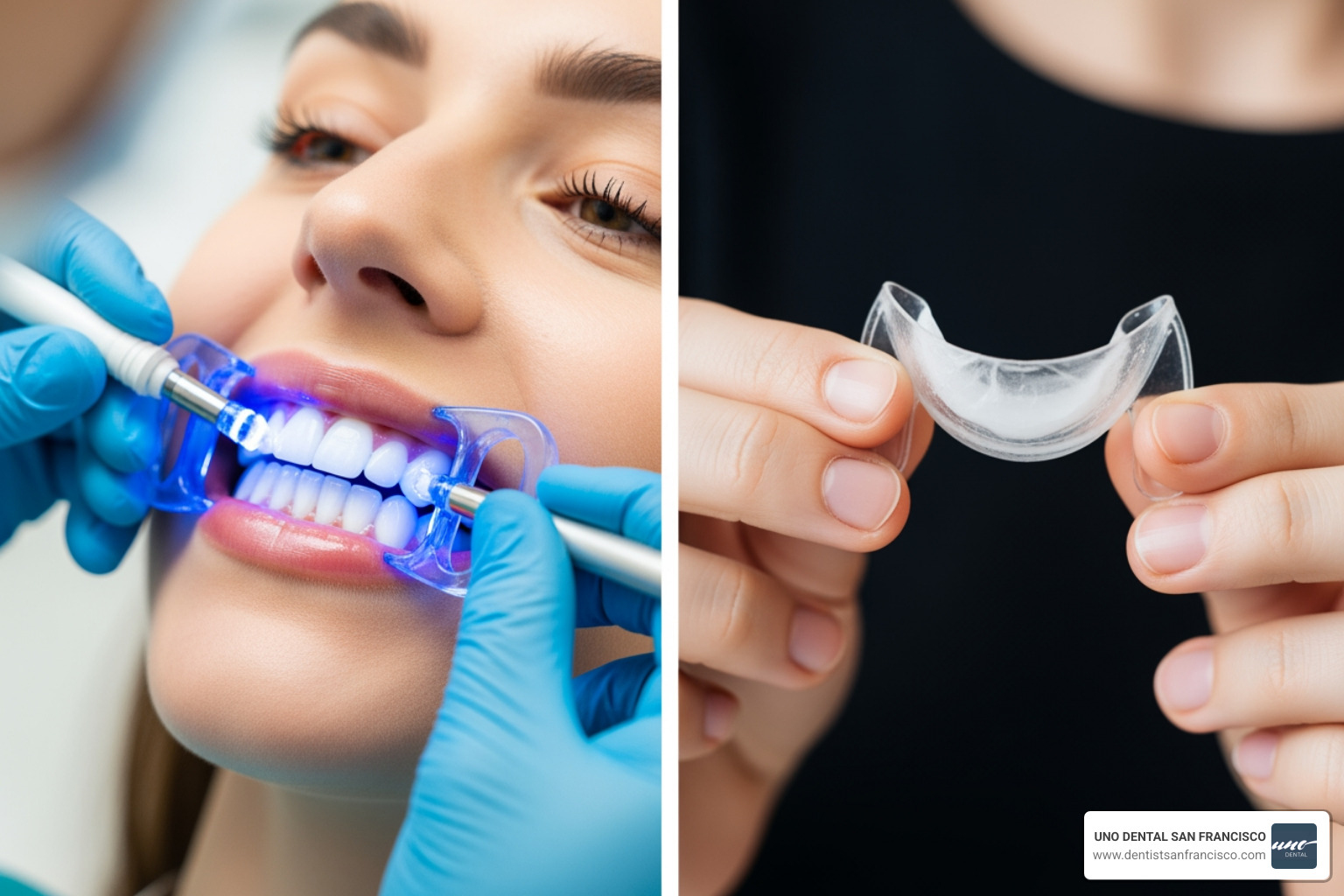
What to Expect: During an in-office session, a high-concentration peroxide gel is applied to your teeth. Often, a special light, such as a laser or LED, is used to accelerate the whitening process. This can lighten your teeth by approximately 5-8 shades in just one hour. Many popular systems use this advanced technology to deliver rapid results. You can find more details about this procedure on our in-office teeth whitening page.
Cost: The average cleaning and bleaching teeth cost for professional in-office treatments typically ranges from $400 to $1,500 per session. For example, a typical light-activated in-office whitening session usually costs around $500 per session, while laser whitening can range from $400 to $1,500. While laser whitening can offer faster speed and greater intensity, it's worth noting that some research suggests UV treatment (often associated with lasers) can be the riskiest method, potentially causing burns or bleeding if not carefully controlled by a professional. This is why professional supervision is paramount.
Benefits: Quick, dramatic results, professional monitoring for safety and evenness, and custom treatment for your specific needs. This is ideal for those looking for Quick Results Teeth Whitening before a special event.
Dentist-Supervised At-Home Kits
If you prefer the convenience of whitening your teeth in the comfort of your own home but still want professional-grade results and guidance, dentist-supervised at-home kits are an excellent choice.
What to Expect: We will take impressions of your teeth to create custom-fit trays that perfectly conform to your unique dental arch. This ensures the whitening gel makes even contact with your teeth and minimizes contact with your gums, reducing sensitivity and irritation. You'll receive professional-grade bleaching gel with a higher concentration of peroxide than over-the-counter products, along with clear instructions on how to use it safely and effectively. You typically wear the trays for 1-3 hours daily over 10-14 days. Explore more about these options in our Custom Fit Teeth Whitening Trays and At Home Dental Whitening Guide.
Cost: The cleaning and bleaching teeth cost for dentist-provided take-home kits usually ranges from $200 to $500. This makes them a more affordable professional option than in-office treatments, while still offering significantly better results than most over-the-counter products.
Benefits: Professional-strength results, convenience, and reduced risk of gum irritation due to custom-fit trays. The results are more gradual but still very effective.
Over-the-Counter (OTC) Alternatives
For those on a tighter budget or looking for a minor brightening effect, there's a vast array of over-the-counter (OTC) teeth whitening products available.
What to Expect: These products typically contain lower concentrations of peroxide (often less than 10%) or mild abrasives to remove surface stains. They come in various forms:
- Whitening Strips: Thin, flexible plastic strips coated with a peroxide gel. Typically cost $30-$70 for a pack of 10-20 strips. Used daily for 5-30 minutes over 1-2 weeks.
- Whitening Toothpastes: Contain mild abrasives like baking soda or polishing agents to remove surface stains. Cost $5-$15 per tube. Require brushing 2-3 times daily for 3-6 weeks for visible changes.
- LED Whitening Kits: Often include a gel and a small LED light device. Cost $50-$300. Used 20-30 minutes daily for 2-4 weeks.
- Paint-on Varnishes: A thin layer of gel painted directly onto teeth. Cost $10-$20 per unit. Applied 1-2 times daily for 1-2 weeks.
- Whitening Rinses: Mouthwashes with whitening agents. Cost $7-$20 per bottle. Used for 60 seconds daily for 3-6 weeks.
- Whitening Chewing Gum: Contains extra abrasives to scour dental surfaces and stimulate saliva flow. Cost $3-$5 per pack. Best paired with other cleaning practices.
Cost: The cleaning and bleaching teeth cost for OTC products can range from as low as $4 to $100.
Benefits: Most affordable, widely accessible, and convenient for minor stain removal or maintenance.
Drawbacks: Lower peroxide concentrations mean slower, less dramatic, and often less even results compared to professional options. Some potent OTC products with abrasives can potentially damage enamel, and ill-fitting trays or improper application can lead to gum irritation. For those interested in a more hands-on approach, our DIY Teeth Whitening Gel Trays Guide offers valuable insights.
Decoding the Price Tag: What Influences the Cleaning and Bleaching Teeth Cost?
Understanding the average costs is a great starting point, but several factors can influence the final cleaning and bleaching teeth cost you encounter. It's not just about the product itself; it's about the comprehensive care and personalized approach that ensures safety and optimal results.
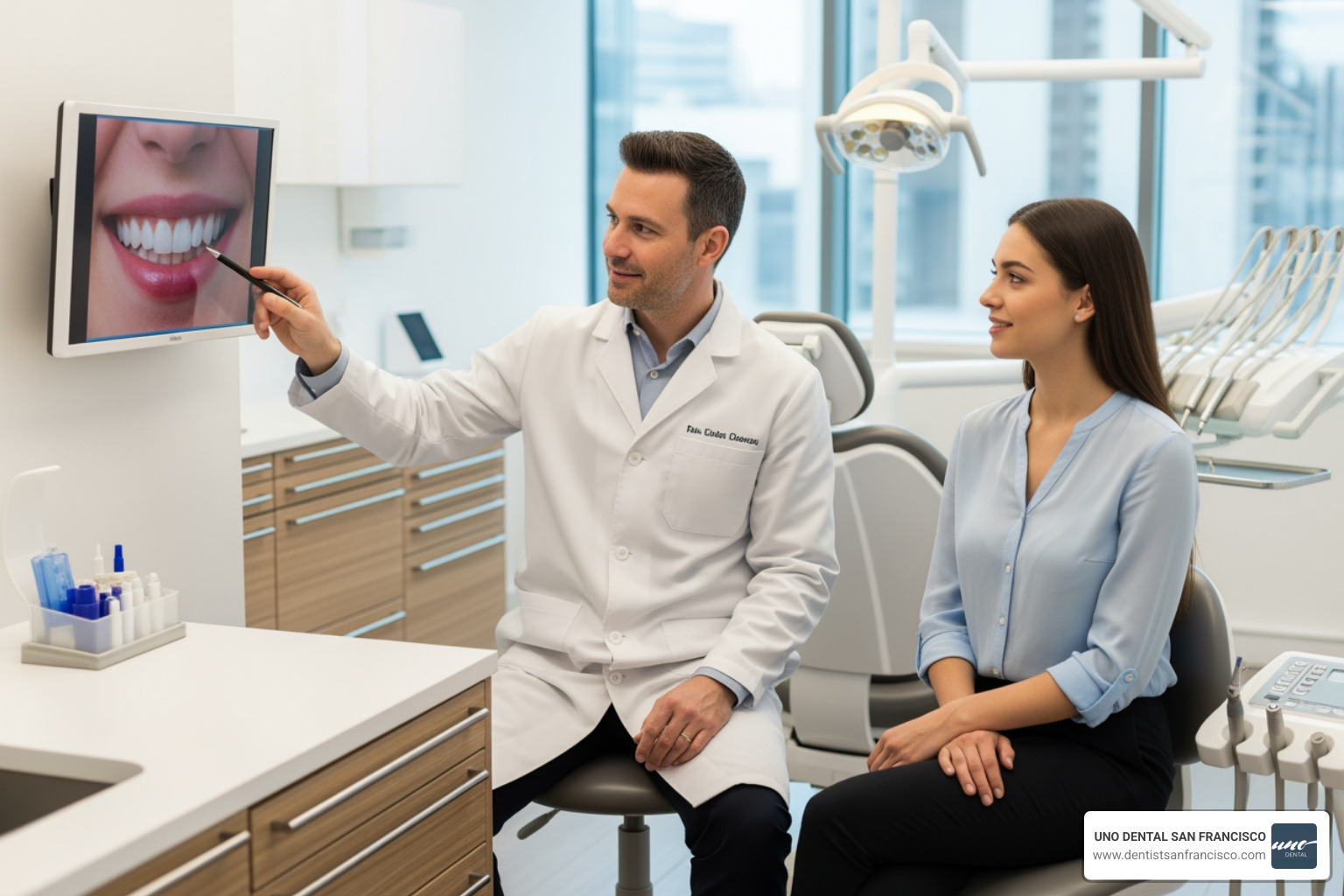
Let's summarize the options and their characteristics in a table:
| Option | Cost Range | Time to Results | Effectiveness | Longevity |
|---|---|---|---|---|
| In-Office Professional | $400 - $1,500 | 1-2 hours | Most dramatic (5-8 shades) | 1-3 years |
| Dentist At-Home Kit | $200 - $500 | 1-2 weeks | Professional-grade (multiple shades) | 4-6 months |
| Over-the-Counter (OTC) | $4 - $100 | Weeks to Months | Mild to moderate surface stain removal (1-2 shades) | Weeks to 3 months |
Factors Influencing the Cleaning and Bleaching Teeth Cost
- Geographic Location: Just like real estate, dental services can vary in price depending on where you live. In major metropolitan areas like San Francisco, dental practices often have increased prices for in-office whitening treatments and professional kits due to higher overheads and cost of living. This is why understanding Teeth Whitening San Francisco Cost is specifically helpful for our patients.
- Dentist's Experience and Reputation: Highly experienced cosmetic dentists who invest in advanced training and technology may charge more for their services. This premium often reflects a higher level of expertise, precision, and a greater likelihood of achieving your desired results safely and effectively.
- Technology Used: The type of whitening system employed plays a significant role. Treatments using advanced technologies like laser whitening or light-activated systems often fall on the higher end of the cost spectrum due to the sophisticated equipment and specialized training required.
- Type and Severity of Stains: Not all stains are created equal. Extrinsic stains (surface level) are generally easier and less expensive to remove. Intrinsic stains (deeply embedded) may require more potent treatments, more sessions, or a combination approach, which can increase the overall cleaning and bleaching teeth cost. For example, deep bleaching, designed for stubborn stains, can cost typically $1200 but range as high as $3500.
- Number of Sessions Required: While in-office treatments often provide significant results in a single visit, some cases of severe discoloration might require multiple sessions or a combination of in-office and at-home treatments to achieve the desired brightness. Each additional session will contribute to the total cost.
- Additional Dental Procedures: Sometimes, other dental work might be necessary before whitening. Ensuring your teeth and gums are healthy is a prerequisite for safe and effective whitening. This might include fillings, gum treatments, or simply a thorough cleaning if you haven't had one recently.
Does Dental Insurance Cover Teeth Whitening?
This is a common question, and unfortunately, the answer is generally no. Dental insurance typically covers procedures deemed medically necessary for your oral health, such as routine check-ups, cleanings, fillings, and extractions. Teeth whitening, whether in-office or at-home, is almost always classified as an elective cosmetic procedure. This means you'll usually be responsible for the full cleaning and bleaching teeth cost out-of-pocket.
However, there are a few avenues to consider:
- FSA/HSA Funds: If you have a Flexible Spending Account (FSA) or Health Savings Account (HSA), you might be able to use these pre-tax dollars to pay for teeth whitening, as some plans consider cosmetic dental treatments eligible expenses. It's always best to check with your plan administrator.
- Payment Plans: We understand that investing in your smile is important, and we believe it should be accessible. At UNO DENTAL SAN FRANCISCO, we offer various Dental Payment Plan Options to help you manage the cost of your treatment. Don't let upfront costs deter you from achieving the smile you desire.
- Special Offers: Keep an eye out for seasonal promotions or new patient deals that can help reduce the overall cost.
For more comprehensive information on insurance and cosmetic procedures, our Cosmetic Dental Insurance Complete Guide is a valuable resource.
After the Sparkle: Safety, Longevity, and Maintenance
Achieving a dazzling smile is exciting, but it's equally important to understand the potential risks, how long your results will last, and how to maintain that sparkle. Our priority at UNO DENTAL SAN FRANCISCO is your safety and the longevity of your oral health.

Potential Risks and Side Effects
While teeth whitening is generally safe when performed or supervised by a dental professional, there are potential side effects to be aware of:
- Tooth Sensitivity: This is the most common side effect. The peroxide agents can temporarily increase tooth sensitivity, especially to hot and cold temperatures. This usually subsides within a few days after treatment. Our Ultimate Teeth Whitening Sensitivity Guide offers detailed information and management tips.
- Gum Irritation: If the whitening gel comes into prolonged contact with your gum tissue, it can cause temporary irritation, redness, or even minor burns. This is why professional application and custom-fit trays are crucial for minimizing this risk.
- Uneven Results: Without proper application or if you have existing dental work, whitening can result in an uneven color. For instance, dental restorations like crowns or veneers will not whiten, leading to a mismatched appearance.
- Enamel Safety: When administered properly by a dental professional, teeth whitening agents are safe on tooth enamel. However, using too much product, leaving it on too long, or relying on abrasive over-the-counter products without professional guidance can potentially damage enamel. Whitening temporarily removes a layer of your teeth known as the acquired pellicle, which protects sensitive parts of the gums. This is why professional supervision is so important for your Teeth Whitening Safety Guide.
How Long Do Results Last and How Can I Maintain Them?
The longevity of your whitening results largely depends on the method used, your lifestyle habits, and your oral hygiene routine.
- Professional In-Office Whitening: Results from these treatments typically last the longest, ranging from 1 to 3 years.
- Dentist-Supervised At-Home Kits: With proper use and maintenance, results can last around 4 to 6 months, or sometimes longer.
- Over-the-Counter Products: The effects of OTC products are generally the shortest-lived, often lasting only a few weeks to 3 months.
To maximize the lifespan of your brighter smile and protect your investment in cleaning and bleaching teeth cost, consider these aftercare tips:
- Avoid Staining Foods and Drinks: For at least 24-48 hours immediately after whitening, your teeth are more porous and susceptible to staining. Avoid highly pigmented items like coffee, tea, red wine, dark sodas, berries, and tomato sauce. Even after this initial period, reducing your intake or sipping dark beverages through a straw can help. Our guide on How to Keep Coffee From Staining Teeth has more tips.
- Practice Excellent Oral Hygiene: Brushing twice daily, flossing once daily, and using an antiseptic mouthwash will help prevent new stains from forming and maintain overall oral health.
- Regular Dental Check-ups and Cleanings: Consistent professional cleanings are essential to remove surface stains before they can set in.
- Touch-up Treatments: For professional treatments, we often recommend periodic touch-up treatments. For in-office whitening, a touch-up might be needed every 12-18 months. For at-home kits, you might use your custom trays and a small amount of gel every few months. Our Teeth Whitening Aftercare page provides further guidance.
Professional teeth whitening should ideally be done no more than once every 12 to 18 months to ensure the health of your enamel. Over-whitening can lead to increased sensitivity and potential damage. Always consult with us at UNO DENTAL SAN FRANCISCO to determine the safest and most effective schedule for your whitening needs.
Frequently Asked Questions about Teeth Whitening
We often hear many questions about teeth whitening, and we're here to provide clear, straightforward answers to help you understand the process and make the best decisions for your smile.
Who is a good candidate for teeth whitening, and who should avoid it?
Good Candidates: Generally, individuals with healthy teeth and gums who have extrinsic stains (yellowish or brownish discoloration caused by food, drink, or tobacco) are excellent candidates for teeth whitening. A thorough dental exam is always the first step to ensure your oral health is suitable for the procedure.
Who Should Avoid It (or proceed with caution):
- Pregnant or Nursing Women: Whitening is generally not recommended as a precautionary measure.
- Children: The pulp chamber in children's teeth is larger, and their enamel is thinner, making them more susceptible to sensitivity.
- People with Dental Restorations: Crowns, veneers, bridges, and fillings will not whiten. This can lead to uneven results, as your natural teeth will lighten while the restorations remain the same color. Teeth whitening is not recommended for people with most dental restorations, as it could cause extreme irritation or uneven whitening effects.
- Individuals with Intrinsic Stains: While some intrinsic stains (e.g., those caused by aging) respond well, others, such as discoloration from tetracycline antibiotics, severe fluorosis, or tooth trauma, may not lighten effectively with traditional whitening. In such cases, cosmetic solutions like veneers or bonding might be more appropriate.
- Those with Sensitive Teeth or Gum Disease: Existing sensitivity or gum issues should be addressed before considering whitening to prevent discomfort or exacerbation of conditions.
How often can you safely whiten your teeth?
The frequency of safe teeth whitening depends on the method and your individual oral health.
- Professional Treatments (In-Office or Dentist-Supervised At-Home Kits): For the best and safest results, we recommend professional teeth whitening treatments no more than once every 12 to 18 months. This allows ample time for your teeth to recover and reduces the risk of excessive sensitivity or enamel erosion.
- Over-the-Counter Products: If you use OTC products for touch-ups, they should be used sparingly and according to package directions. Over-whitening, even with milder products, can lead to chronic sensitivity and a translucent appearance of the teeth. It's always best to consult with us if you're considering frequent use of any whitening product.
Does whitening work on dental crowns, veneers, or fillings?
No, teeth whitening agents are designed to work only on natural tooth enamel. This means that any existing dental restorations you have, such as porcelain crowns, composite fillings, or veneers, will not change color during the whitening process.
If you whiten your natural teeth, these restorations will stand out as they will retain their original shade, potentially leading to an uneven or mismatched smile. For this reason, if you are planning to get new dental work like crowns or veneers, we often recommend whitening your teeth first. Once your desired shade is achieved, we can then match the new restorations to your brighter smile. This ensures a uniform and aesthetically pleasing result. For more on cosmetic bonding, which also involves color matching, you can visit The Benefits of Cosmetic Bonding Over Porcelain Veneers.
Your Brightest Smile Starts with a Consultation
Investing in a brighter, more confident smile is a personal decision, and understanding the cleaning and bleaching teeth cost is a crucial part of that journey. From affordable over-the-counter options to professional in-office treatments, the spectrum of choices is wide, with varying levels of effectiveness, longevity, and price points.
At UNO DENTAL SAN FRANCISCO, we believe that professional guidance is key. A professional cleaning is always the first step towards a healthier, brighter smile, ensuring that any subsequent whitening treatments are both safe and effective. We pride ourselves on offering comprehensive, patient-centered dental services with a focus on high-tech, holistic care.
We are dedicated to providing individualized treatments that cater to your unique needs and aesthetic goals. We invite you to experience the UNO DENTAL difference, where your smile's health and beauty are our top priority.
Ready to uncover your brightest smile? Schedule your virtual smile consultation to get a personalized cost estimate for teeth whitening today. We look forward to helping you shine!