

Why the Dental Code for Veneers Matters for Patients and Providers
Understanding the dental code for veneers is essential for navigating the intersection of cosmetic dentistry and insurance reimbursement. These codes, part of the CDT (Current Dental Terminology) system, identify the specific materials and methods used in your treatment. Here is a quick reference for the primary codes:
| CDT Code | Veneer Type | Fabrication |
|---|---|---|
| D2960 | Resin laminate | Direct (chairside) |
| D2961 | Resin laminate | Indirect (lab-fabricated) |
| D2962 | Porcelain laminate | Indirect (lab-fabricated) |
Assigned by the American Dental Association, these codes allow dental offices to communicate precisely with insurance providers. Accurate coding is more than a clerical necessity; it is the bridge between clinical excellence and financial transparency, directly affecting claim approval and patient out-of-pocket costs.
Many patients find veneer codes confusing, as the distinctions between direct and indirect or resin and porcelain can seem minor. However, to an insurance reviewer, these details are critical. I am Mohammad Aghiad Kandar, DDS, and with over 15 years of clinical and administrative experience at UNO DENTAL SAN FRANCISCO, I have navigated the nuances of the dental code for veneers across hundreds of cases. In this guide, I will explain how these codes work and how to ensure they are used correctly for your benefit.
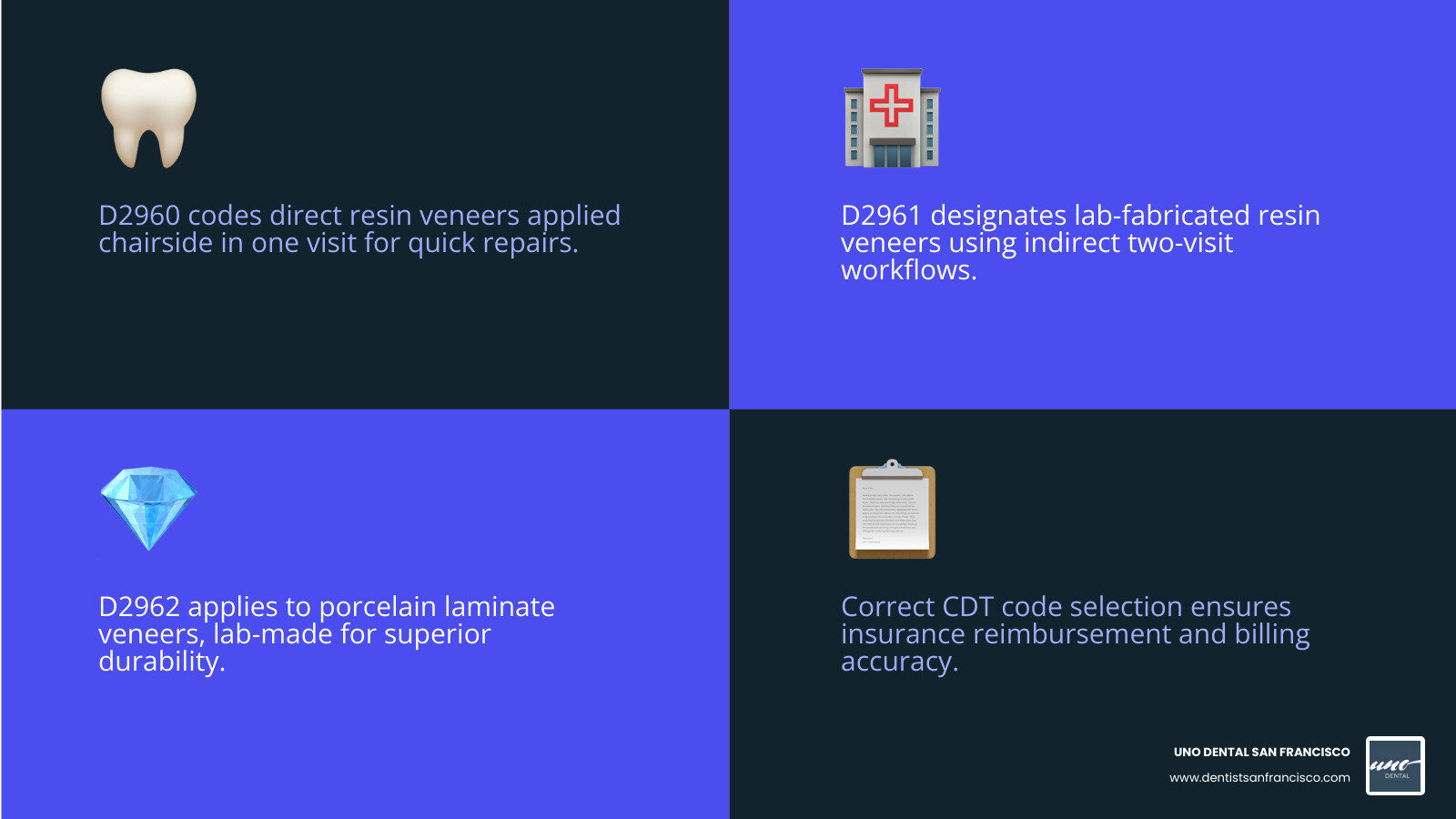
Basic dental code for veneers vocabulary:
Decoding the Primary Dental Code for Veneers: D2960, D2961, and D2962
Navigating the dental code for veneers requires a clear understanding of the Current Dental Terminology (CDT) system. This system ensures that every dentist in San Francisco and across the country uses a standardized language when communicating with insurance companies. For veneers, codes are categorized primarily by the material used and the fabrication process.
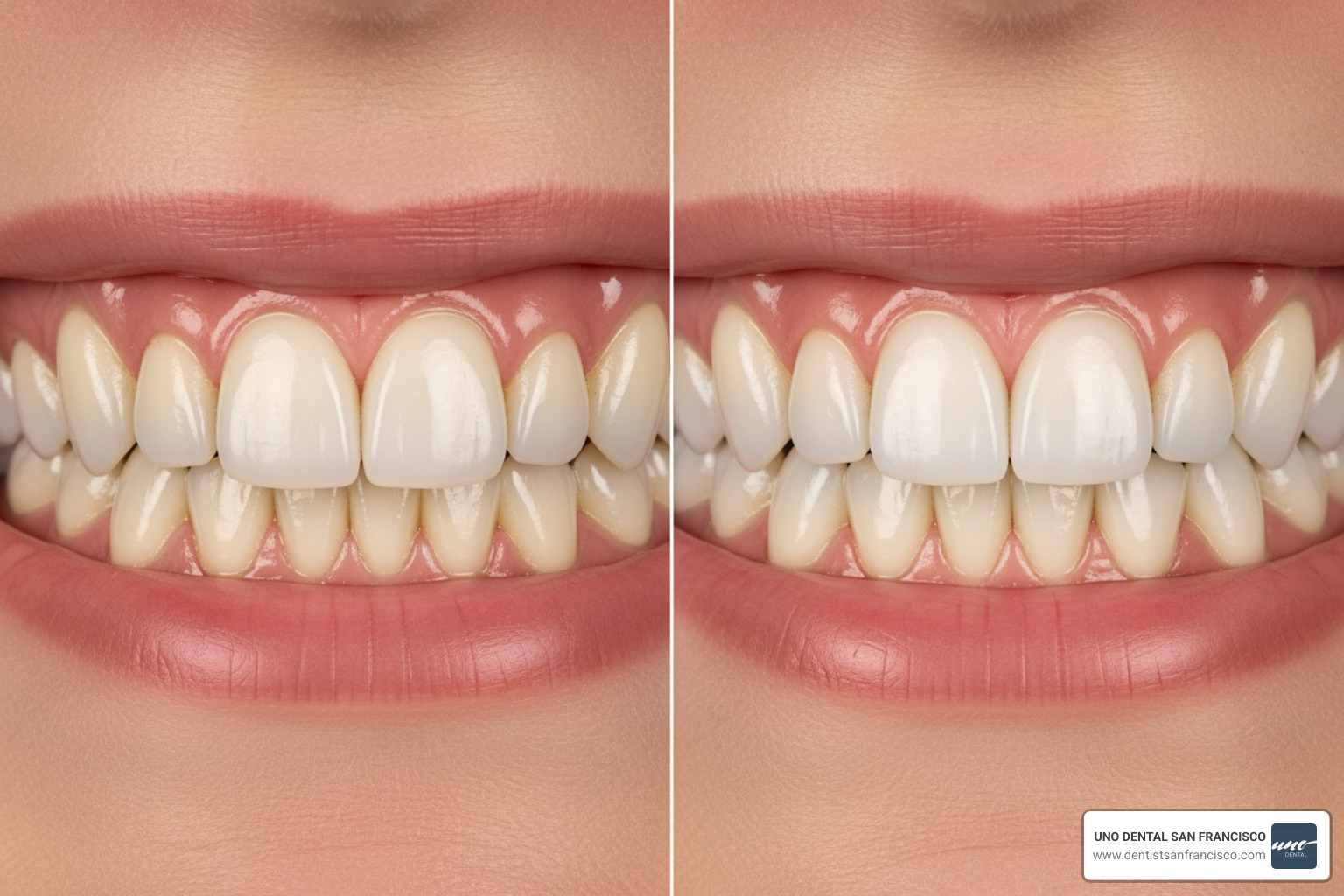
The term "labial" is frequently used in these descriptions. In dental terminology, labial refers to the front surface of the teeth—the part visible when you smile. Whether we are closing a gap or repairing a chip, selecting the correct code from the D2960-D2962 range is the first step toward a successful clinical and financial outcome.
| Feature | D2960 (Direct Resin) | D2961 (Indirect Resin) | D2962 (Porcelain) |
|---|---|---|---|
| Material | Composite Resin | Lab-Processed Resin | Porcelain/Ceramic |
| Visits | One (Chairside) | Two (Lab involved) | Two (Lab involved) |
| Lifespan | 5-7 Years | 7-10 Years | 10-15 Years |
| Stain Resistance | Moderate | High | Very High |
For a deeper look at these options, you can explore our Dental Veneers San Francisco page. Understanding the Veneer - Labial Veneer (Porcelain Laminate), Lab - Dental Procedure Code Description is essential for anyone looking to navigate their care journey with confidence.
When to Apply the Dental Code for Veneers D2960
The D2960 code is used for direct resin veneers, often referred to as the chairside approach. In this scenario, we apply a composite laminate material directly onto the tooth surface in our San Francisco office, without the involvement of an external dental lab.
We typically use D2960 for:
- Fracture Repair: Restoring a chipped front tooth quickly.
- Caries Management: Covering areas where decay has been removed on the facial surface.
- Fluorosis Masking: Hiding intrinsic spots caused by excessive fluoride during development.
Because it is completed in one visit, it is often more affordable, though it requires significant manual skill to sculpt the resin naturally. Learn more in our Dental Veneers Procedure Ultimate Guide.
Selecting the Dental Code for Veneers D2962 for Porcelain
D2962 represents the labial veneer (porcelain laminate), which is an indirect procedure. "Indirect" means the restoration is fabricated outside of the mouth, typically in a specialized dental laboratory.
This is a two-stage procedure. During the first visit, we prepare the tooth and take an impression. In the second visit, we bond the thin porcelain shell to the tooth. To qualify for D2962, the restoration must extend between the teeth or cover the biting edge. Porcelain remains the gold standard for its light-reflective properties and durability. For a complete breakdown, see our Porcelain Veneers Ultimate Guide 2025.
Understanding the Indirect Resin Code D2961
D2961 uses resin material but is fabricated in a lab. These synthetic polymers are processed under heat and pressure, making them denser and more durable than chairside resin. While porcelain lasts 10-15 years, indirect resin veneers typically last 7-10 years. This is an excellent option for patients seeking a customized look with a moderate investment. Our Custom Dental Veneers Guide 2025 covers these material nuances in detail.
Insurance Coverage and Documentation Best Practices
While many dental plans initially categorize veneers as elective, achieving coverage often depends on how we document the clinical necessity of the procedure. If we can demonstrate that a veneer is required for functional restoration rather than just aesthetics, the chances of reimbursement increase significantly.
According to experts like Coding with Kyle: Labial veneers, the key is focusing on function. If a veneer replaces a failed large filling or protects a tooth with severe enamel loss from trauma, it may be covered. For more on how plans handle this, see our Dental Plans Veneers Guide.

Essential Records for Successful Reimbursement
To secure insurance approval, we provide a comprehensive clinical narrative. This story is built on:
- Clinical Narratives: Detailed explanations of why the tooth requires a veneer (e.g., enamel loss due to trauma).
- Pre-operative Radiographs: X-rays showing the structural integrity of the tooth.
- Intraoral Photography: High-resolution photos showing fractures, decay, or severe staining.
- Shade Selection: Documentation of the goal to match existing dentition.
We cover these requirements extensively in our Affordable Porcelain Veneers Complete Guide.
Navigating Cosmetic Exclusions and Appeals
If a claim is denied, it is often just the beginning of the conversation. Many claims are initially flagged as elective, but we can appeal by highlighting:
- Functional Impairment: Does the condition affect the patient's bite?
- Structural Integrity: Is the tooth at risk of further fracture?
- Enamel Loss: Is exposed dentin causing pain or sensitivity?
A well-crafted appeal letter, supported by clinical evidence, can often reverse a denial. We discuss this process in Smile or Sigh: A Deep Dive into Dental Veneer Pros and Cons.
Billing Strategies to Avoid Claim Denials
Our commitment to patient-centered care at UNO DENTAL SAN FRANCISCO extends beyond the dental chair to include proactive billing and financial transparency. One of our primary strategies is the Pre-Treatment Estimate. We submit the proposed dental code for veneers to your insurance before starting treatment, so you know exactly what your plan will cover.

We also offer strategies like bundle pricing for multiple veneers, which can reduce per-unit costs significantly. To ensure your dream smile fits your budget, we provide flexible options like a Dental Veneers Payment Plan or the ability to Pay for Veneers Monthly.
Common Reasons for Veneer Claim Rejections
Claims are typically rejected for one of four reasons:
- Insufficient Documentation: Insurance requires photos and X-rays to prove necessity.
- Aesthetic Classification: The claim was submitted as enhancement rather than restoration.
- Incorrect Code Selection: Using D2962 for a chairside resin veneer is a major red flag for audits.
- Missing Pre-authorization: Some plans require approval before the preparation appointment.
For more tips on navigating these hurdles in the Bay Area, check out Affordable Veneers San Francisco.
Future Trends in Aesthetic Coding
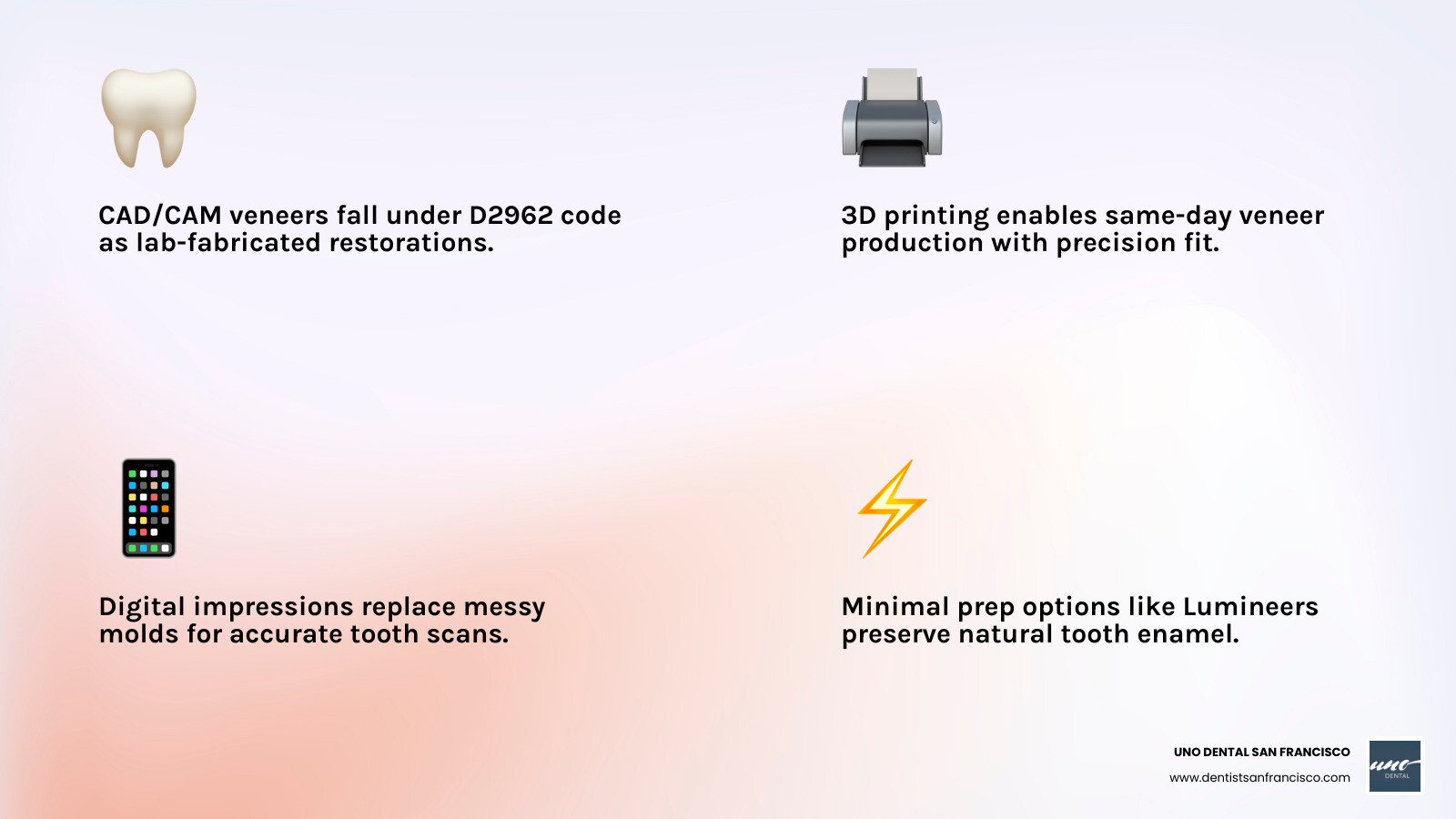
Dentistry is evolving rapidly with a shift toward 3D printing technologies and digital impressions. In the future, we may see new CDT codes specifically for digitally designed veneers.
Currently, CAD/CAM veneers still fall under D2962 because they are lab-fabricated, even if the lab is a machine in our office. These technologies offer a precision fit that was impossible a decade ago, which is especially evident in products like minimal-prep dental veneers, which often require minimal tooth preparation.
Frequently Asked Questions about Veneer Coding
How long do porcelain vs. resin veneers last?
Patients frequently inquire about the longevity of their investment when discussing the dental code for veneers:
- Porcelain (D2962): These typically last 10-15 years and are highly resistant to stains from coffee, tea, and wine.
- Indirect Resin (D2961): These usually last 7-10 years.
- Direct Resin (D2960): These last 5-7 years and are more prone to staining but are the easiest to repair.
For maintenance tips, visit our Porcelain Veneers FAQ.
Can veneers be billed as crowns using code D2783?
Code D2783 is for a 3/4 porcelain/ceramic crown. While it might be tempting to use a crown code for better insurance coverage, it is often not ethically or clinically appropriate. A crown requires more aggressive tooth preparation than a veneer. At UNO DENTAL, we practice conservative dentistry, preserving as much natural tooth as possible. If a veneer is the right clinical choice, we use the correct dental code for veneers. Read more in Should I Get Traditional or Minimal-Prep Veneers.
Are there specific codes for missing teeth?
Veneers are shells that cover existing teeth, not direct replacements for missing teeth. However, they are often used to close gaps (diastemas) left by missing or moved teeth. In these cases, the coding remains focused on the tooth receiving the veneer. For complex cases, see Dental Veneers for Missing Teeth.
Conclusion
Accurate documentation using the correct dental code for veneers is the final step in ensuring a seamless patient experience. Whether it is the chairside artistry of D2960, the lab-processed durability of D2961, or the gold-standard aesthetics of D2962, the right code ensures your treatment is documented accurately and billed fairly.
At UNO DENTAL SAN FRANCISCO, we believe in transparency and high-tech, holistic care. We use the best materials and the most accurate coding to protect both your oral health and your financial interests. We are proud to serve the San Francisco community with individualized care that puts the patient first.
If you are ready to see which veneer is right for you, we offer free virtual smile consultations to help you start your journey from home. Explore Our Services / Cosmetic Dentistry / Dental Veneers to learn more, or contact us through our website to schedule your visit.