

Will Your Dental Insurance Actually Pay for Gum Surgery?
Does insurance cover periodontal treatment - and if so, how much? The short answer: it depends on your plan and the type of treatment needed.
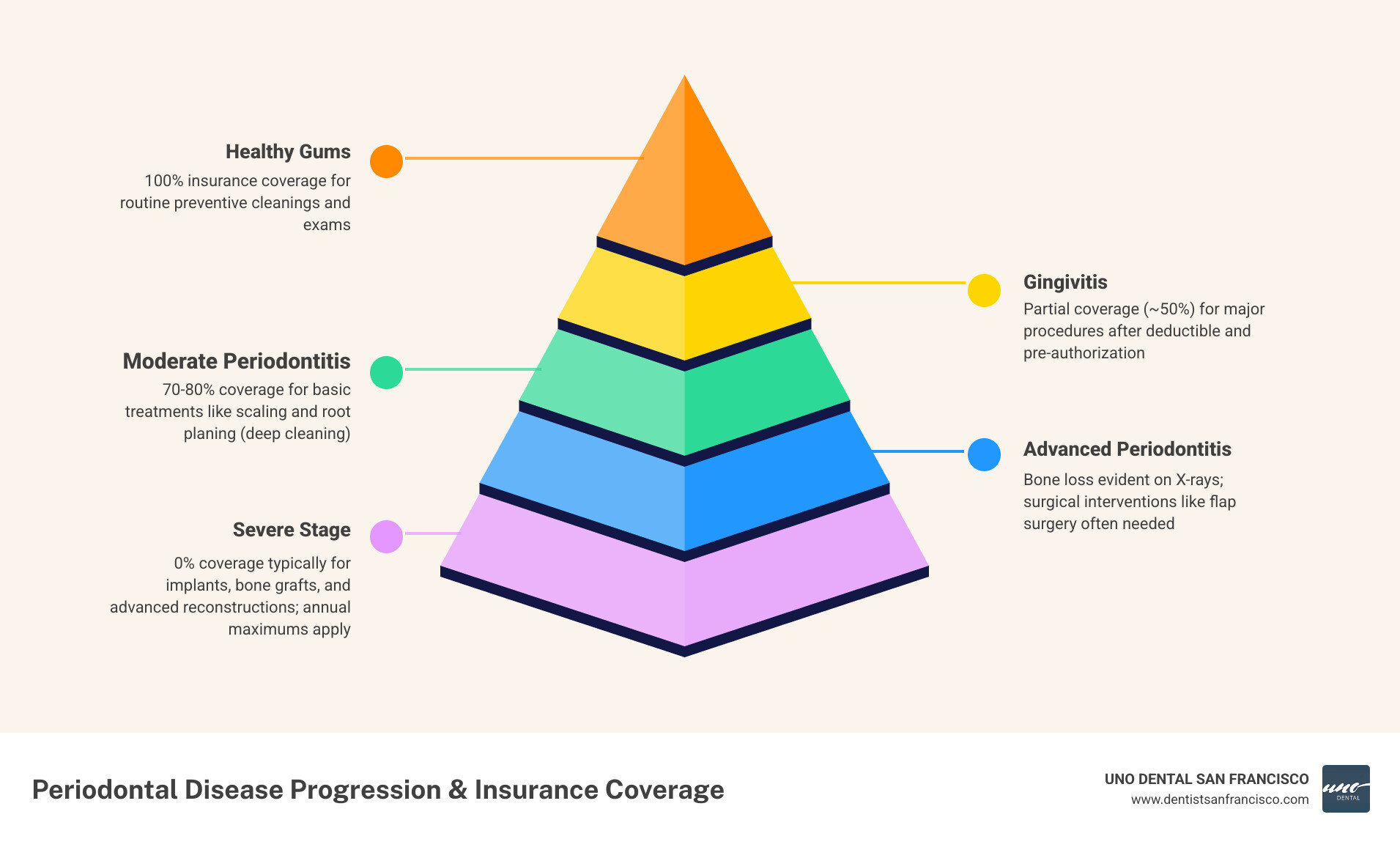
Here's a quick breakdown of what most dental insurance plans cover:
| Treatment Type | Examples | Typical Coverage |
|---|---|---|
| Preventive | Routine cleanings, exams | 100% |
| Basic periodontal | Scaling, root planing (deep cleaning) | 70-80% after deductible |
| Major periodontal | Gum surgery, soft tissue grafts | ~50% after deductible |
| Not typically covered | Dental implants, bone grafting, cosmetic procedures | 0% |
Note: Annual maximums ($1,000-$2,000 for most plans) and deductibles apply.
Nearly half of adults over 30 have some form of gum disease - yet many don't realize their insurance may only partially cover the care they need, or may exclude certain procedures entirely. That gap between what you expect and what your plan actually pays can lead to real financial surprises.
I'm Mohammad Aghiad Kandar, DDS, and with over 15 years of clinical experience - including periodontal case studies and complex treatment planning at UNO DENTAL SAN FRANCISCO - I've helped countless patients navigate the question of does insurance cover periodontal treatment before committing to care. In this guide, I'll walk you through exactly what's covered, what isn't, and how to make the most of your benefits.
Discover more about does insurance cover periodontal treatment:
Understanding Periodontitis and the Need for Specialized Care
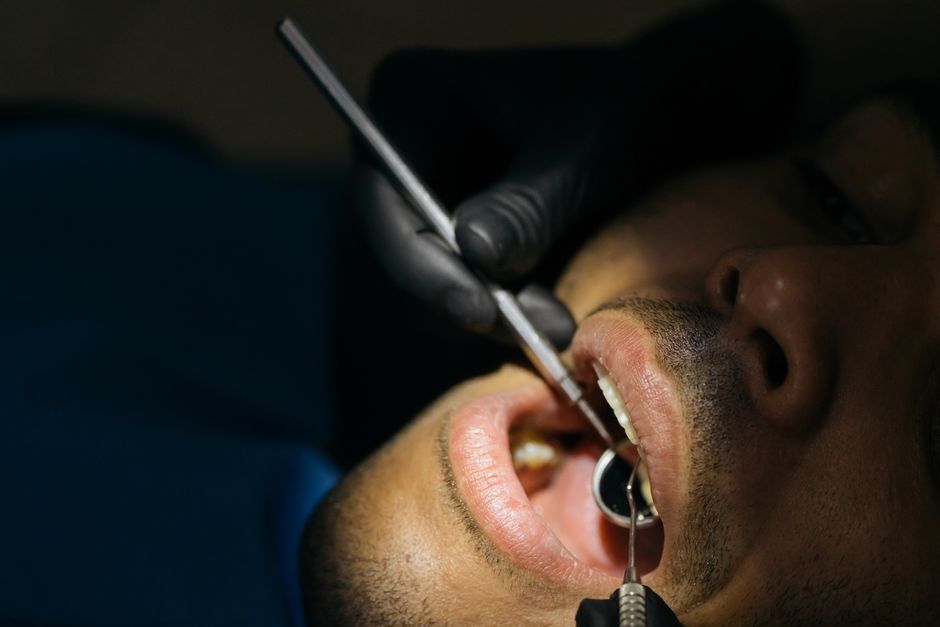
Periodontitis is more than just a bit of blood in the sink when you brush. It is an advanced stage of gum infection that leads to chronic inflammation and, if left untreated, the destruction of the tissues and bone that support your teeth. According to the American Dental Association, the progression of this disease can result in the permanent loss of bone and gum tissue.
At UNO DENTAL, we often see patients who wonder could you have gum disease without knowing it. Early symptoms like persistent bad breath, gum recession, and heavy tartar buildup are red flags. While you might be looking for how to cure gingivitis at home, once the condition advances to periodontitis, professional intervention is the only way to stop the clock.
The stakes are higher than just your smile. There are well-documented links between periodontal disease and systemic health issues. Research suggests that the bacteria from gum infections can enter the bloodstream, potentially contributing to heart disease, diabetes complications, and respiratory issues. This is why we treat periodontal care not as a "cosmetic" fix, but as a vital medical necessity for your whole-body health.
Does Insurance Cover Periodontal Treatment?

Navigating dental insurance can feel overwhelming, but many plans follow a common "100-80-50" structure. This means they categorize periodontal treatment into different buckets.
Understanding dental insurance coverage and cost requires looking at three main categories:
- Preventive Care: This covers your regular exams and "prophy" cleanings. Most plans cover this at 100%.
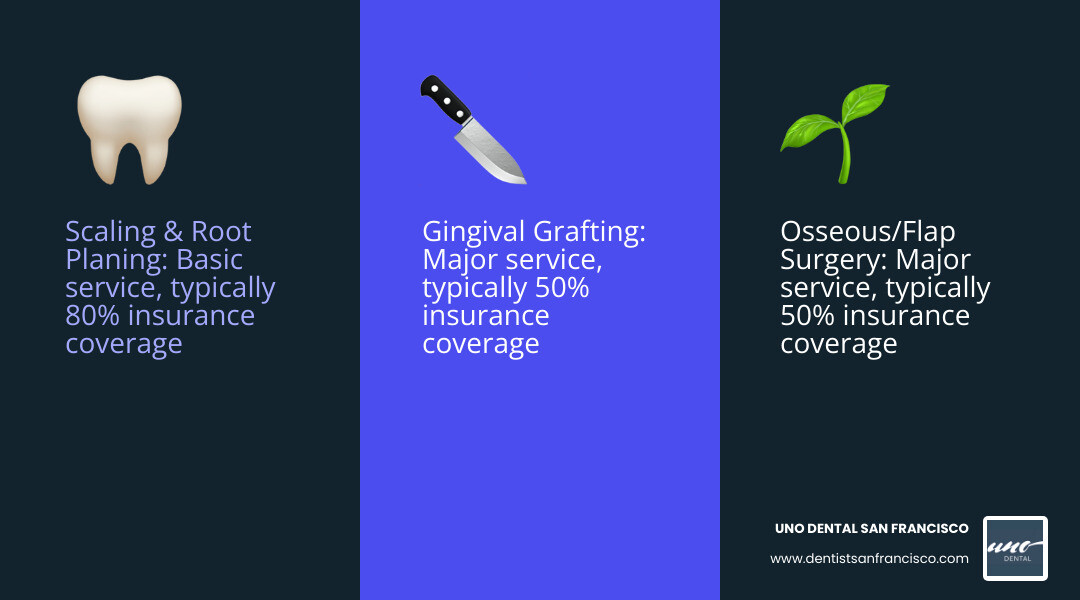
- Basic Periodontal Services: This often includes non-surgical treatments like deep cleanings. These are typically covered at 70% to 80%.
- Major Periodontal Services: This includes surgical procedures. These usually receive about 50% coverage.
It is important to remember your annual maximum. Many plans will only pay out between $1,000 and $2,000 per year. If you need extensive surgery across multiple areas of the mouth, you might hit that ceiling quickly.
How insurance covers non-surgical periodontal treatment
When we catch gum disease in its earlier stages, we often recommend non-surgical therapy. The most common procedure is scaling and root planing, often referred to as a "deep cleaning." Unlike a regular cleaning that stays above the gumline, this involves removing tartar from deep periodontal pockets.
According to gum disease facts from the CDC, nearly 47% of adults need this type of intervention. Most insurance plans cover scaling and root planing as a "Basic" service. However, they often have frequency limitations. For example, they may only pay for a deep cleaning once every 24 to 36 months.
After a deep cleaning, we transition patients to periodontal maintenance. This is a specialized cleaning every three to four months. While insurance usually covers two regular cleanings a year, some plans cover additional periodontal maintenance visits when you have a documented history of gum disease. For more on what to expect after these visits, check our guide on deep cleaning dental aftercare.
Coverage for surgical periodontal treatment and gum surgery
If the infection has reached the bone or caused significant recession, surgery may be required. Common procedures include:
- Flap Surgery: Lifting the gums to clean tartar from the roots and then suturing them back in place.
- Soft Tissue Grafts: Taking tissue (often from the palate) to cover exposed roots.
- Bone Grafting: Using material to encourage the body to rebuild lost bone.
When looking at our services for periodontal treatment, we emphasize that these are often classified as "Major" services. This means you will likely be responsible for about 50% of the cost after deductible, depending on your plan.
Insurance companies often require pre-authorization for these. This involves us sending X-rays and periodontal charting (measurements of your gum pockets) to the insurer to support medical necessity. Without adequate documentation, a claim may be denied. You can find more detailed discussions on this in our healthy gums category.
Navigating Your Dental Insurance Plan

Dental insurance plans vary widely depending on whether you have employer-sponsored coverage or an individual plan. Understanding the specifics of your plan is the most important step in avoiding unexpected costs.
Private Insurance in the U.S.
Most private dental plans in the U.S. follow the "100-80-50" structure described above, but the details can differ significantly between carriers and plan tiers. Key variables include:
- Waiting periods: Some plans require you to be enrolled for 6 to 12 months before they cover major periodontal services like gum surgery.
- In-network vs. out-of-network: Visiting an in-network provider typically means lower out-of-pocket costs because the dentist has agreed to negotiated fees.
- Annual maximums: Most plans cap benefits at $1,000 to $2,000 per year, which can be quickly exhausted by surgical periodontal care.
- Pre-authorization requirements: Many insurers require documentation of medical necessity before approving coverage for surgical procedures.
Regardless of your plan type, the most reliable way to avoid surprises is to verify coverage details before starting treatment. At UNO DENTAL SAN FRANCISCO, our team can help you request a pre-treatment estimate, confirm whether your plan is in-network or out-of-network, and review important plan limits such as deductibles, annual maximums, and waiting periods so you can plan confidently.
Factors Influencing the Cost of Periodontal Care
If you are paying out of pocket or have a high deductible, the cost of periodontal care can vary based on several factors:
- Severity of Disease: Treating early-stage gingivitis is significantly cheaper than treating advanced periodontitis that requires multiple surgeries.
- Procedure Complexity: Scaling and root planing typically costs between $190 and $400 per quadrant. In contrast, a soft tissue graft can range from $800 to $1,600 per tooth.
- Specialist Expertise: Seeing a Periodontist (a specialist in gum disease) often costs more than seeing a general dentist, though their expertise is vital for complex cases.
- Geographic Location: In high-cost areas like San Francisco, office overhead impacts the final bill.
We always recommend following gum disease prevention tips to avoid these higher costs. Preventive care is always the most cost-effective "insurance" you can have. Catching gum disease early through regular exams and cleanings can save you thousands of dollars compared to the cost of surgical intervention down the road.
Frequently Asked Questions about Periodontal Coverage
Are dental implants and bone grafting covered by most insurance plans?
Generally, no. Most insurance plans view dental implants and the bone grafting required to support them as "cosmetic" or "elective." Even though a missing tooth can cause other teeth to shift and lead to further bone loss, insurers often only pay for the cheapest alternative, such as a removable partial denture. However, some "Major" dental plans are beginning to offer 50% coverage for implants, so it is always worth checking your specific policy.
How often does insurance pay for deep cleanings and maintenance?
Standard insurance typically pays for two routine cleanings per year. For those with gum disease, they may cover periodontal maintenance 3 to 4 times a year. However, they often require a "waiting period" or a previous claim for scaling and root planing to approve the higher frequency. Understanding the difference between these cleanings is key to reversing and preventing early gum disease.
What should I ask my dentist to ensure my insurance covers periodontal treatment?
Before starting any treatment, we recommend asking for a pre-treatment estimate. We can submit this to your insurer to get a written "promise" of what they will pay. Key questions to ask include:
- "What are the specific procedure codes (e.g., D4341 for scaling) being used?"
- "Is our office in-network for your specific plan?"
- "How much of my annual maximum is remaining?"
If you're ready to take the next step, you can Schedule an Appointment with us to get a full evaluation.
Conclusion
At UNO DENTAL SAN FRANCISCO, we believe that financial uncertainty should never stand in the way of a healthy smile. Our patient-centered approach combines high-tech periodontal solutions with a holistic philosophy - meaning we look at how your gum health affects your entire body. We even offer free virtual smile consultations to help you explore your treatment options from the comfort of your home.
Whether you have premium private insurance or are navigating care without it, we work with you to create individualized treatment plans that fit your health needs and your budget. Don't wait for a small problem to become a major surgical expense. Explore our periodontal treatment services today and let us help you keep your natural teeth for a lifetime.