

Why Dental and Vision Insurance Matters More Than You Think
Dental and vision insurance are supplemental plans that work alongside your regular health insurance to cover the costs of caring for your teeth, gums, and eyes. Here's a quick breakdown:
| Feature | Dental Insurance | Vision Insurance |
|---|---|---|
| What it covers | Cleanings, fillings, crowns, root canals | Eye exams, glasses, contacts, LASIK discounts |
| Included in ACA health plans? | Only for children under 19 | Only for children under 19 |
| Typical monthly cost | From ~$27/mo | From ~$6/mo |
| Who needs it? | Everyone | Everyone |
| Sold separately from health insurance? | Yes, for adults | Yes, for adults |
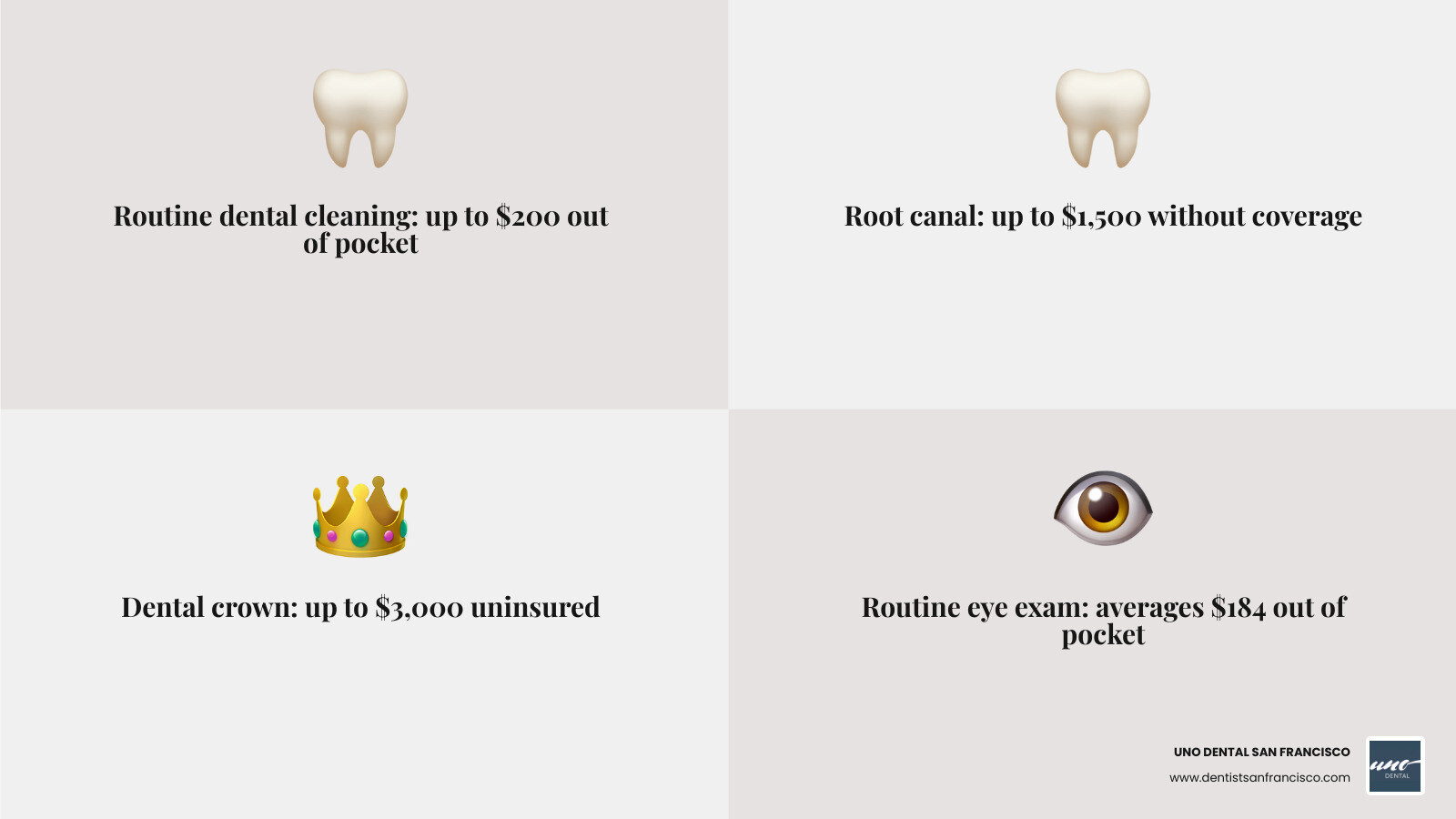
Most standard health insurance plans do not cover routine dental or vision care for adults. That means without supplemental coverage, you're paying out of pocket — and those costs add up fast. A single dental cleaning can run up to $200. A root canal? Up to $1,500. A dental crown can cost as much as $3,000. Even a routine eye exam averages $184 without coverage.
For busy San Franciscans juggling packed schedules and tight budgets, that kind of financial exposure is a real risk — especially when skipping preventive care today can mean much bigger (and more expensive) problems tomorrow.
I'm Mohammad Aghiad Kandar, DDS, and with over 15 years of clinical experience and a deep background in dental practice administration, I've helped hundreds of patients navigate their dental and vision insurance options to get the most from their coverage. In this guide, I'll walk you through everything you need to know to make a confident, informed decision.
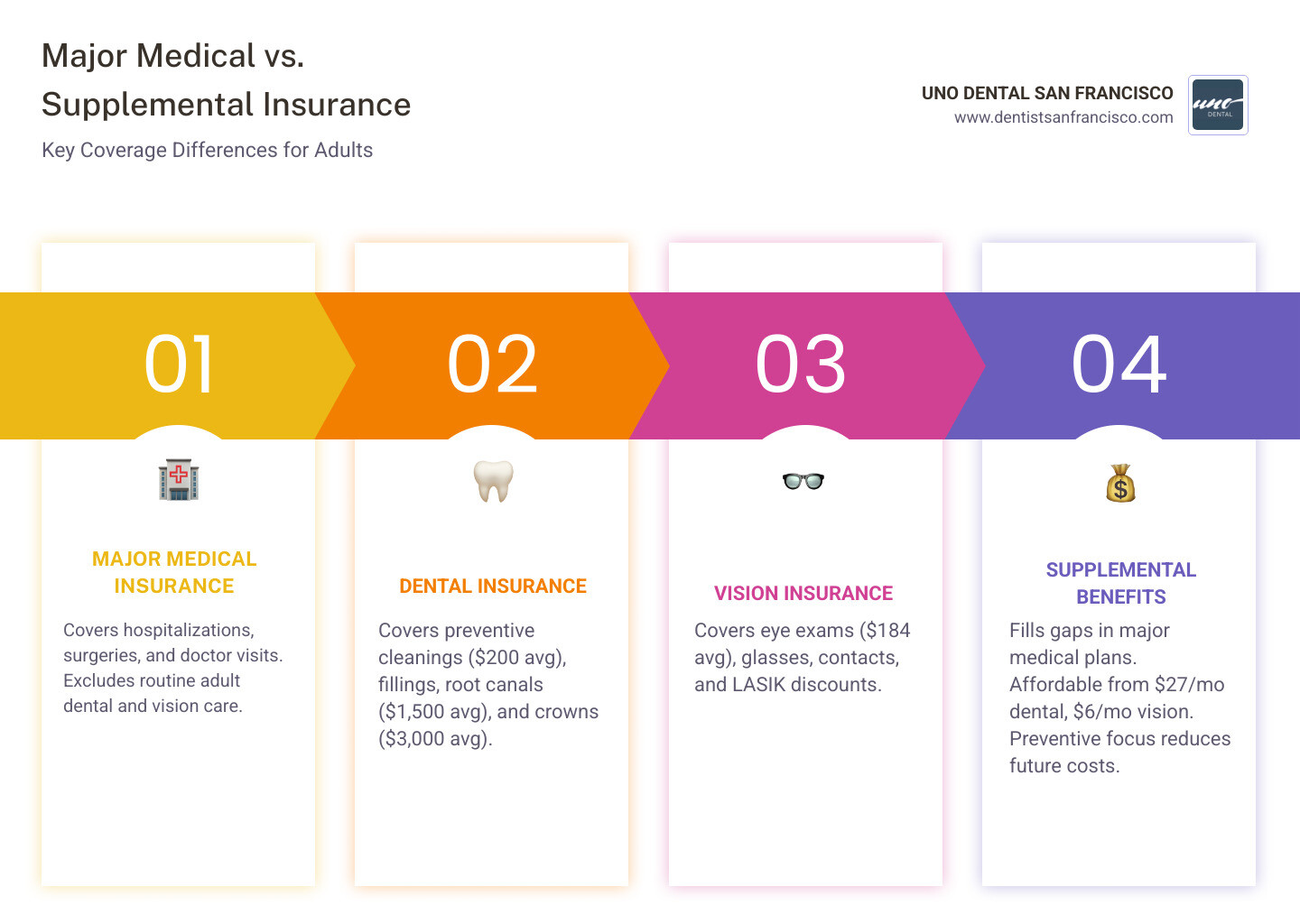
Key terms for dental and vision insurance:
The Essential Role of Dental and Vision Insurance in Modern Healthcare
When we think about healthcare, we often think about hospitals and primary care doctors. However, our mouths and eyes are not isolated islands; they are integral parts of our systemic health. At UNO DENTAL SAN FRANCISCO, we see the mouth as a gateway to the rest of the body.
Research has shown a significant number of conditions linked to oral health. For instance, gum disease is connected to diabetes, heart disease, and even Alzheimer’s disease. When you have dental and vision insurance, you are much more likely to get the preventive care needed to manage these risks.
The Financial Shield
Beyond biology, there is the matter of your bank account. In a city like San Francisco, the cost of living is high, and unexpected medical bills can be devastating. Consider these out-of-pocket averages if you don't have coverage:
- Routine Cleaning: Can cost as much as $200.
- Root Canal: Can run up to $1,500 without insurance.
- Dental Crown: Can cost $3,000 if you pay out of pocket.
- Eye Exam: Averages $184 out of pocket.
The American Dental Association recommends seeing your dentist for a cleaning at least every six months. Similarly, the American Optometric Association suggests adults get a comprehensive eye exam every one to two years. Having dental and vision insurance makes you more likely to stay on schedule, helping you avert major problems like tooth loss or advanced eye disease.
To understand how these plans fit into a long-term wellness strategy, you might want to look at our dental plan adults guide 2025.
Mechanics of Supplemental Coverage: PPOs, HMOs, and Enrollment
Navigating insurance can feel like learning a second language. Let's break down the most common types of plans you'll encounter when shopping for dental and vision insurance.
Understanding Plan Types
There are three primary structures for dental plans:
- DHMO (Dental Health Maintenance Organization): These plans generally have lower premiums and no deductibles or annual maximums. However, you are strictly required to see a dentist within their network. If you go out-of-network, you'll likely pay the full cost yourself.
- DPPO (Dental Preferred Provider Organization): These offer more flexibility. You can see any dentist, but you'll save significantly more by staying in-network. They usually involve a deductible and an annual maximum (the most the insurance will pay in a year).
- PPO (Preferred Provider Organization): Similar to DPPOs, these are widely accepted. For example, some PPO networks include over 55,000 access points in California alone.
| Feature | DHMO | DPPO / PPO |
|---|---|---|
| Network | Restricted to network | Flexible (In and Out of network) |
| Deductible | Usually none | Usually $50 - $100 |
| Annual Max | Usually none | Usually $1,000 - $2,500 |
| Waiting Periods | Rare | Common for major work |
If you find the traditional insurance model frustrating, you aren't alone. Many of our patients at UNO DENTAL prefer our in-house dental savings plan vs insurance because it removes the middleman and the red tape.
When and How to Enroll
You can't always just sign up for insurance the moment you feel a toothache. There are specific windows for enrollment:
- Open Enrollment: This is the annual period (often in the fall) when you can sign up for or change your plans.
- New Employment: Most employers allow you to enroll within the first 30 to 60 days of starting a new job.
- Qualifying Life Events (QLE): If you get married, have a baby, or lose other coverage, you may trigger a qualifying life event that allows you to enroll outside of the standard windows.
For federal employees, the Federal Employees Dental and Vision Insurance Program (FEDVIP) is a popular choice. Enrollment for FEDVIP is handled through www.BENEFEDS.gov. To enroll in FEDVIP, you generally do so during the Federal Benefits Open Season or after a QLE. You can also use the Dental and Vision Plan Comparison Tool to see which carriers fit your needs.

What is Covered by Dental and Vision Insurance?
Standard dental and vision insurance policies are designed with a "100-80-50" coverage structure in mind.
Dental Coverage Tiers
- Preventive Care (100%): This usually covers two cleanings, exams, and X-rays per year at no cost to you.
- Basic Services (80%): This covers things like fillings, simple extractions, and sometimes deep cleanings (periodontal maintenance). You pay 20% of the cost.
- Major Services (50%): This includes crowns, bridges, root canals, and dentures. You pay half the cost.
Some high-end plans may offer full-coverage cosmetic dental insurance, though these are less common and often have higher premiums.
Vision Coverage Benefits
Vision insurance is typically more straightforward. Most plans provide:
- Annual Eye Exams: Often with a small co-pay (e.g., $10-$20).
- Prescription Lenses: Coverage for single vision, bifocal, or trifocal lenses.
- Frames or Contacts: An annual allowance (e.g., $150) toward the purchase of frames or a year's supply of contact lenses.
- Discounts: Many plans offer 15-20% off LASIK or other elective procedures.
The American Optometric Association guidelines emphasize that these exams are about more than just a prescription; they are vital for detecting eye conditions like glaucoma.
Pediatric Coverage under the ACA
Under the Affordable Care Act (ACA), dental and vision care are considered "essential health benefits" for children under 19. This means:
- ACA-compliant health plans must include pediatric dental and vision.
- Out-of-pocket dental costs are capped at $350 per child or $700 for families with more than two children.
- Vision benefits usually include one pair of glasses or a supply of contacts annually.
Comprehensive Coverage in Dental and Vision Insurance Plans
At UNO DENTAL, we emphasize that comprehensive care goes beyond just "fixing what’s broken." A robust plan should support:
- Oral Cancer Screenings: Dentists are often the front line for identifying early signs of oral cancer.
- Retinal Disease Screening: Eye doctors can detect signs of tumors, heart disease, and diabetes during a routine exam.
- Periodontics: Managing the health of your gums is essential for preventing tooth loss.
Exclusions and Limitations in Dental and Vision Insurance
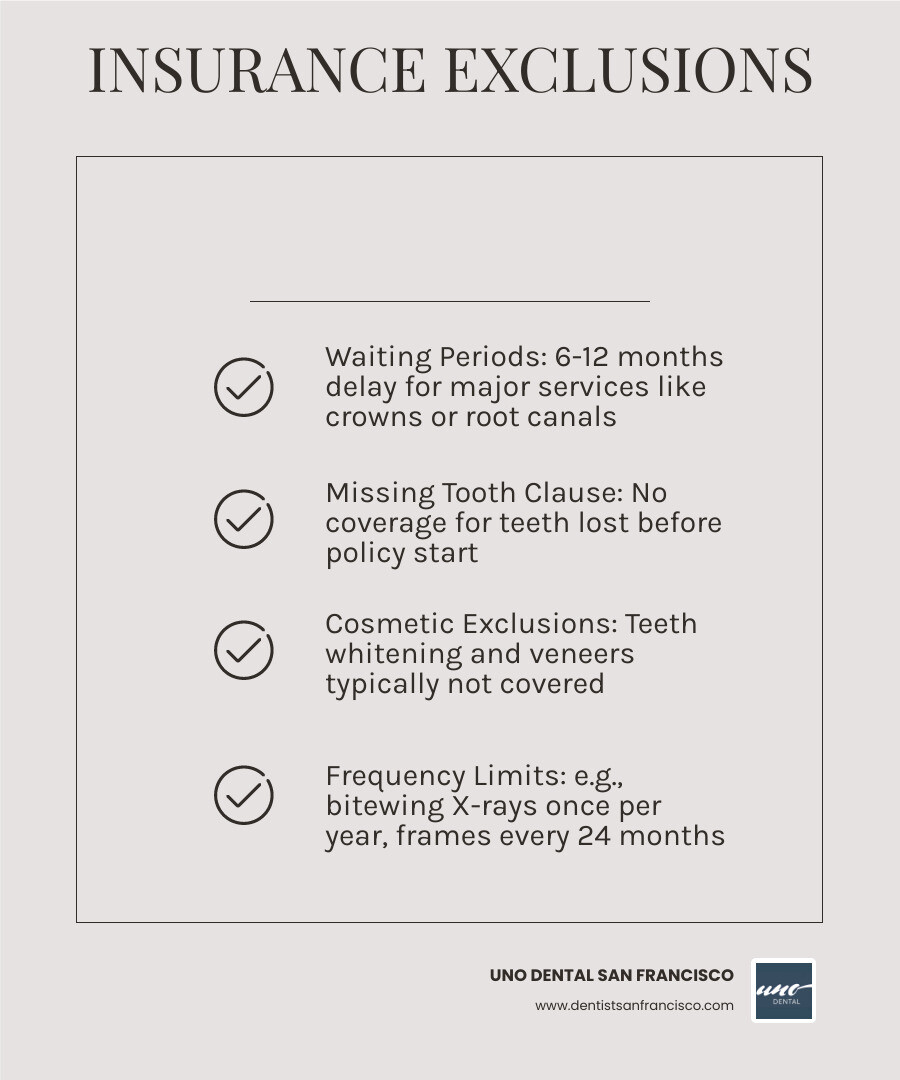
It is vital to read the fine print. Even the best dental and vision insurance will have limitations:
- Waiting Periods: Many plans require you to wait 6 to 12 months before they will pay for "Major" services like crowns or root canals.
- Missing Tooth Clause: Some plans won't cover the replacement of a tooth that was lost before the policy began.
- Cosmetic Exclusions: Standard plans rarely cover teeth whitening or veneers. If you're interested in aesthetics, you should look into will my dental insurance cover cosmetic dentistry.
- Frequency Limits: You might only be allowed one set of bitewing X-rays per year or one set of frames every 24 months.
If insurance feels too restrictive, there are many alternatives to dental insurance that can help make care affordable.
Frequently Asked Questions about Dental and Vision Insurance
We hear many of the same questions from our San Francisco patients. Here are the answers to the most common queries.
When can I enroll in dental and vision insurance?
As mentioned, you typically enroll during your employer's open enrollment period or within 60 days of a qualifying life event. However, some private plans allow for year-round enrollment, and vision-only plans are often available at any time.
Are there plans with no waiting periods?
Yes! Certain plans provide "guaranteed acceptance" and have no waiting periods for preventive, basic, or even major services. This is a game-changer if you have an urgent need for a crown or implant. If you are in a rush, check out our guide on same-day dental plans.
For older adults, finding a plan without waiting periods is often a top priority. We have a dedicated resource for dental insurance for seniors to help navigate those specific needs.
How do I get my ID card?
Not all carriers issue physical ID cards anymore. Many, like those under the FEDVIP program, may only provide an electronic acknowledgment. You can usually download a digital card from your carrier’s member portal or app.
How much do these plans cost?
Premiums for dental and vision insurance are quite affordable compared to medical insurance.
- Vision: Can start as low as $6 or $7 per month.
- Dental: Individual plans often start around $27 per month.
- Bundling: Many providers allow you to add vision to a dental plan for a small additional fee (often around $7).
Conclusion
At UNO DENTAL SAN FRANCISCO, we believe that everyone deserves a healthy smile and clear vision without the stress of financial uncertainty. Whether you choose a traditional PPO, a federal plan through BENEFEDS, or a flexible dental savings plan, the most important step is simply having a plan in place.
Our practice is built on a foundation of high-tech, holistic care. We do not just look at your teeth; we look at you as a whole person. We accept most PPO plans and are always happy to help you understand your benefits and minimize your out-of-pocket expenses.
If you are ready to take control of your oral health, we invite you to experience our patient-centered approach at our San Francisco office. From our state-of-the-art facility to our free virtual smile consultations, we make it easy to get the care you need.
Ready to smile brighter? Start saving with our Dental Savings Plan or schedule your next visit with us today.

Manual review has been completed: y