
Understanding Full Coverage Cosmetic Dental Insurance: Separating Fact from Fiction
Full coverage cosmetic dental insurance is a widely misunderstood term. Many people assume it means 100% payment for all cosmetic procedures, but that's rarely the case.
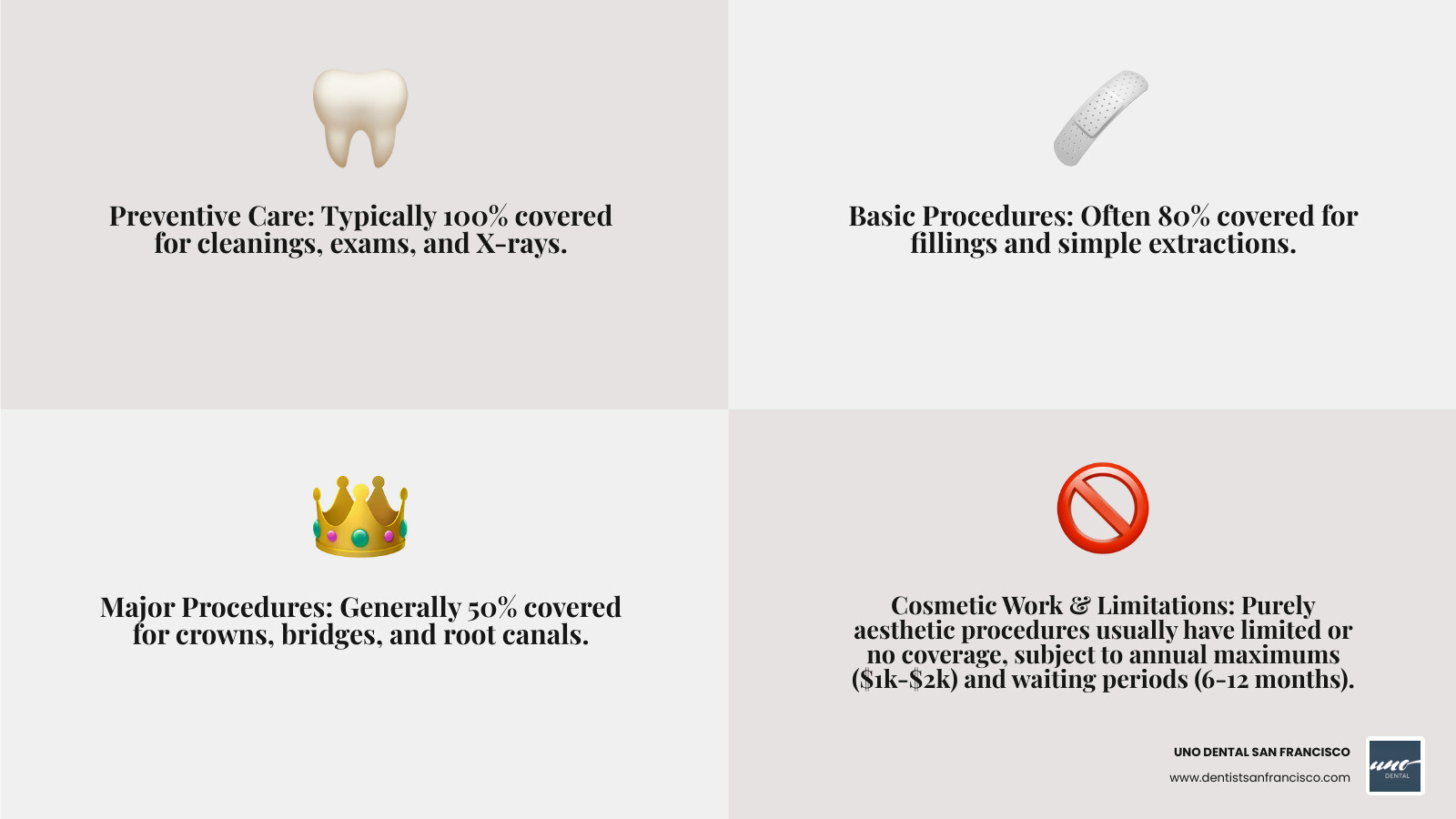
In reality, "full coverage" typically refers to a tiered benefit structure:
- Preventive care: 100% coverage (cleanings, exams, X-rays)
- Basic procedures: 80% coverage (fillings, simple extractions)
- Major procedures: 50% coverage (crowns, bridges, root canals)
- Cosmetic procedures: Limited or no coverage (veneers, whitening)
- Annual maximums: Typically $1,000-$2,000 per year
- Waiting periods: 6-12 months for major work
Most dental insurance follows this 100-80-50 rule, meaning even the best plans have limitations on purely aesthetic treatments.
"When you're confident about your smile, you feel more confident about yourself," and understanding your insurance is the first step to making informed decisions about your dental care.
With over 15 years of experience at UNO DENTAL San FRANCISCO, I've helped countless patients steer the complexities of full coverage cosmetic dental insurance. We help patients understand exactly what their coverage includes—and what it doesn't.
Important full coverage cosmetic dental insurance terms:
Clinically reviewed by the UNO DENTAL San Francisco team (Last reviewed: August 30, 2025).
Deconstructing "Full Coverage": What's Really Included?
When you see "full coverage cosmetic dental insurance" advertised, it's easy to assume you've found a plan that pays for everything. The reality is more complex.
"Full coverage" doesn't mean free services. It means the plan offers benefits across multiple categories of dental care, typically following the 100-80-50 structure:
- Preventive Care (100% coverage): Your twice-yearly cleanings, exams, and X-rays are usually fully covered with an in-network dentist, often with no deductible or waiting period.
- Basic Restorative Services (80% coverage): After your deductible is met, plans cover about 80% of common treatments like fillings, simple extractions, and periodontal cleanings. A waiting period of around six months is common.
- Major Restorative Services (50% coverage): For big-ticket items like crowns, bridges, dentures, and root canals, expect about 50% coverage. These often have a 12-month waiting period.
Even with this coverage, financial terms like annual maximums (often just $1,000-$2,000), deductibles, and coinsurance significantly impact your out-of-pocket costs.
Will My Dental Insurance Cover Cosmetic Dentistry?
How Insurance Categorizes Dental Procedures
Insurance companies use American Dental Association (ADA) procedure codes to categorize treatments based on medical necessity.
- Preventive: Cleanings and exams are favored by insurance because they prevent more costly issues later.
- Basic: Fillings and simple extractions address common problems and restore oral health.
- Major: Crowns, bridges, and root canals resolve serious issues that require more complex and expensive treatment.
- The "Cosmetic" Gray Area: Purely cosmetic treatments like teeth whitening are rarely covered. However, the line blurs when a procedure is both functional and aesthetic. A white filling or a crown on a front tooth restores function but also improves appearance. The key is medical necessity. At UNO DENTAL San Francisco, we carefully document this to help you get the coverage you're entitled to.
Understanding Key Financial Terms

- Premium: The fixed monthly or yearly fee you pay to keep your plan active.
- Deductible: The amount you must pay out-of-pocket for services each year before your insurance begins to pay.
- Coinsurance: The percentage of costs you share with your insurance after meeting your deductible. For example, with 80% coverage, your coinsurance is 20%.
- Copayment: A fixed fee you pay for a specific service, like $25 per visit.
- Annual Maximum: The most your insurance plan will pay for your dental care in a plan year, typically $1,000-$2,000. Once you hit this limit, you are responsible for 100% of costs.
- Waiting Period: The time you must be enrolled in a plan before certain benefits become available (e.g., 6 months for basic care, 12 months for major work). This can impact your treatment timeline, making advance planning essential.
Cosmetic Procedures: Coverage, Exclusions, and Limitations
The world of cosmetic dental coverage hinges on one concept: intent. Insurance companies distinguish between procedures that restore health (medical) and those that only improve appearance (cosmetic).
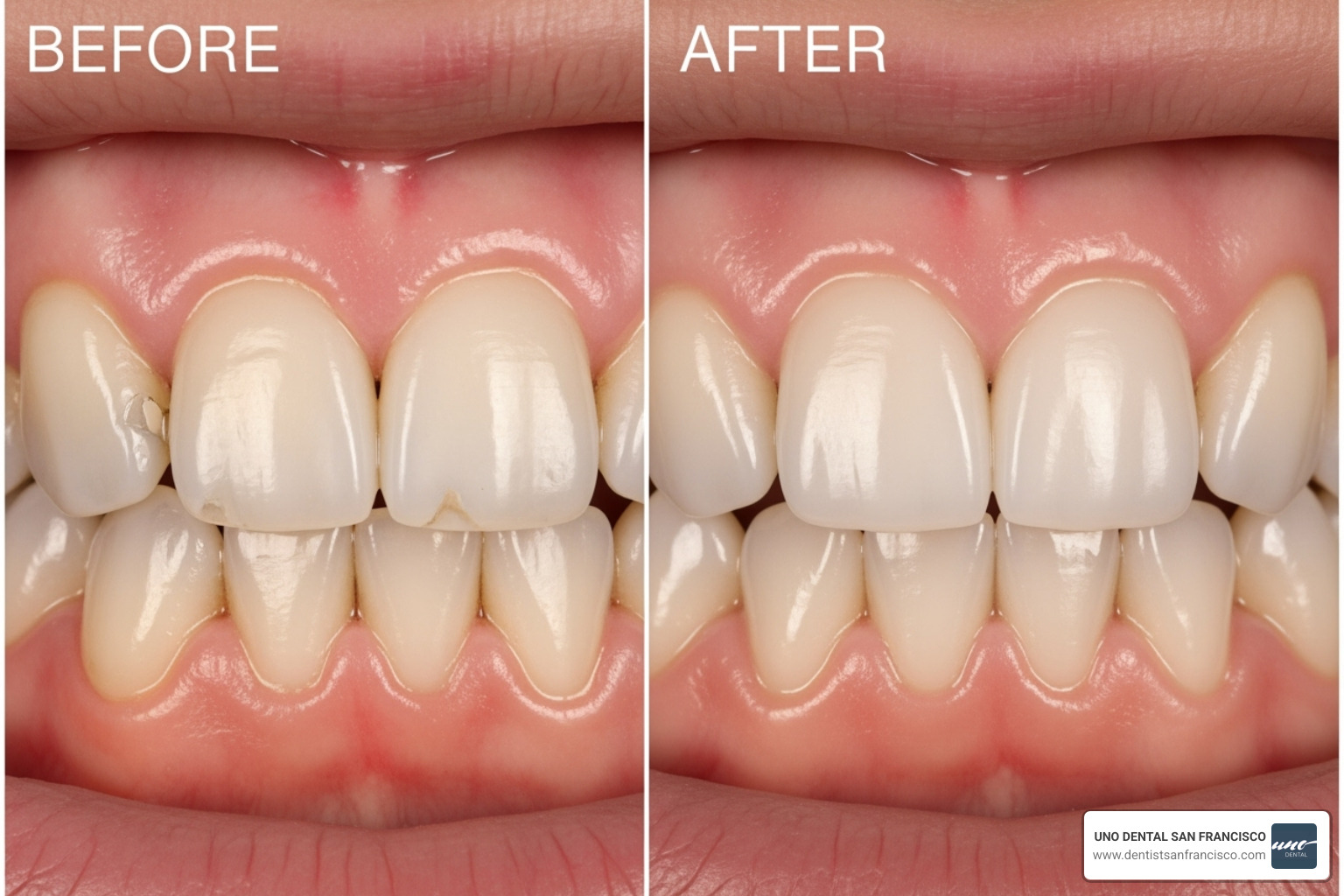
At UNO DENTAL San Francisco, we know many procedures do both. That's why pre-authorization is so important. We get written approval from your insurance company before treatment to prevent surprises and help you budget accordingly.
Procedures That May Receive Partial Coverage
Some treatments that improve your smile also restore function, making them eligible for partial coverage.
- Dental Crowns: A crown saves a severely damaged tooth, which is a medical necessity. Most plans cover crowns at about 50% as a major service, even though the result is also beautiful.
- White Composite Fillings: Many plans now cover tooth-colored fillings at the same rate as metal ones, especially for visible front teeth.
- Dental Bonding San Francisco: If bonding repairs a chipped tooth, it's often covered as a basic service. If it's used to close a gap between healthy teeth, coverage is less likely.
- Dental Implants: Once considered purely cosmetic, implants are now often treated as a major restorative service (around 50% coverage) because they restore chewing function and preserve jawbone health.
- Onlays and Inlays: These partial crowns are clearly restorative, so most plans cover them when a filling isn't enough but a full crown is unnecessary.
The key is that if a procedure restores your ability to chew, speak, or prevents future dental problems, insurance is more likely to help pay for it.
Procedures Typically Excluded from Coverage
Some procedures are considered purely aesthetic and are almost always excluded from insurance plans.
- Professional Teeth Whitening: Since discolored teeth don't impact health or function, you'll likely pay the full cost for whitening.
- Porcelain Veneers: As the ultimate cosmetic treatment, the Porcelain Veneers Cost San Francisco is typically paid out-of-pocket. An exception is rare and might occur if a veneer is the only option for a damaged front tooth.
- Gum Contouring: Reshaping gums for a less "gummy" smile is cosmetic. However, it may be covered if it's part of periodontal disease treatment.
- Tooth Reshaping: Sculpting enamel for a better appearance is purely aesthetic and not covered.
If your primary goal is appearance rather than health, expect to cover the costs yourself. However, many financing options can make your dream smile affordable.
Navigating Plan Types and Finding Full Coverage Cosmetic Dental Insurance
The type of dental plan you choose—PPO or HMO—dramatically affects your options for full coverage cosmetic dental insurance.
| Feature | PPO (Preferred Provider Organization) | HMO (Health Maintenance Organization) |
|---|---|---|
| Network Choice | Offers flexibility; you can choose any licensed dentist. | Requires you to choose a primary dentist within the network. |
| Out-of-Network Coverage | Yes, you can see out-of-network dentists, but with higher out-of-pocket costs. | No, services typically not covered if you go out of network. |
| Specialist Referrals | Usually not required. You can see a specialist directly. | Often required for specialist visits. |
| Premium Costs | Generally higher monthly premiums. | Generally lower monthly premiums. |
| Cosmetic Options | More flexibility if some cosmetic services are partially covered, or for seeing specialists. | Very limited, as cosmetic procedures are typically excluded and network is restricted. |
At UNO DENTAL San Francisco, we work with most major PPO plans, both as in-network and out-of-network providers. Our team is experienced in submitting claims on your behalf to help you maximize your benefits, regardless of the specific carrier.
How Plan Types (PPO vs. HMO) Impact Your Cosmetic Options
PPO plans offer the freedom to choose any dentist, which is valuable if you want a specific cosmetic specialist. They also tend to be more generous with dual-purpose restorative/cosmetic procedures.
HMO plans have lower premiums but restrict you to a network and require referrals. Cosmetic work is rarely covered, and the rigid network limits your choice of providers and financing options.
Understanding the Fine Print of Full Coverage Cosmetic Dental Insurance
The details of your plan determine your actual costs. Here's what to watch for:
- The "Alternate Benefit" Clause: If multiple treatments are available, your insurance will only pay for the least expensive adequate option (e.g., the cost of a metal crown even if you choose porcelain).
- Lifetime Maximums: Some procedures, like orthodontics or implants, have a lifetime cap on what insurance will pay, separate from your annual maximum.
- Pre-existing Condition Exclusions: The "missing tooth clause" is common, meaning the plan won't cover replacing a tooth that was missing before your coverage began.
Understanding the connection between oral health and overall wellness explains why insurance prioritizes medically necessary treatments. Always review your Evidence of Coverage (EOC) document annually, as benefits can change. At UNO DENTAL San Francisco, we help patients interpret their plan details to plan treatments effectively.
What If Your Insurance Doesn't Cover Cosmetic Dentistry?
It can be disappointing to learn your full coverage cosmetic dental insurance won't cover the smile you want. But limited insurance shouldn't be a barrier to achieving your goals. Your smile impacts your confidence every day, making it a worthy investment in yourself.

At UNO DENTAL San Francisco, we've seen how a new smile can transform a patient's life. That's why we offer free virtual smile consultations and have a dedicated financial team to create payment solutions for every budget. Understanding the Cost of Cosmetic Dentistry upfront is the first step.
Alternatives for Financing Your Perfect Smile
When insurance falls short, several options can make cosmetic dentistry affordable.
- In-House Dental Membership Plans: Pay a fee directly to our practice for significant discounts on services, including cosmetic procedures, without involving an insurance company.
- Third-Party Financing: Reputable third-party financing companies offer flexible payment plans for healthcare, often with low or 0% interest promotional periods. We can help you explore these options to find terms that fit your budget.
- HSA/FSA Accounts: Use your pre-tax Health Savings Account (HSA) or Flexible Spending Account (FSA) dollars to pay for qualifying procedures, giving you an automatic discount.
- Phasing Treatment Over Time: We can create a treatment timeline that spreads costs over months or years, allowing you to achieve your smile makeover at a comfortable pace.
Our team at UNO DENTAL San Francisco believes financial constraints shouldn't prevent you from getting the smile you deserve. We'll help you explore all options, including how to Pay for Veneers Monthly, to create a realistic path forward.
Frequently Asked Questions about Cosmetic Dental Insurance
Over my years at UNO DENTAL San Francisco, I've answered countless questions about full coverage cosmetic dental insurance. Here are the most common ones, with the straight answers you need.
How can I find out if my current plan covers any cosmetic procedures?
To avoid surprise bills, you need to investigate your plan. Here's how:
- Read your Evidence of Coverage (EOC): This document is your roadmap. Look for sections on "Cosmetic Procedures" or "Exclusions and Limitations."
- Check the Schedule of Benefits: This lists specific ADA procedure codes and their coverage percentages. If a procedure isn't listed, it's likely not covered.
- Call your insurance provider: Ask about coverage for specific procedure codes.
Our experienced team at UNO DENTAL San Francisco can also help. We review your benefits, submit pre-treatment estimates, and clarify your expected costs before you commit to any treatment.
Does insurance cover treatments needed before a cosmetic procedure?
Often, yes. Insurance coverage is based on medical necessity. For example, if you want veneers but have underlying decay, the filling to treat that decay is medically necessary and typically covered under your plan's basic services. The same principle applies to a crown needed to restore a damaged tooth, even if it's part of a larger cosmetic plan. At UNO DENTAL San Francisco, we prioritize your oral health and document the medical necessity of each step to help maximize your insurance benefits.
Are dental implants considered cosmetic?
Dental implants are primarily considered restorative, not cosmetic, even though they provide beautiful results. An implant's main purpose is to replace a missing tooth's root, restoring function for chewing and speaking while preserving jawbone health. Its aesthetic benefit is secondary to its restorative purpose.
Because they restore function, more insurance plans now offer partial coverage for implants as a major service (typically around 50%), subject to deductibles and waiting periods. Medical experts note that dental implants function to restore chewing ability and support jawbone health, which is why their medical value is increasingly recognized by insurers. While the results feel cosmetic, insurance companies see them as a functional tooth replacement.
Conclusion: Achieving Your Dream Smile with the Right Financial Plan
Navigating full coverage cosmetic dental insurance reveals that while the term can be misleading, achieving your perfect smile is possible with the right plan.
"Full coverage" typically means tiered benefits under the 100-80-50 rule, with limited to no coverage for purely cosmetic treatments. The good news is that many procedures that improve your smile also restore function, which is where your insurance can provide value.
A pre-treatment estimate is essential. Knowing your exact out-of-pocket costs before committing to a procedure eliminates financial surprises. At UNO DENTAL San Francisco, we help you plan by clarifying your coverage upfront.
Our experienced team has spent over 15 years helping patients maximize their benefits. We are in-network with many major PPO providers and also work with out-of-network plans to accommodate our patients.
Partnering with our dental team means you get comprehensive support. We help you understand your treatment options, submit insurance paperwork, and explore financing alternatives like HSAs, payment plans, or phased treatment. We are committed to finding a solution that fits your budget.
Investing in your smile is an investment in your confidence and well-being. Let us help you steer the complexities of insurance and create a financial plan that brings your dream smile within reach.