

Why Your Post-Braces Smile Deserves Expert Care
Reviewed by Dr. Mohammad Aghiad Kandar, UNO DENTAL SAN FRANCISCO.
Braces relapse treatment is a common concern for adults who find their teeth shifting years after orthodontic work. You're not alone—studies show that after 10 years, only 30% to 50% of patients maintain satisfactory alignment, and this drops to just 10% after 20 years.
Quick Treatment Options for Braces Relapse:
- Minor relapse: New retainers or active retainer adjustments
- Moderate relapse: Clear aligners (6-18 months)
- Significant relapse: Traditional or clear braces (12-24 months)
- Assessment needed: Professional evaluation to determine the best approach
The exciting news is that modern orthodontic technology makes correcting relapse faster and more comfortable than ever before. Retreatment often takes less time than your original braces, with discreet options like clear aligners and ceramic braces perfect for busy professionals.
At UNO DENTAL SAN FRANCISCO, Dr. Mohammad Aghiad Kandar has helped countless adults reclaim their smiles with personalized braces relapse treatment plans. Our expertise in advanced orthodontic techniques ensures you receive the most effective solution for your specific situation.
This guide covers everything you need to know about identifying, treating, and preventing orthodontic relapse so you can make the best decision for your smile.
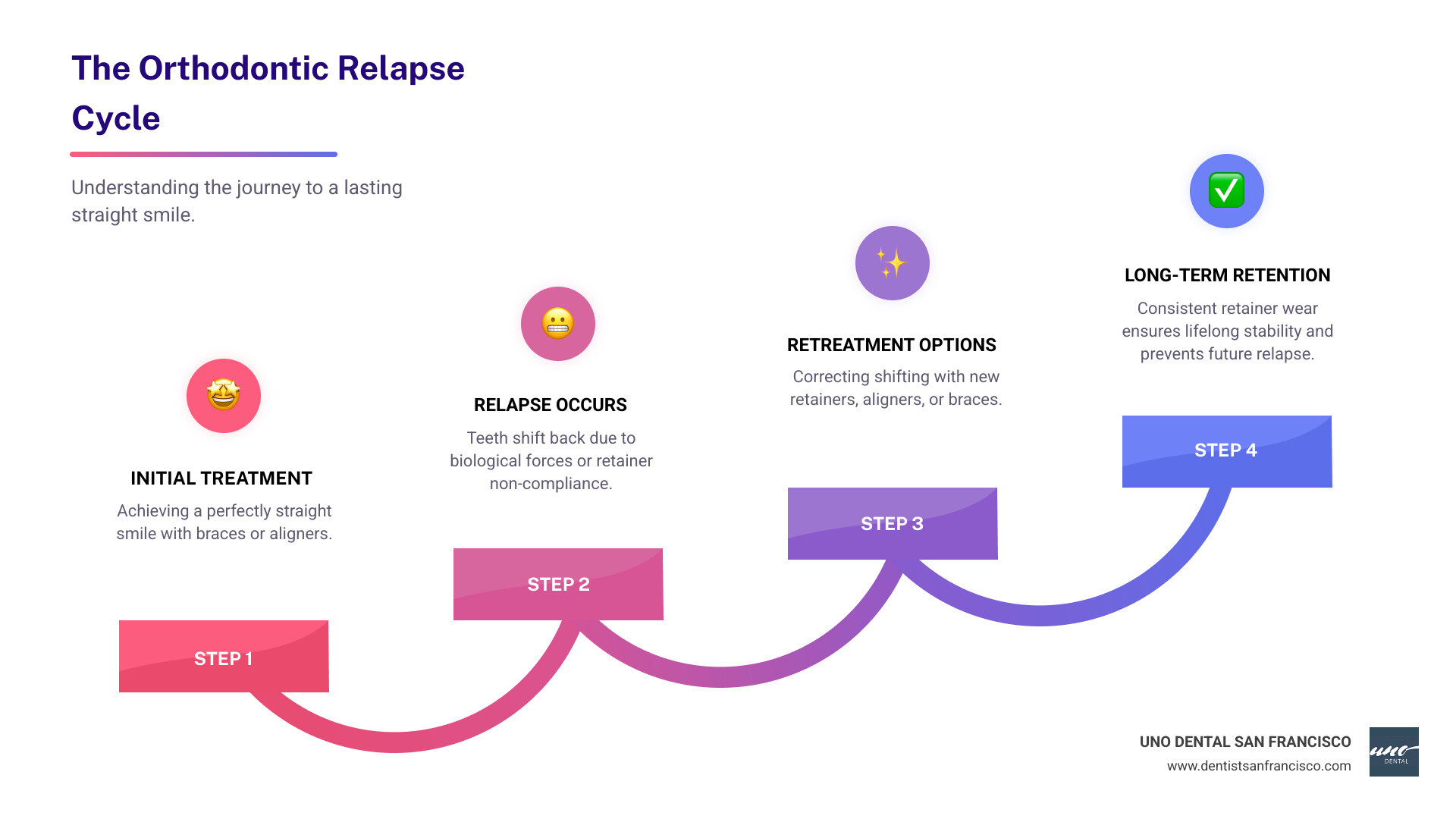
Understanding Orthodontic Relapse: Why Do Teeth Shift Back?
If you've had braces and now notice your teeth aren't as straight as they used to be, you're experiencing orthodontic relapse. This is the common tendency for teeth to drift back toward their original positions. Relapse isn't a sign of failed treatment; it's a natural biological process.
Telltale signs of relapse often appear gradually. You might notice:
- New gaps appearing between your teeth.
- Crowding returning, especially in the lower front teeth.
- Your bite feeling different or "off."
- Your retainer feeling tight after not wearing it for a while.
Orthodontists categorize relapse as short-term (within the first year) or long-term (a year or more after treatment), influenced by aging and lifestyle.
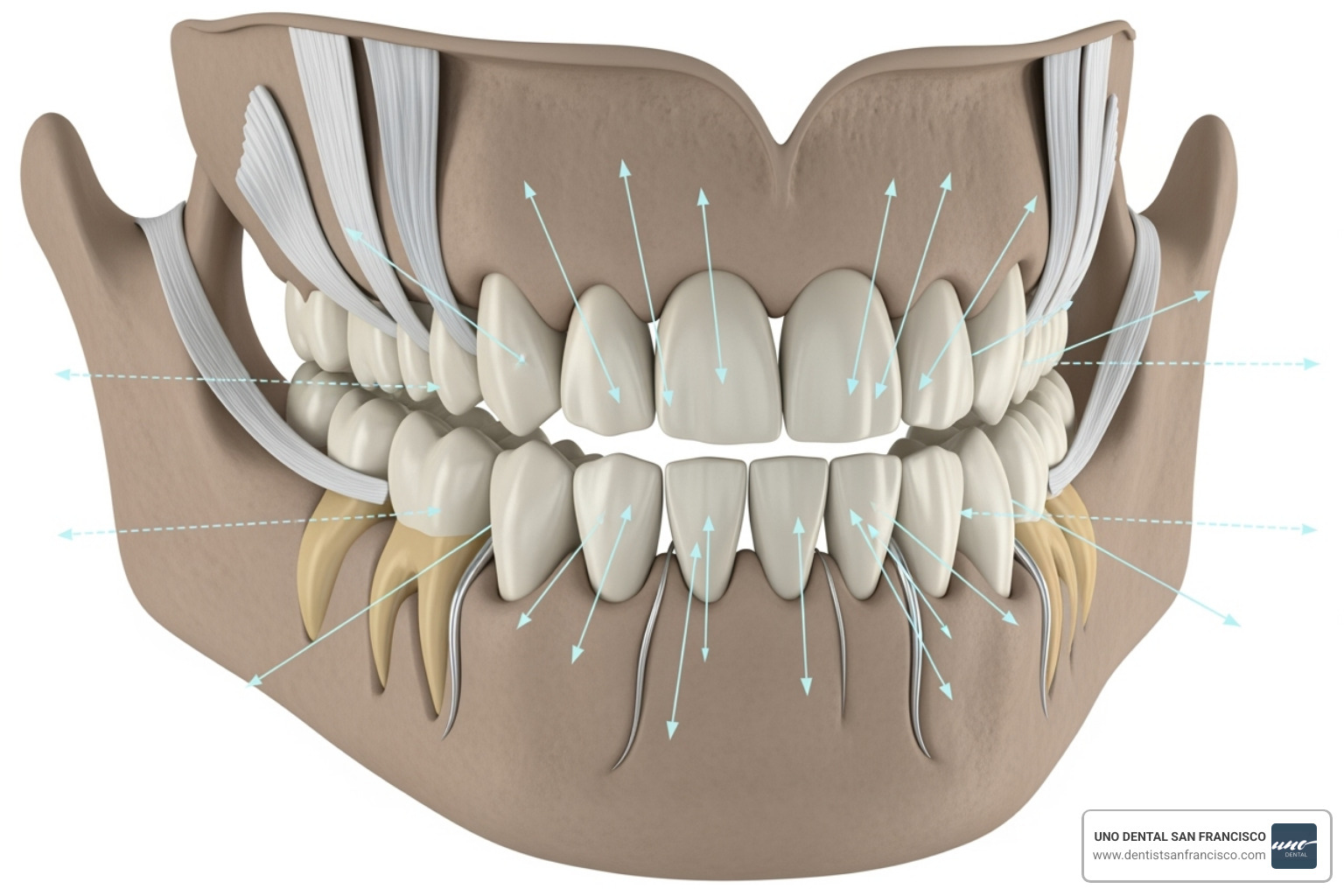
So, what causes this shift? Your teeth are held in place by a complex system of biological forces.
- Periodontal Ligament Memory: The elastic fibers holding your teeth have a "memory" and naturally try to pull teeth back to their original spots. This is why initial retainer use is so critical.
- Bone Remodeling: The bone around your teeth needs years to fully stabilize in their new positions. Without a retainer, teeth can drift before the bone solidifies.
- Muscle Pressure: Constant, subtle pressure from your lips, cheeks, and tongue can gradually push teeth out of alignment over time.
Research, like one long-term stability study90102-3), confirms that maintaining alignment becomes more difficult over decades, highlighting the need for ongoing retention.
The Primary Causes of Post-Braces Shifting
While biological forces are always at play, certain factors can accelerate relapse.
- Retainer Non-Compliance: This is the single biggest cause. Modern orthodontics recommends lifelong retainer wear, typically nightly, to prevent shifting.
- Genetics: Your genetic makeup influences jaw growth and tooth positioning tendencies throughout your life.
- Natural Aging: Changes in bone density and a natural forward drift of teeth can cause alignment changes, such as late lower arch crowding.
- Teeth Grinding (Bruxism): The immense pressure from clenching and grinding, often during sleep, can move teeth.
- Tooth Loss: When a tooth is lost, adjacent teeth naturally drift into the empty space, disrupting the entire arch.
- Gum Disease: Unhealthy gums and bone weaken the foundation of your teeth, making them more susceptible to movement.
- Wisdom Teeth Eruption: The pressure from erupting wisdom teeth can sometimes contribute to crowding in the lower front teeth.
A comprehensive review on post-retention changes00447-5) confirms that multiple factors often work together, requiring personalized solutions. Fortunately, for every cause, effective braces relapse treatment options are available.
Your Guide to Braces Relapse Treatment Options
Finding your teeth have shifted can be disheartening, but braces relapse treatment is common, and today's solutions are better than ever. At UNO DENTAL SAN FRANCISCO, we help patients regain their perfect smiles every week.
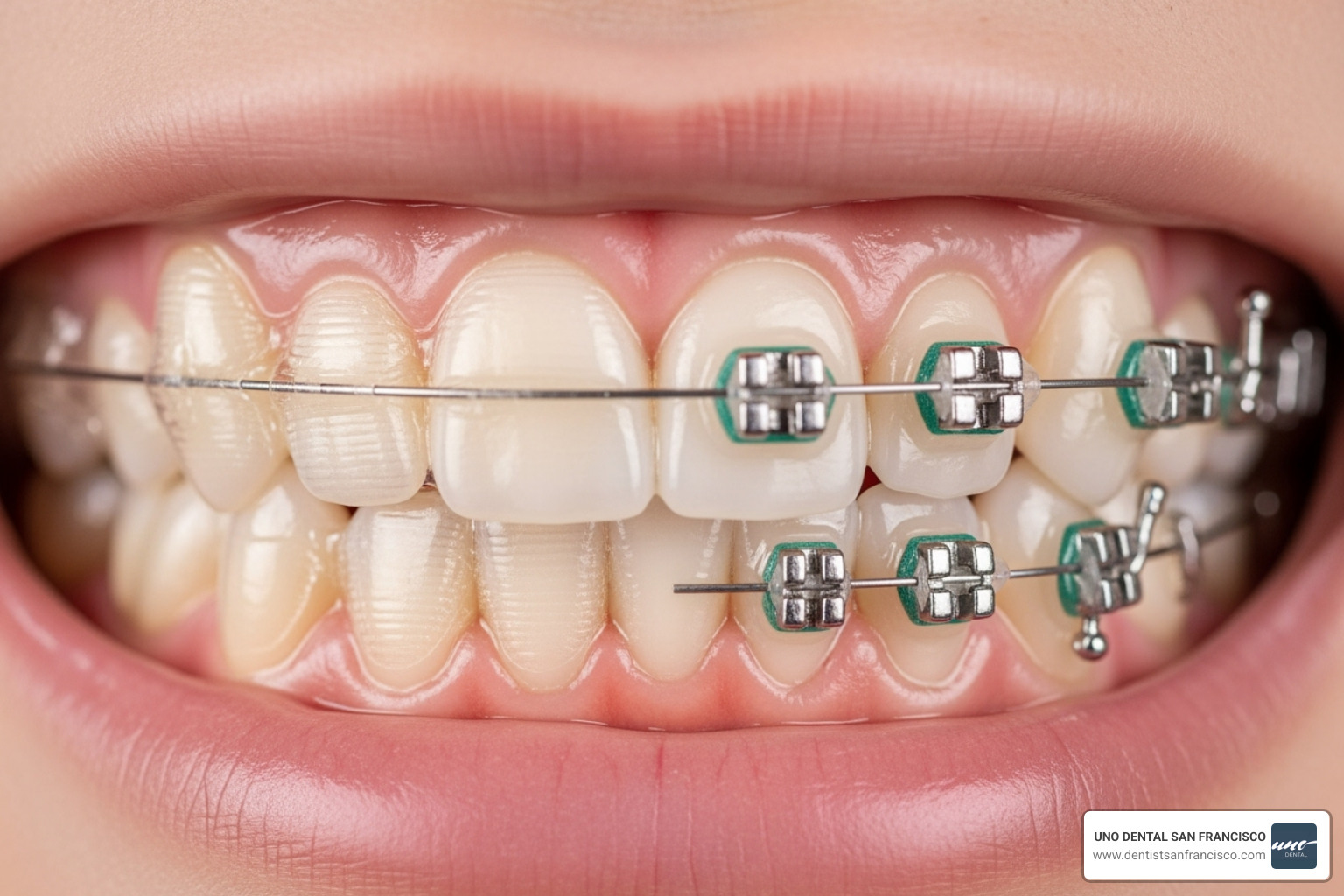
The first step is a thorough assessment to understand the extent of the relapse. This evaluation is crucial for creating a personalized treatment plan that fits your needs and lifestyle at our Orthodontics San Francisco practice.
Assessment First: When is a New Retainer Enough?
If you've caught the relapse early and the movement is minor, a new retainer may be all you need. This is especially true for recent shifts where a retainer has become tight but still fits. Acting quickly makes correction much easier.
Active retainers, also called spring aligners, are designed to do more than just hold teeth. They contain small springs or wires that apply gentle pressure to guide specific teeth back into place, effectively correcting minor crowding or spacing. For minor relapse, this approach is often faster and more affordable than full orthodontic treatment. Research confirms that well-designed retainers can correct minor malalignment, making them a smart first choice.
Comprehensive Braces Relapse Treatment: Braces and Aligners
For significant movement or relapse that has occurred over many years, more comprehensive tools are needed. The good news is that modern braces relapse treatment is faster and more comfortable than you might remember. Retreatment often takes less time than the original because we're starting from a better position.
Our Adult Braces San Francisco services are designed for busy professionals. Options include:
- Traditional metal braces: Efficient and cost-effective.
- Clear ceramic braces: Blend with your natural tooth color.
- Lingual braces: Hidden completely behind your teeth.
- Clear aligners: Removable for convenience.
We'll help you choose the best option based on your goals, timeline, and preferences.
Clear Aligners and Clear Braces for Relapse
Discreet adult options like clear aligners and ceramic braces are popular for relapse treatment because they straighten teeth without the look of traditional metal braces.
As an experienced provider of clear aligners in San Francisco, we've seen how effective they are for correcting post-braces shifting. The aligners are virtually invisible and removable, and treatment is often faster for relapse cases, typically taking 6 to 18 months.
San Francisco Clear Braces are another excellent choice, offering the strength of fixed appliances with a much more subtle appearance. The best choice depends on your lifestyle and the complexity of your case. Our guide comparing clear aligners and braces can help you explore the differences.
Beyond Aesthetics: The Health Benefits of Correcting Relapse
While many people focus on appearance, braces relapse treatment offers significant health benefits. Your overall oral health is closely linked to proper tooth alignment.
Crowded, overlapping teeth create hard-to-reach spots where plaque and food particles accumulate. Correcting relapse leads to improved oral hygiene because your toothbrush and floss can effectively clean every tooth surface.
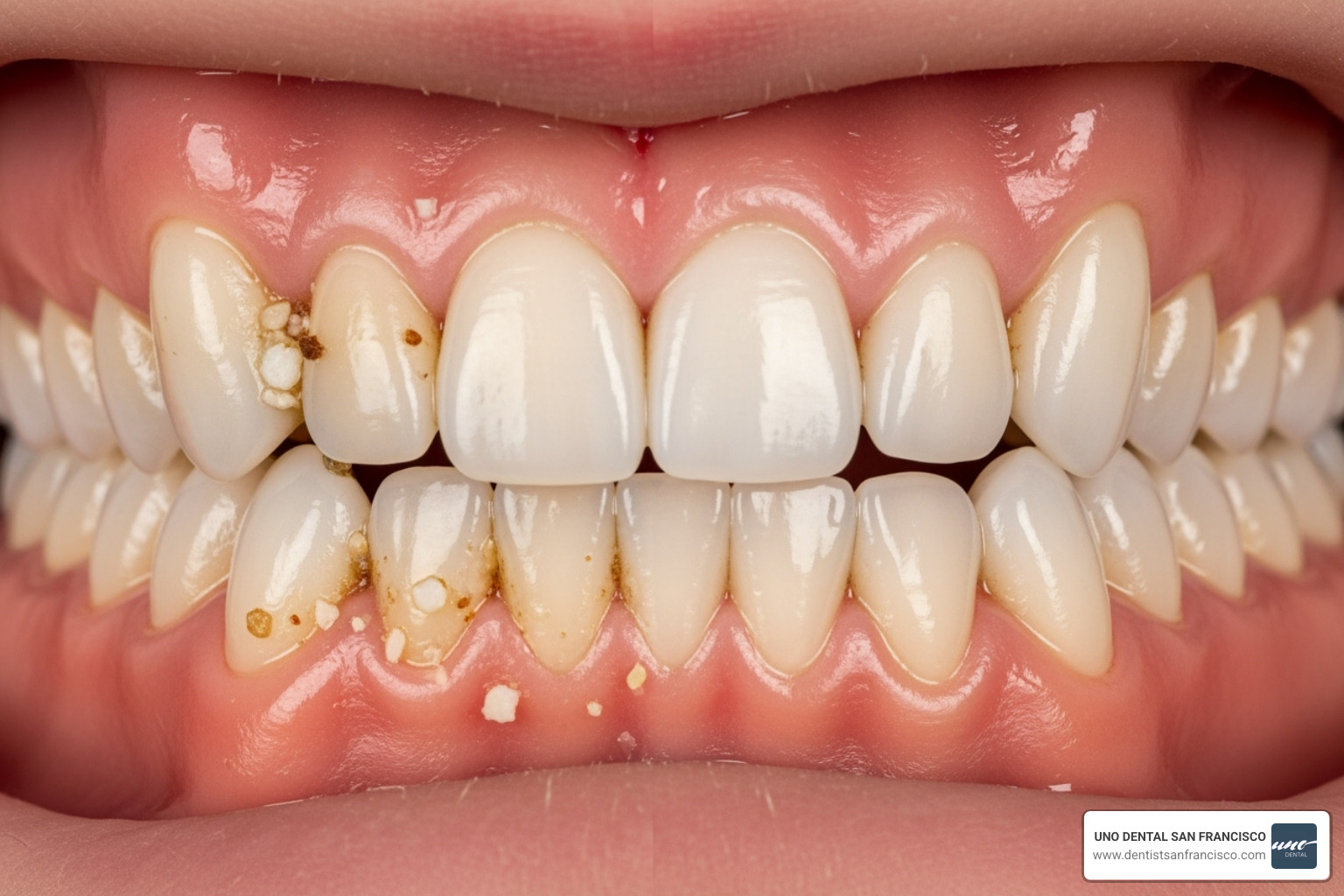
This directly translates to a reduced risk of tooth decay and better gum disease prevention. When bacteria can't hide, your teeth and gums stay healthier.
Beyond cleanliness, correcting bite problems (malocclusion) can eliminate symptoms like jaw pain, headaches, and difficulty chewing. An improper bite causes uneven wear on your teeth, which can lead to issues we sometimes see as Bad Teeth After Braces Come Off. Restoring a balanced bite protects your teeth from excessive wear and tear.
Finally, increased confidence is a powerful benefit. Feeling good about your smile affects how you interact with the world, both socially and professionally. Correcting relapse is an investment in both your oral health and your self-esteem.
Lifelong Stability: How to Prevent Relapse After Treatment
The secret to a lasting smile is commitment to the retention phase. Think of it as the foundation that keeps your orthodontic results stable for life. Statistics show why this is so crucial: after 20 years, only 10% of patients maintain their initial alignment without proper retention. Prevention is far easier than future braces relapse treatment.
As emphasized by resources from the Cochrane Oral Health Group, effective retention is the key to long-term success.
The Golden Rule: The Role of Retainers
The most important rule is that retainers are for life. Just as you brush daily to prevent cavities, you wear your retainer to maintain your orthodontic investment. Your teeth need consistent support to counteract the natural forces that cause shifting.
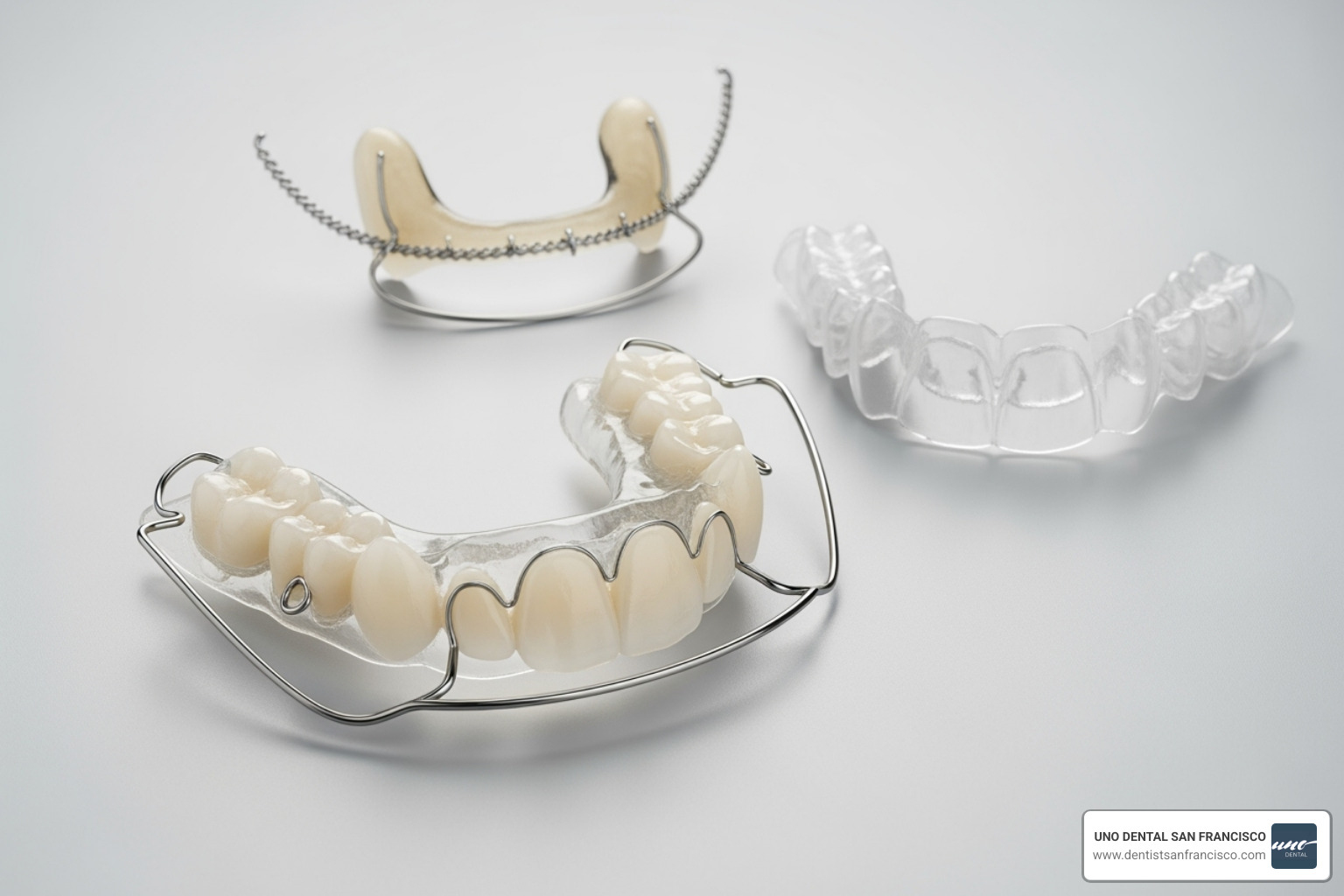
Common retainer types include:
- Hawley retainers: The classic durable wire and acrylic design, which can make minor adjustments.
- Essix retainers: Clear, comfortable plastic trays that are virtually invisible but less durable.
- Fixed lingual retainers: A thin wire bonded behind your front teeth, providing 24/7 retention without needing to be remembered.
Your wearing schedule will likely start full-time and transition to nighttime-only. It's vital to clean your retainers daily and store them safely. If you lose or damage a retainer, contact us immediately to prevent shifting. For tips on managing clear appliances, see our guide on what to do if you lose your clear aligner.
Supporting Habits for a Stable Smile
Beyond retainers, a few habits support long-term stability:
- Excellent oral hygiene: Healthy gums provide a stable foundation for your teeth. Brush and floss daily.
- Regular dental check-ups: These visits allow us to monitor your bite, check your retainer's fit, and catch any early signs of shifting. We can also help you keep your smile bright with services like Teeth Whitening After Braces.
- Address teeth grinding: If you grind your teeth (bruxism), a custom nightguard can protect your teeth from the powerful forces that cause movement.
Consistent retainer wear and good habits are the best way to enjoy your straight, healthy smile for a lifetime.
Frequently Asked Questions about Braces Relapse Treatment
Considering braces relapse treatment brings up many questions. Here are clear, honest answers to common concerns we hear at UNO DENTAL SAN FRANCISCO.
How long does retreatment for orthodontic relapse take?
Encouragingly, retreatment is typically much faster than your original treatment. The average time is 6 to 18 months. Minor shifts might be corrected in as little as 3-6 months with an active retainer or clear aligners. More significant relapse requiring comprehensive movement may take 12-18 months. The timeline depends on the severity of the relapse and your consistency with wearing appliances like aligners. Our clear aligner program for teens also offers efficient timelines.
What is the cost of correcting orthodontic relapse?
The cost varies based on the treatment method and complexity. A simple active retainer is the most economical option, while comprehensive braces or aligner therapy costs more. However, braces relapse treatment is often less expensive than initial orthodontic work because the corrections are typically more focused. We offer flexible financing options and will provide a detailed cost breakdown during your consultation. We can also help you steer your Dental Plan for Braces to maximize benefits.
Is retreatment as an adult different from having braces as a teen?
Yes, but modern techniques make adult treatment highly effective. While adult bone is denser, which can mean slightly slower movement, today's orthodontics are designed to work efficiently. The biggest advantages for adults are higher compliance and motivation, which often lead to excellent, predictable results. Aesthetic concerns are also paramount, which is why discreet options are so popular. Our Adult Braces San Francisco services are custom to these needs. You're in good company—one in five orthodontic patients is now an adult.
Conclusion: Reclaim Your Perfect Smile in San Francisco
You now know that orthodontic relapse is common, treatable, and that a straight smile is absolutely achievable again. Many adults in San Francisco have felt the frustration of shifting teeth, only to find that modern orthodontics offers faster and more comfortable solutions than their first experience.
At UNO DENTAL SAN FRANCISCO, Dr. Mohammad Aghiad Kandar and our team understand this journey. Our high-tech, patient-centered approach involves creating personalized treatment plans that fit your lifestyle and goals. Using nearly invisible methods like clear aligners or clear braces, we can often correct relapse in just 6 to 18 months without disrupting your life.
Your perfect smile is waiting. Addressing relapse isn't just about aesthetics; it's about protecting your oral health and preserving your confidence for years to come.
Ready to take the next step? We invite you to schedule a consultation to assess your relapse and explore your options. Learn more about achieving your ideal smile in our complete guide to teeth after braces, and let's work together to reclaim the smile you deserve.