
Understanding When You Need Dental Insurance That Covers Bonding
Dental insurance that covers bonding can be confusing, but the key is simple: is your procedure medically necessary or purely cosmetic?
Quick Answer: When Does Insurance Cover Bonding?
- Usually Covered (50-80%): Filling cavities, repairing chips that affect function, fixing fractures, protecting exposed roots.
- Rarely Covered: Closing gaps for aesthetics, whitening discolored teeth, reshaping teeth for appearance.
- Coverage Range: $90-$300 out-of-pocket for necessary procedures, $300-$600+ for cosmetic work.
Dental bonding uses a tooth-colored composite resin to restore or improve your teeth. It's the same material used in tooth-colored fillings and can serve both restorative and cosmetic purposes. Whether repairing a chipped tooth or closing a small gap, bonding offers a quick, affordable solution.
Insurance companies draw a clear line between necessity and aesthetics. If bonding restores function—like fixing a cavity or a broken tooth—you'll likely get significant coverage. If it's purely to improve your smile's appearance, you'll probably pay out of pocket.
As Dr. Mohammad Aghiad Kandar from UNO DENTAL SAN FRANCISCO, I've helped countless patients steer dental insurance that covers bonding over my 15+ years of practice. My experience with complex restorative cases has shown me how proper documentation and treatment planning can make the difference between covered and non-covered procedures.
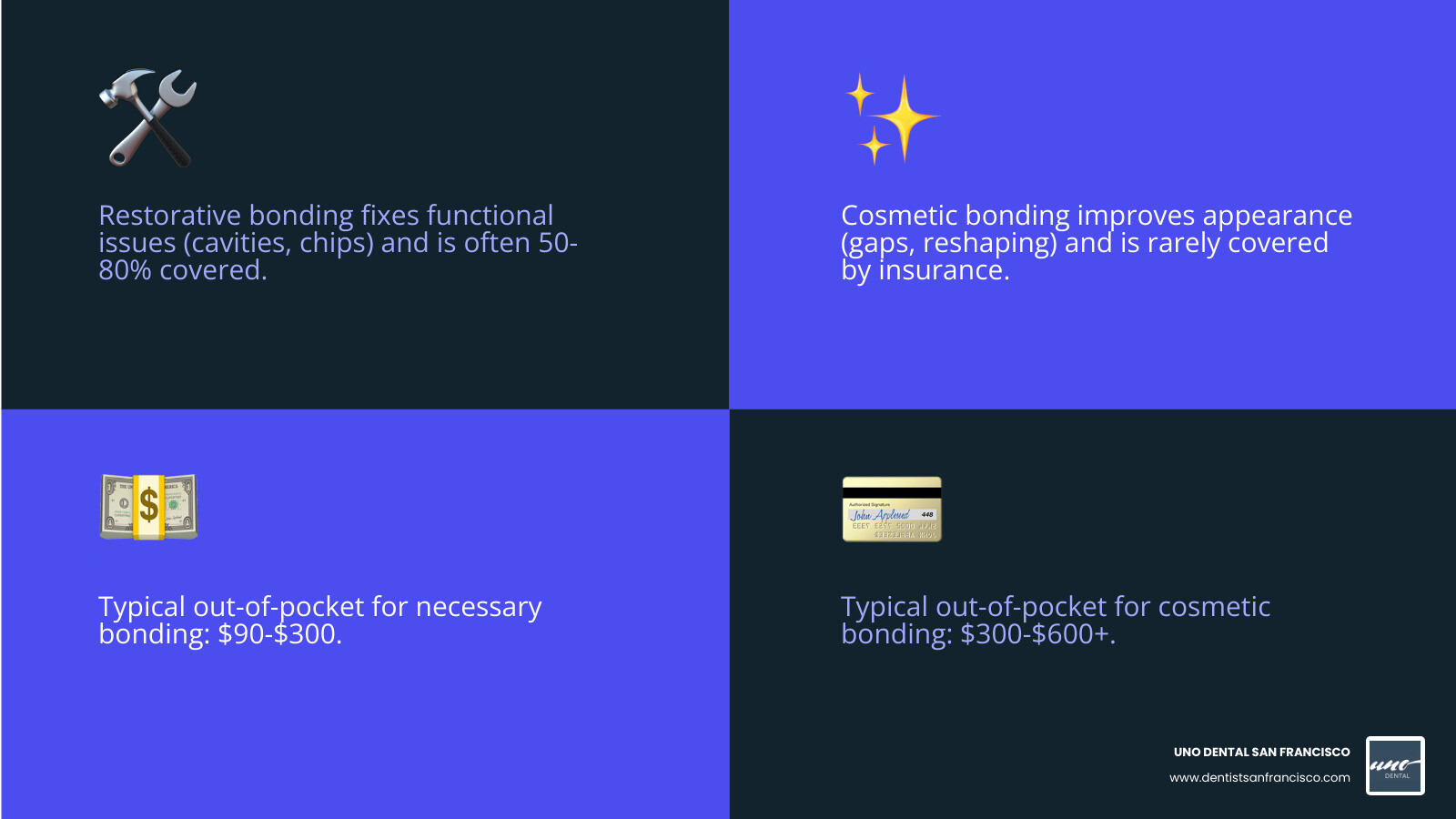
Dental insurance that covers bonding definitions:
The Deciding Factor: When Insurance Covers Dental Bonding
Whether you have dental insurance that covers bonding comes down to one question: Is the procedure fixing a health problem or just improving your smile's appearance?
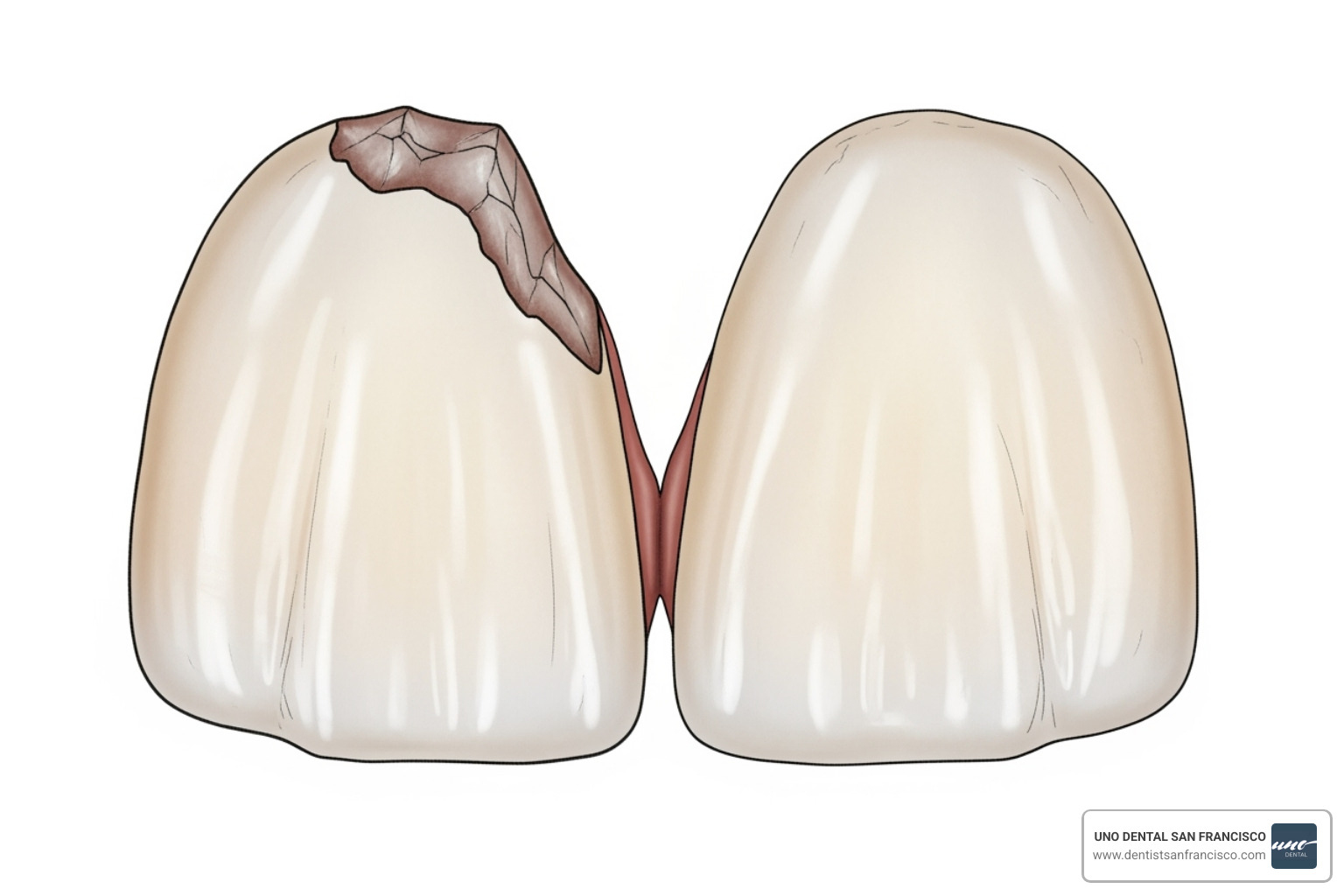
This distinction between medical necessity and cosmetic improvement is what insurance companies use to decide if they will help pay. Understanding this concept helps you set realistic expectations for your coverage.
Most dental plans categorize treatments. Basic restorative services include fillings and simple repairs that keep teeth healthy. Major restorative services cover complex work like crowns. When bonding is restorative, it typically falls into the basic category, which is good for your wallet.
Restorative vs. Cosmetic: The Key to Finding Dental Insurance That Covers Bonding
The same bonding procedure can be restorative or cosmetic depending on why you need it. Here’s how to tell the difference.
When Bonding is Restorative (Usually Covered):
- Filling cavities: Bonding fills holes from decay to prevent further damage, and is treated like any standard Dental Filling Restoration.
- Repairing fractures and chips: When damage affects tooth function, bonding restores the tooth's structure and protects it.
- Protecting exposed roots: Gum recession can expose sensitive roots. Bonding covers these areas to prevent pain and decay.
- Improving bite function: If a tooth's shape interferes with chewing or causes uneven wear, bonding can solve this functional problem.
When Bonding is Cosmetic (Rarely Covered):
- Closing gaps between teeth (diastema): While you may not like the look of a gap, it doesn't typically harm your oral health.
- Improving tooth shape and size: Changing a tooth's appearance for aesthetic reasons is considered cosmetic.
- Masking stains and discoloration: Covering stains that don't respond to whitening is about appearance, not health.
Sometimes the line blurs, as a chipped front tooth has both functional and aesthetic implications. This is where a good relationship with your dentist is key. To explore your options, learn More about cosmetic dentistry.
Typical Coverage for Medically Necessary Bonding
When you have dental insurance that covers bonding for restorative needs, here's what to expect. Your out-of-pocket cost is determined by a few factors:
- Deductible: The amount you pay each year before your insurance begins to pay.
- Coinsurance: Your share of the cost after your deductible is met. For basic procedures like restorative bonding, most plans cover 50-80% of the cost.
- Annual Maximum: The total amount your plan will pay for your dental care in one year.
For example, if a $400 bonding procedure is covered at 70% after your deductible, insurance pays $280, and you pay $120. Be aware of policy limitations, like waiting periods or restrictions on how many surfaces can be bonded. Always check your specific plan. For more technical details, you can reference What is dental bonding?.
When bonding is necessary for your oral health, most insurance plans provide meaningful coverage. When it's purely cosmetic, you'll likely pay the full cost.
Navigating Your Policy: How to Confirm Your Dental Insurance That Covers Bonding
Every dental insurance that covers bonding is different. Policies can be confusing, but you don't have to figure this out alone. At UNO DENTAL SAN FRANCISCO, we help patients steer their benefits every day.

We are in-network preferred providers for many major PPO insurance plans. We also work with many other plans as an out-of-network provider, which often still provides partial coverage. Please note: we do not accept HMO plans.
Understanding in-network vs. out-of-network coverage is key. In-network providers offer the highest benefit level, while out-of-network care may have higher out-of-pocket costs but can still offer savings. For an overview of how we work with insurance, see our guide on New Patients: Dental Insurance Financing.
Steps to Verify if You Have Dental Insurance That Covers Bonding
Getting clarity on your dental insurance that covers bonding is worth the effort. Follow these steps:
- Review your Summary of Benefits: Look for terms like "composite fillings," "resin restorations," or "basic restorative services." This document is usually available on your insurer's member portal.
- Call your insurance provider: Have your policy number ready. Ask about coverage for restorative vs. cosmetic bonding, your deductible, annual maximum usage, and if pre-approval is required.
- Request a pre-treatment estimate: Our office can submit this for you. It provides a realistic, though not guaranteed, picture of what insurance will likely cover.
- Work with your dental team: During your consultation, we'll determine if your bonding is restorative or cosmetic. Our experienced administrative team can help spot coverage opportunities and explore timing treatments across benefit years to maximize your savings.
Understanding the Costs and Alternatives to Bonding
Even with dental insurance that covers bonding, it's crucial to understand your final cost. Bonding prices vary based on factors like dentist experience, geographic location (costs are higher in San Francisco), the number of teeth treated, and procedure complexity. Sometimes, preliminary treatments like a cleaning are also needed. For a broader perspective, explore the Cost of Cosmetic Dentistry.
Cost Breakdown: With and Without Insurance
Here are typical cost expectations for bonding:
- Without Insurance: Restorative bonding (fillings) ranges from $90 to $450 per tooth. Cosmetic bonding generally runs between $300 and $600 per tooth, but complex cases can range from $100 to $1,000 per tooth.
- With Insurance: For medically necessary bonding, insurance typically covers 50% to 80% of the cost after your deductible. A $400 procedure might only cost you $80 to $200 out-of-pocket. Cosmetic bonding is rarely covered, meaning you'll likely pay the full amount.
At UNO DENTAL SAN FRANCISCO, we are committed to Affordable Dental Care San Francisco and offer various payment options to maximize your benefits.
[TABLE] Comparing Dental Bonding vs. Porcelain Veneers
Bonding isn't the only option. Porcelain veneers offer a more dramatic, long-lasting alternative. Here’s how they compare:
| Feature | Dental Bonding | Porcelain Veneers |
|---|---|---|
| Procedure | Resin applied, sculpted, hardened directly on tooth. | Thin porcelain shells custom-made, then bonded to tooth. |
| Cost (per tooth) | $100 - $1,000 (typically $300-$600 cosmetic) | $500 - $1,300 (can be higher) |
| Longevity | 3-10 years (average 7-11 years) | 10-20 years |
| Material | Composite resin | Porcelain |
| Stain Resistance | Prone to staining (like natural teeth) | Highly stain-resistant |
| Best For | Minor chips, cracks, gaps, discoloration, restorative fillings. Quick, cost-effective, reversible. | Significant cosmetic changes, severe discoloration, misalignment, worn enamel. Durable, highly aesthetic. |
Bonding is excellent for minor, budget-friendly corrections, while veneers are ideal for a complete, durable smile makeover. Learn more about The Benefits of Cosmetic Bonding Over Porcelain Veneers.
Financial Solutions if Bonding Isn't Covered
If dental insurance that covers bonding doesn't apply to your needs, we offer several solutions:
- Payment Plans: We work with financing companies to spread costs over manageable monthly payments, often with low or no interest.
- HSA/FSA: Use your pre-tax Health Savings or Flexible Spending Account dollars for both restorative and cosmetic treatments.
- Dental Savings Plan: Our in-house Dental Savings Plan provides discounted rates for an annual fee, with no waiting periods.
- Alternative Treatments: For severe damage, a Dental Crown may have better insurance coverage and longevity.
- Phasing Treatment: We can strategically time procedures across calendar years to maximize your annual insurance benefits.
The Bonding Procedure and Long-Term Care
Beyond understanding dental insurance that covers bonding, it's important to know what the procedure entails and how to care for your results.
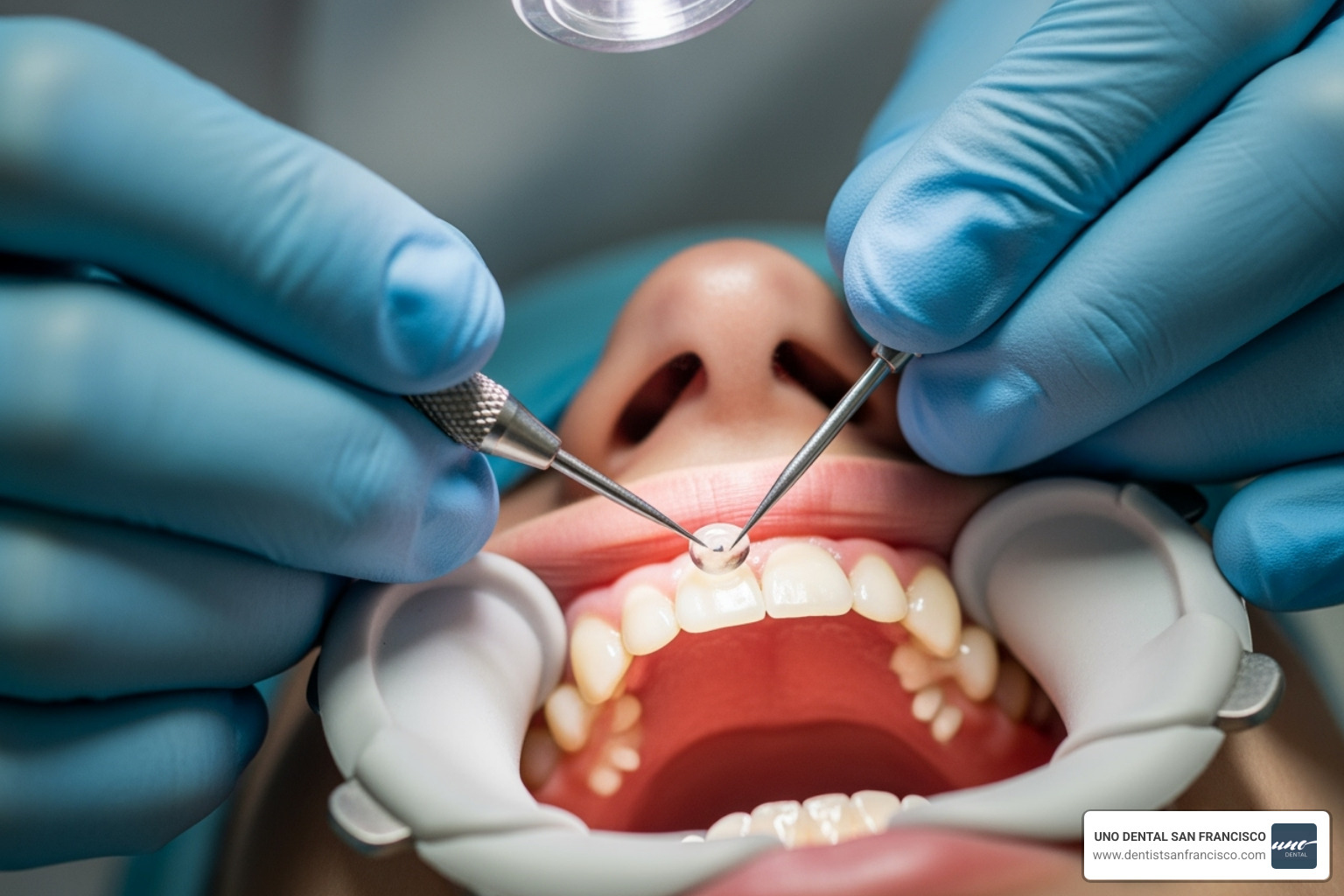
Dental bonding is a straightforward, single-visit procedure. Here’s what to expect:
- Preparation: We clean the tooth, remove any decay, and gently etch the surface with a mild gel to help the resin adhere. This step is painless and usually requires no anesthetic.
- Resin Application: We apply a conditioning liquid and then the tooth-colored composite resin. At UNO DENTAL SAN FRANCISCO, we carefully select the perfect shade to ensure a seamless match.
- Curing: A special ultraviolet light hardens each layer of resin in seconds, allowing us to build up the tooth's shape with precision.
- Shaping and Polishing: We sculpt the hardened resin to achieve the perfect contour and bite, then polish it to a smooth, natural finish. The entire process takes 30-60 minutes per tooth.
With proper care, dental bonding typically lasts 3 to 10 years. Durability depends on the bonding's location, your diet, and your oral hygiene habits.
Maintaining Your Bonded Teeth
Simple habits can extend the life of your bonded teeth:
- Practice Good Oral Hygiene: Brush twice daily with a non-abrasive toothpaste, floss regularly, and use an antimicrobial mouthwash to prevent decay around the bonding.
- Avoid Staining: Composite resin is porous and can stain, especially in the first 48 hours. Be mindful of coffee, tea, red wine, and tobacco. Rinsing with water after consumption can help.
- Protect from Damage: Avoid biting hard items like ice or candy and using your teeth as tools. If you grind your teeth, a custom nightguard can protect your bonding and natural teeth.
- Schedule Regular Dental Visits: During your six-month check-ups, we'll examine your bonding for wear and can perform minor polishing or repairs to prevent larger issues.
For detailed guidance, see our Cosmetic Procedure Aftercare Instructions. Proper care makes bonding a fantastic, long-lasting investment in your smile.
Frequently Asked Questions about Dental Insurance and Bonding
Here are answers to the most common questions we hear at UNO DENTAL SAN FRANCISCO about dental insurance that covers bonding.
Is dental bonding considered a basic or major restorative procedure?
Most of the time, when bonding is used for restorative purposes like filling a cavity, insurance companies classify it as a basic restorative procedure, similar to a standard filling. However, some plans may classify extensive bonding as a major procedure. This is why a pre-determination (a cost estimate from your insurer before treatment) is so important. It clarifies what you'll owe and eliminates surprises.
Can my insurance cover bonding if it's for a chipped front tooth?
Often, yes. Coverage for a chipped front tooth depends on the functional versus cosmetic determination. If the chip has sharp edges, affects your bite, or makes the tooth vulnerable to more damage, it's typically considered medically necessary and covered. If the chip is a minor aesthetic concern with no functional impact, it will likely be classified as cosmetic and not covered. At UNO DENTAL SAN FRANCISCO, we carefully document any functional issues to ensure clear communication with your insurer. For urgent needs, explore our Emergency Tooth Repair services.
What happens if my dental bonding chips or needs to be replaced?
Bonding is durable but not invincible. If it chips, we can often perform a simple repair by adding new composite material, which is quicker and less expensive than a full replacement. If a full replacement is needed after several years, insurance coverage typically depends on the original reason for the bonding. If it was for a medically necessary reason, the replacement is often covered as well, subject to your plan's waiting periods or frequency limitations. We always check with your insurance to help you understand the costs for repair versus replacement.
Conclusion: Making an Informed Decision for Your Smile
The key takeaway for dental insurance that covers bonding is that coverage hinges on medical necessity. If bonding restores function or repairs damage, insurance likely helps. If it's purely cosmetic, you'll likely cover the cost yourself.
You don't have to steer this alone. At UNO DENTAL SAN FRANCISCO, we have over 15 years of experience helping patients understand their benefits and find affordable paths to oral health. We are committed to transparency and know the ins and outs of working with insurance.
A consultation is essential. We will assess whether your bonding needs are restorative or cosmetic, which directly impacts your costs. We'll help you understand your plan, submit pre-determinations, and explore financing options.
Proactive communication with your insurer and our team is your best strategy. We can help you ask the right questions to get clear answers before treatment begins.
Whether you need a simple filling or a cosmetic smile improvement, we're here to help you make an informed decision that fits your health needs and budget. Our goal is to ensure you never have to choose between the care you need and your financial well-being.
Ready to take the next step? Schedule a consultation to discuss your situation and review your benefits. Explore your options for cosmetic dentistry and see how we make quality dental care accessible.
Reviewed by: Dr. Mohammad Aghiad Kandar, DDS, UNO DENTAL SAN FRANCISCO.