
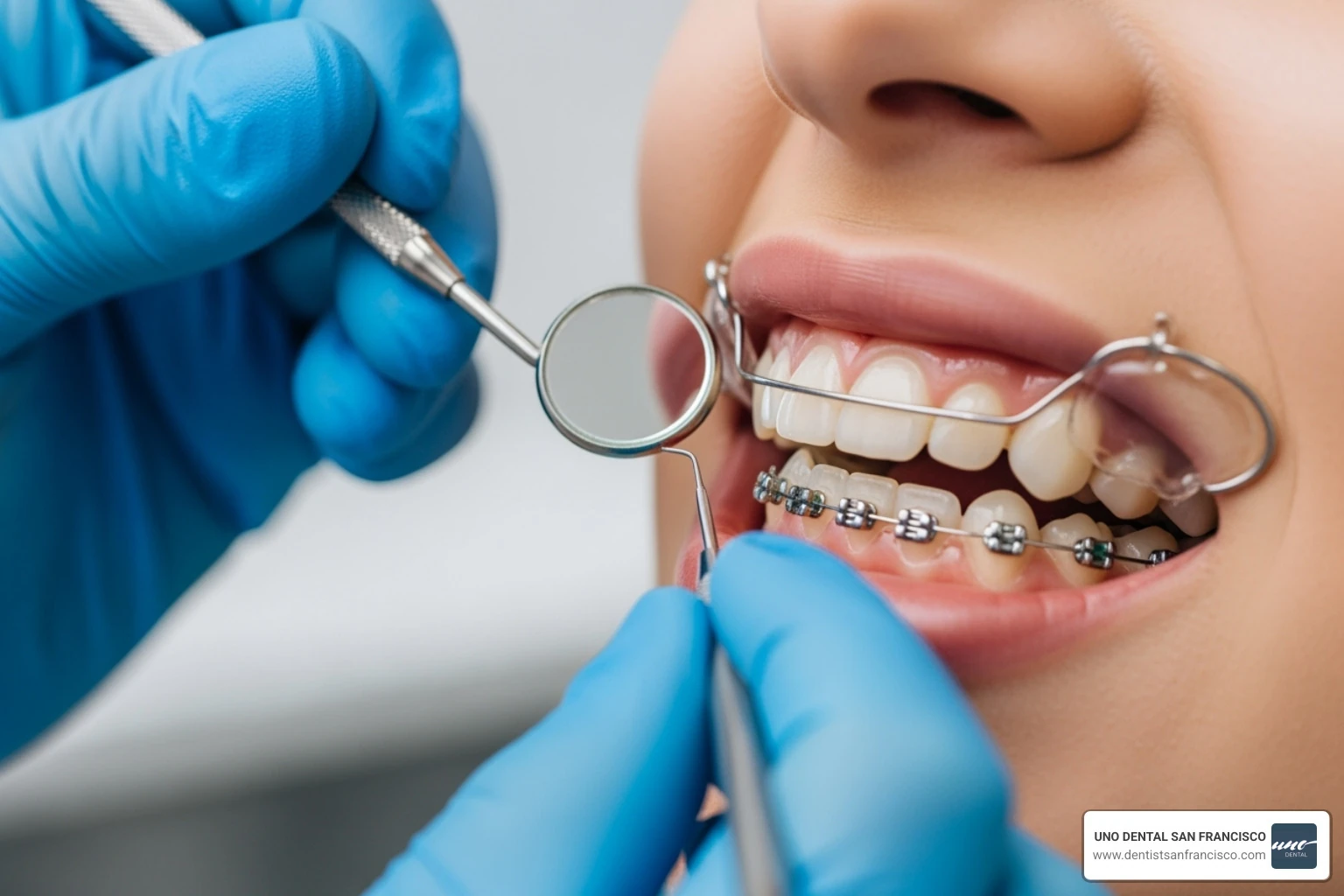
Why Your Gums Deserve Attention After Orthodontic Treatment
Congratulations on completing your orthodontic journey! While you’re enjoying your newly straightened teeth, you might notice your gums don’t look as healthy as you’d hoped. This is a common experience, as braces can leave behind gum issues that need proper care. The good news is that most problems are treatable, and many improve significantly with the right approach.
Common post-braces gum treatments include:
- At-home care - Gentle brushing, water flossing, and antimicrobial rinses.
- Professional deep cleaning - Scaling and root planing to remove built-up plaque.
- Gingivectomy - Surgical removal of overgrown gum tissue.
- Gum grafting - Restoration of receded gum tissue.
- Routine monitoring - Regular dental visits to track healing.
Some issues, like mild swelling, may resolve on their own, while others, like recession or overgrowth, require professional intervention. As Mohammad Aghiad Kandar, DDS at UNO DENTAL SAN FRANCISCO, I've helped countless patients with gum treatment after braces using personalized care plans. My experience in restorative and cosmetic dentistry ensures your gums heal properly and look their best.
This guide will help you identify post-braces gum issues and explore treatments, from simple home care to advanced procedures, to ensure your gums match your perfect smile.

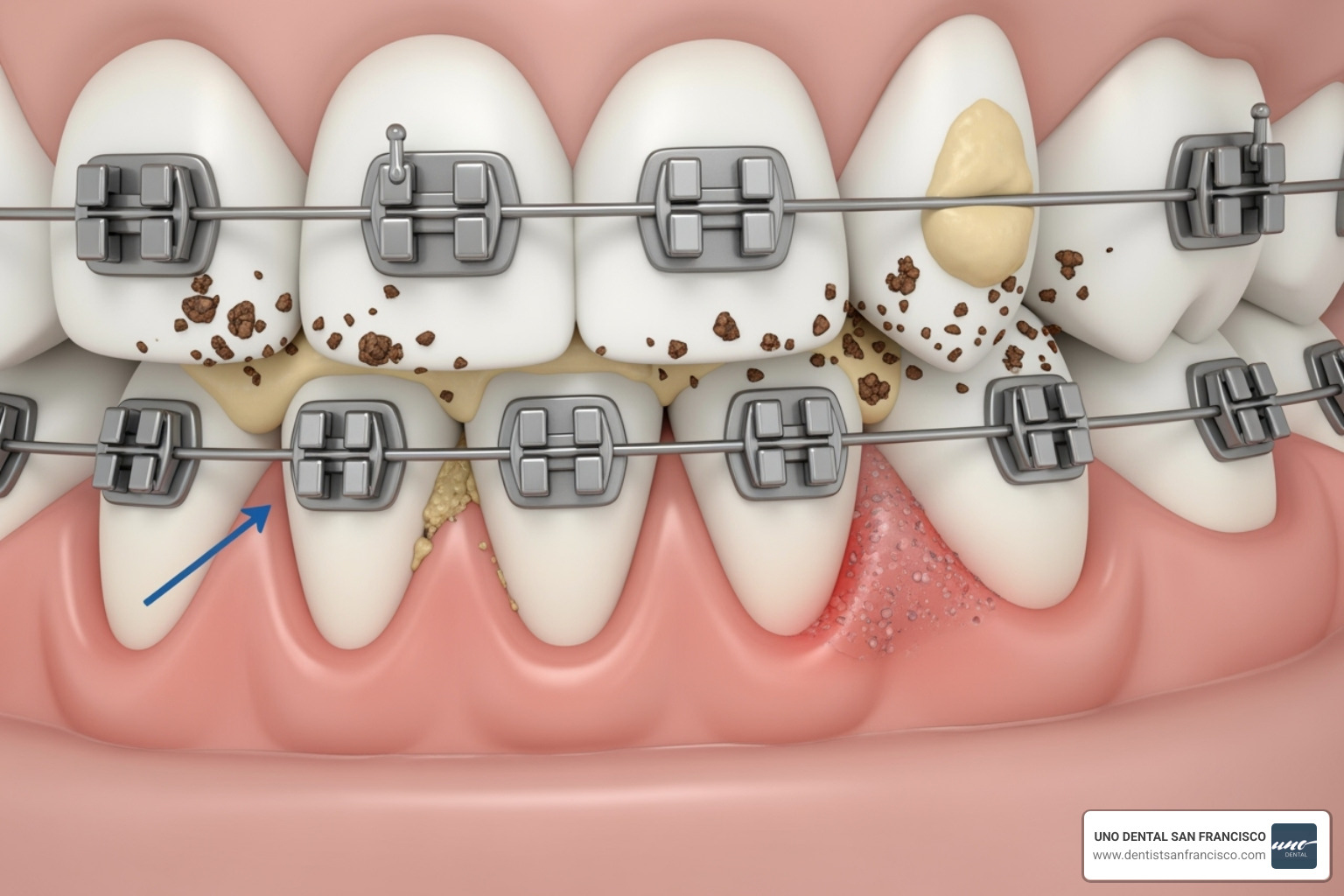
Common Gum Problems You Might Notice
The brackets and wires of braces make oral hygiene challenging, allowing food and plaque to accumulate and increase the risk of gum problems. Here are some common issues we see after braces are removed:
-
Gingival Inflammation (Swelling): This is the most frequent issue. Plaque buildup and the pressure from braces can lead to red, swollen, and bleeding gums (gingivitis). Mild swelling is normal and often subsides within a few days, but persistent swelling may indicate a larger problem.
-
Gum Overgrowth (Gingival Hyperplasia): Chronic irritation from plaque can trigger an overgrowth of gum tissue, causing the gums to look puffy and cover parts of the teeth. This often improves within 6-8 weeks after brace removal, but significant cases may need treatment.
-
Gum Recession: While braces don't directly cause recession, they can contribute to it if teeth are moved significantly or if you have thin gum tissue or pre-existing gum disease. Aggressive brushing can also cause gums to pull back, exposing tooth roots. This condition does not resolve on its own.
-
Dark or Black Triangles: These are small, dark spaces between teeth at the gumline that appear when the gum tissue doesn't fully fill the space. This is common in adults and, while not a health issue, can be a cosmetic concern.
At UNO DENTAL SAN FRANCISCO, we know that maintaining good oral hygiene is crucial. If you're experiencing any signs of Early Stage Gingivitis, it's important to address it promptly.
Signs You Need Professional Help
While mild gum swelling is normal after braces removal, certain signs indicate it's time to consult a professional. Ignoring these symptoms can lead to more serious oral health issues.
You should seek professional attention if you notice:
- Persistent bleeding when brushing or flossing: Consistent bleeding is a sign of inflammation that isn't resolving.
- Severe or painful swelling: Significant or tender swelling could indicate a more serious condition.
- Pus or discharge from the gums: This is a clear sign of infection and requires immediate evaluation.
- Gums that don't improve after several weeks: If diligent home care isn't helping, it's time for a professional look.
- Noticeable tooth root exposure: If your gums are visibly receding, intervention is needed to prevent further damage.
- Extreme sensitivity to hot or cold: This can be a symptom of exposed tooth roots due to recession.
- Loose or shifting teeth: This is a rare but serious sign of advanced gum disease that requires immediate attention.
At UNO DENTAL SAN FRANCISCO, we emphasize regular check-ups. Your journey to a perfect smile includes healthy gums, and we are here to support you. Don't hesitate to reach out if you have concerns about your Oral Hygiene or gum health.
At-Home Gum Care and Recovery
Once your braces are off, your gums can finally begin to heal. This phase is critical for reducing inflammation and allowing your gum tissue to recover and adjust. The good news is that you have significant control over this process through a consistent at-home care routine. With the right approach, most people see noticeable improvement within a few weeks.
Your Initial At-Home Gum Treatment After Braces
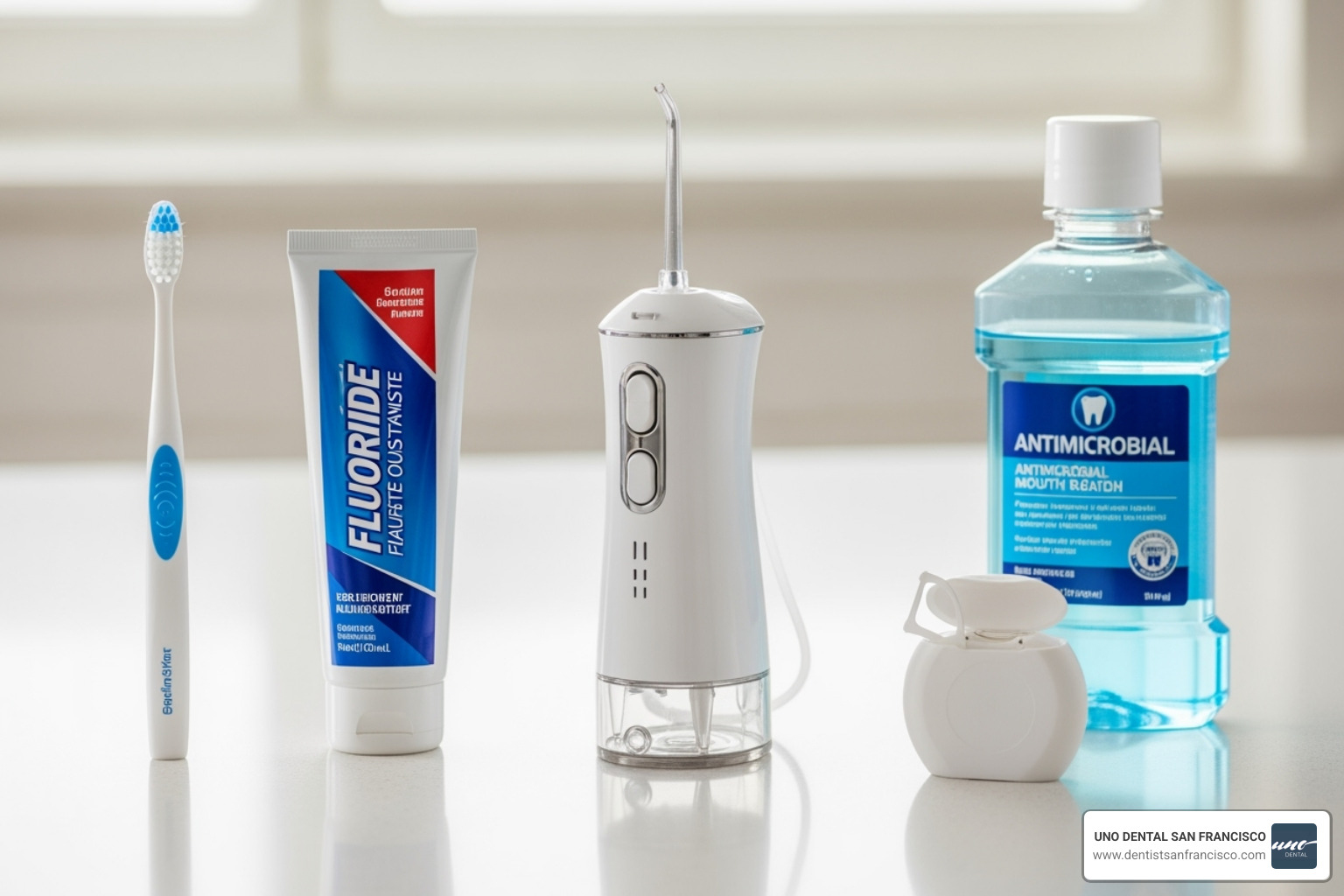
Your gum treatment after braces starts at home. This initial routine sets the foundation for long-term gum health.
-
Use a soft-bristled toothbrush. Your gums need gentleness. Brush at least twice daily with small, circular motions along the gumline. Forceful brushing can worsen irritation and recession.
-
Continue with fluoride toothpaste. This helps strengthen your enamel and manage the temporary sensitivity that is common after brace removal.
-
Invest in a water flosser. This tool is excellent for removing plaque from areas that were hard to clean with braces on. Use a gentle pressure setting if your gums are tender.
-
Add an antimicrobial mouthwash. Rinsing after brushing and flossing helps reduce bacteria and combat inflammation. We can recommend a suitable product for you.
-
Try saltwater rinses. This simple, natural remedy soothes inflamed gums and reduces swelling. Mix half a teaspoon of salt in warm water and rinse several times a day.
-
Incorporate gentle gum massage. Using your soft toothbrush or a clean finger, gently massage your gums in circular motions to improve blood circulation and stimulate healing.
These practices are the foundation of Best Dental Hygiene Practices that will serve you for life. Consistency is key.
How Long Does It Take for Gums to Heal?
The question we hear most often is: "When will my gums look normal again?" The timeline depends on several factors, but here’s a general guide.
Most people see significant improvement in the first one to two weeks, as initial swelling and redness subside. However, full adaptation can take several months, as the gum tissue remodels itself around your teeth's new positions.
Several factors influence this timeline:
- Previous Oral Hygiene: Gums will bounce back faster if you maintained excellent hygiene with braces.
- Professional Cleaning: A cleaning right after brace removal removes accumulated tartar and gives your gums a fresh start.
- Gum Recession: Receded gums will not grow back on their own and require professional treatment.
- Age and Overall Health: Younger patients tend to heal faster, and your general health plays a role.
- Retainer Use: Wearing your retainer as directed stabilizes your teeth, allowing the surrounding gum tissue to settle properly.
Your diet also supports recovery. To maintain Healthy Gums, focus on foods rich in Vitamin C (citrus fruits, strawberries), which is essential for collagen production. Leafy greens (spinach, kale) provide antioxidants that fight inflammation, while dairy products offer calcium for strong teeth and bone. Lean proteins and whole grains also provide the necessary building blocks for tissue repair. A well-rounded diet directly impacts how quickly your gums recover.
At UNO DENTAL SAN FRANCISCO, we guide you through the most effective gum treatment after braces routine and intervene professionally when needed. Your commitment to home care during these first months makes all the difference.
Professional Gum Treatment After Braces
While diligent at-home care is the foundation of healthy gums, it's sometimes not enough to address issues that developed during orthodontic treatment. When inflammation, gum overgrowth, or recession persists, it's time for professional intervention.
At UNO DENTAL SAN FRANCISCO, we understand your journey doesn't end when the braces come off. A thorough evaluation helps us determine the best course of action, whether it's a deep cleaning, a gingivectomy to reshape tissue, or gum grafting to restore recession. Modern dental procedures are often minimally invasive with faster healing and excellent results. Let's explore the professional options for gum treatment after braces.
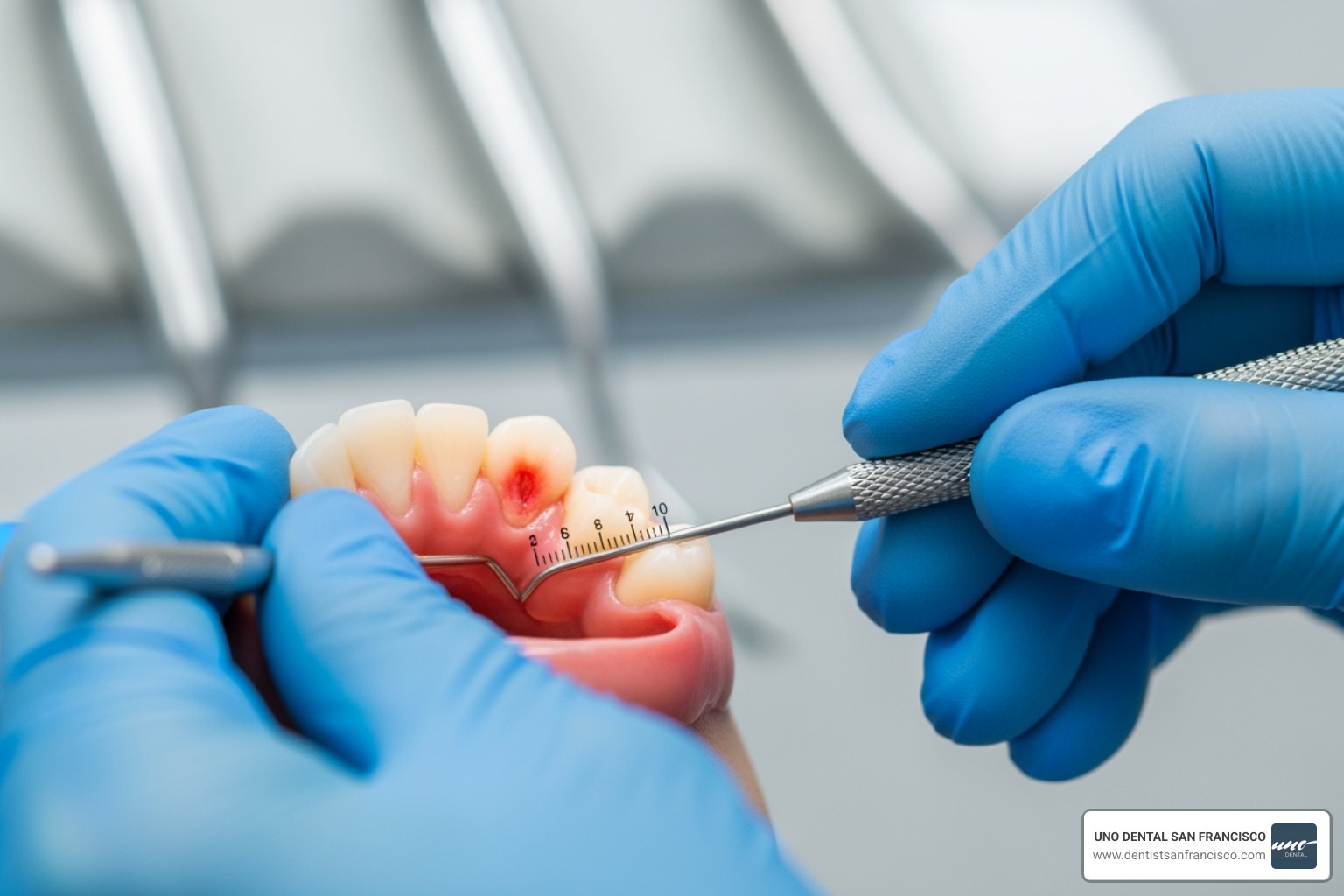
Treating Gum Overgrowth: The Gingivectomy Procedure
Gum overgrowth (gingival hyperplasia) can be a frustrating side effect of braces. If the excess tissue doesn't resolve on its own, it can trap food and affect the appearance of your smile.
A gingivectomy is a surgical procedure to remove this excess gum tissue, reshaping your gumline for a more balanced, healthy look. We typically recommend it when overgrowth is significant and doesn't improve with diligent oral hygiene. It's also used to treat certain forms of periodontal disease or to correct a "gummy smile."
The procedure can be done with a scalpel or, more commonly, a dental laser. At UNO DENTAL SAN FRANCISCO, we often use a laser because it offers less bleeding, reduced discomfort, and faster healing. The process takes 30-60 minutes under local anesthetic.
Recovery is generally quick, with most patients healing within a week. We'll provide detailed aftercare instructions, including guidance on gentle brushing and which foods to avoid. The results are permanent—once the excess tissue is removed, it won't grow back.
To learn more about our approach, visit our Periodontal Treatment page.
Solutions for Gum Recession After Braces
Gum recession after braces can be concerning, as it exposes sensitive tooth roots and increases the risk of decay. Addressing it is a crucial part of gum treatment after braces.
Recession can be caused by significant tooth movement, thin gum tissue, pre-existing gum disease, or even aggressive brushing. The first step in treatment is often a professional deep cleaning (scaling and root planing). This procedure removes plaque and tartar from below the gumline and smooths the tooth roots to help the gums reattach more firmly. You can learn more from our resource on Deep Cleaning Dental Aftercare.
For more significant recession, gum grafting is the gold standard. This involves attaching healthy gum tissue (from your palate or a donor source) to the receded area to cover the exposed roots. While highly effective, traditional grafting is more invasive and has a longer recovery time.
The Pinhole Surgical Technique is a minimally invasive alternative. We make a small pinhole in the gum and gently slide the existing tissue down to cover the exposed root. This technique offers minimal discomfort, no sutures, and a much faster recovery.
| Feature | Gum Grafting (Traditional) | Pinhole Surgical Technique |
|---|---|---|
| Invasiveness | More invasive (requires tissue harvest from another site) | Minimally invasive (small pinhole, no tissue cutting) |
| Recovery Time | Longer (typically 1-2 weeks for donor site, 2-4 weeks for graft site) | Shorter (usually 24-48 hours of mild discomfort) |
| Sutures | Required at both donor and recipient sites | None or very few |
| Pain/Swelling | Moderate to significant | Minimal |
| Ideal Use Cases | Severe recession, need for significant tissue augmentation | Moderate to severe recession across multiple teeth, good existing gum tissue for manipulation |
At UNO DENTAL SAN FRANCISCO, we evaluate your specific situation to determine the most effective treatment, ensuring we restore your gum health for the long term.
Frequently Asked Questions about Post-Braces Gum Health
It's natural to have questions as your gums adjust after orthodontic treatment. At UNO DENTAL SAN FRANCISCO, we hear these concerns often. Here are answers to some common questions.
Will my gums go back to normal on their own after braces?
It depends on the issue. Mild swelling and inflammation often resolve on their own with excellent oral hygiene, typically within a few weeks to a couple of months. However, significant issues like gum recession or severe overgrowth (gingival hyperplasia) will not resolve on their own and require professional treatment. If you're concerned about a persistent gum issue, an evaluation is the best way to determine the right gum treatment after braces for you.
Can my retainer hurt my gums?
A properly fitted retainer should not cause pain or irritation. Its purpose is to hold your teeth in place, not to press uncomfortably on your gums. If your retainer is causing sores or discomfort, it likely needs an adjustment. An ill-fitting retainer can lead to inflammation or even gum recession over time. Contact your orthodontist or our team at UNO DENTAL SAN FRANCISCO right away if you experience any discomfort to prevent potential gum damage and keep your Oral Hygiene routine comfortable.
Are "black triangles" between teeth permanent after braces?
Those small, dark spaces between teeth at the gumline are called "black triangles." They appear when the gum tissue (papilla) doesn't completely fill the space, which is common in adults after teeth are straightened. Unfortunately, they typically do not fill in on their own. While not a health concern, they can be a cosmetic one. Several cosmetic dental procedures, such as cosmetic bonding or veneers, can improve their appearance. We can discuss these solutions with you during a consultation at UNO DENTAL SAN FRANCISCO.
Conclusion: Partnering for Your Perfect Post-Braces Smile
Your orthodontic journey isn't over when the braces come off. The final step is ensuring your gums are as healthy and beautiful as your newly aligned teeth. A great smile requires a healthy foundation, and that starts with your gums.
Diligent home care is your foundation. Gentle brushing, water flossing, and antimicrobial rinses can resolve mild inflammation and swelling. For many, this consistent care is all that's needed for gums to bounce back.
But when home care isn't enough, professional gum treatment after braces is essential. Whether it's a deep cleaning, a gingivectomy for overgrown tissue, or gum grafting for recession, these treatments offer powerful solutions for persistent problems.
At UNO DENTAL SAN FRANCISCO, we believe in individualized treatment plans. We take the time to evaluate your specific concerns and explain your options clearly. Our high-tech, patient-centered approach ensures we monitor your healing and catch any issues early.
We make it easy to start the conversation with our free virtual smile consultations, allowing you to discuss your concerns from the comfort of home. Your journey to a confident, healthy smile is our priority. We're here to partner with you, ensuring the beautiful smile you worked so hard for is supported by vibrant, healthy gums.
Ready to complete your smile change? Visit us for your Dental Health San Francisco needs, and learn more about achieving your best smile with our complete guide to teeth after braces. Your perfect post-braces smile is waiting—and we're here to help you achieve it.