
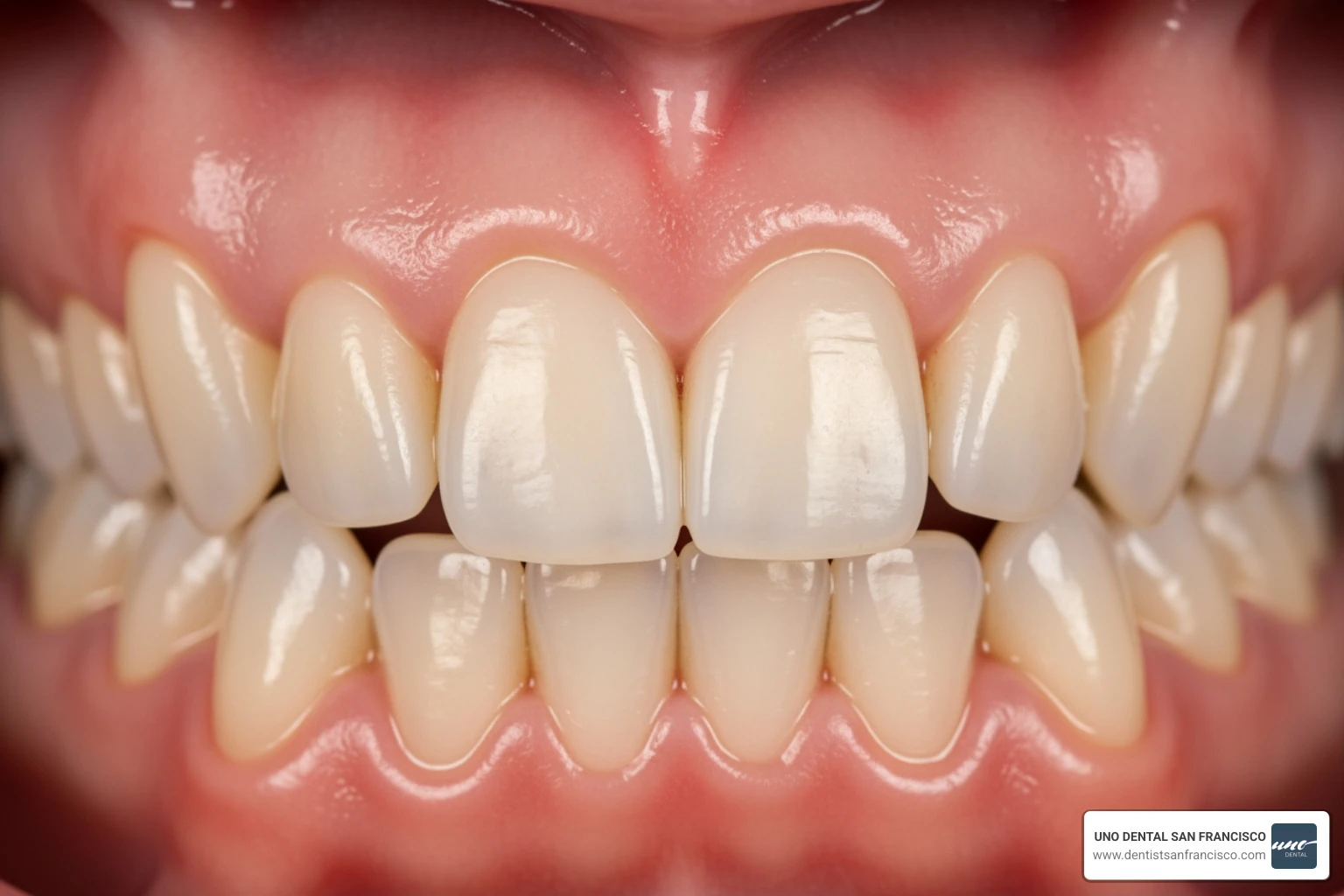
Why Your Smile Can Change After Orthodontic Treatment
Teeth shifting after braces is one of the most common frustrations for patients who've invested time, money, and effort into achieving a perfectly straight smile. You're not alone if you've noticed a subtle gap reopening or a tooth that's not quite as straight as it was on the day your braces came off.
Here's what you need to know:
- Why it happens: Your teeth are held in place by elastic periodontal ligaments that have a "memory" and naturally want to pull teeth back to their original positions
- How common it is: Over 70% of patients experience some degree of relapse if they neglect their retainer wear
- When it occurs: Movement can start immediately after braces are removed, with the first few months being the most critical period
- What causes it: Inconsistent retainer use, aging, jaw growth, genetics, teeth grinding, and poor oral habits like tongue thrusting or nail biting
- How to prevent it: Consistent retainer wear as directed by your orthodontist is your best defense—think of it as insurance for your smile
The good news? Orthodontic relapse is manageable. Whether you're noticing early signs of shifting or dealing with more significant movement, modern solutions like clear aligner touch-ups can often correct the issue in as little as 3-6 months—without needing a full second round of traditional braces.
Medical Review: This article has been medically reviewed and approved by Dr. Mohammad Aghiad Kandar, DDS, at UNO DENTAL SAN FRANCISCO. Dr. Kandar has personally verified all clinical information and treatment recommendations presented in this guide. With over 15 years of experience in restorative and cosmetic dentistry, Dr. Kandar specializes in helping patients understand and address teeth shifting after braces through personalized retention plans and discreet re-treatment options. The guidance in this article reflects current best practices in orthodontic retention and post-treatment care as of 2024.
Teeth shifting after braces terms to remember:
Understanding Orthodontic Relapse: Why Teeth Shift After Braces
It's a common misconception that once your braces are off, your teeth are permanently locked into their new positions. The reality is that your teeth are dynamic structures, anchored in living bone and connected by tiny, elastic fibers. This means that even after extensive orthodontic treatment, your teeth retain a natural tendency to move. This phenomenon is known as orthodontic relapse.
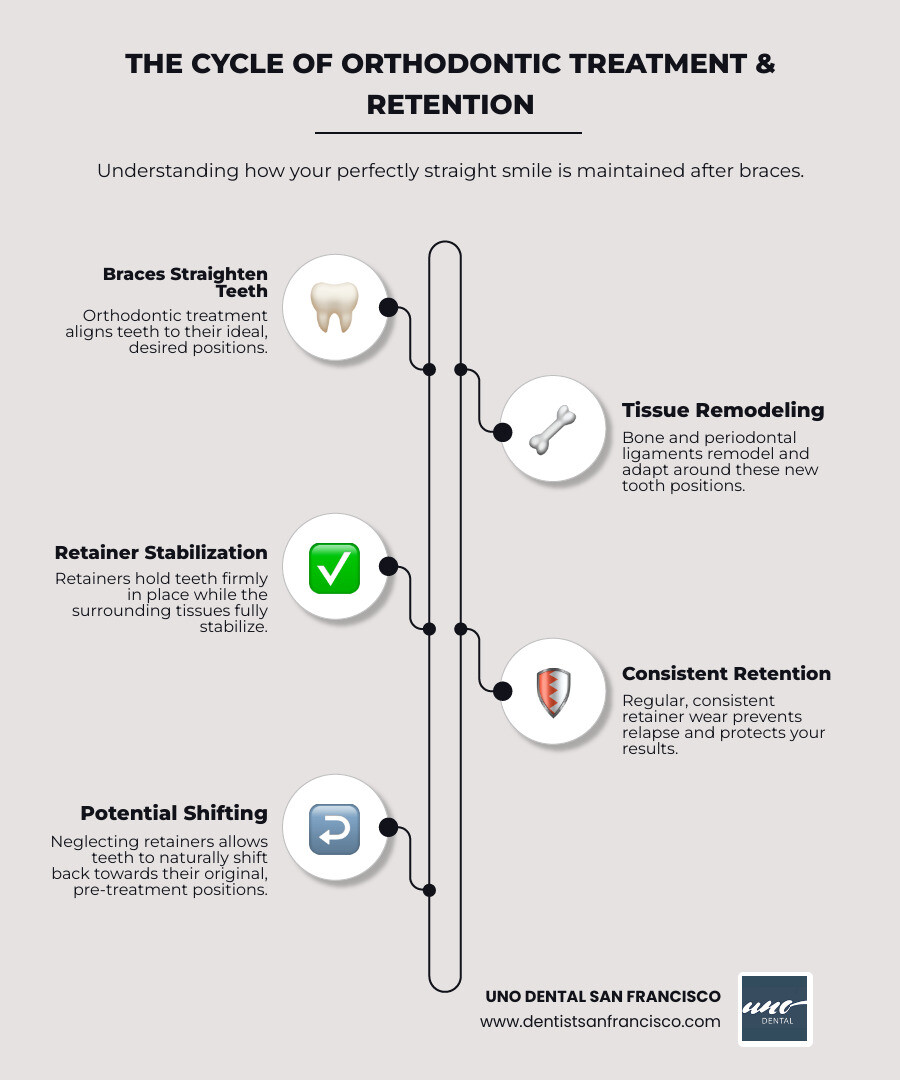
At UNO DENTAL SAN FRANCISCO, we understand that you've invested significantly in achieving your ideal smile. That's why we emphasize that understanding the biological processes behind tooth movement is crucial for long-term success. Your teeth are held into place by tiny fibers—you can think of them like rubber bands. When your teeth are moved with braces, these fibers stretch to fit the new position of your bite. If teeth aren’t held in place with a retainer after your braces are removed, those fibers want to pull your teeth back to their original alignment. This is often referred to as "periodontal ligament memory." Research shows that once braces are removed, teeth have a natural tendency to relapse.
Furthermore, the bone and gum tissues surrounding your teeth need time to "remodel" and stabilize around their new positions. This adaptive process can take months, or even years, and during this crucial period, your teeth are particularly vulnerable to shifting. This natural settling is a mild movement that occurs as your teeth and jaw find their final, comfortable resting place. While a tiny bit of settling is normal, significant changes—like a new gap or a twisted tooth—are signs of orthodontic relapse and require professional attention.
The Main Causes of Post-Braces Movement
Several factors contribute to teeth shifting after braces, even after successful orthodontic treatment. Understanding these causes is the first step in preventing relapse and protecting your beautiful smile.
One of the most significant culprits is inconsistent retainer use. The American Association of Orthodontists states that neglecting retainers can lead to relapse for over 70% of patients. Your retainer's job is to hold your teeth in their new positions while the surrounding bone and ligaments stabilize. Without that support, natural forces will start pulling your teeth back toward their old alignment. In fact, research published in the American Journal of Orthodontics and Dentofacial Orthopedics suggests that most of the time, tooth shifting happens if one of the retainer’s bonds breaks or if the retainer wasn’t bonded properly.
Aging and jaw growth also play a role. Your jawbone and facial structure continue to change throughout your life. For instance, the jaw can continue to grow into the late teens or early twenties. Natural growth and the everyday forces of chewing and talking can exert subtle pressures that, over time, lead to shifts in alignment. Your teeth are always in motion, and this natural movement can cause them to drift forward towards the center of the mouth, a process called mesial drift. Even individuals who have never had braces can experience teeth shifting due to these age-related changes.
Genetics can predispose individuals to certain bite patterns or jaw structures that make them more susceptible to relapse. While orthodontics can correct these issues, the underlying genetic tendencies might still exert a subtle pull towards the original alignment.
Finally, poor oral habits can significantly impact your dental alignment. These habits can be sneaky, exerting constant, unconscious pressure on your teeth:
- Tongue thrust: This occurs when your tongue presses against your front teeth, rather than the roof of your mouth, during swallowing. Over time, this consistent pressure can push teeth forward.
- Nail biting: This seemingly harmless habit puts repetitive stress on your front teeth, potentially causing them to shift or chip.
- Mouth breathing: Chronic mouth breathing can alter jaw development and the position of your tongue, affecting tooth alignment.
- The dangers of grinding your teeth (bruxism): Whether you grind your teeth unconsciously during sleep (sleep bruxism) or clench them during the day (awake bruxism), this habit puts immense pressure on your teeth. A 2016 survey of more than 6,000 people reported that 8.6 percent grind their teeth during sleep. Furthermore, a 2013 review published in the Journal of Oral and Facial Pain and Headache found that 22 to 31 percent of adults experience bruxism while awake. This constant grinding and clenching can wear down tooth enamel and cause significant tooth movement.
External Factors That Contribute to Shifting
Beyond the internal biological processes and personal habits, several external factors can also contribute to teeth shifting after braces. It’s important to be aware of these to fully protect your orthodontic investment.
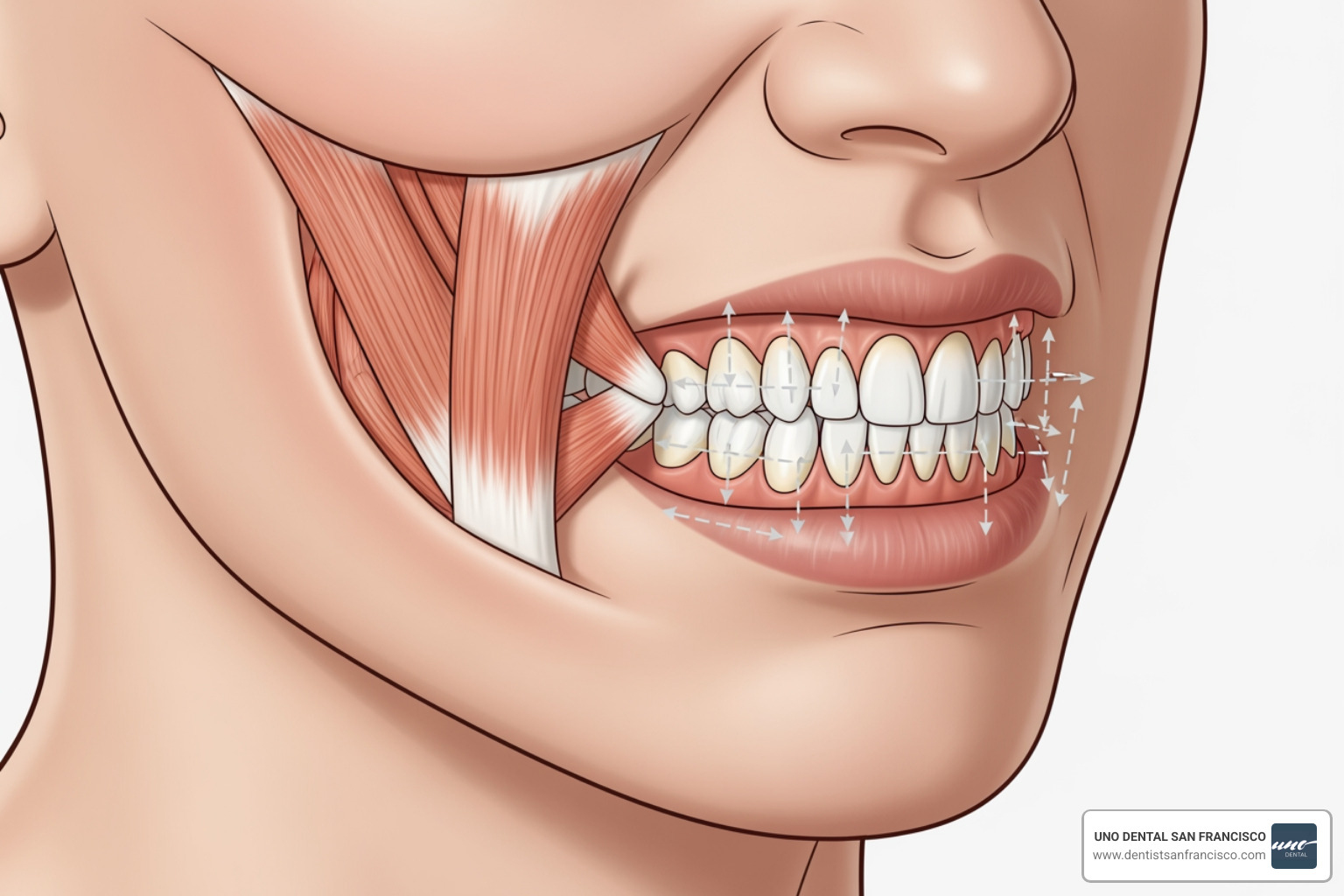
Gum disease (periodontitis) is a major concern. This infection weakens the gums and the underlying bone that supports your teeth. As the gums recede and bone density decreases, teeth lose their stable foundation and become more susceptible to movement. Loose or shifting teeth are one of many serious complications of gum disease, according to the American Dental Association. Maintaining excellent oral hygiene and regular dental check-ups at UNO DENTAL SAN FRANCISCO are crucial to prevent gum disease and protect your dental alignment.
Tooth loss or extraction creates gaps in your dental arch, and your remaining teeth will naturally drift into these spaces. If you have a missing tooth or had a tooth removed, your other teeth will shift around the gap. This can lead to new crowding, spacing issues, and a misaligned bite. Replacing missing teeth with dental implants or bridges can prevent this unwanted shifting.
A traumatic injury to your mouth or jaw can instantly alter tooth alignment. If you’ve been in an accident that damaged or broke a tooth or your jaw, this can shift the alignment of your teeth. Even minor impacts can cause teeth to move out of their corrected positions.
Lastly, certain medical treatments can have unintended effects on your dental alignment. For example, CPAP therapy for sleep apnea, while life-saving, can sometimes contribute to tooth movement. A 2018 study published in the Journal of Clinical Sleep Medicine acknowledged that CPAP therapy can cause some tooth movement. The researchers suggest that people using CPAP pay attention to any changes in their bite and work with an orthodontist to prevent or correct any major shifting. If you use a CPAP machine and notice changes in your bite or tooth alignment, we encourage you to discuss this with us at UNO DENTAL SAN FRANCISCO.
Your First Line of Defense: Preventing Teeth from Shifting
We've explored the many reasons why teeth shifting after braces can occur, but the good news is that preventing it is largely within your control. The single most critical phase of your orthodontic journey isn't during braces treatment, but after—it's the retention phase. Think of it as protecting your orthodontic investment; you wouldn't spend years saving for a dream home only to let it fall into disrepair, would you? Similarly, you've invested time, effort, and resources into achieving a beautiful, healthy smile, and the retention phase is about preserving that result for a lifetime.
Maintaining your results is a lifelong commitment, but it's a small effort for a significant payoff. Consistent adherence to your retention plan is your best defense against relapse.
The Role of Retainers in Preventing Teeth Shifting After Braces
Retainers are not merely a post-treatment accessory; they are an essential component of your orthodontic care. Their role is pivotal in preventing teeth shifting after braces. A retainer's job is to hold your teeth in their new positions while the surrounding bone and ligaments stabilize. Without that support, natural forces will start pulling your teeth back toward their old alignment.
When your braces are removed, your teeth are in their corrected positions, but the tissues and bone that support them haven't fully adapted. The periodontal ligaments, those elastic fibers we discussed earlier, still have a "memory" of your teeth's original alignment. Retainers provide the necessary gentle pressure to counteract this memory, allowing the bone and gum tissues to solidify around the new tooth positions. This stabilization process is crucial for long-term success. By consistently wearing your retainer as prescribed, you're actively reinforcing the alignment you worked so hard to achieve, ensuring your smile remains straight and beautiful.
Types of Retainers and How Long to Wear Them
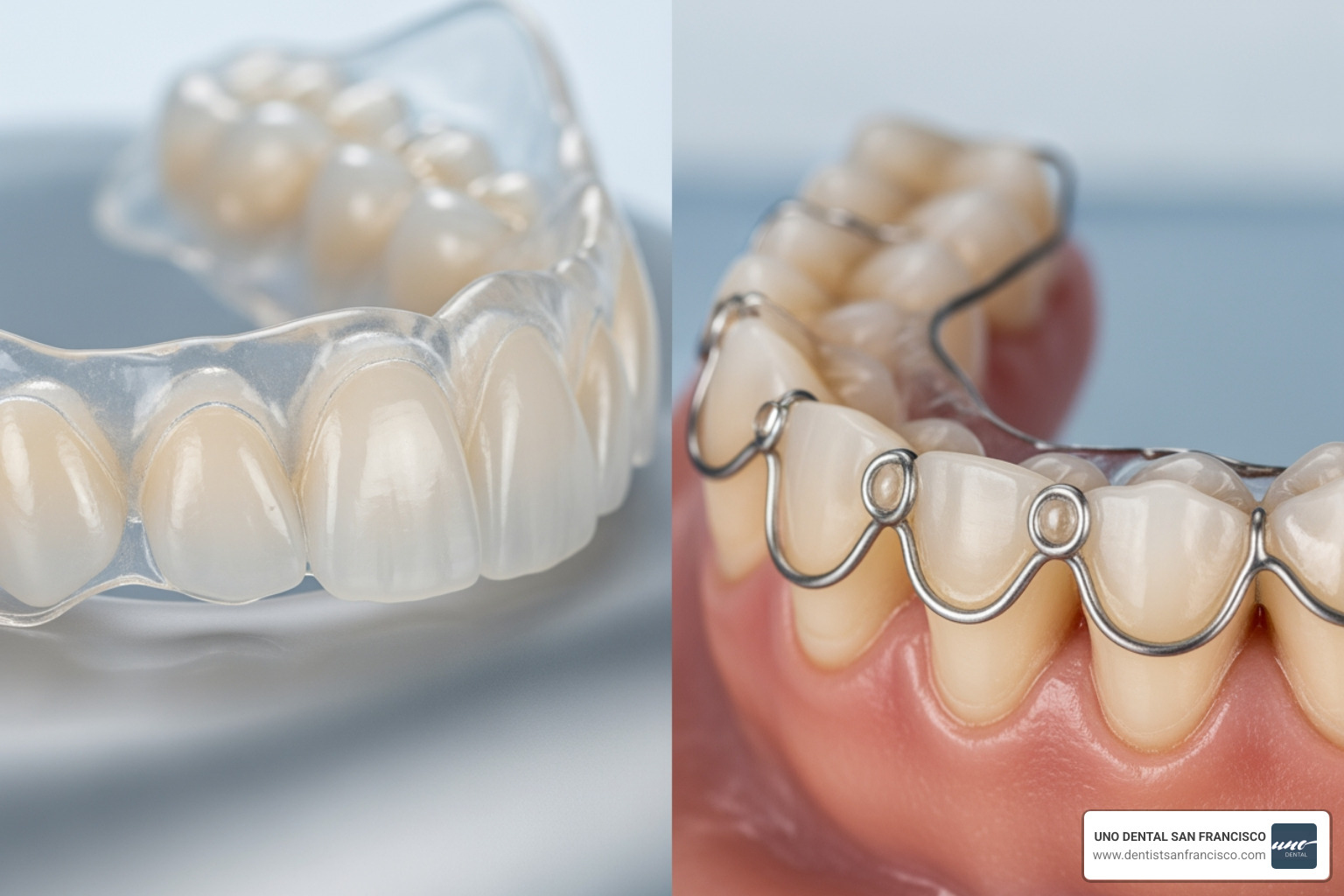
At UNO DENTAL SAN FRANCISCO, we offer various types of retainers, and we will work with you to determine the best option for your lifestyle and specific needs.
Below is a simplified comparison of the most common options:
Removable Retainers
Hawley Retainer
- Pros
- Durability: More resistant to damage than many clear retainers.
- Adjustability: Can be adjusted to accommodate minor tooth movements.
- Easy to clean: Can be brushed and rinsed.
- Cons
- Visibility: The metal wire is visible across the front teeth.
- Comfort: Can feel bulky and may affect speech initially.
- Cleaning: Requires careful cleaning around the wire.
- Typical Wear Schedule
- Initial: Full-time for several months (except when eating or brushing).
- Long-term: Transition to nightly wear for life, or as advised by your orthodontist.
- Care
- Brush with a toothbrush and mild soap/toothpaste.
- Store in its case when not wearing.
- Avoid hot water.
Clear Retainer
- Pros
- Aesthetics: Almost invisible, making it a popular choice.
- Comfort: Often more comfortable and less bulky than Hawley retainers.
- Speech: Typically has less impact on speech than Hawley retainers.
- Cons
- Durability: Can crack or warp more easily than Hawley retainers.
- Cleaning: Requires thorough cleaning to prevent bacterial buildup and discoloration.
- Heat sensitivity: Can warp if exposed to hot water or left in a hot car.
- Typical Wear Schedule
- Initial: Full-time for several months (except when eating or brushing).
- Long-term: Transition to nightly wear for life, or as advised by your orthodontist.
- Care
- Rinse with cold water after removal.
- Clean daily with a soft brush and non-abrasive cleaner.
- Store in its case when not wearing and avoid heat.
Fixed/Bonded Retainers
A fixed or bonded retainer is a thin wire bonded to the back of the front teeth (usually the lower teeth, and sometimes the upper teeth) to hold them in place long term.
- Pros
- Convenience: Always in place, so there is no need to remember to put it in.
- Aesthetics: Hidden behind the teeth and not visible when you smile.
- Retention: Very effective for maintaining exact tooth position over long periods.
- Cons
- Cleaning: Requires extra attention when brushing and flossing to keep the area plaque-free.
- Maintenance: If the bond breaks, teeth can begin to shift, so periodic checks are important.
- Typical Wear Schedule
- Designed for long-term, often indefinite use, as recommended by your dentist or orthodontist.
- Care
- Maintain excellent oral hygiene and floss carefully around the wire.
- Attend regular checkups at UNO DENTAL SAN FRANCISCO so we can ensure the retainer remains intact and effective.