
Making the Right Choice for Your Smile
Medically reviewed and manually approved by the UNO DENTAL SAN FRANCISCO clinical team. Last reviewed: June 2024.
Manual review completed: Yes.
After months or years of dedication, your braces are finally off, revealing a beautifully straight smile. Now comes the most important part: keeping it that way. Deciding between a permanent retainer vs removable one is the crucial next step to protect your investment and maintain that perfect alignment. Here's a quick overview to help you understand your options:
Quick Comparison:
| Feature | Permanent Retainer | Removable Retainer |
|---|---|---|
| Wear Schedule | 24/7 (bonded to teeth) | Full-time initially, then nightly |
| Visibility | Invisible (behind teeth) | Visible when worn (clear or wire) |
| Maintenance | Requires floss threaders | Easy to clean when removed |
| Compliance | No effort needed | Requires discipline to wear |
| Cost | $150-$500 per arch | Similar initial cost, but can be lost |
| Best For | High-relapse cases, lower front teeth | Those who prioritize flexibility |
After your braces come off, your teeth have a natural tendency to shift back to their original positions. This is because the periodontal ligament, which holds your teeth, has a "memory" and tries to pull them back. This relapse is most common in the first few months when the surrounding bone is still stabilizing.
Choosing the right retainer is about protecting the time and effort you've invested in your smile. At UNO DENTAL SAN FRANCISCO, we help patients make the best choice for their lifestyle and long-term oral health, ensuring beautiful results for years to come.

What Are Your Retainer Options After Braces?
After braces, retainers are essential to prevent your teeth from shifting back, a process known as orthodontic relapse. This is most likely to happen in the first few months as the bone and ligaments around your teeth stabilize. For a deeper look at this process, see our complete guide on what happens to teeth after braces.
The permanent retainer vs removable decision comes down to two main categories, each with unique trade-offs.
Permanent (Fixed) Retainers
A permanent retainer (also called a bonded retainer or lingual wire) is a thin, custom-fitted metal wire bonded to the back of your teeth with dental adhesive. It works 24/7 to keep teeth in position. These are most commonly placed on the lower front teeth, which are prone to shifting, and are completely invisible from the front. Once in place, a permanent retainer requires no daily effort from you.
Removable Retainers
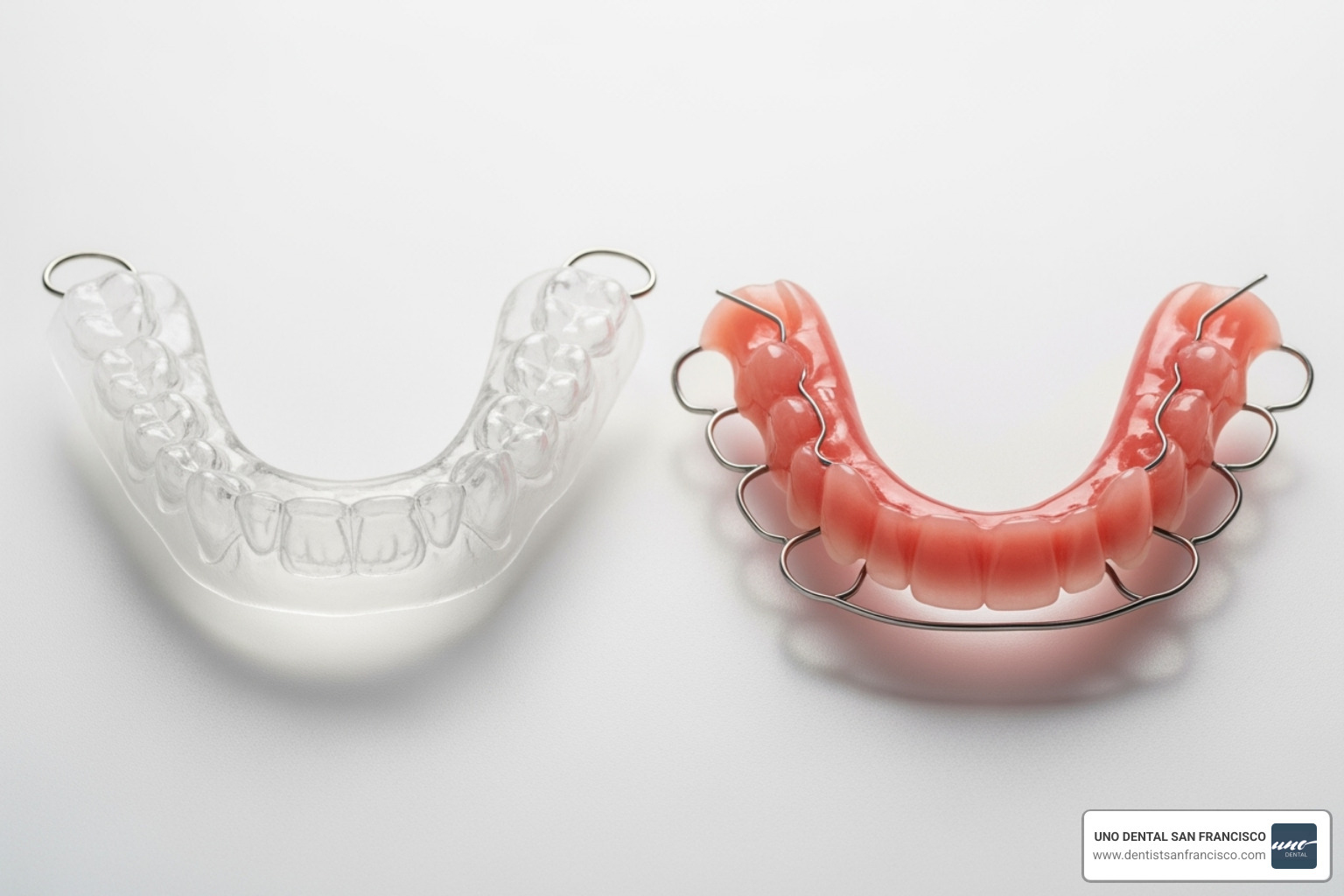
Removable retainers offer flexibility, as you can take them out for eating, brushing, and special occasions. The two main types are:
-
Clear Plastic Retainers: These are clear plastic trays that fit snugly over your teeth, much like clear aligners. Made from a digital scan of your smile, they are virtually invisible when worn.
-
Traditional Wire Retainers: The classic design, featuring a metal wire that wraps around the front of your teeth, attached to a custom-molded acrylic plate.
Both types are effective, but their success depends entirely on consistent wear as prescribed by your orthodontist.
The Case for Permanent Retainers
A permanent retainer is the ultimate "set it and forget it" solution. Once bonded behind your teeth, it works around the clock to prevent relapse, which is especially valuable in the critical months after braces. Many orthodontists favor this method for its efficiency and high success rate, a view supported by scientific research. You can read more in this detailed review: Scientific research on retainer efficiency.
Advantages of Permanent Retainers
- Always Working: It provides constant protection without relying on your memory or discipline.
- Invisible: The wire is hidden behind your teeth, so no one will see it when you smile or talk.
- No Speech Impact: The thin wire typically does not interfere with speech.
- Cannot Be Lost: This eliminates the common problem of lost or misplaced retainers, a frequent cause of relapse.
- Better Long-Term Success: Studies show fixed retainers have a higher success rate, especially for patients who may struggle with compliance.
- Ideal for High-Relapse Cases: They provide robust, continuous support for teeth that were severely crowded or rotated, particularly the lower front teeth.
Disadvantages and Maintenance
While effective, permanent retainers require some adjustments to your oral care.
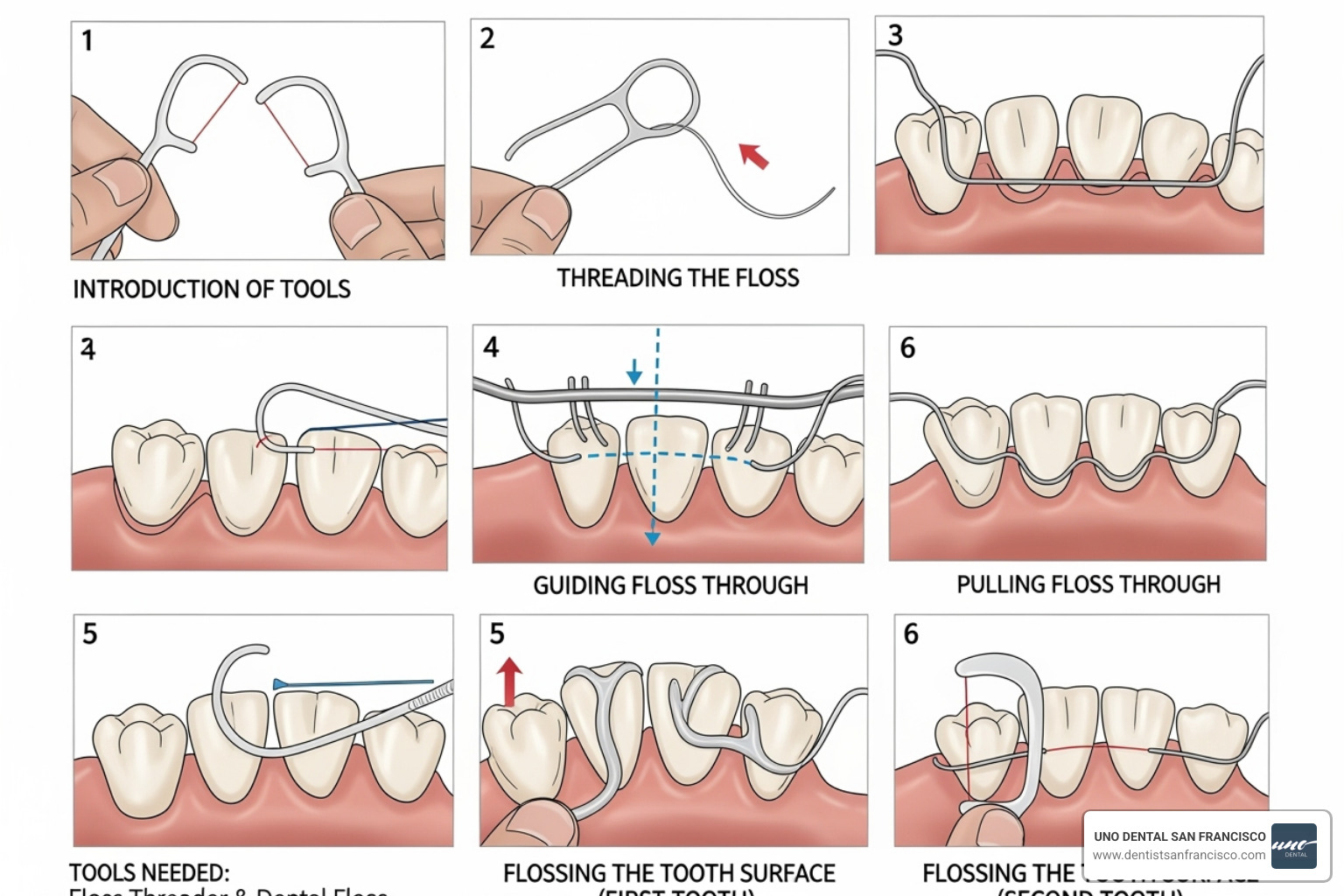
- Challenging Oral Hygiene: The wire creates areas where plaque can accumulate. You'll need specialized tools like floss threaders or a water flosser to clean effectively between teeth. Without diligent care, there's an increased risk of tartar buildup. You can find more tips for excellent dental hygiene in our guide.
- Food Restrictions: You'll need to be careful with hard, sticky, or tough foods (like hard candies, caramels, or tough bread crusts) that could damage the wire or bonding.
- Potential for Breakage: The wire can occasionally break or debond from a tooth. If this happens, contact your orthodontist immediately to prevent teeth from shifting and to repair the retainer.
The Case for Removable Retainers
Removable retainers offer flexibility, but their success hinges on patient compliance. You must wear them as directed. Typically, this means full-time wear for the first few months, followed by nightly wear for life. Even skipping a few nights can allow teeth to shift. If you misplace a retainer, prompt action is key.
Advantages of Removable Retainers
- Easy Oral Hygiene: Simply remove the retainer to brush and floss your teeth normally, with no special tools required.
- No Food Restrictions: Since you take them out to eat, you can enjoy any food you like without worry.
- Flexibility: You can remove them for special events or photos. Clear retainers are also discreet when worn.
- Can Double as Whitening Trays: Clear retainers can be used with professional whitening gel, serving a dual purpose.
Disadvantages and Maintenance
- Can Be Lost or Damaged: It's common for removable retainers to be lost, thrown away, or damaged, with replacements costing $150-$500.
- Relapse from Non-Compliance: Forgetting to wear your retainer is the biggest risk. Inconsistent use can lead to significant tooth movement, potentially requiring more orthodontic treatment.
- Temporary Lisp: Some patients experience a minor, temporary lisp as their tongue adjusts to the retainer.
- Requires Daily Cleaning: The retainer itself must be cleaned daily to prevent bacteria and plaque buildup.
At UNO DENTAL SAN FRANCISCO, we help you assess your lifestyle to determine if a removable retainer is the right fit. If consistency is a concern, a permanent option might better protect your investment.
Permanent Retainer vs Removable: A Head-to-Head Comparison
Choosing between a permanent retainer vs removable option is a personal decision that impacts your daily routine and long-term results. At UNO DENTAL SAN FRANCISCO, we help you make an informed choice that fits your lifestyle. Often, a combination approach—a permanent retainer on the lower teeth and a removable one on the upper arch—offers the best of both worlds.
| Feature | Permanent Retainer | Removable Retainer |
|---|---|---|
| Cost | $150-$500 initially; minimal long-term cost | $150-$500 per replacement; potentially higher over time |
| Effectiveness | Constant, compliance-free protection | Highly effective when worn as directed |
| Durability | Can last up to 20 years | Prone to loss, damage, or wear; needs periodic replacement |
| Hygiene | Requires floss threaders and extra care | Easy to clean; normal brushing and flossing |
| Aesthetics | Completely invisible from the front | Clear options are discreet when worn |
Cost and Longevity: Permanent retainer vs removable
The initial cost for both retainer types is similar, typically $150 to $500. However, the long-term costs can differ significantly. A permanent retainer can last up to 20 years with proper care, making it a one-time investment. In contrast, removable retainers are frequently lost or damaged, and each replacement costs another $150 to $500. Over time, these replacement costs can add up, making the permanent option more cost-effective. We offer flexible dental payment plans to help manage these costs.
Effectiveness and Compliance: Permanent retainer vs removable
Both retainers are effective, but their success depends on different factors.
Permanent retainers offer compliance-free effectiveness. They work 24/7 without any action on your part, preventing even minor shifts. This is why they often have better long-term success rates, as they eliminate the risk of human error.
Removable retainers are only effective when worn consistently. Forgetting to wear them, even for a few nights, can allow teeth to shift. The risk of relapse is directly tied to your discipline. While they offer more flexibility, this freedom requires a high level of personal commitment.
An in-depth conversation with our team can help determine the best approach for your specific needs and orthodontic history. Get personalized recommendations from our expert orthodontist.
Frequently Asked Questions about Retainers

Here are answers to common questions we hear at UNO DENTAL SAN FRANCISCO about the permanent retainer vs removable choice.
How long do I have to wear a retainer?
Ideally, retainer use is lifelong. Your teeth can shift at any age, so continued retention is key to protecting your investment. The typical schedule is:
- Initial Full-Time Wear: For the first 2-3 months, you'll wear your retainer 24/7 (except when eating or brushing) to allow your bone and tissues to stabilize.
- Nightly Wear for Life: After the initial phase, you'll transition to wearing your retainer every night to prevent gradual, age-related tooth shifting.
What happens if my permanent retainer breaks?
If your permanent retainer feels loose, bent, or broken, contact your orthodontist immediately. A broken retainer can no longer hold your teeth in place, creating a risk of shifting. It can also irritate your tongue. We will assess whether it needs a simple repair or a full replacement. Prompt action is crucial to prevent your teeth from moving.
How do you properly clean around a permanent retainer?
Proper hygiene is manageable with the right routine.
- Brush Carefully: Pay extra attention to the area around the wire, angling your brush to clean behind it.
- Use Special Tools: You must clean between the teeth bonded by the retainer. Use a floss threader to guide floss under the wire, or use a water flosser to flush out debris and plaque.
- Schedule Regular Cleanings: Professional cleanings every six months are essential for removing any tartar buildup you might have missed.
Protecting Your Smile for a Lifetime
Your straight smile is the result of months of dedication. The permanent retainer vs removable decision is the next step in protecting that investment for years to come. Both options are effective, but the best choice depends on your lifestyle and habits. A permanent retainer offers compliance-free security, while a removable one provides flexibility at the cost of requiring strict discipline. A combination of both is also a popular and effective strategy.
Maintaining your results is your responsibility. Consistent wear, proper cleaning, and regular dental check-ups are the pillars of successful, lifelong retention. Think of your retainer as an insurance policy for your smile—one that requires your active participation.
At UNO DENTAL SAN FRANCISCO, we provide the professional guidance you need to make an informed choice. Our patient-centered approach focuses on individualized, high-tech solutions to help you maintain your beautiful results. We're here to support you every step of the way, from your initial decision to check-ups years down the line. For more information, explore our comprehensive guide on maintaining your smile after braces.
Your radiant smile is worth protecting. Let us help you choose the right solution to maintain those amazing results for a lifetime. At UNO DENTAL SAN FRANCISCO, your smile's future is our priority.