
Your Journey to a Lasting Bright Smile
Professional teeth whitening aftercare is essential for maintaining your brilliant new smile and protecting your investment. Here's what you need to know right away:
Essential Professional Teeth Whitening Aftercare Steps:
- First 48 Hours: Stick to a "white diet" of light-colored foods and avoid all dark, acidic beverages
- Manage Sensitivity: Use desensitizing toothpaste and avoid extreme temperatures for 1-3 days
- Modify Oral Hygiene: Brush gently with a soft toothbrush and avoid colored dental products
- Long-Term Habits: Use straws for staining drinks, rinse after meals, and schedule touch-ups every 6-12 months
- Avoid Tobacco: Stay away from smoking and tobacco products for at least 48 hours (ideally permanently)
Congratulations on taking the step toward a brighter, more confident smile! You've just invested in one of the most popular cosmetic dental procedures in the United States—teeth whitening is the most requested cosmetic treatment nationwide, with over 42% of people under 35 choosing to brighten their smiles.
But here's the reality: your whitening results don't stop at the dental chair. What you do in the hours and days following your treatment can make the difference between a smile that stays dazzling for months and one that fades back to its original shade in just weeks.
Think of professional teeth whitening like getting a fresh coat of paint on your home. The quality of the paint matters, but so does how you protect it afterward. Your teeth, freshly whitened, are temporarily more vulnerable to staining. The protective layer on your enamel has been removed, and the pores in your teeth are open—ready to absorb whatever comes their way.
The good news? With the right aftercare routine, you can protect your investment and enjoy your bright smile for a year or longer.
This guide covers everything you need to know about caring for your newly whitened teeth. We'll walk you through the critical first 48 hours, show you how to manage common side effects like sensitivity, and share long-term habits that keep your smile looking its best. You'll also learn about special considerations, like how existing dental work responds to whitening and how to use at-home touch-up kits safely.
As Mohammad Aghiad Kandar, DDS, with over 15 years of experience in cosmetic and restorative dentistry at UNO DENTAL SAN FRANCISCO, I've personally reviewed and approved this professional teeth whitening aftercare guide to ensure it reflects the same standard of care we provide in our practice. My approach combines cutting-edge techniques with personalized care plans, helping busy San Francisco professionals like you maintain their confidence-boosting smiles with minimal disruption to their schedules.
Let's explore the specifics of protecting your investment and keeping your smile radiant.
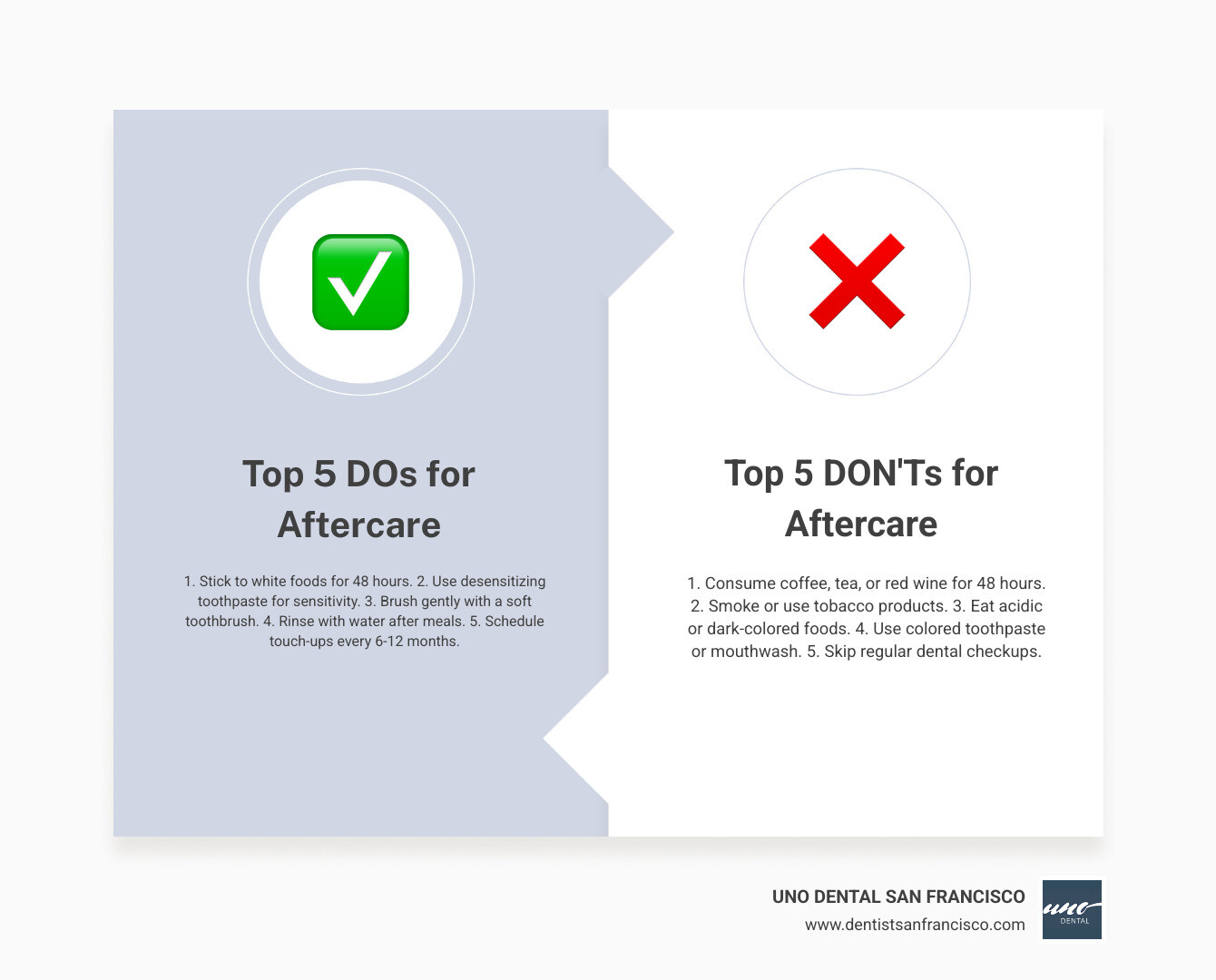
Quick professional teeth whitening aftercare definitions:
The First 48 Hours: Your Critical Window for Success
The moments immediately following your professional teeth whitening session are arguably the most crucial for the longevity of your results. During the whitening process, the acquired pellicle—a protective layer on your teeth—is temporarily removed along with surface stains. This leaves your enamel pores open and your teeth more susceptible to absorbing new pigments. Think of it like a sponge that's just been thoroughly cleaned; it's ready to soak up anything it comes into contact with.
This temporary vulnerability means that for the first 12 to 24 hours, and ideally up to 48 hours, your teeth are highly prone to staining. As the acquired pellicle slowly regenerates, your teeth also undergo a rehydration process. It's normal for your teeth to appear dramatically white right after treatment due to minor dehydration, and then for the color to tone down slightly as they rehydrate to a natural, brilliant white. This is all part of the process, and careful adherence to professional teeth whitening aftercare during this window will ensure the best outcome.
To protect your newly brightened smile, we recommend a strict "white diet" and careful avoidance of certain foods and drinks.
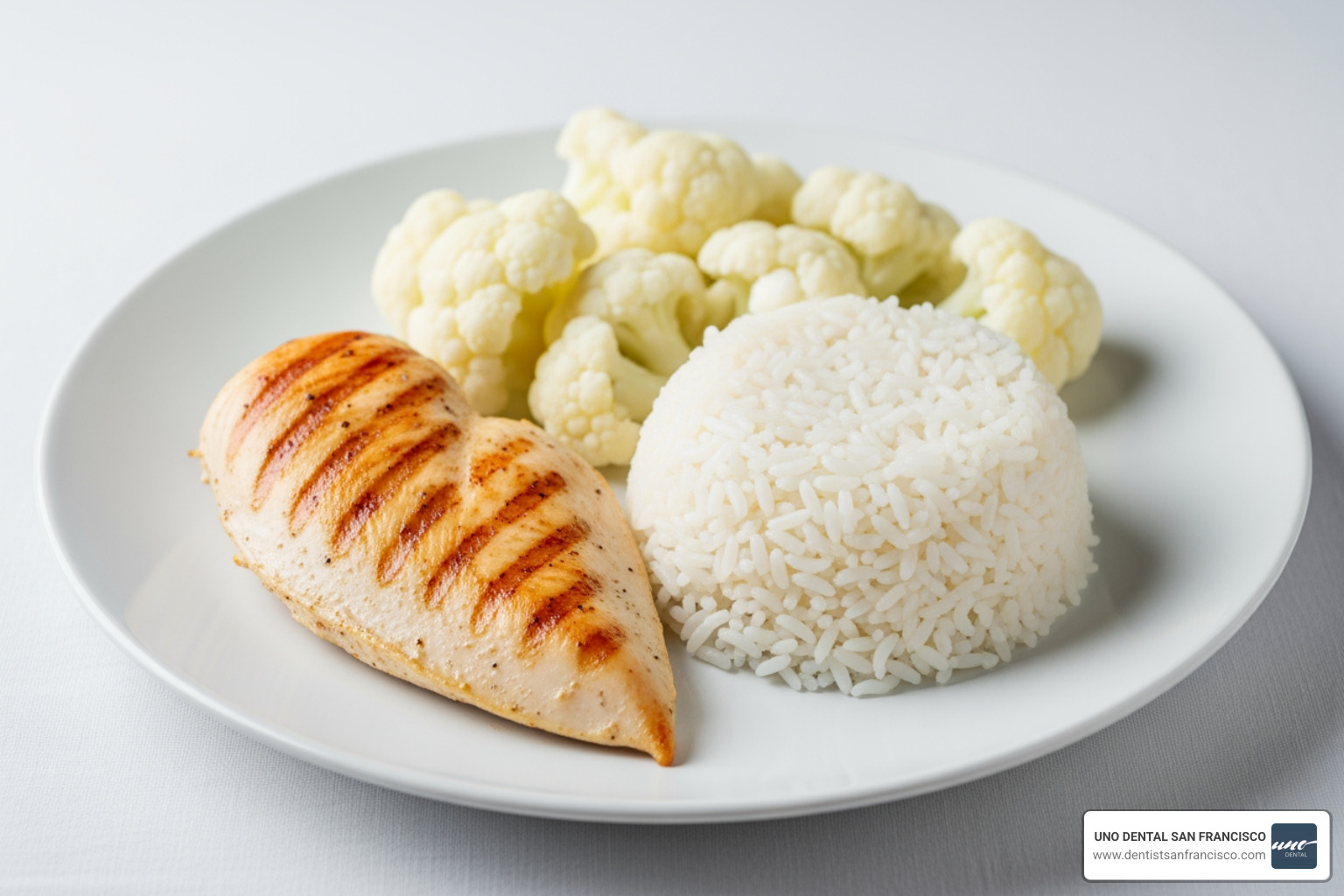
Immediate Professional Teeth Whitening Aftercare: The White Diet
During this critical 48-hour period, a "white diet" is your best friend. This means consuming only foods and drinks that are light in color and non-acidic. These items pose minimal risk of staining your vulnerable enamel.
Here's a list of recommended foods and drinks to enjoy:
- Poultry and Fish: Skinless chicken breast, turkey, and white fish (like cod, tilapia) that are plain or lightly seasoned without dark spices.
- Grains: White rice, plain pasta with white sauce (like Alfredo, no tomato or pesto), white bread (crusts removed if dark).
- Dairy: Plain or vanilla yogurt, white cheese (mozzarella, cottage cheese), milk.
- Vegetables: Cauliflower, white potatoes (peeled, baked, or mashed), white mushrooms.
- Fruits: Bananas, peeled apples.
- Beverages: Water (your absolute best choice!), clear sodas, clear herbal teas (avoid dark ones).
These foods are not only safe but also help support the rehydration process without introducing new stains.
Foods and Drinks to Avoid
Just as important as knowing what to eat is knowing what to absolutely steer clear of. For at least 48 hours, and ideally longer, you must avoid anything that could potentially stain your teeth or increase their porosity.
Here are the culprits to eliminate from your diet:
- Dark-Staining Drinks: This includes notorious offenders like coffee, tea (black, green, or herbal with dark pigments), red wine, dark colas, and dark fruit juices (cranberry, grape, pomegranate). These beverages contain chromogens and tannins, which are powerful staining agents.
- Staining Foods: Be wary of berries (blueberries, raspberries, blackberries), soy sauce, tomato sauce, dark chocolate, curries, balsamic vinegar, beetroot, and highly pigmented fruits and vegetables. These can quickly undo your whitening efforts.
- Acidic Foods and Drinks: Items like citrus fruits (oranges, lemons, limes), pickles, and all soft drinks (even clear ones, due to their acidity) should be avoided. Acidic substances can temporarily open up your enamel pores even further, making your teeth even more susceptible to staining.
- Tobacco Products: Smoking or using any tobacco product is a major no-no for at least 48 hours. Nicotine and tar are significant staining agents and can also irritate your gums after treatment. We strongly advise quitting tobacco altogether for both your oral and general health.
By strictly adhering to these dietary guidelines, you're giving your teeth the best possible chance to lock in that brilliant white shade and ensure your professional teeth whitening aftercare is a success.
Managing Common Side Effects: Sensitivity and Gum Irritation
It's completely normal to experience some temporary side effects after a professional teeth whitening treatment. The most common ones are tooth sensitivity and, occasionally, gum irritation. Don't worry, these usually subside quickly with proper care.
Tooth sensitivity occurs because the whitening agents temporarily open the pores in your enamel, exposing the underlying dentin and nerve endings. This can lead to a sharp, fleeting pain, especially when your teeth are exposed to hot, cold, or even air. Gum irritation can happen if the whitening gel comes into contact with your soft tissues during the procedure, but it's typically mild and resolves quickly.
Most patients find that any sensitivity or irritation they experience lasts only a short time, typically 1-3 days. While it can be uncomfortable, it’s a sign that the whitening process has been effective.

Soothing Tooth Sensitivity
If you find yourself experiencing tooth sensitivity, there are several effective strategies you can employ as part of your professional teeth whitening aftercare:
- Avoid Extreme Temperatures: For the first few days, try to avoid very hot or very cold foods and drinks. This can help minimize sharp pangs of sensitivity. Opt for lukewarm beverages and room-temperature meals.
- Use Desensitizing Toothpaste: We often recommend switching to a toothpaste specifically designed for sensitive teeth. These toothpastes contain ingredients like potassium nitrate or strontium chloride that help block the tiny tubules in your dentin, reducing nerve sensitivity. Apply it gently to sensitive areas.
- Over-the-Counter Pain Relievers: If discomfort is more pronounced, over-the-counter pain relievers like ibuprofen or acetaminophen can help manage the pain. Always follow dosage instructions carefully.
- When to Contact Your Dentist: While sensitivity is normal, if it persists for more than 3-4 days, becomes severe, or is accompanied by other unusual symptoms, please contact UNO DENTAL San Francisco. We can assess the situation and recommend specific treatments, like a prescription-strength fluoride gel, to provide relief.
The Role of Fluoride and Remineralizing Gels
Fluoride and remineralizing gels play a significant role in nurturing your teeth back to optimal health after whitening. As we discussed, the whitening process temporarily opens enamel pores, and while this allows stains to be lifted, it also means your teeth can lose some moisture and become more susceptible to sensitivity.
- Strengthening Enamel: Fluoride is a mineral that helps to strengthen tooth enamel, making it more resistant to acid attacks and decay. After whitening, when enamel pores are open, fluoride can penetrate more effectively, aiding in the remineralization process. This helps to 'seal' those open pores, reducing sensitivity and increasing the overall strength of your tooth surface. The American Dental Association (ADA) supports the use of fluoride for maintaining oral health, especially post-whitening.
- Reducing Sensitivity: By strengthening and remineralizing enamel, fluoride helps to mitigate post-whitening sensitivity. Many desensitizing toothpastes contain fluoride for this very reason.
- Rehydration: Remineralizing gels, often prescribed or recommended by your dentist, are designed to replenish lost minerals and rehydrate your teeth. They can help accelerate the closure of enamel pores and restore the natural balance of your tooth structure, further reducing sensitivity and enhancing the overall health of your whitened teeth. Drinking plenty of water is also a simple yet effective way to help rehydrate your teeth internally.
We may recommend specific fluoride rinses or remineralizing gels as part of your personalized professional teeth whitening aftercare plan, especially if you have a history of sensitivity.
Adjusting Your Oral Hygiene for a Brighter Smile
Maintaining excellent oral hygiene is always important, but it takes on an even greater significance after professional teeth whitening. Your teeth are in a delicate state, and adjusting your daily routine slightly will protect your newly dazzling smile from new stains and irritation. Think of it as giving your teeth a gentle, loving touch during their recovery period.
Your Daily Routine: Professional Teeth Whitening Aftercare for Oral Health
Here’s how to adjust your oral hygiene practices in the immediate days following your treatment:
- Gentle Brushing Technique: For the first 48 hours, brush your teeth very gently. Your gums might be a little sensitive, and aggressive brushing could cause irritation.
- Soft-Bristled Toothbrush: Always use a soft-bristled toothbrush. This is good advice for daily oral hygiene, but it's especially important after whitening to avoid irritating sensitive gums or enamel.
- Avoiding Colored Toothpaste or Mouthwash: For at least 48 hours, avoid colored toothpastes and mouthwashes. The pigments in these products, even if they seem innocuous, can potentially stain your newly porous enamel. Opt for a white toothpaste or a clear, alcohol-free mouthwash during this time.
- Flossing is Still Essential: Don't skip flossing! Continue to floss at least once a day to remove food particles and plaque from between your teeth. This prevents new stains from forming in hard-to-reach areas and maintains overall gum health.
- Waiting 30 Minutes After Eating to Brush: This is a crucial tip, especially after consuming anything acidic (even safe "white diet" foods can have some acidity). Acids temporarily soften enamel, and brushing immediately afterward can cause microscopic erosion. Waiting about 30 minutes allows your saliva to naturally re-harden your enamel before you brush.
By following these simple adjustments to your oral hygiene routine, you're actively contributing to the success and longevity of your professional teeth whitening aftercare.
Long-Term Professional Teeth Whitening Aftercare and Maintenance
While the first 48 hours are critical, professional teeth whitening aftercare extends well beyond that initial window. To maintain your brilliant results for months or even years, integrating certain lifestyle habits into your routine is essential. Think of it as a continuous commitment to your smile's radiance, preventing new stains from forming and keeping that glow alive.

Habits to Maintain Your Dazzling Results
Once you've steerd the initial sensitive period, you can gradually reintroduce some of your favorite foods and drinks. However, conscious choices will significantly impact how long your whitening lasts:
- Avoiding Tobacco and Smoking: This is paramount. Smoking is one of the quickest ways to reverse your whitening results. The tar and nicotine rapidly stain teeth, making them yellow or brown. We strongly advise against all tobacco products, including e-cigarettes and vape pens, not just for your white smile but for your overall health.
- Using a Straw for Staining Drinks: When you do indulge in coffee, tea, red wine, or other dark-colored beverages, using a straw can help minimize contact with your front teeth. This simple trick can significantly reduce staining over time.
- Rinsing with Water After Meals: Make it a habit to quickly rinse your mouth with water after consuming any food or drink, especially those that are highly pigmented or acidic. This washes away potential staining agents before they have a chance to settle on your enamel.
- Regular Dental Cleanings: Your regular check-ups and professional cleanings at UNO DENTAL San Francisco are vital. Our hygienists can remove surface stains and plaque buildup that accumulate over time, helping to preserve your bright smile and keep your teeth healthy.
- Limiting Staining Foods and Drinks: While you don't have to eliminate them entirely after the initial 48 hours, moderation is key. Enjoy your glass of red wine or cup of coffee, but perhaps not every day, and always remember to rinse with water afterward. Supplementing your diet with lighter-colored fruits like apples and bananas, and acid-neutralizing vegetables such as carrots and celery, can also be beneficial.
Touch-Up Treatments for a Lasting Glow
Even with the best long-term habits, natural tooth shade regression is inevitable over time. This is where touch-up treatments become invaluable in your professional teeth whitening aftercare strategy.
- How Often Touch-Ups Are Needed: The frequency of touch-ups varies depending on your lifestyle and how well you maintain your results, but generally, we recommend them every 6-12 months. This helps to combat any minor re-staining and keeps your smile consistently bright.
- Using Professional At-Home Kits: We often provide our patients with professional at-home whitening kits, including custom-fitted trays and a whitening gel. These kits are significantly more effective and safer than over-the-counter options because they are custom to your unique dental structure and administered under our professional guidance. For example, some protocols involve using the kit for a few consecutive days every month, or for a specific duration depending on the gel's concentration—such as 15-30 minutes for a higher concentration gel or 45-60 minutes (or overnight) for a lower concentration one.
- Following Dentist Instructions: It's crucial to follow our specific instructions for using these kits. Overdoing whitening treatments can lead to increased sensitivity or even damage to your enamel. We'll advise you on the correct amount of gel, wear time, and frequency to ensure optimal results without compromising your dental health. For example, to avoid increased sensitivity, we might recommend using at-home trays only once every six months and limiting touch-ups to no more than two during a single period.
- Ensuring Longevity of Results: Combining diligent daily oral hygiene, mindful dietary choices, and periodic touch-up treatments is the most effective way to ensure the longevity of your dazzling smile.
Special Considerations for Your Whitening Journey
Every smile is unique, and your professional teeth whitening aftercare plan should account for any specific factors related to your dental health. Understanding how different elements of your mouth respond to whitening ensures you achieve the most even, consistent, and beautiful results.
How Existing Dental Work is Affected
One of the most important things to understand before undergoing professional teeth whitening is its effect on existing dental restorations.
- Fillings, Crowns, Veneers, Bonding: It's crucial to know that only your natural tooth enamel will whiten. Any existing dental work, such as tooth-colored fillings, crowns, veneers, or dental bonding, will not change color during the whitening process. This is because these materials are not porous in the same way natural enamel is and do not react to the whitening agents.
- Why Restorations Don't Whiten: The bleaching agents (typically hydrogen peroxide or carbamide peroxide) work by breaking down organic chromophores within the enamel and dentin. Dental restorative materials are inorganic and therefore unaffected by this chemical oxidation process.
- Planning for Cosmetic Updates: If you have visible dental work in your smile zone, this means that after whitening your natural teeth, your restorations might appear darker or mismatched. This can result in uneven whitening. In such cases, we might recommend replacing these fillings or crowns after your whitening treatment to match your new, brighter tooth shade. We'll discuss this during your initial consultation to ensure a uniform and aesthetically pleasing smile.
Using Dentist-Provided At-Home Trays
Many professional whitening treatments include custom-fitted at-home trays to either supplement the in-office procedure or for touch-up maintenance. These are a powerful tool in your professional teeth whitening aftercare, but proper use is key.
Here are specific instructions and precautions for using at-home whitening trays provided by UNO DENTAL:
-
Specific Instructions:
- Prepare Your Teeth: Always brush and floss your teeth thoroughly before each application to ensure a clean surface.
- Apply the Gel: Place a small, pea-sized drop of the whitening gel into each compartment of the custom tray that corresponds to a tooth you wish to whiten. Less is often more; overfilling can lead to gel oozing onto your gums and causing irritation.
- Seat the Tray: Carefully place the tray over your teeth, ensuring it fits snugly.
- Wipe Away Excess: If any gel oozes out onto your gums, gently wipe it away with a tissue or a clean, dry finger. This prevents gum irritation.
- Wear Time: Adhere strictly to the wear time prescribed by us. This can vary significantly depending on the concentration of the gel (e.g., 15-30 minutes for higher concentrations, or 45-60 minutes to overnight for lower concentrations). Do not wear the trays longer than instructed, as this can increase sensitivity without improving results.
- After Treatment: Once the wear time is complete, remove the trays. Rinse your mouth thoroughly with lukewarm water to remove any residual gel. Clean your trays with a toothbrush and cold water, then store them in their case.
- Storage: Store unused whitening gel in a cool, dark place, away from direct sunlight (typically between 2°-25°C / 35°-77°F). Do not use expired gel.
-
Precautions for At-Home Whitening:
- Dentist Supervision is Essential: At-home kits provided by a dentist are professional-grade products. They should always be used under our supervision.
- Keep Out of Reach: Ensure the gel is stored safely away from children and pets.
- Contraindications: Whitening products are generally not recommended for pregnant or lactating women, or for children under 14 years old.
- Discontinue if Reactions Occur: If you experience any unusual sensitivity, severe gum irritation, or other adverse reactions, discontinue use immediately and contact UNO DENTAL.
- Avoid During Treatment: Do not eat, drink, or smoke while your whitening trays are in your mouth. If you smoke, wait at least two hours after treatment before doing so again.
By understanding these nuances and following our detailed instructions, you can effectively use at-home whitening trays to maintain and improve your dazzling smile safely and efficiently.
Frequently Asked Questions about Teeth Whitening Aftercare
We often hear similar questions from our patients after their professional teeth whitening treatments. Here are some of the most common ones, along with our expert advice:
How long after whitening can I drink coffee?
For best results, you should wait at least 48 hours before reintroducing coffee. During this critical window, your enamel is most porous and susceptible to staining. When you do, consider drinking it with a straw to minimize direct contact with your front teeth and rinsing your mouth with water afterward to wash away any potential staining agents. Moderation is also key for long-term maintenance.
What should I do if my tooth sensitivity lasts longer than a few days?
If sensitivity persists for more than 3-4 days or becomes severe, it's important to contact your dental professional at UNO DENTAL San Francisco. While temporary sensitivity is normal, prolonged discomfort could indicate a need for a specific intervention. We can assess the situation and recommend targeted treatments, such as a prescription-strength fluoride gel or a different desensitizing agent, to provide relief and ensure your comfort.
Will my teeth look unnaturally white right after the procedure?
It's normal for teeth to appear exceptionally white immediately after treatment due to minor dehydration. The whitening agents can temporarily draw moisture out of your teeth, making them look even brighter. However, the color will tone down slightly over the next 24-48 hours as your teeth rehydrate, settling into a more natural, but still brilliantly white, shade. This subtle adjustment is part of the process and results in a beautiful, natural-looking smile.
Partner with a Professional for a Radiant, Healthy Smile
Your journey to a dazzling, long-lasting smile doesn't end when you leave our office. As we've explored, diligent professional teeth whitening aftercare is the cornerstone of preserving your results and protecting your oral health. From carefully navigating the critical first 48 hours with a "white diet" to incorporating long-term habits like using a straw and regular dental cleanings, every step contributes to the brilliance of your smile.
Managing common side effects like sensitivity with desensitizing products and understanding how existing dental work interacts with whitening are all part of a comprehensive aftercare plan. Most importantly, always follow up with a dental professional. A follow-up visit ensures we can examine your teeth to confirm no harm was done during the whitening process, address any lingering concerns, and help you plan future touch-up treatments to keep your smile vibrant.
At UNO DENTAL San Francisco, we are committed to providing comprehensive, patient-centered dental services that blend high-tech solutions with a holistic approach to your well-being. We believe in creating individualized treatment plans and equipping you with the knowledge and tools you need to maintain your oral health and aesthetic goals. Our team is here to guide you through every step of your whitening journey, ensuring you achieve and sustain the radiant smile you desire.
Don't let your investment fade away. Partner with us to keep your smile shining bright. Ready to learn more? We offer free virtual smile consultations to help you explore your options from the comfort of your home.