
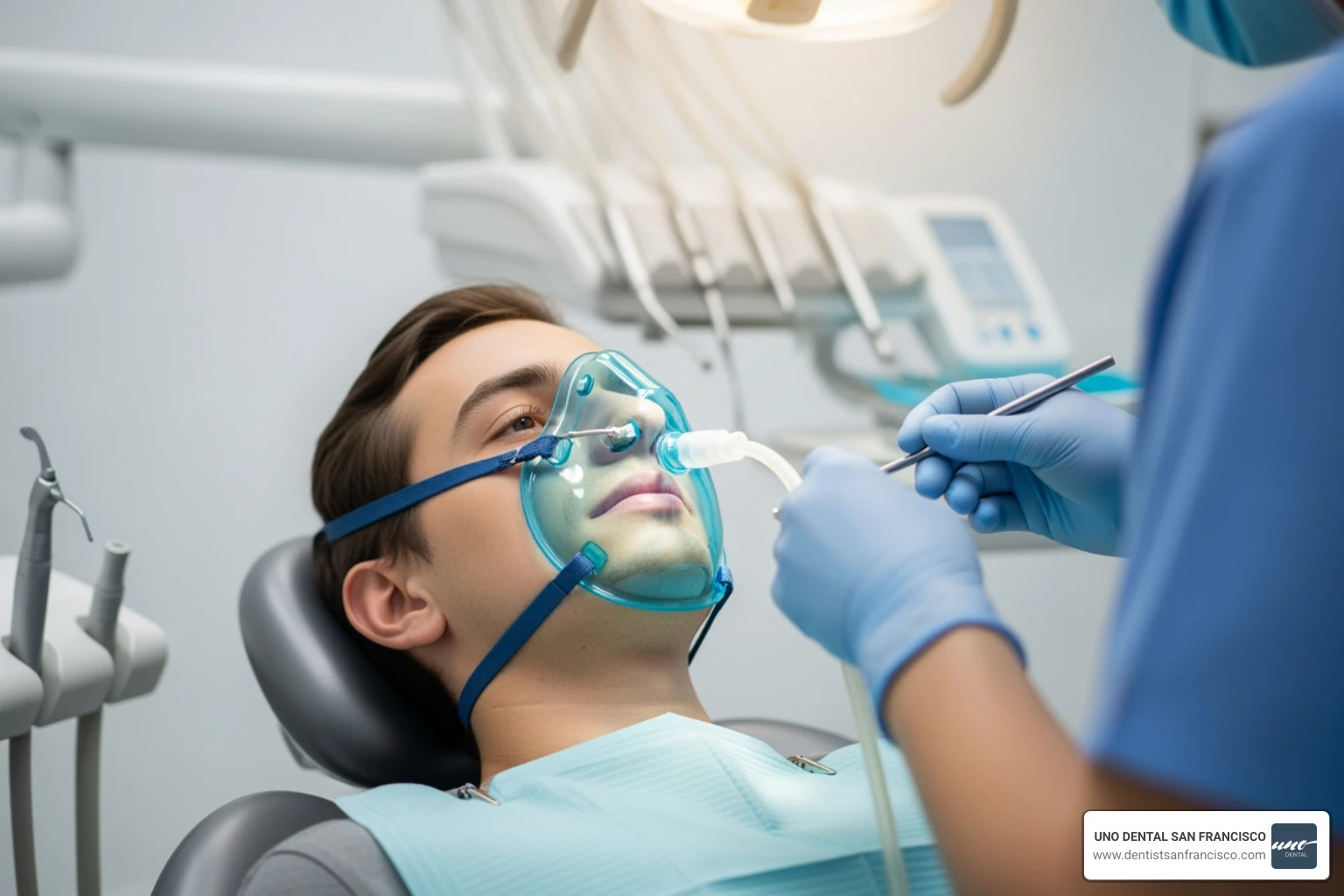
Your Guide to a Calm and Comfortable Dental Visit
Sedation for dental procedures uses medication to help you relax during dental treatment. It helps manage anxiety, reduce discomfort, and allows for more efficient, stress-free visits.
For many, visiting the dentist causes significant anxiety. In fact, approximately 36% of the population experiences some form of dental anxiety, with about 5% facing severe dental fear. Thankfully, sedation for dental procedures offers a pathway to a relaxed experience. It helps overcome fears of needles, discomfort, and lengthy procedures, changing a daunting appointment into a comfortable one.
I'm Dr. Mohammad Aghiad Kandar. With over 15 years in dentistry, I've seen how sedation transforms patient experiences. At UNO DENTAL SAN FRANCISCO, we integrate modern techniques to ensure your visit is as relaxed and effective as possible.
Understanding sedation dentistry is the first step toward a more comfortable dental experience. It involves using medication to help you relax during procedures. It’s not always about putting you to sleep, but about easing your fears to make your visit as pleasant as possible. The goal is to provide a stress-free environment so you can receive the care you need without dread.
Understanding the Types and Levels of Sedation for Dental Procedures
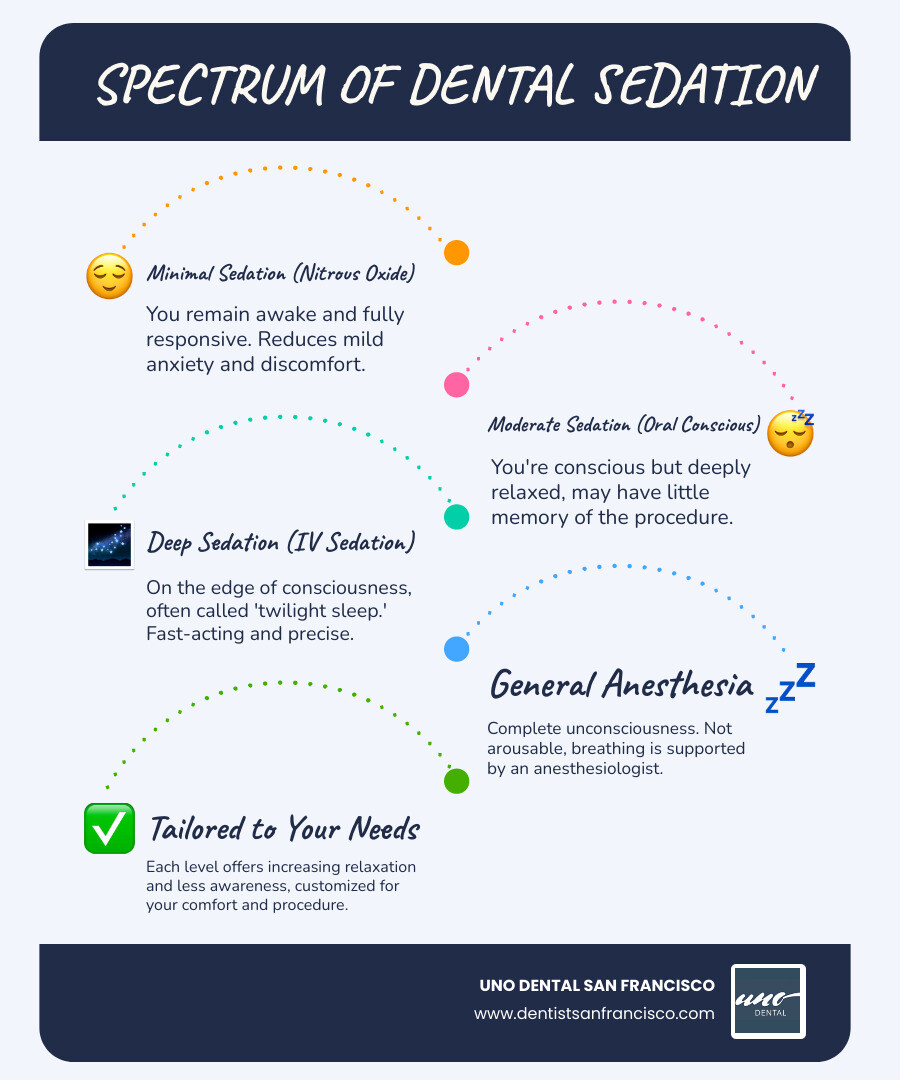
Sedation for dental procedures exists on a spectrum, from minimal relaxation to a deep, restful state. The level we recommend depends on your anxiety, the specific treatment, and your overall health. Our goal at UNO DENTAL is to ensure you feel safe and comfortable.
Here's a comparison of the different ways we can help you relax:
| Sedation Type | Level of Consciousness | Administration | Recovery Time | Amnesia Effect | Typical Use Cases |
|---|---|---|---|---|---|
| Minimal Sedation | Awake, relaxed, fully responsive | Inhaled gas (nitrous oxide) | Minutes (15-30) | Rare | Mild anxiety, routine cleanings, fillings, minor procedures |
| Moderate Sedation | Conscious, deeply relaxed, may not remember details | Oral pill (e.g., benzodiazepines) | Hours (up to 24) | Common (anterograde) | Moderate anxiety, longer appointments, multiple procedures, root canals, extractions |
| Deep Sedation | On the edge of consciousness, "twilight sleep," responsive to repeated stimulation | Intravenous (IV) | Hours (up to 24) | Common | Severe anxiety, complex or lengthy procedures, oral surgery (e.g., wisdom teeth extraction, dental implants) |
| General Anesthesia | Completely unconscious, not arousable | Inhaled gas and/or IV | Hours, often in a recovery facility | Complete | Extensive surgeries, patients with extreme anxiety or special needs, very young children, or procedures requiring complete immobility |
Minimal Sedation: Nitrous Oxide (Laughing Gas)
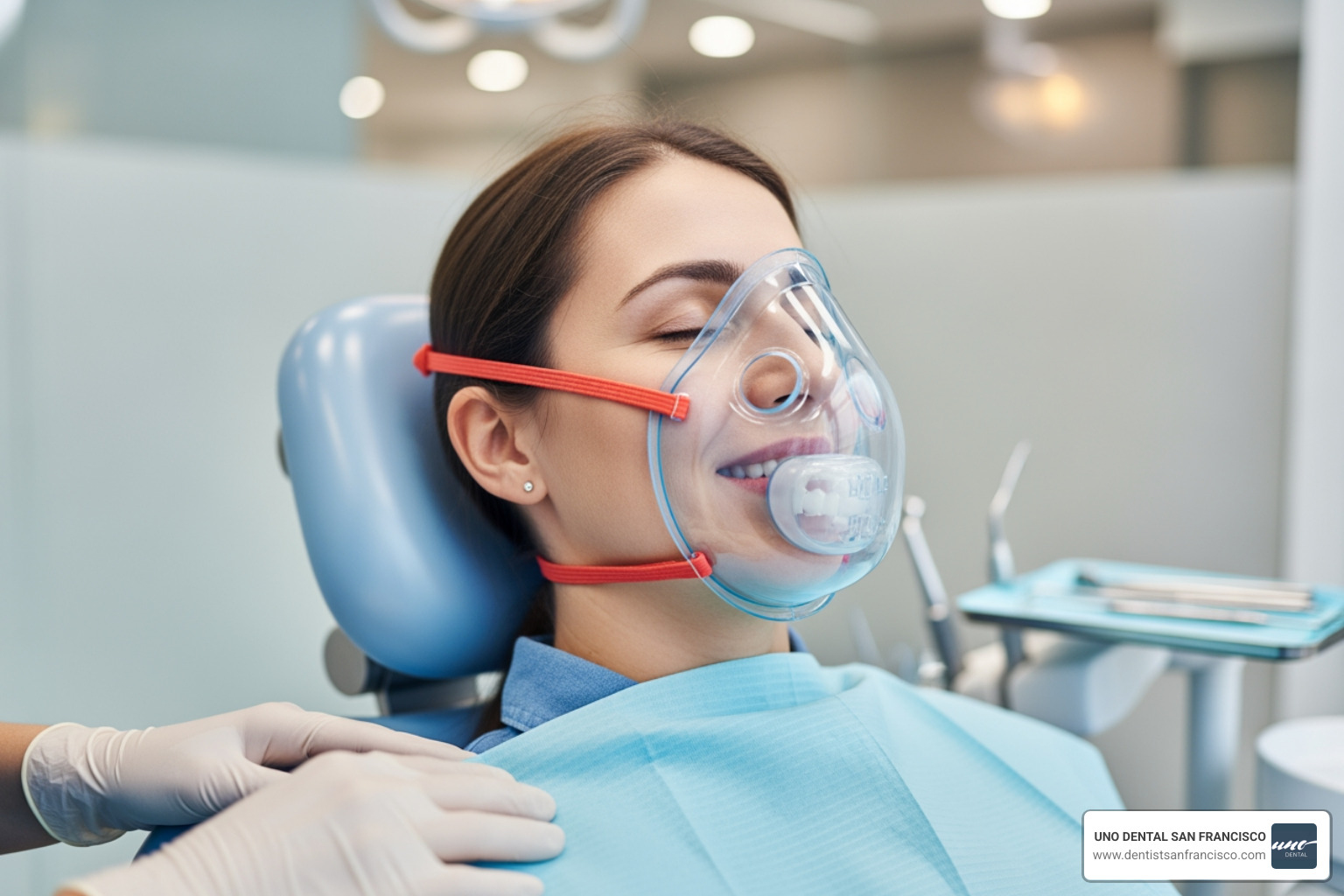
Nitrous Oxide, or "laughing gas," is a sweet-smelling gas mixed with oxygen, inhaled through a small nose mask. It gently relaxes your central nervous system, making you feel calm and at ease. The effects are immediate and wear off within 15 to 30 minutes after the gas is turned off, meaning you can drive yourself home. You remain awake and responsive, making it an excellent choice for mild dental anxiety during routine visits like cleanings and fillings. Learn more on our Nitrous Dental page, and find extra info from the American Dental Association's Nitrous oxide information from MouthHealthy.org.
Moderate Sedation: Oral Conscious Sedation
For a deeper sense of calm, oral conscious sedation involves taking a prescribed pill (typically a benzodiazepine like Triazolam or Diazepam) about an hour before your appointment. No needles are involved. Once the medication takes effect, you'll feel very drowsy and relaxed. While you remain conscious and able to respond, many patients drift into a light sleep. A common benefit of this type of sedation for dental procedures is "anterograde amnesia," meaning you may have little to no memory of the procedure. Because the effects last for several hours, you must arrange for someone to drive you to and from our San Francisco office. It's ideal for moderate anxiety or longer procedures. Dive deeper into this option on our page: What is Conscious Sedation?.
Deep Sedation: Intravenous (IV) Sedation
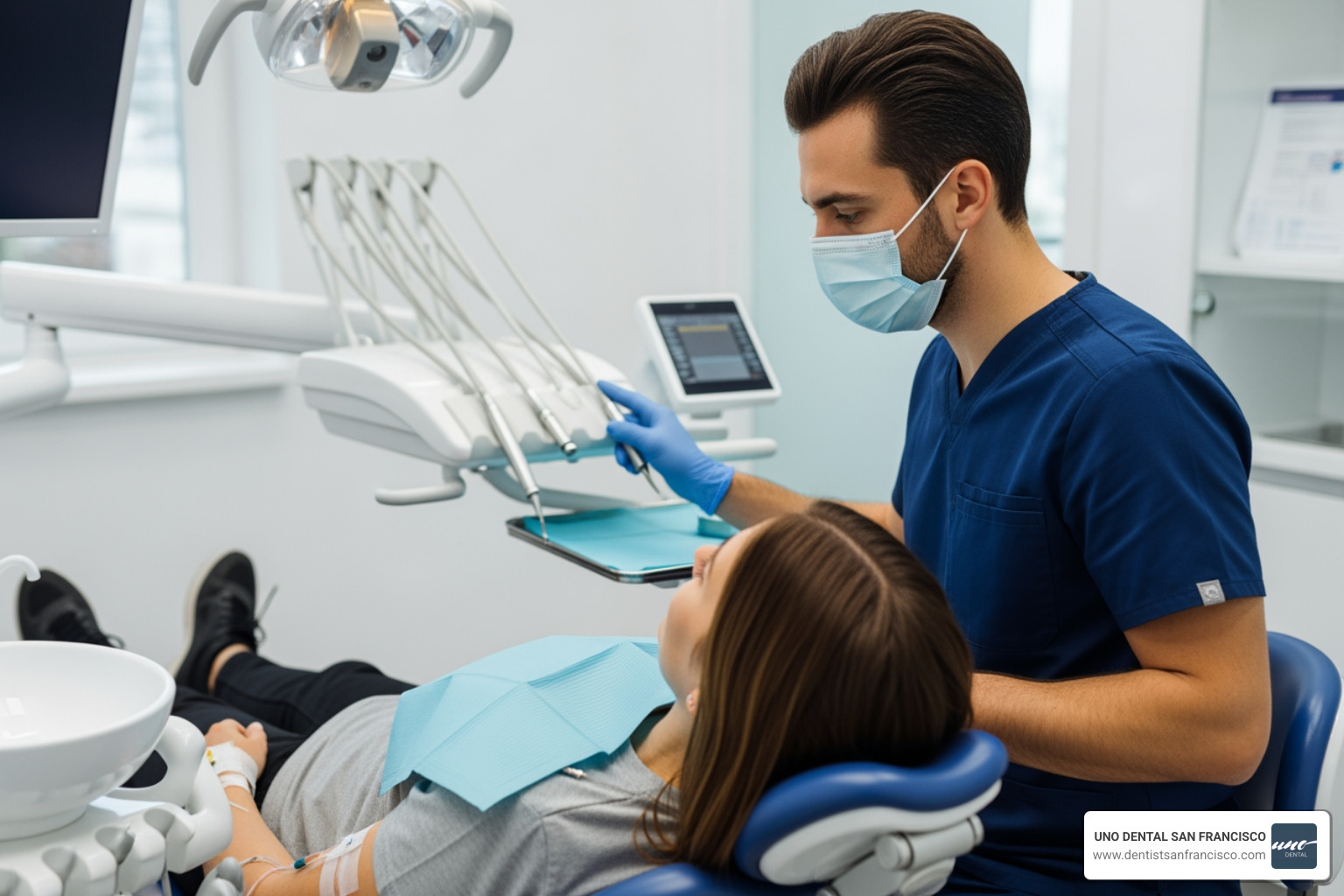
For a higher level of relaxation, Intravenous (IV) sedation is an excellent choice. Medication is administered directly into your bloodstream, allowing our team to control the sedation level precisely. Patients often describe IV sedation as a "twilight sleep." You'll be on the edge of consciousness, feeling incredibly relaxed and less aware, but still able to respond to gentle prompts. It's highly effective for severe dental anxiety, complex treatments like wisdom teeth removal, or a strong gag reflex. As with oral sedation, you'll need an escort to drive you home and should plan to rest for the remainder of the day. Learn more about this advanced option on our Conscious Anesthesia page.
General Anesthesia
General anesthesia is the deepest level of sedation for dental procedures, where you are completely unconscious and cannot be awakened during treatment. A specialized anesthesiologist is always present to monitor and support your breathing and vital signs, ensuring your absolute safety. This option is typically reserved for extensive oral surgeries, patients with extreme dental phobia, or individuals who must remain completely still, such as young children or those with special needs. General anesthesia is usually performed in a hospital or a specialized surgical center. For a broader understanding, visit our Dental Anesthesia page.
Who is a Good Candidate and What are the Benefits?
At UNO DENTAL SAN FRANCISCO, we believe everyone deserves comfortable dental care. Before recommending any sedation for dental procedures, we conduct a thorough evaluation, including a review of your medical history and an assessment of your overall health using classifications like the American Society of Anesthesiologists (ASA) physical status. This helps us tailor the safest and most effective comfort plan for you.
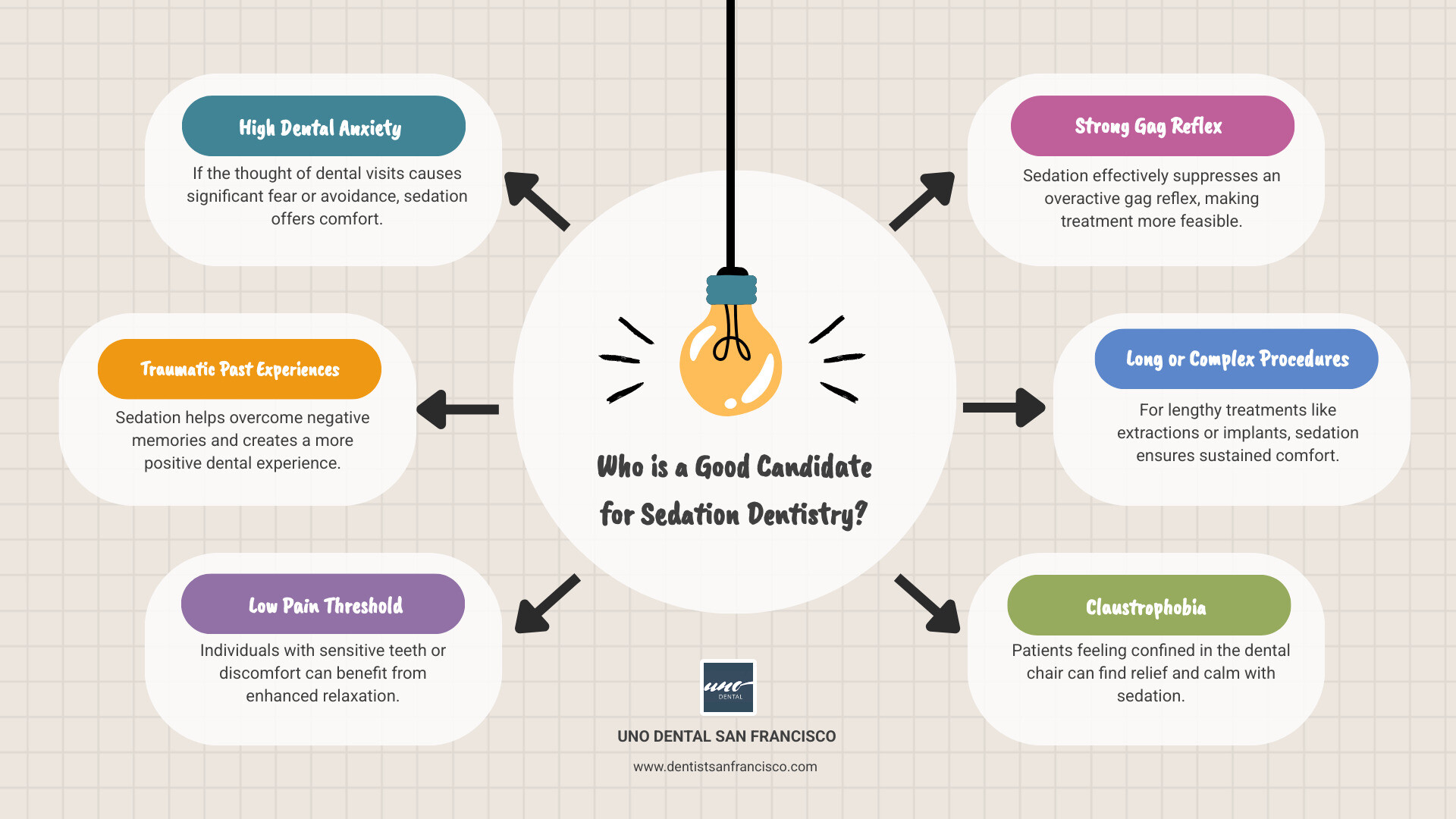
Who is a good candidate for sedation for dental procedures?
Sedation dentistry is beneficial for many people. You are a good candidate if you have:
- High dental fear or phobia: If the thought of a dental visit causes significant anxiety or panic, sedation can make a world of difference.
- Traumatic dental experiences: Sedation helps create new, positive associations with dental care.
- A low pain threshold or sensitive teeth: It improves comfort, even when combined with local anesthesia.
- A strong gag reflex: Sedation gently suppresses this reflex, allowing for easier and more comfortable treatment.
- Claustrophobia in the dental chair: It can help you feel more at ease in the dental environment.
- Need for lengthy or complex procedures: Sedation helps you remain comfortable for extended periods during treatments like root canals or extractions.
- Certain medical conditions: Patients with conditions worsened by stress (like epilepsy) or that cause involuntary movements (like Parkinson's disease) can have a safer treatment.
What are the main benefits of choosing sedation?
Choosing sedation for dental procedures offers numerous advantages:
- Reduces Anxiety and Stress: This is the primary benefit, changing a daunting experience into a calm one.
- Increases Comfort and Relaxation: You'll feel physically and mentally at ease throughout your appointment.
- Allows for More Efficient Treatment: A relaxed patient allows our dental team to work more effectively, often completing more dentistry in fewer visits.
- Makes Appointments Feel Shorter: The amnesic effects of moderate or deep sedation can make a long appointment feel like only minutes have passed.
- Helps Patients Receive Necessary Care: For those with severe dental anxiety, sedation is key to overcoming avoidance and maintaining oral health, including routine visits. Learn more about how we make these visits easy on our Sedation for Dental Cleaning page.
The Patient Journey: Before, During, and After Sedation
Starting on a journey with sedation for dental procedures means choosing comfort and peace of mind. At UNO DENTAL SAN FRANCISCO, we carefully plan each step to prioritize your safety and comfort, ensuring you know exactly what to expect.
Before Your Sedation Appointment
Preparation is crucial for a smooth and safe experience. Here’s what to expect:
- Consultation: We'll have an in-depth consultation to review your dental and medical history, discuss your anxiety levels, and determine the best type of sedation for dental procedures for you.
- Medical History Disclosure: It is vital to disclose all medications (prescriptions, over-the-counter, and supplements), allergies, and health conditions to ensure your safety.
- Pre-Operative Instructions: We provide customized instructions. For oral or IV sedation, this may mean fasting for a few hours before your appointment. We'll also cover any medication adjustments.
- Arrange an Escort: For oral conscious sedation or IV sedation, a responsible adult must drive you to and from our San Francisco office and stay with you for a few hours post-procedure.
During the Procedure
Once in our care, our experienced team is focused on your comfort and safety:
- Continuous Monitoring: We continuously monitor your vital signs, including your pulse oximetry (oxygen levels), blood pressure, and heart rate, to ensure everything is stable.
- The Dental Team's Role: Dr. Kandar and our sedation-certified dental nurses work in concert. The nurse monitors your well-being while Dr. Kandar focuses on providing top-notch dental treatment.
- Patient Safety and Comfort: Our San Francisco office is fully equipped with oxygen, an emergency trolley, and reversal agents for certain sedatives. We adhere to the highest standards of care, guided by organizations like the American Dental Association.
After Your Sedation Procedure
The recovery process varies depending on the type of sedation for dental procedures you received:
- Recovery Period: With nitrous oxide, recovery is quick, typically within 15-30 minutes, and you can drive home. For oral or IV sedation, the effects last several hours, with full recovery taking up to 24 hours.
- Post-Operative Instructions: We provide detailed verbal and written instructions covering diet, activity, and other guidelines for a smooth recovery.
- Driving and Activity Restrictions: With oral or IV sedation, you must not drive, operate heavy machinery, or make important decisions for 24 hours. Rest is essential.
- Common Feelings: It's normal to feel groggy, drowsy, or a bit disoriented for a few hours. A dry mouth, mild headache, or slight nausea are also common and temporary.
- When to Call Your Dentist: While complications are rare, please contact our San Francisco office if you experience persistent nausea, unusual pain, difficulty breathing, or feel overly groggy more than 24 hours later. Learn more about the duration of effects on our page: How Long Does Conscious Sedation Last?.
Safety, Risks, and Alternatives to Sedation
Your safety is our top priority when considering sedation for dental procedures. At UNO DENTAL SAN FRANCISCO, we employ rigorous protocols and continuous monitoring to ensure a safe and comfortable experience in our expert hands.
How is patient safety ensured?
We ensure your well-being through several key protocols:
- Thorough Patient Screening: We carefully review your medical history, current medications, and overall health to create a custom sedation plan, paying close attention to pre-existing conditions like sleep apnea or heart disease.
- Trained and Certified Dental Team: Our professionals who administer and monitor sedation are highly skilled and hold certifications in basic life support (BLS) and, for deeper levels, advanced cardiac life support (ACLS). We strictly follow the ADA Guidelines for Sedation.
- Continuous Vital Sign Monitoring: We constantly monitor your oxygen saturation, heart rate, and blood pressure. For deeper sedation, we may also monitor respiration and ECG.
- Emergency Preparedness: Our San Francisco office is fully equipped with oxygen, a comprehensive medical emergency trolley, and the availability of reversal agents (like Flumazenil for benzodiazepines) to counteract sedative effects if needed.
What are the risks of sedation for dental procedures?
While sedation for dental procedures is very safe when administered by qualified professionals, potential risks and side effects exist. We believe in full transparency so you can make informed decisions.
Common side effects are typically mild and temporary, including nausea, drowsiness, dizziness, or a headache. Some patients experience dry mouth, and a small bruise may appear at an IV site. These effects usually fade within a day or two.
More serious, though extremely rare, risks include paradoxical reactions (agitation instead of relaxation) or respiratory depression (slowed breathing), which is why continuous monitoring is so vital. Other very rare complications are laryngospasm (a temporary spasm of the vocal cords) and, with prolonged use of nitrous oxide, vitamin B12 inactivation. Our team is trained to manage these rare events. For more details, see our Dental Anesthesia Side Effects page.
Are there alternatives for managing dental anxiety?
Absolutely. While sedation for dental procedures is an excellent solution, we also support non-pharmacological approaches to help you feel comfortable.
- Distraction Techniques: Feel free to bring headphones to listen to music or an audiobook to shift your focus.
- Deep Breathing Exercises: Simple, slow, deep breaths can calm your nervous system and reduce panic.
- "Tell-Show-Do" Approach: We first explain the procedure, then show you the instruments (when appropriate), and then gently perform the task. This builds trust and reduces intimidation.
- Building Trust with Your Dentist: We strive to create a welcoming environment where you feel heard and respected.
- Local Anesthesia for Pain Control: For many, knowing that potential pain will be effectively managed with numbing medication is enough to reduce anxiety.
Special Considerations: Sedation Dentistry for Children
Children can experience dental anxiety, often due to fear of the unknown or a previous difficult experience. At UNO DENTAL SAN FRANCISCO, we understand the unique needs of our youngest patients and offer gentle and effective options for sedation for dental procedures to ensure their visits are positive and calm. Our goal is to create happy dental memories from the very beginning.
Is sedation safe for my child?
When administered by a qualified and experienced team, sedation for dental procedures is very safe for children. Their well-being is our top priority.
For children, we most commonly use nitrous oxide ("laughing gas") because it works and wears off quickly, helping them relax while remaining awake. For more anxiety, oral sedatives (often a liquid) can provide deeper calm, sometimes causing drowsiness and little memory of the procedure. General anesthesia is reserved for extensive treatments or children with special needs, typically in a specialized surgical setting.
The sedative dosage is always carefully calculated based on your child's age, weight, and health. Throughout the procedure, our trained team continuously monitors their vital signs (oxygen levels, heart rate, blood pressure) and follows strict pediatric sedation protocols. We adhere to the highest clinical practice guidelines, such as those for conscious sedation in children found on resources like PubMed.
Open communication is key. We will discuss all options with you and answer your questions to ensure you feel comfortable before any sedation for dental procedures is administered. You can find more specific information on our page about Dental Sedation for Children.
Conclusion: Take the First Step Towards Anxiety-Free Dentistry
Dental anxiety is common, but it shouldn't prevent you from achieving a healthy smile. Modern sedation for dental procedures makes it possible to have a calm, comfortable, and peaceful dental experience.
Here at UNO DENTAL SAN FRANCISCO, we offer a full range of gentle options designed for you. Whether it's the light touch of nitrous oxide, the deeper relaxation of oral sedation, or the "twilight sleep" of IV sedation, we have a solution to transform your dental visit into a positive, anxiety-free experience.
We combine high-tech tools with a holistic, personal approach. We listen to your concerns and create individualized treatment plans focused on your health and peace of mind. By offering effective sedation for dental procedures, we empower you to move past fear and receive the essential care you need for a radiant smile.
It's time to stop letting dental anxiety hold you back. We invite you to find a different kind of dental experience with us. Take the important step of taking control of your dental health, and let us show you how supportive a dental visit can be.
Ready to explore your options? Schedule your consultation with a San Francisco Sedation Dentist today. We look forward to welcoming you to the UNO DENTAL SAN FRANCISCO family.