
Your Guide to a Fear-Free Root Canal
Medically reviewed by Dr. Mohammad Aghiad Kandar, DDS – UNO DENTAL SAN FRANCISCO. Manual review: Completed.
The thought of a root canal causes anxiety for many. If you're considering sedation for root canal procedures, you're not alone. Modern dentistry offers solutions to make your experience comfortable and stress-free, addressing the common fear of pain during dental work.
Here’s what you need to know about sedation for a root canal:
- What it is: Medication used to help you relax, manage anxiety, and minimize discomfort.
- Why it's used: To reduce dental fear, control pain, manage a sensitive gag reflex, and allow for a smoother treatment.
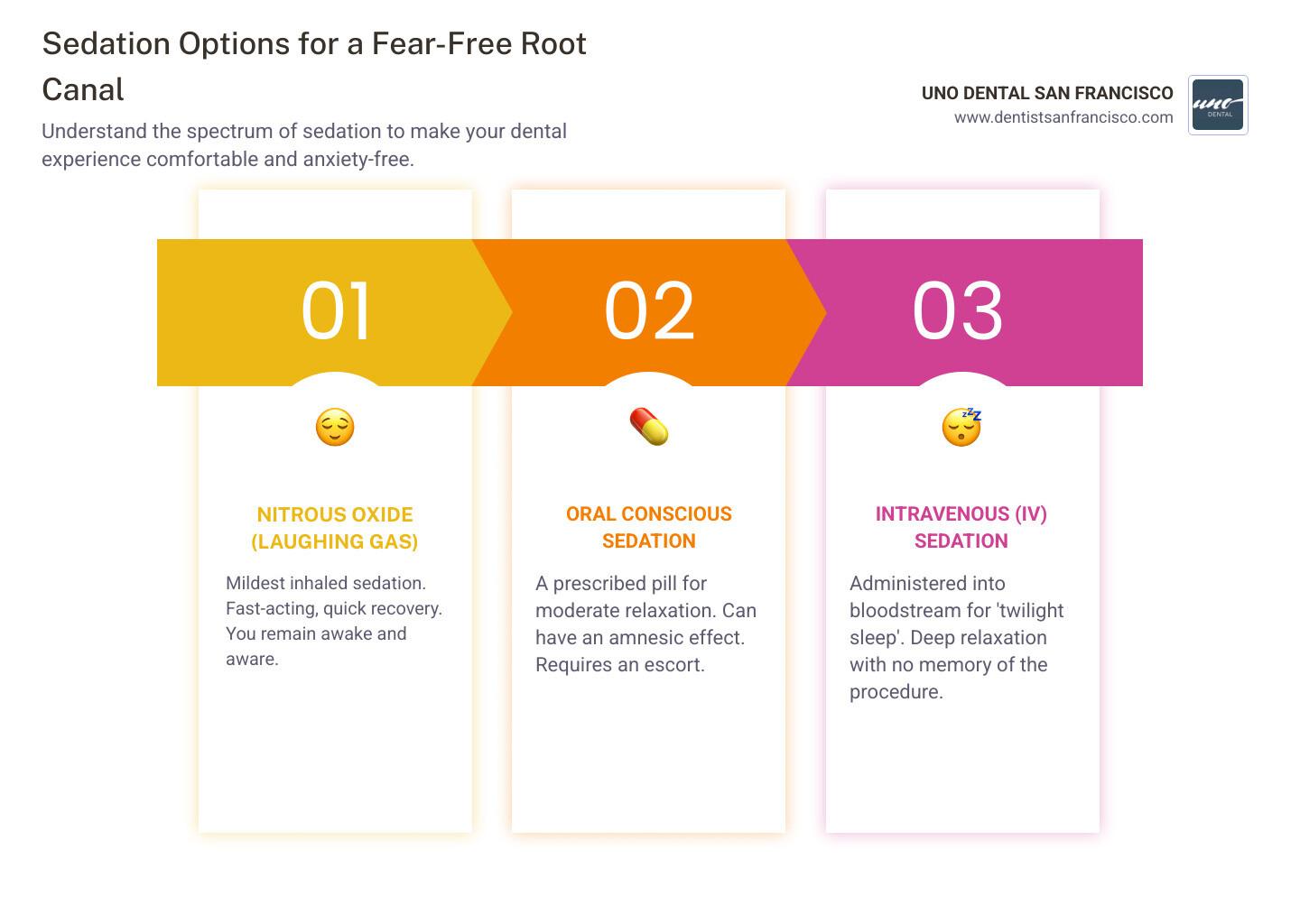
- Types available: Options range from mild (nitrous oxide) to moderate (oral conscious sedation) to deep relaxation (IV sedation).
- Benefits: Sedation can make long procedures feel shorter, and many patients have little to no memory of the treatment.
If you suffer from dental anxiety, you deserve a relaxed experience. Sedation dentistry transforms a dreaded procedure into a calm, manageable appointment.
As Dr. Mohammad Aghiad Kandar of UNO DENTAL SAN FRANCISCO, I've seen how effective sedation for root canal treatments are. My expertise in advanced dentistry ensures a comfortable, anxiety-free experience for even the most apprehensive patients.
Why Choose Sedation for Root Canal Treatment?
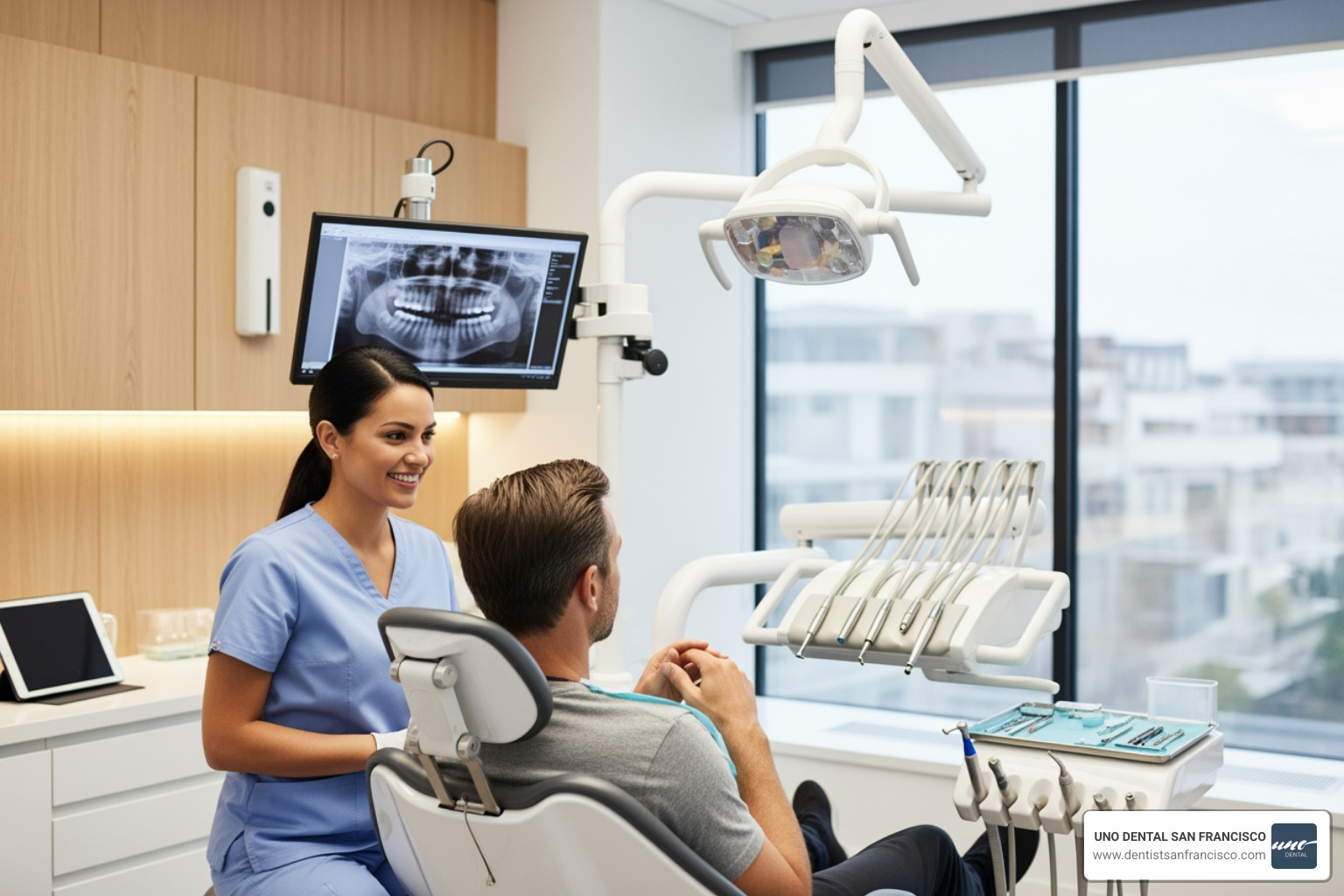
Choosing sedation for root canal treatment at UNO DENTAL SAN FRANCISCO is about changing your dental experience into a calm, pleasant visit, free from discomfort. This approach helps build a positive relationship with your oral health, with sedated root canals boasting a 97.5% success rate.
Sedation offers anxiety and stress relief, effective pain management, control over a sensitive gag reflex, and improved treatment efficiency. This makes complex procedures or multiple treatments much easier to manage. For more on this, see our articles on How Painful Is a Root Canal? and What Is Conscious Sedation?.
Managing Dental Anxiety and Phobia
Dental anxiety is a common challenge that prevents many from seeking necessary care, often leading to more significant dental problems. Sedation dentistry is the solution. It helps to reduce fear, allowing you to relax during your procedure. For those with past negative experiences or severe phobias, this stress relief is invaluable. By making visits less intimidating, sedation helps create positive associations with dental care and break the cycle of avoidance. To learn more, read our guides on Overcoming Dental Fear San Francisco and 5 Tips for Calming Your Dental Anxiety.
Ensuring a Comfortable and Efficient Procedure
Sedation for root canal treatments also improves the procedure's efficiency. When you're relaxed, our dental team can work more effectively.
Sedation ensures patient stillness, which is vital for the precision a root canal requires. A calm patient allows our endodontist to maintain focus, leading to a smoother, faster procedure and increased patient cooperation.
Your relaxed state may allow for fewer appointments, as more can be accomplished in one visit. Sedation ensures comfort during long or complex procedures and helps control a sensitive gag reflex, preventing treatment interruptions. This patient-centered approach is at the core of what we do at UNO DENTAL SAN FRANCISCO. Learn more about our philosophy on Patient-Centered Dental Care.
Types of Sedation Available for Your Root Canal
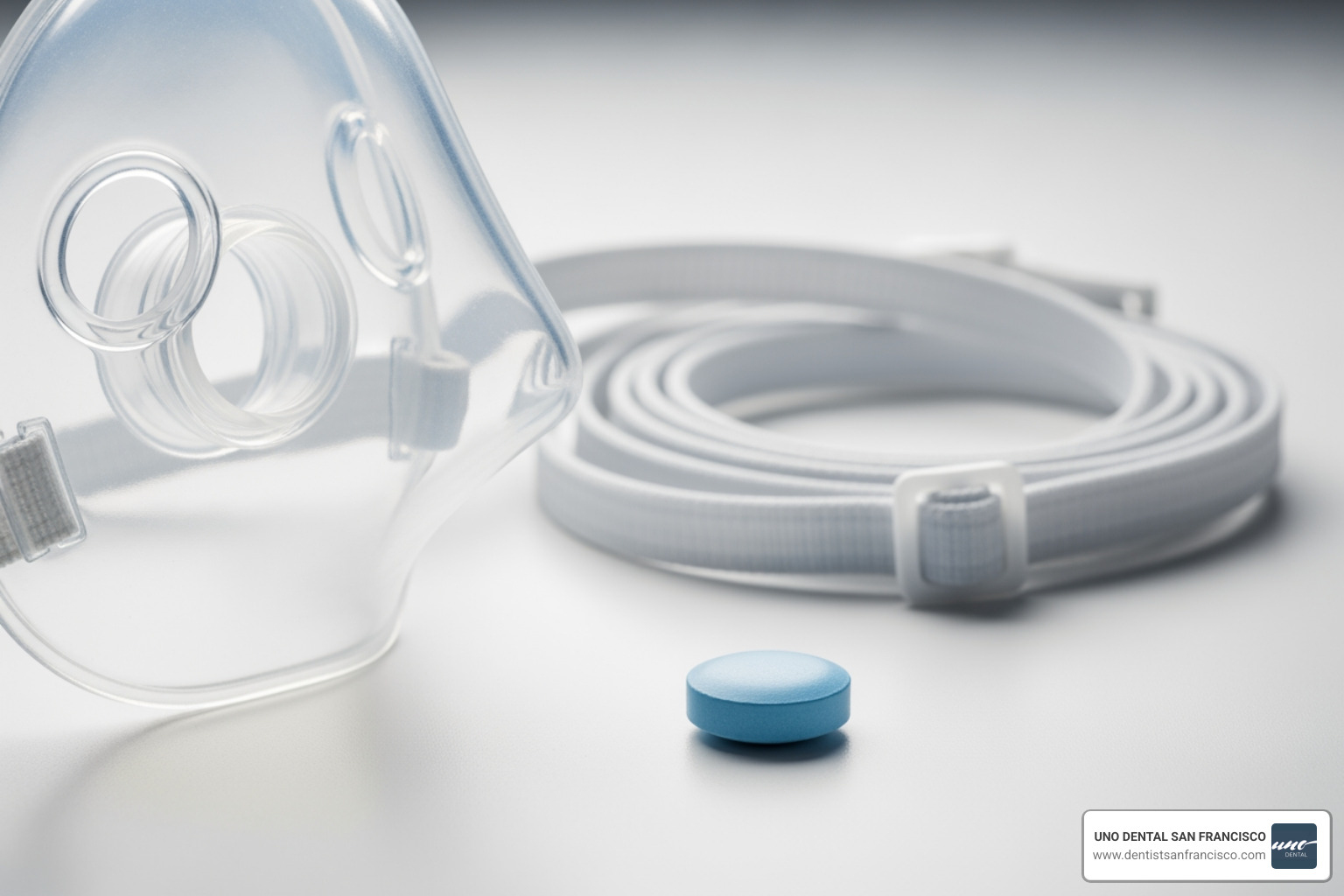
At UNO DENTAL SAN FRANCISCO, we know every patient's comfort needs are unique. We offer a variety of sedation options custom to you, from mild jitters to significant anxiety, to make your sedation for root canal experience calm and stress-free.
The right choice depends on your anxiety level, procedure complexity, and medical history. We offer options from minimal relaxation to "twilight sleep" to ensure treatment is accessible and comfortable. Explore our Sedation Dentistry Complete Guide for more details. The ADA also offers a guide on Anesthesia and Sedation .
Nitrous Oxide (Laughing Gas)
Nitrous oxide, or "laughing gas," is a gentle option for mild anxiety. This minimal sedation is inhaled through a small nasal mask. It works within minutes, and we can adjust the dosage throughout your procedure to maintain comfort. You'll remain awake and able to communicate but will feel a sense of well-being that eases anxiety. The effects wear off quickly; after a few minutes of breathing pure oxygen, most patients can drive themselves home.
Oral Conscious Sedation
For deeper relaxation, oral conscious sedation is an excellent solution. This involves taking a prescribed sedative pill, like triazolam, about an hour before your appointment. While you remain conscious and responsive, you may doze off. A key benefit is the amnesic effect, leaving little to no memory of the treatment—a major plus for anxious patients. The effects linger for 2-8 hours, causing grogginess. For your safety, you must arrange for a responsible adult to escort you and should not drive for 24 hours. Learn more in our Conscious Sedation Dentistry Complete Guide.
Intravenous (IV) Sedation
For severe anxiety or complex procedures, intravenous (IV) sedation provides the deepest conscious relaxation in our office. A sedative like midazolam is administered directly into your bloodstream, allowing for precise control. We continuously monitor your vital signs to ensure your safety. You'll enter a "twilight sleep"—deeply relaxed and often with no memory of the procedure. Though conscious, you'll feel detached from the treatment. The medication acts as an anxiolytic and muscle relaxant for a calming experience.
Because the effects are prolonged, you will need a responsible adult to drive you home. Recovery can take up to 24 hours, during which you must avoid driving. This option is ideal for patients with severe dental phobia who want to "sleep through" their root canal. Our standard practices align with clinical guidelines for safe IV sedation, including thorough medical history review and continuous monitoring.
[TABLE] Comparing Sedation Options
| Sedation Type | Level of Consciousness | Administration Method | Recovery Time | Best For |
|---|---|---|---|---|
| Nitrous Oxide | Minimal sedation (awake, responsive, relaxed) | Inhaled via nasal mask | 15-30 minutes | Mild anxiety, short procedures, minor discomfort, patients who want to drive themselves home immediately. |
| Oral Conscious Sedation | Moderate sedation (awake but deeply relaxed, may doze, limited memory of procedure) | Pill taken orally before appointment | 2-8 hours (grogginess) | Moderate anxiety, longer procedures, patients with gag reflex, those who prefer no needles, requires an escort. |
| IV Sedation | Deep conscious sedation ("twilight sleep," barely aware, usually no memory of procedure) | Administered directly into bloodstream via IV | Up to 24 hours | Severe dental anxiety or phobia, lengthy or complex procedures (like some root canals), strong gag reflex, patients who want to completely "sleep through" the procedure, requires an escort and continuous monitoring. |
The Process: What to Expect Before, During, and After
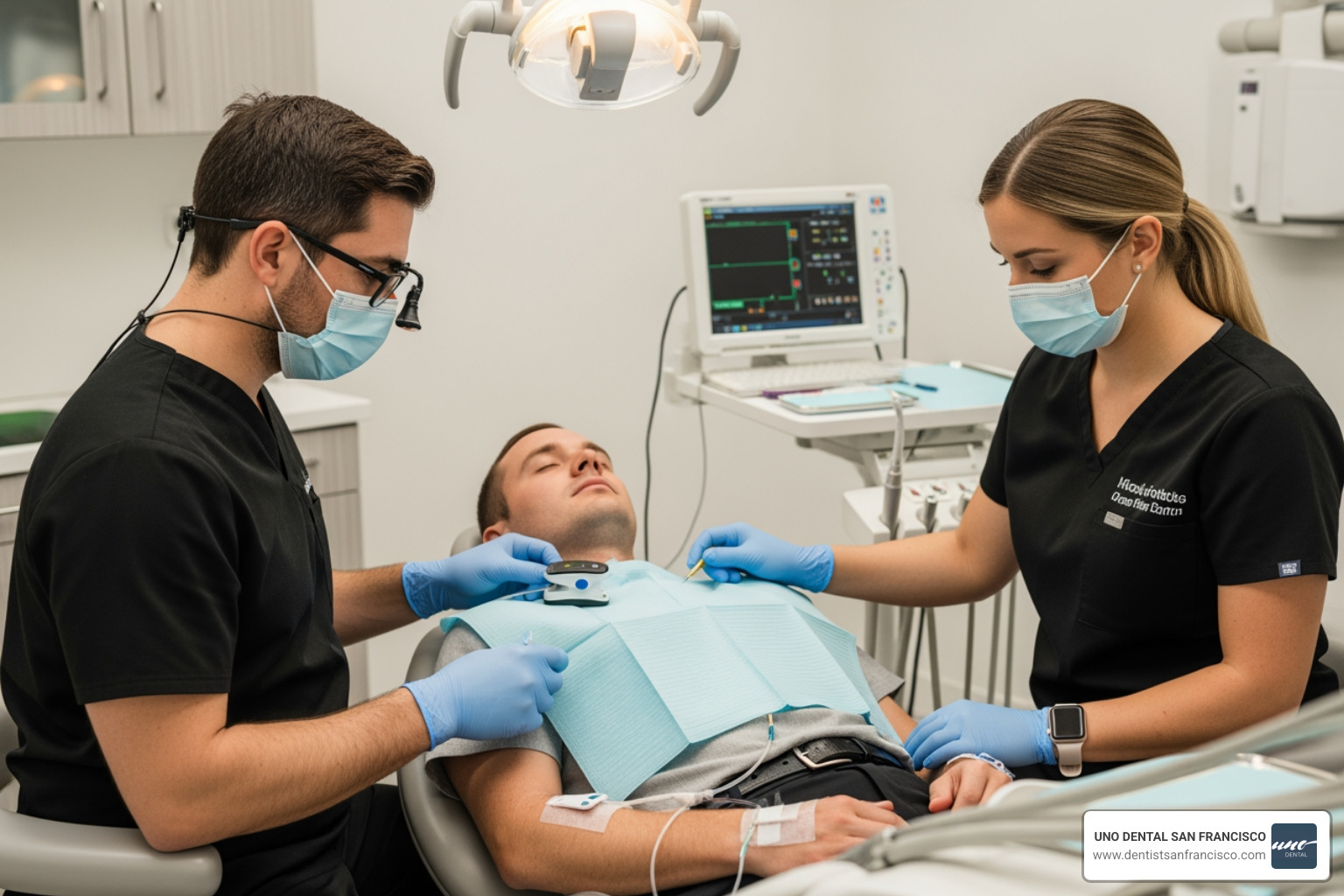
Knowing what to expect before, during, and after your sedation for root canal can ease anxiety. At UNO DENTAL SAN FRANCISCO, your patient journey is designed for comfort and safety, ensuring a smooth experience.
Preparing for Your Appointment with Sedation for a Root Canal
Preparation for your sedated root canal is straightforward.
First is a thorough medical history review. This crucial conversation covers your medications (including supplements), allergies, and health conditions. This information helps us select the safest, most effective sedation option for you.
Depending on the sedation type, you may need to follow fasting instructions. For oral or IV sedation, you'll need to avoid food and drink for several hours beforehand. This is a standard safety measure, and we will provide you with a specific timeline.
Arranging transportation is essential for oral or IV sedation. You cannot drive. A responsible adult must escort you to and from your appointment and should stay with you for the rest of the day, as your reflexes and judgment will be impaired.
We'll also provide specific medication guidelines. Continue your regular medications unless we instruct you otherwise. For more preparation details, see our Before Your Visit FAQs.
Recovery After Your Sedation for a Root Canal
Your recovery depends on the type of sedation used. We provide detailed post-operative instructions, but here's a general overview.
- Nitrous Oxide: The effects wear off in 15-30 minutes after breathing pure oxygen. You can resume normal activities, including driving, right away.
- Oral and IV Sedation: You will feel drowsy and groggy for several hours, with effects lasting up to 24 hours. Many patients have little memory of the procedure. Plan to rest at home for the remainder of the day.
Lingering drowsiness is normal. Avoid strenuous activity and rest. For your diet, start with clear liquids and soft foods, gradually returning to normal as you feel comfortable. Avoid hot beverages while your mouth is numb. Our Root Canal Aftercare Instructions have more details.
Regarding activity restrictions, you must avoid driving, operating machinery, making important decisions, or drinking alcohol for at least 24 hours after oral or IV sedation.
When should you call us? Contact us if you experience persistent nausea, vomiting, unusual pain, or excessive grogginess that lasts more than 24 hours. Learn more about recovery on our page, How Long Does Conscious Sedation Last?. We are with you every step of the way.
Frequently Asked Questions about Sedation and Root Canals
Who is a good candidate for sedation dentistry?
If fear has caused you to delay a root canal, sedation for root canal treatment can help. At UNO DENTAL SAN FRANCISCO, we find it transforms a dreaded experience into a manageable one. You may be an excellent candidate if you have:
- High dental fear or anxiety: This is the most common reason patients choose sedation.
- A sensitive gag reflex: Sedation significantly reduces this reflex, allowing for a smoother procedure.
- Difficulty getting numb: Sedation can improve the effectiveness of local anesthetics.
- Claustrophobia or discomfort sitting for long periods.
- A need for long or complex treatment or wish to combine multiple procedures.
- Special needs (physical, behavioral, or cognitive) that make it difficult to remain still.
If you are a New Dental Patient with concerns, please discuss them with us during your consultation.
What are the risks and side effects of sedation?
Sedation dentistry is very safe when administered by qualified professionals like our team. However, it's important to understand the potential side effects.
Common, mild side effects include temporary drowsiness, dry mouth, mild headache, and occasionally, nausea. A small bruise may appear at an IV injection site.
Less common risks include rare allergic reactions or experiencing deeper sedation than intended. This is why a thorough medical history review is vital. We mitigate these risks by carefully monitoring your vital signs and adjusting dosages, and our team is fully trained to manage any unexpected responses. With deeper sedation, there is a slight risk of breathing problems, which is why continuous monitoring is critical.
We follow all ADA Guidelines for the Use of Sedation and General Anesthesia by Dentists to ensure your safety.
What is the difference between local anesthesia, sedation, and general anesthesia?
These terms are often confused, but they refer to different methods of ensuring comfort. Understanding them can help you feel more confident about your sedation for root canal treatment. Learn more on our page about Dental Anesthesia.
- Local Anesthesia: This is the foundation of pain control. It numbs a specific area of your mouth to block pain, but you remain fully awake. We always use local anesthesia for root canals to ensure the tooth is completely numb.
- Sedation (Conscious Sedation): This reduces anxiety and awareness. You remain responsive but relaxed, and you won't be fully "asleep." Its purpose is to alleviate fear, often resulting in little to no memory of the procedure. For root canals, sedation is an optional addition to local anesthesia.
- General Anesthesia: This is a state of controlled unconsciousness where you are completely unresponsive. It requires an anesthesiologist and is reserved for complex surgeries or specific medical situations, not for a standard root canal in a dental office.
For your root canal, we combine local anesthesia (to prevent pain) with your chosen level of sedation (to manage anxiety). This combination ensures a pain-free and anxiety-free experience.
Experience a Comfortable Root Canal in San Francisco
At UNO DENTAL SAN FRANCISCO, we believe dental care shouldn't be a source of dread. We know the term "root canal" can cause anxiety, so we've made it our mission to transform the experience.
Our patient-centered approach means we care about your overall well-being. Our team listens to your concerns and works with you to create a personalized treatment plan that addresses your anxiety level. We combine advanced technology with compassionate care to make your experience smoother and more efficient.
By offering customized sedation for root canal options, we remove barriers to care. From nitrous oxide to IV sedation, we'll find the right solution for you. Your oral health is our priority, and that starts with ensuring you feel safe and comfortable.
Many of our patients express relief after treatment, wishing they hadn't waited so long. Don't let dental anxiety keep you from the care you deserve. Take the first step toward a comfortable, stress-free root canal. We're here to guide you through the entire process.
Book your consultation with a San Francisco sedation dentist and find what truly patient-centered dental care feels like. We look forward to welcoming you and showing you that a dental visit can be a pleasant experience.