
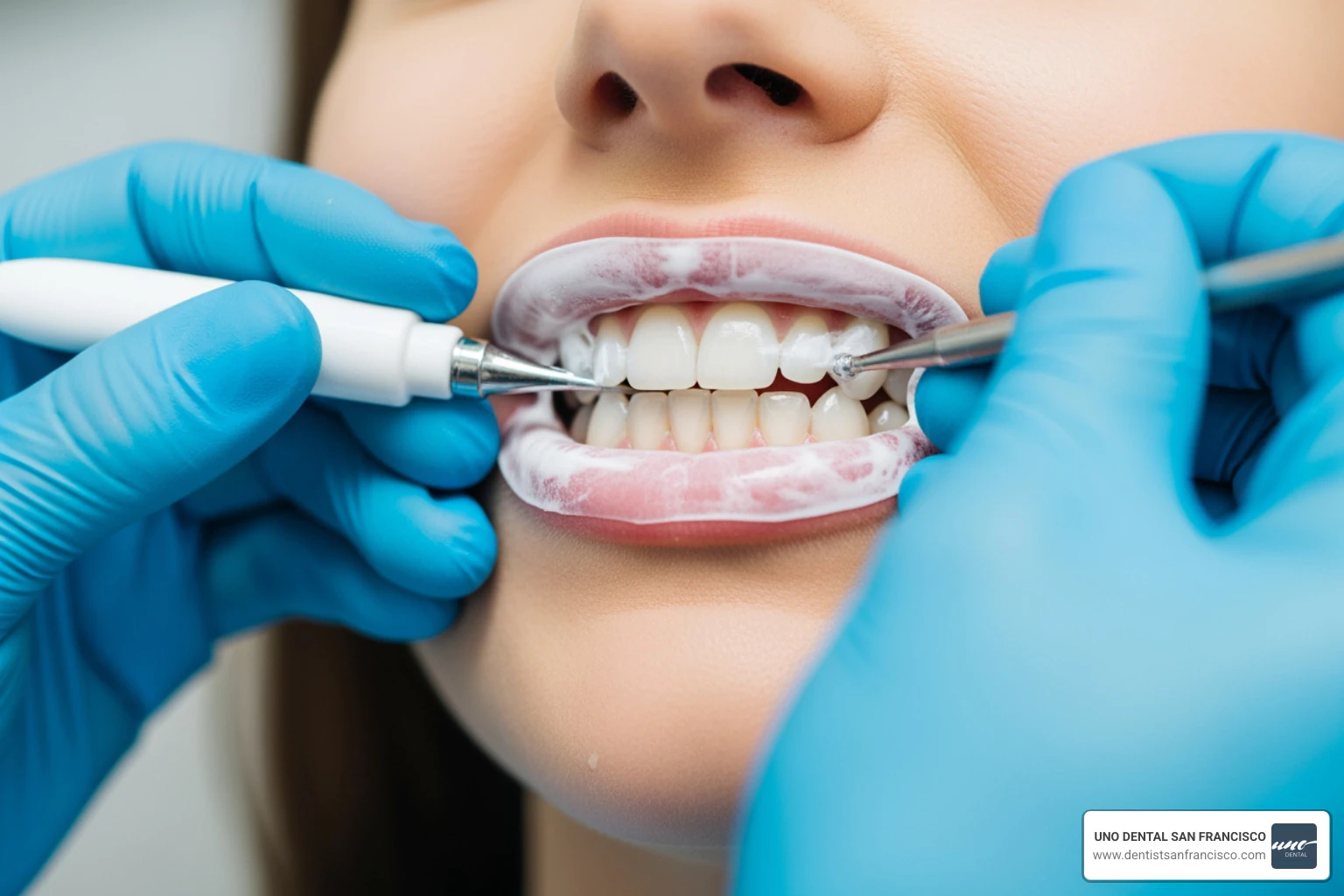
Why Professional Teeth Whitening Safety Matters More Than You Think
Does professional whitening damage teeth? This is one of the most common questions patients ask when considering cosmetic dental treatments. The short answer: No, professional teeth whitening does not damage teeth when performed correctly under dental supervision.
Quick Answer: Safety of Professional Teeth Whitening
- Enamel Safety: Professional whitening does not permanently damage tooth enamel. The process causes temporary dehydration, which naturally reverses through saliva.
- Common Side Effects: Temporary tooth sensitivity and mild gum irritation are possible but typically fade within days.
- Professional vs. OTC: Dentist-supervised treatments use custom trays and protective barriers, making them safer than most over-the-counter products despite higher peroxide concentrations.
- Long-Term Effects: Research has not shown permanent structural damage when whitening is done correctly with appropriate intervals between treatments.
- Key to Safety: Professional assessment before treatment and proper supervision during the procedure minimize risk.
About 37 million Americans tried some form of teeth whitening in 2020, making it one of the most requested cosmetic dental procedures. With social media showcasing bright smiles everywhere, it is no surprise that many patients ask about whitening treatments.
With this popularity comes concern. Online warnings about enamel damage, sensitivity, and gum problems can make it hard to know what to trust. Understanding the facts is key to protecting your oral health.
Professional whitening is safe when done right. The difference is not just about what goes on your teeth—it is about who applies it, how your gums are protected, and whether your teeth are healthy enough for the procedure in the first place.
I am Dr. Mohammad Aghiad Kandar, and in more than 15 years of dental practice, I have guided many patients through safe, effective whitening treatments while addressing their concerns about whether does professional whitening damage teeth. My training at UCSF and my experience at UNO DENTAL SAN FRANCISCO have shown me that education is the first step to a confident, brighter smile.
Does professional whitening damage teeth glossary:
The Science Behind a Whiter Smile: How Whitening Really Works
To understand if does professional whitening damage teeth, it helps to know a little about our teeth and how whitening agents interact with them. Our teeth are complex structures, primarily made up of two main layers: the outer enamel and the inner dentin.
Tooth Anatomy:
- Enamel: This is the hard, protective outer layer of our teeth. It's the strongest substance in the human body, but it's not entirely impenetrable. Over time, its microscopic pores can absorb stains.
- Dentin: Located beneath the enamel, dentin is a softer, yellowish tissue that makes up the bulk of our tooth structure. It contains tiny tubules that connect to the tooth's nerve. The natural color of our dentin significantly contributes to our overall tooth shade, especially as enamel thins with age.
Chromogens: These are the colored compounds that cause stains and discoloration on and within our teeth. They can come from various sources, which we'll discuss shortly.
How Bleaching Agents Work:
The magic behind teeth whitening lies in bleaching agents, primarily hydrogen peroxide or carbamide peroxide. These powerful ingredients work through a process called oxidation. When applied to the teeth, they penetrate the enamel and reach the dentin. There, they break down the chromogens into smaller, less concentrated, and less colored pieces. This chemical reaction essentially bleaches the stains, making our teeth appear brighter and whiter.
The science is quite clear: these peroxides initiate an oxidation reaction that removes discoloration both on and below the tooth's surface. You can learn more about The science of peroxide on teeth if you're curious about the detailed chemical processes.
Extrinsic vs. Intrinsic Stains
Not all tooth discoloration is the same, and understanding the difference is key to knowing how well whitening will work for you.
-
Extrinsic Stains: These are surface stains that accumulate on the enamel. They are primarily caused by external factors and behaviors. Common culprits include:
- Coffee and Tea: The dark pigments in these beverages are notorious for staining teeth.
- Red Wine: Its rich color and acidity contribute to significant staining.
- Tobacco: Tar and nicotine are stubborn staining agents that can lead to yellow or brown discoloration.
- Other highly pigmented foods and beverages, like berries and dark sodas, can also contribute.
These types of stains often respond very well to professional whitening treatments and even regular dental cleanings. If you're struggling with specific types of discoloration, like those from your morning brew, we have More on removing coffee stains.
-
Intrinsic Stains: These stains occur inside the tooth, within the enamel or dentin. They can be more challenging to treat and sometimes require more intensive or specific whitening approaches. Causes include:
- Aging: As we age, our enamel naturally thins, allowing more of the yellowish dentin to show through.
- Genetics: Some individuals are naturally predisposed to having yellower teeth.
- Medication: Certain medications, particularly tetracycline antibiotics taken during childhood, can cause severe intrinsic discoloration.
- Trauma: A tooth injury can cause the tooth to lay down more dentin, leading to darkening.
- Dental Restorations: Old amalgam fillings can sometimes stain the surrounding tooth structure.
While yellow and brown extrinsic stains generally bleach well, gray intrinsic stains (often from medications or trauma) might not respond as effectively or at all to traditional whitening. This is why a professional assessment is so crucial before any whitening procedure.
Does Professional Whitening Damage Teeth? A Look at the Evidence
Many people worry if professional teeth whitening harms enamel. When performed by a qualified dental professional, the answer to does professional whitening damage teeth is a resounding "no."
Enamel Porosity and Temporary Dehydration:
The whitening process involves a temporary change to the enamel. The active bleaching agents penetrate the enamel, causing a temporary dehydration of the tooth structure. This makes the enamel more permeable, allowing the peroxide to reach and break down stains within the dentin. This temporary change is often what causes the common side effect of tooth sensitivity.
The Myth of Permanent Enamel Loss:
Despite concerns, this process does not permanently damage or remove tooth enamel. The temporary dehydration and increased permeability are reversible. Our teeth are living tissues, and they have a remarkable ability to heal and recover. After the whitening treatment, our saliva naturally works to rehydrate the teeth and remineralize the enamel. Saliva contains essential electrolytes like phosphate and calcium, which are crucial for this natural repair process. Foods like dairy products, dark leafy greens, and fish also contribute to teeth-strengthening minerals.
Leading dental organizations, like the American Dental Association (ADA), affirm the safety of professional whitening. Their guidelines and research support that today's bleaching products are safe for tooth enamel when used correctly. You can explore the ADA statement on whitening safety for more comprehensive information. Numerous clinical studies have consistently shown that professional whitening, when performed under a dentist's supervision and with appropriate intervals, is generally harmless to tooth structure.
The Critical Role of Professional Supervision
This is where the distinction between professional and over-the-counter whitening becomes paramount. The safety and effectiveness of teeth whitening hinge significantly on professional oversight.
At UNO DENTAL SAN FRANCISCO, we begin every whitening journey with a thorough dental health assessment. This isn't just a formality; it's a critical step to ensure your oral health is in optimal condition before applying any whitening agents.
- Identifying Underlying Issues: We look for any pre-existing conditions that could affect the outcome or safety of whitening. For example, if you have untreated cavities or gum disease, applying whitening gels could cause severe pain or exacerbate these issues. Addressing these concerns first is vital. Brown or gray discoloration could also signal problems that a bleaching kit won't fix, and we need to determine the root cause.
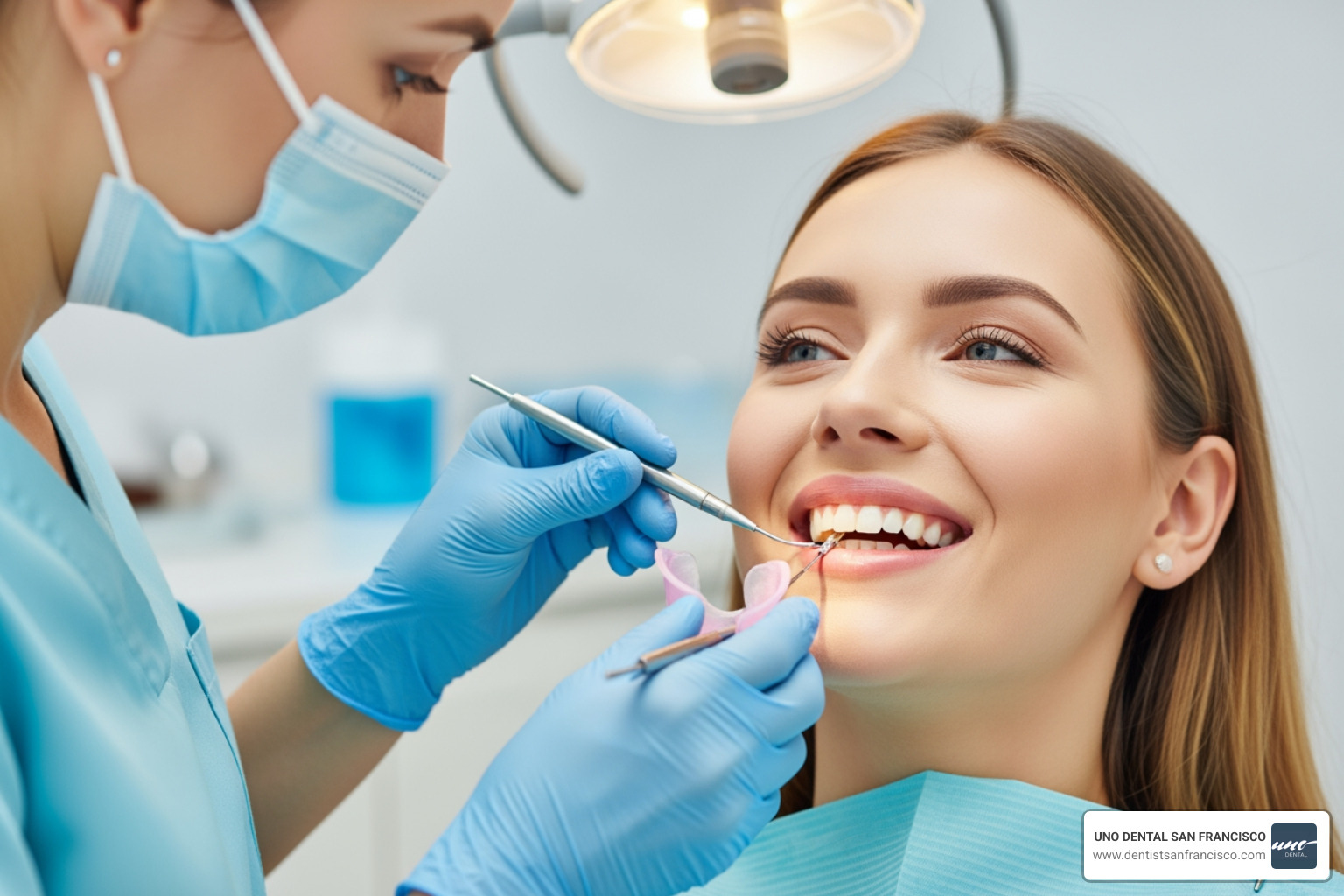
- Personalized Treatment Plans: Every smile is unique, and so are its needs. Your dentist knows your teeth better than anyone. We use this familiarity to build a personalized plan to brighten your smile, taking into account your specific type of discoloration, enamel health, and sensitivity levels. This individualized approach is a cornerstone of the comprehensive, patient-centered care we provide at UNO DENTAL SAN FRANCISCO.
- Ensuring Candidacy for Whitening: Not everyone is an ideal candidate for teeth whitening. For instance, the American Academy of Pediatric Dentistry discourages full-arch cosmetic bleaching for children and adolescents. If you are pregnant, breastfeeding, have significant tooth sensitivity, gum disease, cracks, or untreated dental problems, whitening may not be recommended. Our assessment ensures that whitening is appropriate and safe for you.
For many, the first step towards a brighter smile isn't whitening at all, but a thorough cleaning. Why a professional teeth cleaning is a great first step is because it removes plaque, tartar, and surface stains, revealing your natural tooth shade and allowing us to accurately assess your whitening needs.
Professional vs. Over-the-Counter (OTC): A Safety and Efficacy Showdown
When considering teeth whitening, you will see many options, from professional in-office treatments to various over-the-counter (OTC) products. While both aim to brighten your smile, the differences in safety, efficacy, and application are significant.
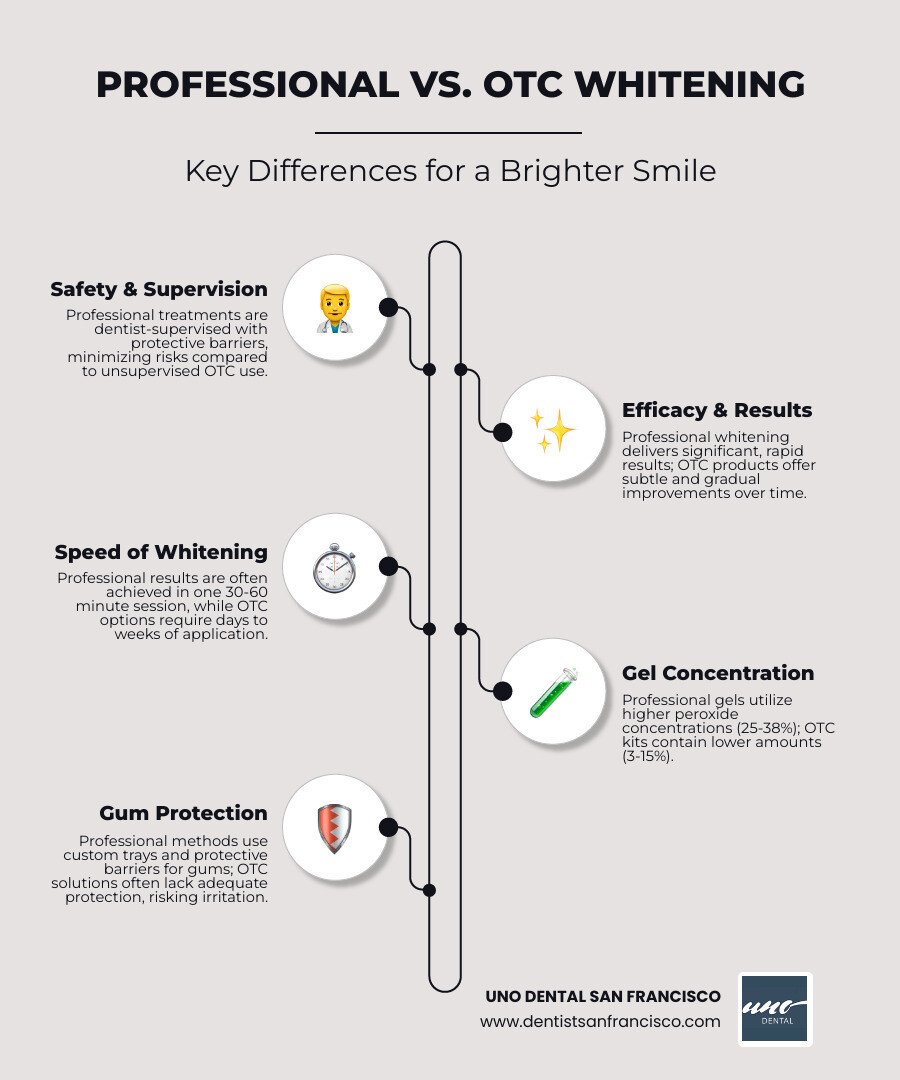
| Feature | Professional Whitening | Over-the-Counter (OTC) Whitening |
|---|---|---|
| Safety | High (dentist supervised, protective barriers) | Variable (unsupervised, risk of misuse, poor fit) |
| Efficacy | High (significant, rapid results) | Lower (subtle, gradual results) |
| Speed of Results | Very Fast (often 1 session, 30-60 minutes) | Slower (days to weeks, multiple applications) |
| Gel Concentration | Higher (typically 25-38% hydrogen peroxide) | Lower (typically 3-15% hydrogen peroxide) |
| Gum Protection | Excellent (custom trays, protective gels/barriers) | Often limited (one-size-fits-all, gel leakage common) |
Custom-fitted trays vs. one-size-fits-all strips
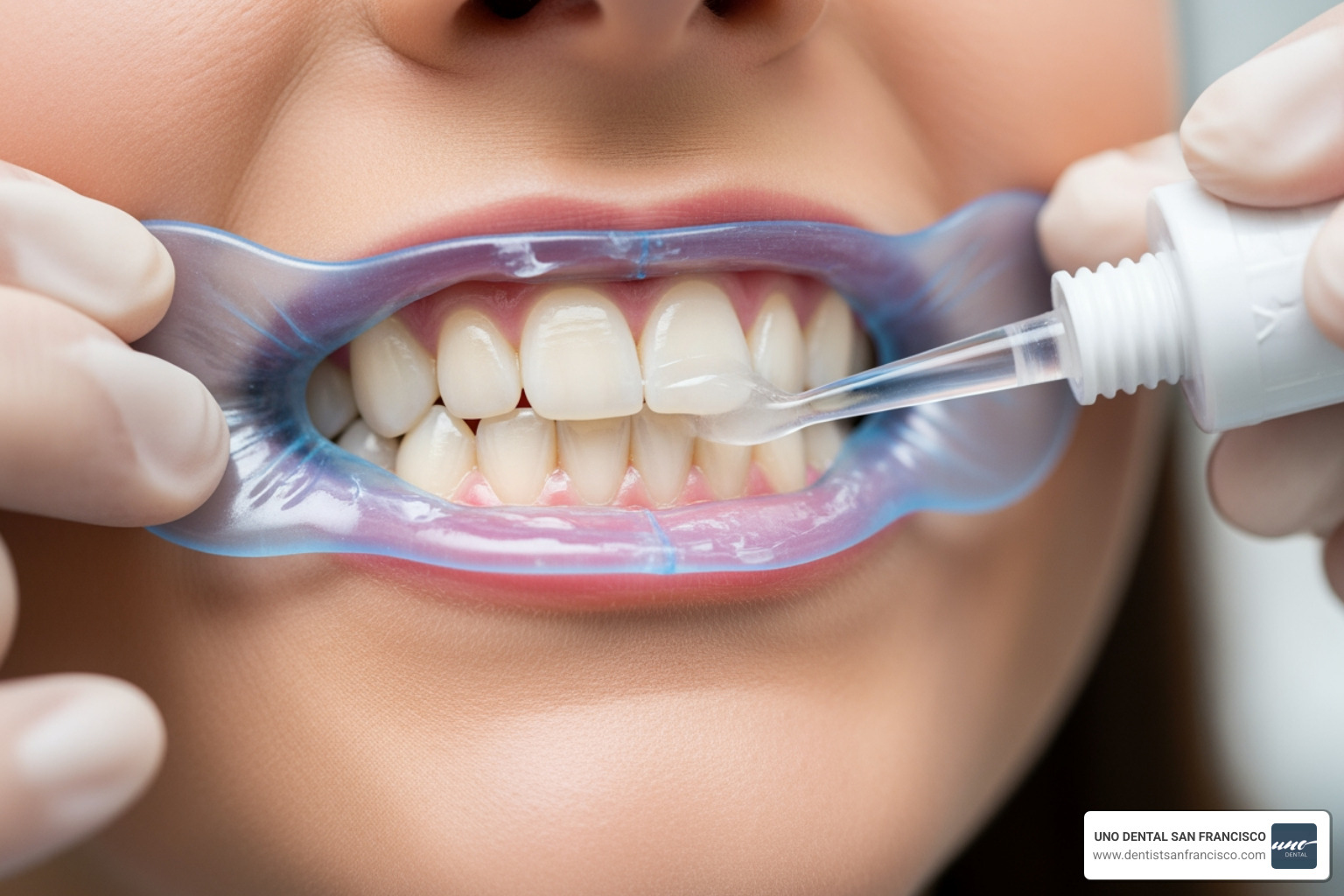
One of the most important distinctions lies in the application method. Professional at-home whitening from UNO DENTAL SAN FRANCISCO often involves custom-fitted trays created from impressions of your teeth. These trays fit snugly, helping whitening gel stay where it is needed—on the teeth—and minimizing contact with your gums. In contrast, OTC products like strips or generic trays are one-size-fits-all, which can lead to inconsistent coverage and more frequent gel contact with soft tissues.
Risk of misuse with OTC products
OTC products are used without direct dental supervision, which can increase the risk of misuse. People may apply them incorrectly, leave them on for too long, or use them too frequently in pursuit of faster results. This overuse can increase sensitivity and soft tissue irritation.
Chemical burns on gums
When whitening gel remains on gums or other soft tissues for too long, it can cause irritation, inflammation, or temporary chemical burns. This is more likely with ill-fitting OTC products. With professional treatments at UNO DENTAL SAN FRANCISCO, protective gels or barriers are applied to shield your gums and other soft tissues.
Uneven results
Because OTC products do not conform precisely to each tooth, you may end up with uneven whitening, creating a patchy or streaky appearance. Professional treatments are designed for uniform application and more consistent, natural-looking results.
Why is professional whitening considered safer?
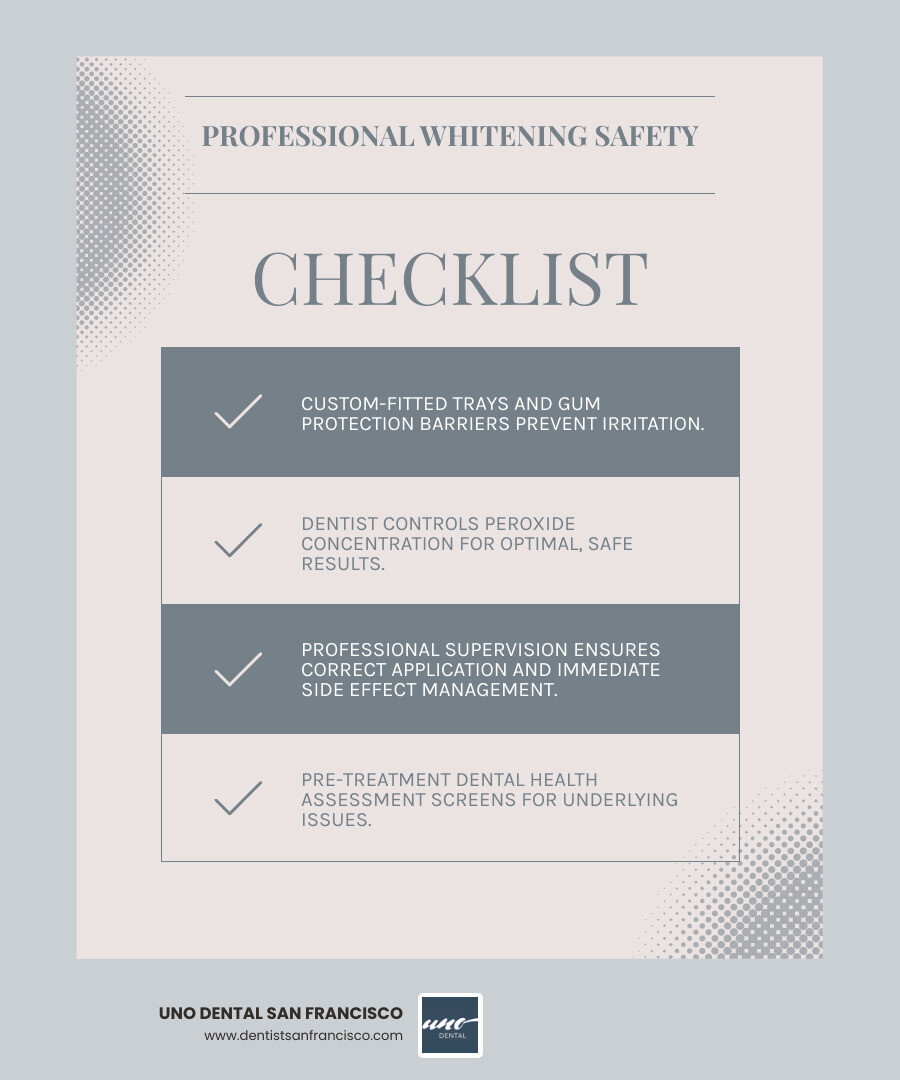
The safety of professional whitening at UNO DENTAL SAN FRANCISCO comes from several key factors that are typically not present with unsupervised methods:
- Controlled Application: Our dental team is trained to apply whitening agents precisely. The gel is placed only on the tooth surfaces being treated, avoiding unnecessary contact with soft tissues.
- Higher Concentration, Short, Supervised Duration: In-office treatments use higher concentrations of hydrogen peroxide but for carefully timed intervals and under direct supervision. A 30- to 60-minute session can provide significant results while allowing our team to monitor your comfort.
- Protective Barriers for Gums and Soft Tissues: Before applying the whitening gel, we place protective materials over your gums and other soft tissues. This helps prevent irritation and chemical burns.
- Immediate Management of Side Effects: If you experience sensitivity or discomfort during the procedure, our team can respond immediately by adjusting the treatment, rinsing the gel, or applying desensitizing agents.
Only a qualified dental professional can properly evaluate whether whitening is appropriate for you and design a plan that balances results with safety. At UNO DENTAL SAN FRANCISCO, we provide that guidance as part of every whitening visit. You can Explore our safe whitening options to see which approach may fit your needs.
Does professional whitening damage teeth more than at-home kits?
Some people worry that because professional whitening uses higher concentrations of bleaching agents, it must be more damaging than lower-concentration at-home kits. In reality, when done correctly, professionally supervised whitening is often safer.
The concentration myth
Higher-concentration peroxide gels used in a professional setting are applied for controlled periods and under constant monitoring. This allows you to reach your desired shade more quickly and with fewer total applications. The key factor is not just the strength of the gel, but how and where it is used, and for how long.
How professional application minimizes risk
At UNO DENTAL SAN FRANCISCO, our whitening protocols are designed to limit risk by:
- Precise Placement: Applying the gel only to the teeth, not the gums.
- Protective Barriers: Using barriers to protect soft tissues from contact with the gel.
- Controlled Duration: Timing each application carefully to avoid overexposure.
- Pre-Treatment Assessment: Confirming that your teeth and gums are healthy enough for whitening and addressing any issues before treatment.
When appropriate intervals are maintained between sessions, professional whitening is generally harmless to tooth structure.
The dangers of prolonged or incorrect OTC use
By contrast, unsupervised and prolonged use of whitening products at home can increase risk, even if the gels are weaker. Using them more often than recommended, wearing trays or strips for longer than directed, or placing gel directly on gums can lead to:
- Increased Enamel Permeability: Consistent overuse can keep enamel in a more porous state for longer than intended.
- Gum Irritation or Burns: Leaked gel can irritate soft tissues.
- Long-Term Sensitivity: Repeated irritation of the tooth nerve can result in persistent sensitivity.
- Over-Whitening: Excessive whitening attempts can make teeth appear unnaturally bright or translucent.
Following instructions carefully is essential for both professional take-home kits and OTC products. For more on safe use and timing, see A complete guide to safe whitening.
Potential Side Effects and How to Manage Them
Even with professional supervision, some temporary side effects can occur during or after teeth whitening. Understanding these effects—and how they are managed at UNO DENTAL SAN FRANCISCO—can help you feel more comfortable about treatment.
Tooth Sensitivity
This is the most common side effect. Many people notice temporary sensitivity to hot, cold, or sweet foods and drinks. This occurs because the bleaching agent temporarily makes the enamel more permeable, allowing the peroxide to irritate the nerve within the dentin. In most cases, this sensitivity is mild to moderate and fades within a few days after treatment.
Gum Irritation
Mild irritation to the gums can occur if the bleaching agent comes into contact with soft tissues. This is more common with ill-fitting, non-custom products, but a slight irritation can occasionally happen even with professional treatment. Like sensitivity, gum irritation is typically short-lived and improves once the gel is removed.
Why these effects are usually temporary
Teeth and oral tissues are resilient. The temporary dehydration of enamel reverses as saliva naturally rehydrates the tooth and supports remineralization. Gums also heal quickly once exposure to the whitening gel stops. At UNO DENTAL SAN FRANCISCO, we plan whitening treatments with comfort and safety in mind.
How dentists minimize these risks
- Protective Barriers: We use protective gels or rubber dams to shield your gums from the whitening agent.
- Controlled Application and Duration: We place the gel precisely and monitor treatment time to provide effective results with minimal exposure.
- Desensitizing Agents: If you have a history of sensitivity or develop it during treatment, we can apply desensitizing agents before, during, or after your whitening session. We may also recommend specific toothpastes designed for sensitive teeth.
For more detailed information on managing any discomfort, see A guide to managing whitening sensitivity.
Can whitening cause long-term damage?
The question of whether does professional whitening damage teeth in the long term is an important one. Based on current research and clinical experience, professional, dentist-supervised whitening is generally safe when done correctly and in moderation.
Long-term studies and reversibility of effects
Studies have shown that professional teeth whitening, when performed with appropriate intervals between sessions, does not cause permanent structural damage to teeth. The temporary increase in enamel permeability and dehydration reverses over time. Saliva plays a key role in naturally remineralizing the tooth surface and supporting enamel strength.
With a typical schedule—such as periodic professional whitening once a year, combined with good home care—there is no evidence that enamel is irreversibly harmed when professional protocols are followed.
Importance of moderation and professional guidance
Moderation is essential. Problems arise mainly from over-whitening or ignoring professional advice. Whitening too often, especially without supervision, can increase the risk of:
- Changes in Enamel Surface: Aggressive or repeated bleaching without sufficient recovery time can affect the enamel surface.
- Translucent Appearance: Excessive whitening attempts can make teeth appear glassy or translucent at the edges as more of the underlying dentin shows through. This is not the goal of treatment and is a sign of overdoing whitening.
At UNO DENTAL SAN FRANCISCO, we recommend whitening schedules custom to your teeth, your goals, and your lifestyle. This guided approach helps you maintain a bright smile while protecting the long-term health of your enamel.
Best Practices for a Safe and Lasting Whitening Experience
Achieving and maintaining a bright, healthy smile through professional teeth whitening involves more than just the procedure itself. Following best practices before and after treatment helps ensure safety, comfort, and long-lasting results.

Pre-whitening consultation
A thorough consultation with your dentist is the most important first step. During this visit at UNO DENTAL SAN FRANCISCO, we will:
- Assess Your Oral Health: Check for cavities, gum disease, cracks, and other concerns that should be treated before whitening.
- Identify Stain Types: Determine whether your discoloration is primarily extrinsic or intrinsic and which whitening approach is most likely to work.
- Discuss Your Goals: Review your expectations and help you choose a realistic shade target.
- Review Your Health History: Consider any sensitivities, allergies, or medications that may affect treatment.
We also offer free virtual smile consultations so you can discuss whitening options and candidacy from home before scheduling an in-office visit.
Post-treatment care: the "white diet"
Right after whitening, your teeth are more porous and can pick up new stains more easily. For at least 48 hours after treatment, we recommend a "white diet":
- Avoid coffee and tea
- Avoid red wine
- Limit dark sodas
- Avoid berries and dark fruit juices
- Avoid tomato-based sauces
- Avoid soy sauce and other strongly colored sauces
- Avoid tobacco use
If you do consume highly pigmented drinks, rinsing with water right away and using a straw when possible can help reduce staining.
How often to whiten safely
An individualized plan keeps your smile bright while protecting your enamel:
- Professional In-Office Whitening: Many patients do well with sessions spaced at least six months to a year apart, depending on their stain level and goals.
- At-Home Touch-Ups: For patients who receive professional take-home kits from our office, touch-ups should follow our specific instructions. Spacing treatments several months apart is a common guideline.
- Daily Habits: Brushing twice a day with a fluoride toothpaste, flossing daily, and keeping up with regular cleanings at UNO DENTAL SAN FRANCISCO help your whitening results last longer.
For a more complete overview of how to care for your smile after whitening, read Your complete teeth whitening aftercare guide.
Conclusion: A Brighter, Healthier Smile is Within Reach
The debate around does professional whitening damage teeth is understandable for anyone considering cosmetic dental treatment. The available evidence, combined with clinical experience, supports that when whitening is performed under the supervision of a qualified dental professional, it is a safe and effective procedure that does not cause permanent damage to tooth enamel.
Temporary sensitivity or mild gum irritation can occur, but these effects are usually short-lived and manageable with proper care. The combination of careful assessment, customized treatment planning, and monitored application is what makes professional whitening different from unsupervised methods.
At UNO DENTAL SAN FRANCISCO, we focus on:
- Customization and Precision: Whitening plans custom to your teeth, stain type, and goals.
- Controlled Application: Techniques that protect your gums and soft tissues.
- High Efficacy with Safety: Modern materials and protocols that provide noticeable results while respecting enamel health.
- Comprehensive, Patient-Centered Care: High-tech and holistic dentistry, including free virtual smile consultations, all under one roof.
If you are interested in a brighter smile and want guidance from a team that prioritizes your oral health and comfort, we invite you to connect with us.
Schedule your teeth whitening consultation in San Francisco today!