
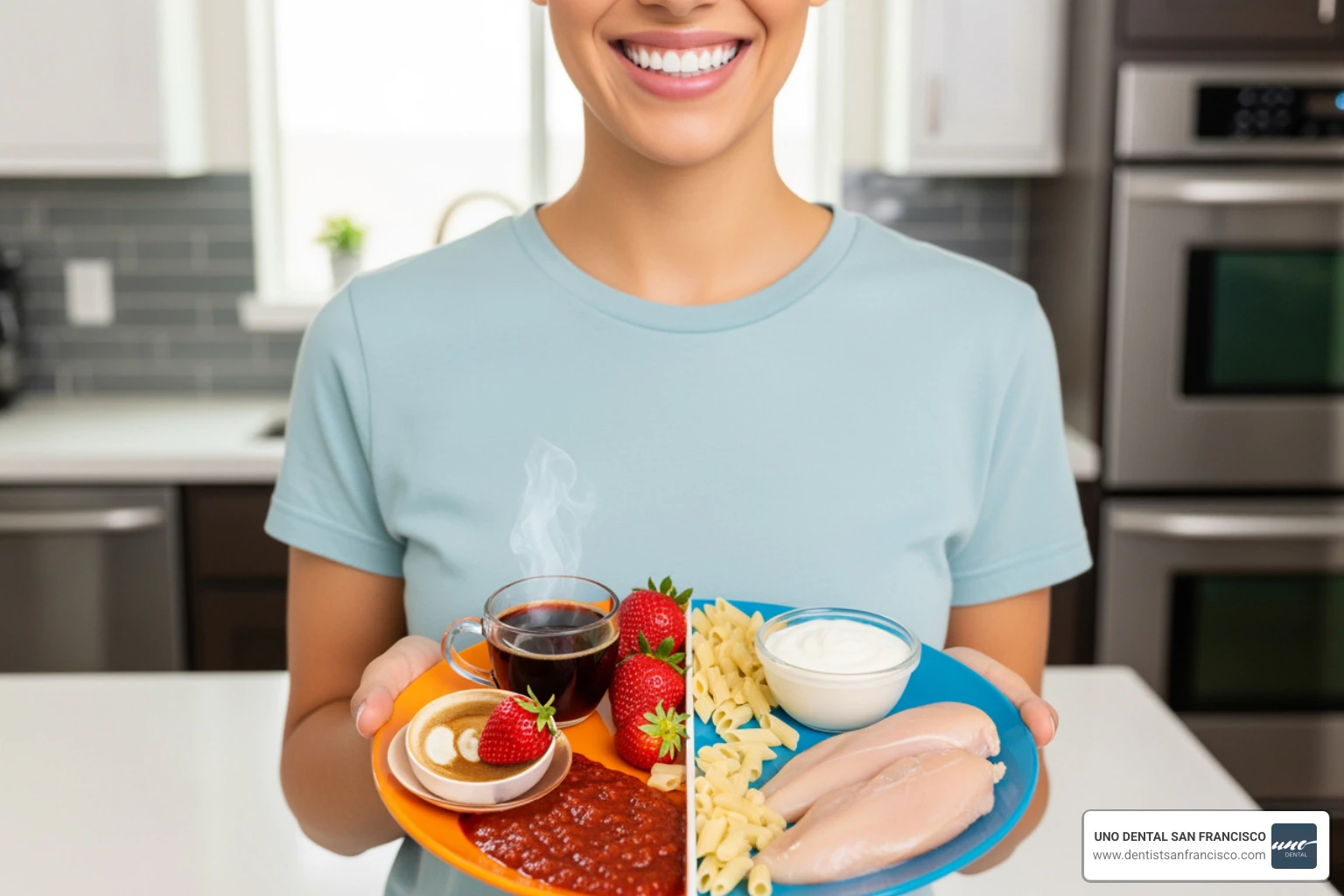
Why What You Eat After Whitening Can Make or Break Your Results
Eating after whitening is one of the most important — and most overlooked — parts of getting a brighter smile. Here's the short answer if you need it fast:
Quick Guide: Eating After Whitening
| Timeframe | What to Do |
|---|---|
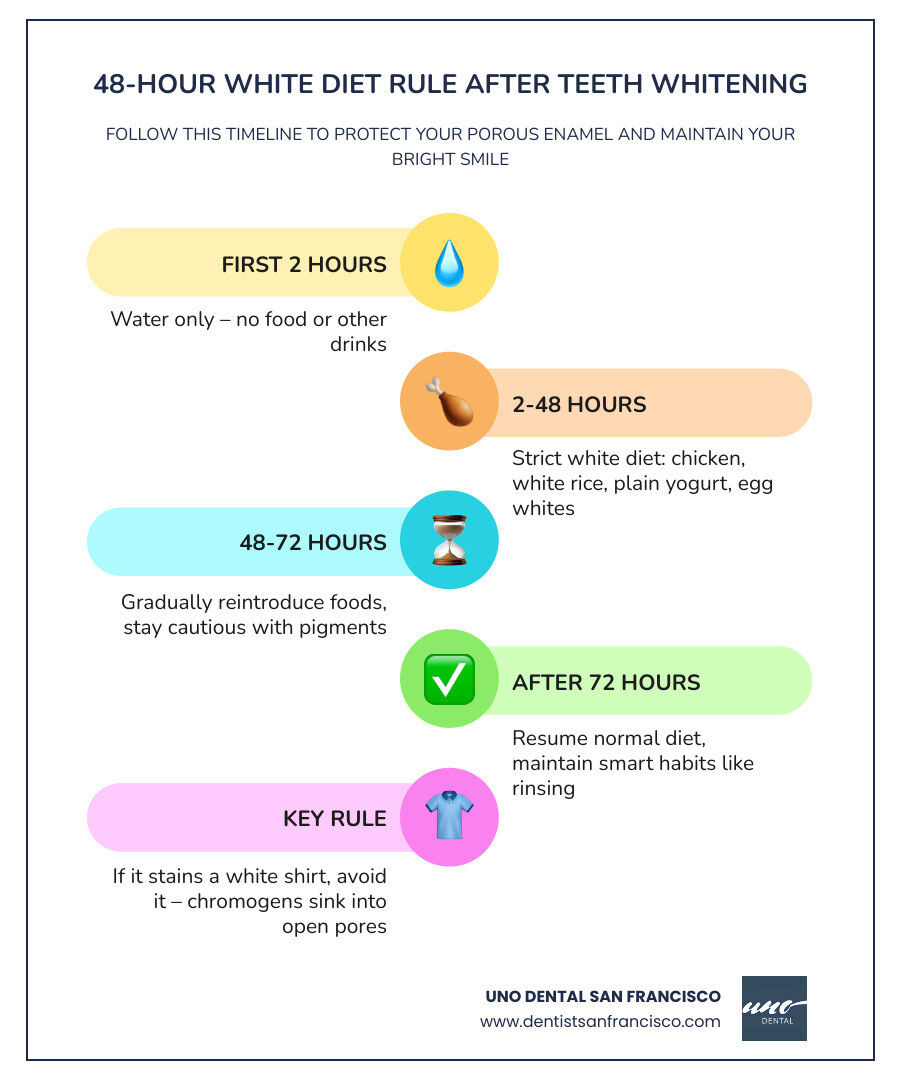
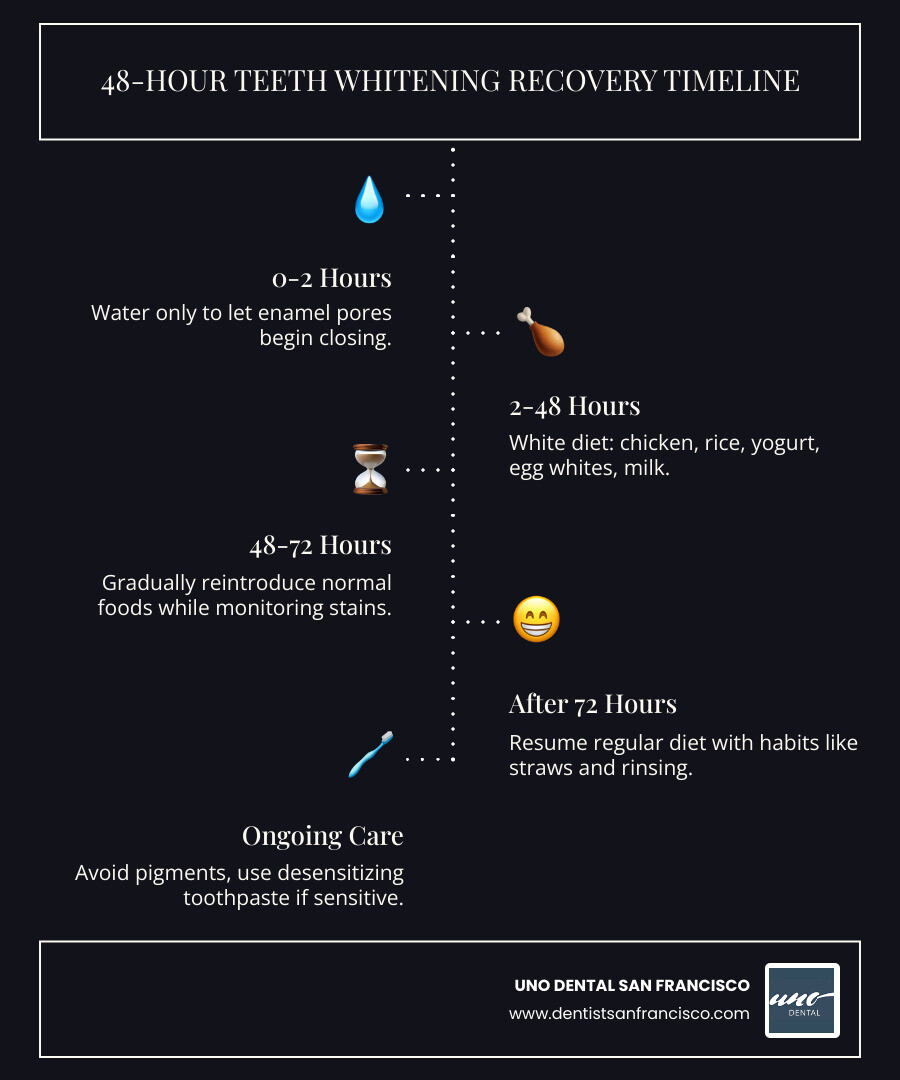
| First 2 hours | Water only |
| 2-48 hours | Stick to the white diet (chicken, white rice, plain yogurt, egg whites) |
| 48-72 hours | Gradually reintroduce foods, stay cautious |
| After 72 hours | Resume normal diet, but maintain smart habits |
Foods safe to eat right after whitening:
- Plain chicken or turkey breast
- White rice or pasta
- Egg whites
- Plain yogurt or skim milk
- Cauliflower, peeled potatoes
- Bananas and peeled apples
- Water, coconut water, skim milk
Foods to avoid for at least 48 hours:
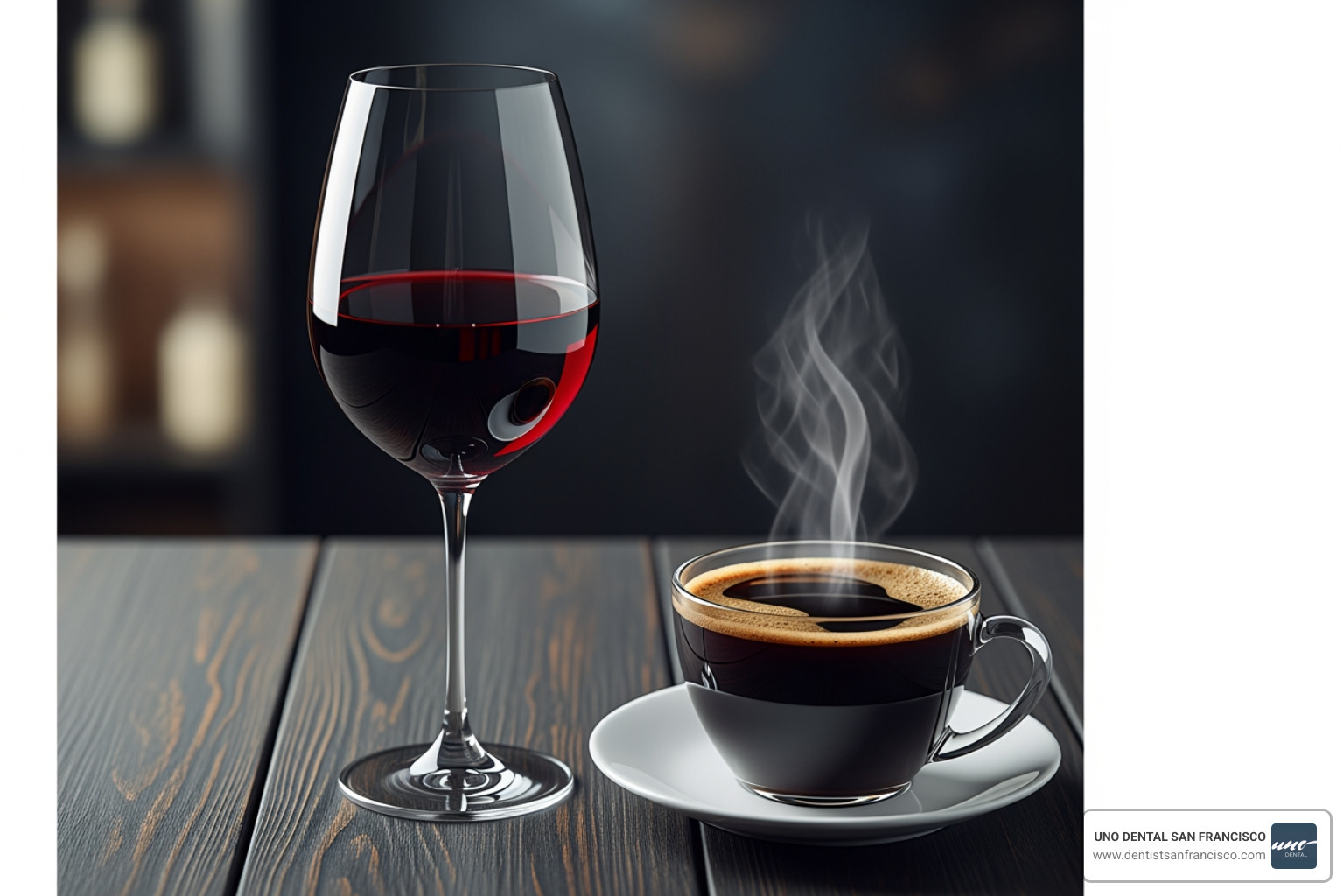
- Coffee, tea, red wine
- Dark berries, beets, tomato sauce
- Soy sauce, curry, turmeric
- Dark sodas and fruit juices
- Tobacco products
Your enamel is temporarily more porous right after whitening — almost like a sponge. Anything with strong pigments, acids, or tannins can sink in fast and undo the results you just paid for.
Think of it this way: if it would stain a white shirt, it will stain your teeth.
I'm Dr. Mohammad Aghiad Kandar, DDS, and with over 15 years of clinical experience in cosmetic dentistry, I've guided countless patients through the dos and don'ts of eating after whitening to help them protect their investment and keep that bright smile lasting as long as possible. Below, I'll walk you through exactly what to eat, what to avoid, and how to handle the unexpected.
Eating after whitening terms to remember:
Why Your Diet Matters After Teeth Whitening
When we perform a whitening treatment at UNO DENTAL San Francisco, we use high-quality bleaching agents like hydrogen peroxide or carbamide peroxide. While these are incredibly effective at breaking down stains, the teeth-whitening process involves a temporary chemical reaction that affects your enamel.
Essentially, these agents open up microscopic channels or "pores" in your enamel to reach the discolored molecules within the dentin. For a period of 24 to 72 hours, these pores remain open. This is a critical window because enamel takes some time to close pores and fully remineralize.
During this time, your teeth are hyper-receptive. If you consume a glass of red wine or a bowl of blueberry yogurt, those dark pigments can slide right into those open channels, leading to "instant restaining." This is why following a strict teeth-whitening aftercare guide is not just a suggestion—it's a requirement for preserving your results. Furthermore, because the dentin tubules are more exposed, your teeth may experience temporary sensitivity to extreme temperatures and acidic substances.
The "White Diet": Safe Foods for Eating After Whitening
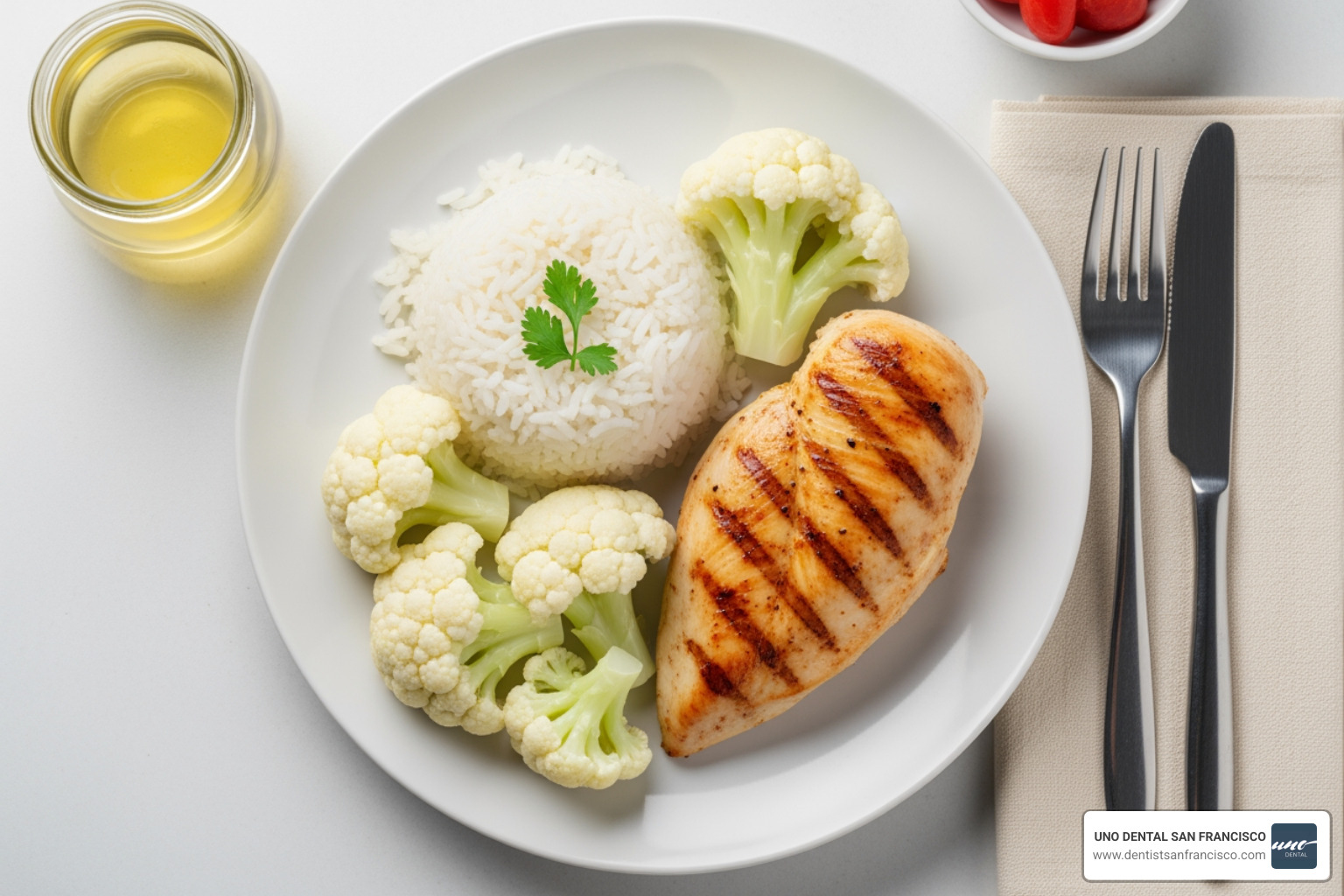
The "White Diet" is exactly what it sounds like: a short-term eating plan consisting only of foods and liquids that are white or colorless. If you’re ever in doubt about a specific food, use the "white shirt test." If the food would leave a stubborn stain on a crisp white T-shirt, it’s a no-go for your teeth.
Adhering to a teeth-whitening aftercare diet ensures that while your enamel is remineralizing, it is only exposed to neutral, non-staining substances.
Best Practices for Eating After Whitening
To keep your meals interesting while staying safe, focus on these light-colored staples:
- Lean Proteins: Skinless chicken breast, turkey breast, and white fish (like cod, tilapia, or halibut) are excellent choices. They are high in protein and completely free of dark pigments.
- Plant-Based Proteins: Tofu is a fantastic non-staining option for vegetarians and vegans.
- Carbohydrates: White rice, white pasta (with white sauce), and white bread (without the crust) are safe. Peeled potatoes—whether mashed, boiled, or baked—are also post-whitening favorites.
- Vegetables: Cauliflower is your best friend during these 48 hours. White onions are also safe to include in your cooking.
- Dairy: Plain white yogurt, cottage cheese, skim milk, and white cheeses (like mozzarella or white cheddar) are perfectly fine.
- Fruits: Bananas and peeled apples or pears are the safest fruit options.
- Beverages: Stick to still or sparkling water, coconut water, and skim milk.
For more detailed tips, check out our teeth-whitening aftercare resource page.
What Not to Eat: The Ultimate Avoidance List
Knowing what to avoid is often harder than knowing what to eat, especially since many "healthy" foods are the biggest culprits for staining. The three main enemies of your white smile are chromogens (highly pigmented compounds), tannins (bitter compounds that help stains stick), and organic acids (which soften enamel and make it easier for stains to penetrate).
Research on foods that stain your teeth highlights that the combination of these three elements creates a "perfect storm" for discoloration. For a deeper dive, read our detailed list of foods that stain teeth.
High-Risk Beverages and Pigments
Beverages are often the primary cause of post-whitening relapse because they wash over all tooth surfaces.
- Coffee and Black Tea: Both are loaded with tannins and chromogens. Even adding milk doesn't completely eliminate the risk during the first 48 hours. Many patients ask, will coffee stain your teeth? and the answer is a resounding yes, especially when your pores are open.
- Red Wine: This is perhaps the most potent stainer due to its deep red color and high acidity.
- Dark Sodas and Fruit Juices: Colas, grape juice, and cranberry juice should be avoided entirely.
- Sauces and Spices: Tomato sauce (pizza and pasta), soy sauce, balsamic vinegar, and anything containing curry or turmeric should be off the menu. Turmeric, in particular, is a powerful yellow dye that can ruin a whitening treatment instantly.
- Dark Fruits: Blueberries, blackberries, raspberries, and beets are incredibly high in natural pigments.
- Sweets: Dark chocolate and any candies with artificial dyes (like Skittles or M&Ms) are risky.
Acidic and Sugary Hazards
It’s not just about color; it’s also about the integrity of your enamel.
- Citrus Fruits: Lemons, limes, oranges, and grapefruits contain citric acid that can irritate sensitive teeth and keep enamel pores open longer.
- Pickles and Vinegar: The high acetic acid content is harsh on newly whitened teeth.
- Sugary Snacks: Research on sugar and cavity risk post-whitening suggests that because your pores are open, sugar can more easily reach the inner structures of the tooth, potentially increasing the risk of decay if hygiene is not perfect.
- Spicy Foods: Many spicy dishes use colorful peppers or spices that can lead to staining or gum irritation.
Timeline for Eating After Whitening
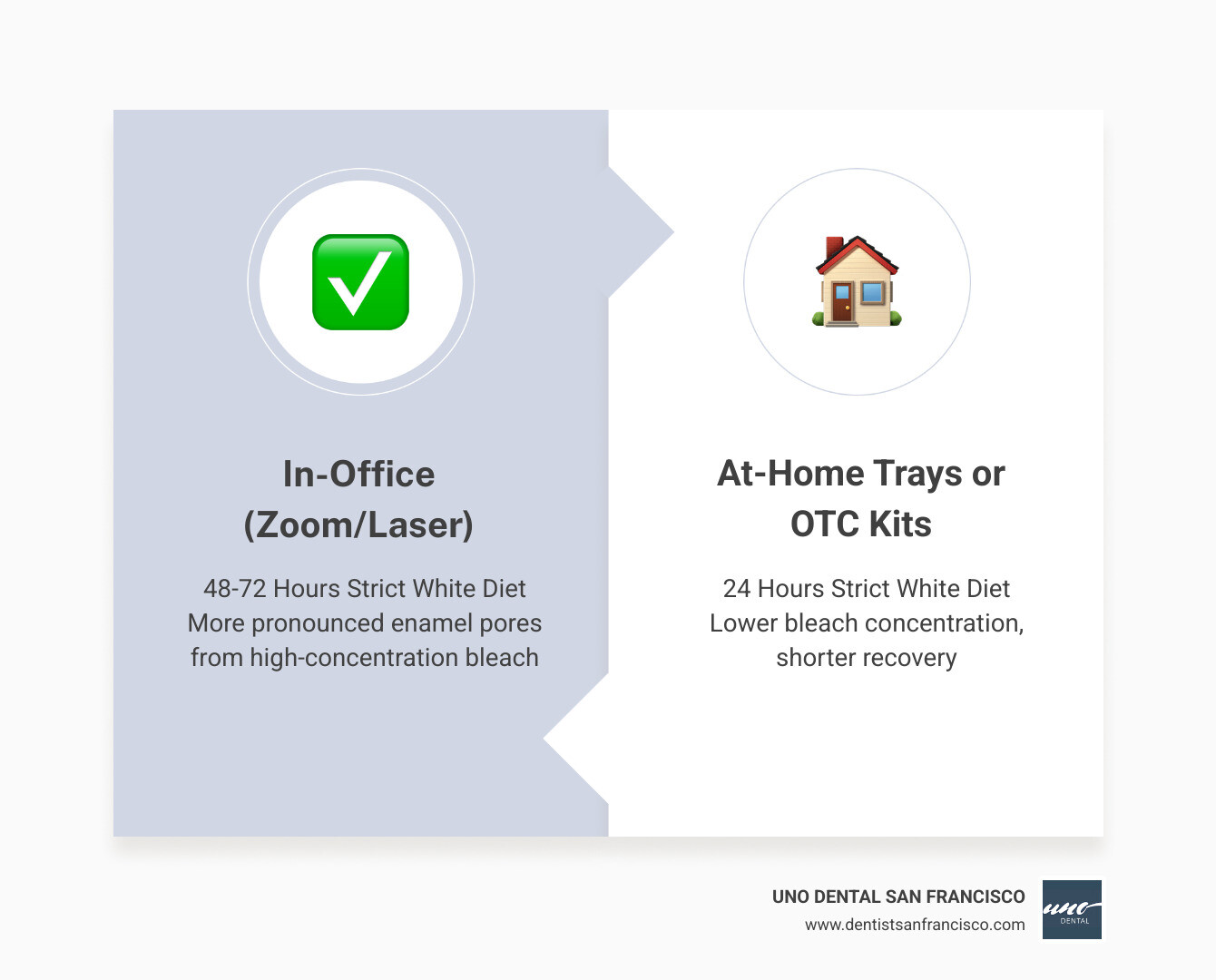
The length of time you need to be strict with your diet often depends on the type of whitening procedure you received. Professional in-office treatments like Zoom use higher concentrations of bleaching agents, meaning the "pore-opening" effect is more pronounced, requiring a more disciplined recovery.
| Whitening Method | Strict White Diet Duration | Gradual Reintroduction |
|---|---|---|
| In-Office (Zoom/Laser) | 48 - 72 Hours | After 3 Days |
| Custom Take-Home Trays | 24 Hours after last use | After 48 Hours |
| OTC Strips/Kits | 24 Hours | After 24 Hours |
Regardless of the method, the first 24-72 hours represent the critical window for saliva to naturally remineralize the teeth. Following our teeth-whitening aftercare instructions is the best way to ensure your specific treatment lasts.
Immediate 48-Hour Recovery
This is the "make or break" period. During these two days, your goal is to be as boring as possible with your food choices. According to the GoodRx guide on what to eat after teeth whitening, sticking to room-temperature foods can also help manage the thermal sensitivity many patients feel.
Avoid all tobacco products during this time. Nicotine and tar are incredibly aggressive staining agents, and smoking right after whitening is one of the fastest ways to turn your new white smile back to yellow.
Long-Term Maintenance Habits
Once you pass the 72-hour mark, you can start enjoying your favorite foods again, but we recommend a few "smart habits" to keep your smile bright for 12-18 months:
- Use a Straw: When drinking iced coffee, tea, or soda, use a straw to bypass your front teeth.
- Rinse After Eating: If you eat something staining (like berries or pasta sauce), rinse your mouth with water immediately after.
- Professional Cleanings: Maintain your 6-month checkups at UNO DENTAL. Professional cleanings remove surface stains before they become permanent.
- Whitening Toothpaste: Use a gentle whitening toothpaste a few times a week to polish away new surface stains.
Check out more post-whitening wisdom on maintaining your smile to see how small changes make a big difference.
Managing Sensitivity and Accidental Staining
It is very common to feel "zings" or general thermal sensitivity after whitening. This happens because the bleaching agent temporarily dehydrates the tooth and exposes the nerve endings in the dentin tubules.
To manage this, we recommend:
- Using a desensitizing toothpaste (like Sensodyne) for a week before and after treatment.
- Avoiding ice-cold or piping-hot drinks.
- Using a soft-bristled toothbrush and brushing gently in circular motions.
- Refer to our guide on teeth-whitening aftercare and sensitivity for more relief tips.
What if you slip up? We’ve all been there—you’re at a dinner party and accidentally take a bite of a beet salad or a sip of red wine. If you consume a staining food by mistake, don't panic. Immediately rinse your mouth thoroughly with water. This helps neutralize acids and wash away pigments before they can settle into the enamel pores. Wait about 30-60 minutes before brushing gently to avoid scrubbing acids into the enamel. Research on snacking risks shows that frequent exposures are worse than a single accidental bite, so just get back on track with the white diet immediately.
Frequently Asked Questions about Post-Whitening Care
Can I drink coffee through a straw after teeth whitening?
While using a straw is better than drinking directly from a cup, we still recommend avoiding coffee entirely for the first 48 hours. A straw minimizes contact with the front teeth, but the liquid still circulates in your mouth and can touch the back of your teeth or the edges. If you absolutely must have caffeine, use a straw and follow up with a water rinse.
Is white wine okay to drink during the white diet?
White wine won't stain your teeth red, but it is highly acidic. Acidity can keep the enamel pores open and make your teeth more vulnerable to other stains later in the day. If you choose to have a glass of white wine, drink it in moderation, don't "swish" it, and rinse with water afterward.
What should I do if I accidentally eat something dark?
Rinse with water immediately! This is your first line of defense. If you have access to a soft toothbrush, you can gently brush about 30 minutes later. Avoid using abrasive whitening toothpastes immediately after a slip-up, as your enamel is still in a sensitive state.
Conclusion
At UNO DENTAL San Francisco, we believe that a bright smile is a powerful tool for self-confidence. Whether you are preparing for a wedding, a big presentation, or just want to refresh your look, our team provides individualized cosmetic care with a focus on your long-term oral health.
Our holistic dental approach ensures that we aren't just looking at the color of your teeth, but the health of your entire mouth. We offer free virtual smile consultations to help you determine which whitening method is right for your lifestyle and goals.
Ready to transform your smile and get personalized advice on eating after whitening? Schedule your professional teeth whitening today and let us help you achieve the dazzling results you deserve.