

What Are Braces Marks on Teeth? (And What You Can Do About Them)
Braces marks on teeth are a common concern for patients finishing their orthodontic treatment. While discovering discoloration after months of progress can be frustrating, most of these marks are treatable and preventable.
| Type of Mark | Cause | Permanent? | Fix |
|---|---|---|---|
| White spots (WSLs) | Enamel demineralization from plaque acids | Can be, if untreated | Remineralization, resin infiltration |
| Yellow/brown stains | Plaque and tartar buildup around brackets | No | Professional cleaning, whitening |
| Glue residue | Adhesive fragments left after bracket removal | No | Professional cleaning, microabrasion |
| Generalized dullness | Enamel surface changes during treatment | No | Polishing, whitening |
Up to 50% of orthodontic patients develop white spot lesions during treatment. It is important to understand that braces themselves do not cause these marks; rather, they are caused by plaque - the sticky film of bacteria that accumulates around brackets and wires. When teeth are not cleaned thoroughly, this plaque produces acids that strip minerals from the enamel, leaving behind chalky patches or stains.
I'm Mohammad Aghiad Kandar, DDS, and with over 15 years of clinical experience in restorative and cosmetic dentistry, I have helped many patients address braces marks on teeth through preventive care and advanced treatments. In this guide, I will explain why these marks form and how we can effectively treat or prevent them.
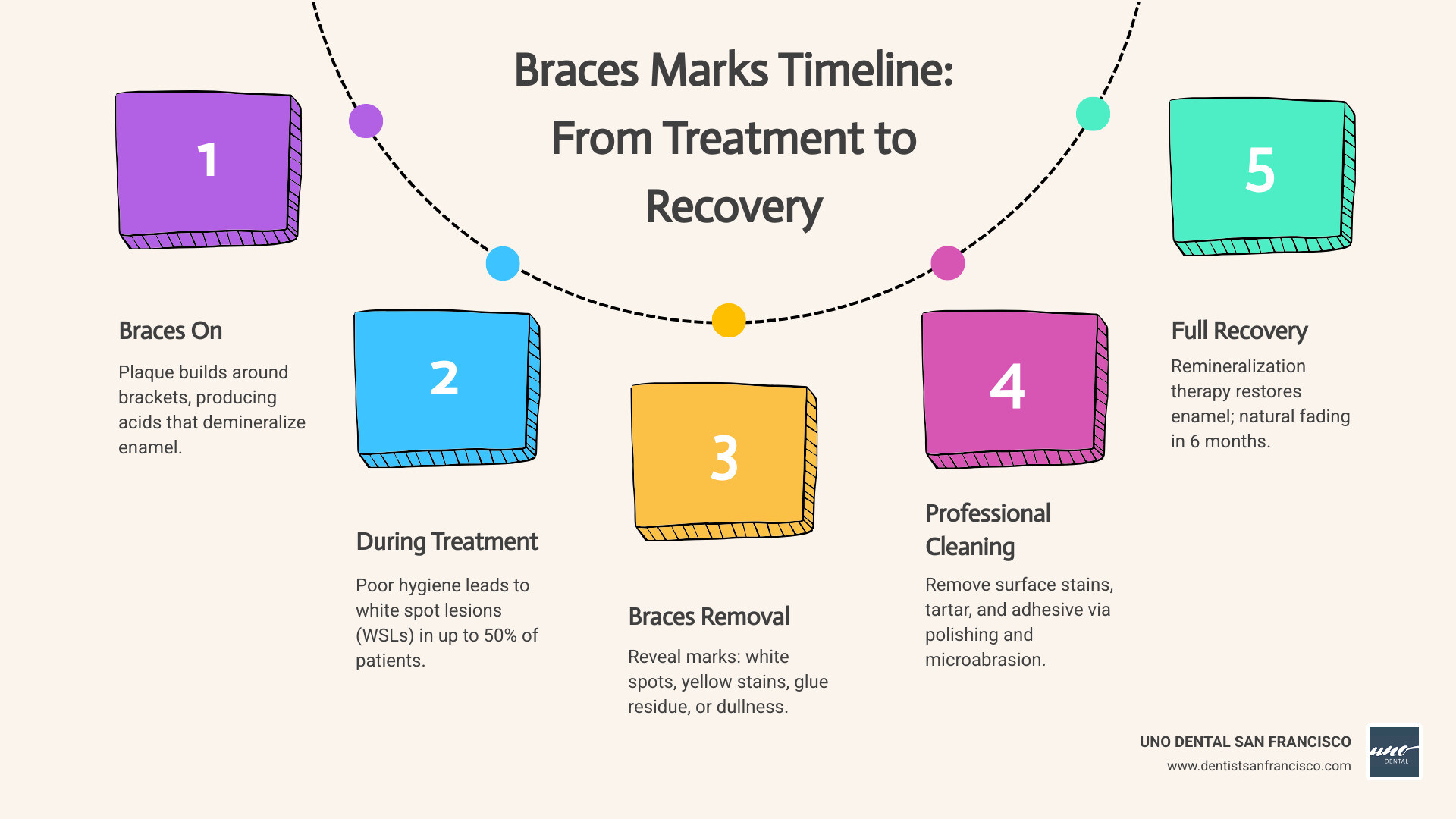
Braces marks on teeth terms explained:
manual_review_completed: y
Understanding Braces Marks on Teeth: Causes and Types
When your brackets are finally removed, the initial excitement can sometimes be affected by the appearance of bad teeth after braces come off. These marks represent various types of discoloration and structural changes to the enamel.
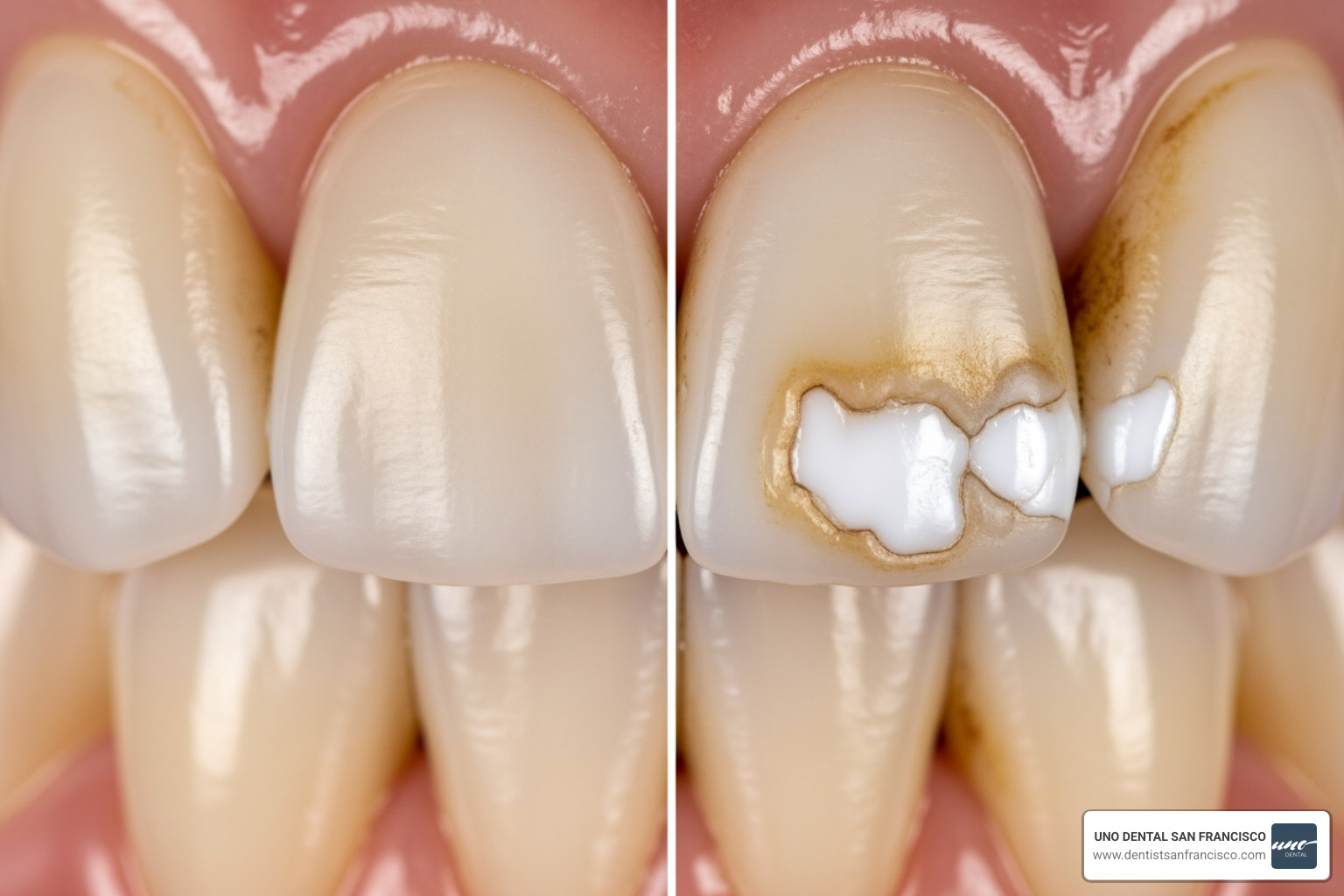
The most common issues are white spot lesions (WSLs), which are areas of demineralization. This is the earliest stage of a cavity, occurring when plaque acids leach calcium and phosphate from the enamel, making it porous and changing how it reflects light.
While enamel erosion and plaque accumulation are primary drivers, other marks include:
- Yellow or Brown Stains: Caused by tartar buildup that has absorbed pigments from food and drink.
- Glue Residue: Small fragments of orthodontic adhesive that can leave a rough or matte appearance.
- Plaque Stains: Soft biofilm trapped near the bracket margins or gumline.
According to the American Association of Orthodontics, these marks are preventable through a dedicated partnership between the patient and their dental team.
Why Braces Marks on Teeth Form During Treatment
The primary cause of braces marks on teeth is biofilm retention. Brackets and wires create small spaces where plaque can easily accumulate. The area around the bracket margins is especially vulnerable; if poor oral hygiene allows food particles to remain, bacteria produce acidic byproducts that lead to mineral loss. Research in the American Journal of Orthodontics and Dentofacial Orthopedics confirms that plaque removal is more challenging for orthodontic patients, requiring specialized tools.
Identifying Different Types of Discoloration
- Chalky patches: These WSLs often appear as white "scars" near the gumline.
- Yellow tartar: Hardened material that typically forms at the base of the teeth.
- Brownish stains: Often linked to smoking or consuming staining agents during treatment.
- Adhesive fragments: Dull spots on the tooth surface.
In some instances, plaque irritation can also lead to gum issues after braces, such as swelling, which can make discoloration more noticeable.
Professional Treatments for Post-Braces Discoloration
If you have noticed marks after your braces were removed, UNO DENTAL San Francisco offers high-tech, holistic solutions to restore your enamel.

Professional Treatment Comparison
| Treatment | Best For | How it Works |
|---|---|---|
| Professional Cleaning | Yellow stains, tartar, glue | Removal of surface debris using specialized tools. |
| Professional Whitening | Generalized yellowing | Lifting deep stains with peroxide-based gels. |
| Resin Infiltration | White spot lesions | Filling enamel pores with liquid resin to blend the spot. |
| Enamel Microabrasion | Superficial stains/spots | Buffing the enamel with a gentle abrasive slurry. |
| Remineralization | Early-stage white spots | Re-filling enamel with high-concentration minerals. |
Enamel microabrasion is an excellent option for surface-level discoloration, revealing the bright structure beneath. For deeper white spots, resin infiltration provides a non-invasive way to make spots virtually disappear by matching the optical properties of healthy enamel. In more severe cases, composite bonding or porcelain veneers can be used. You can learn more about our whitening after braces protocols to find the best fit for your needs.
The Limitations of Standard Teeth Whitening
Using over-the-counter whitening strips to fix white spots can often make them more visible. Because white spot lesions are already opaque, whitening the surrounding healthy enamel increases the contrast issues. Professional assessment is essential before starting any teeth whitening after braces.
Advanced Remineralization Techniques
For early-stage marks, we focus on remineralization therapy using fluoride varnish, calcium phosphate, or peptide scaffolds. These treatments guide minerals back into the porous enamel. Additionally, research on flossing shows that maintaining a clean environment is vital for enamel health.
How to Prevent Marks and White Spots During Orthodontics
Proactive care is the best defense against braces marks on teeth. If you are currently in treatment, your daily hygiene routine is essential.
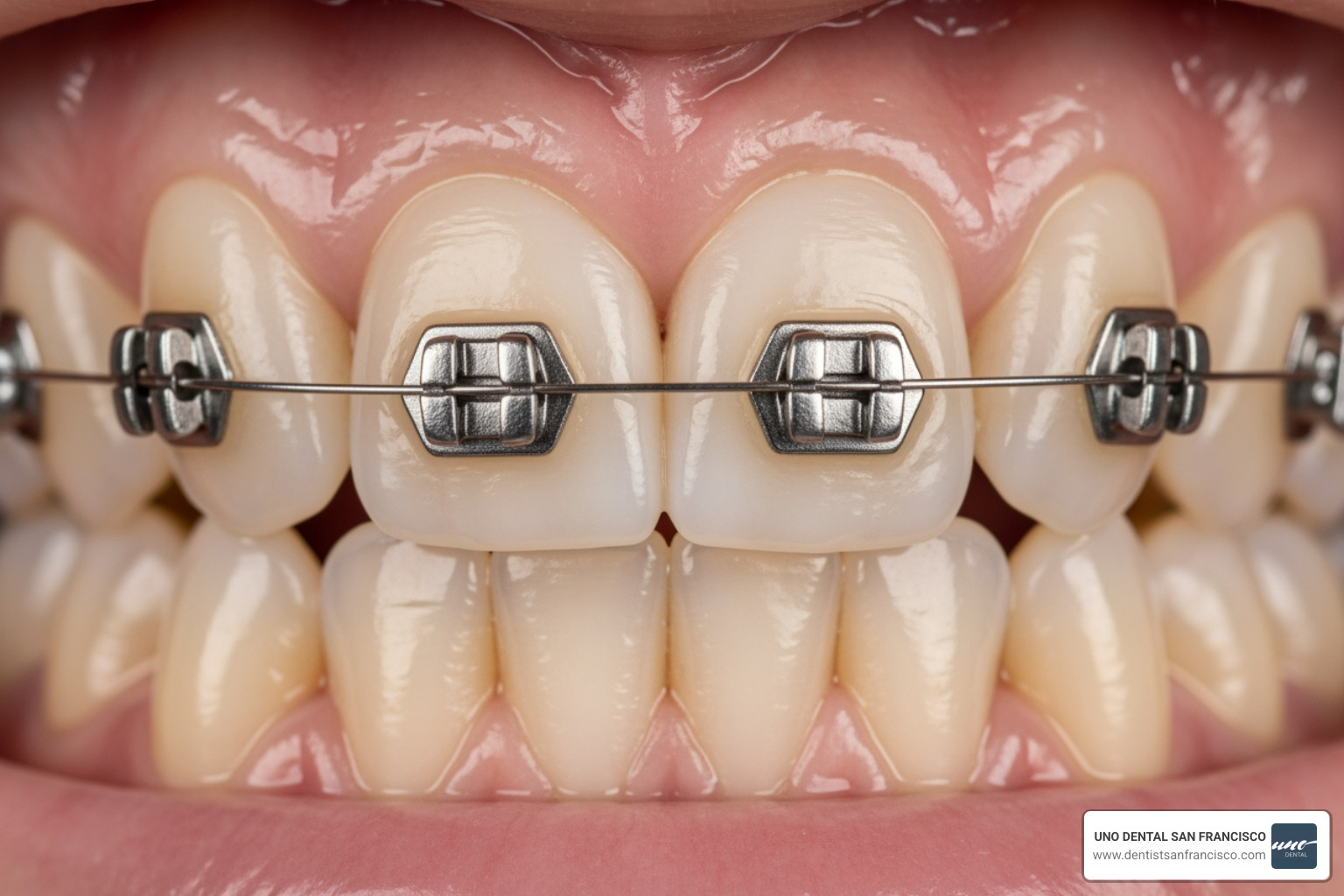
Essential Hygiene Tools and Techniques
Standard brushing is often insufficient with brackets and wires. We recommend:
- Electric Toothbrushes: Highly effective at removing plaque from bracket edges.
- Interproximal Brushes: Ideal for cleaning under the archwire.
- Water Flossers: Useful for flushing out trapped food particles.
- Floss Threaders: Necessary for cleaning the gumline under the wire.
When brushing, use a 45-degree angling technique, directing bristles toward both the top and bottom of the brackets. Following the two-minute rule - or extending it to three minutes - ensures all surfaces are cleaned. Proper post-braces dental care begins with these consistent habits.
Dietary Choices to Protect Enamel
- Limit Acidic Beverages: Soda and sports drinks can soften enamel, increasing the risk of damage.
- Reduce Sugary/Starchy Snacks: Bacteria thrive on sugar; sticky candies are particularly problematic.
- Increase Water Intake: Drinking water helps rinse away food and neutralize acids.
- Wait to Brush: After consuming acidic items, wait 60 minutes before brushing to allow enamel to re-harden.
The Impact of Different Orthodontic Systems on Enamel
The risk of developing braces marks on teeth can vary depending on the orthodontic system you choose.
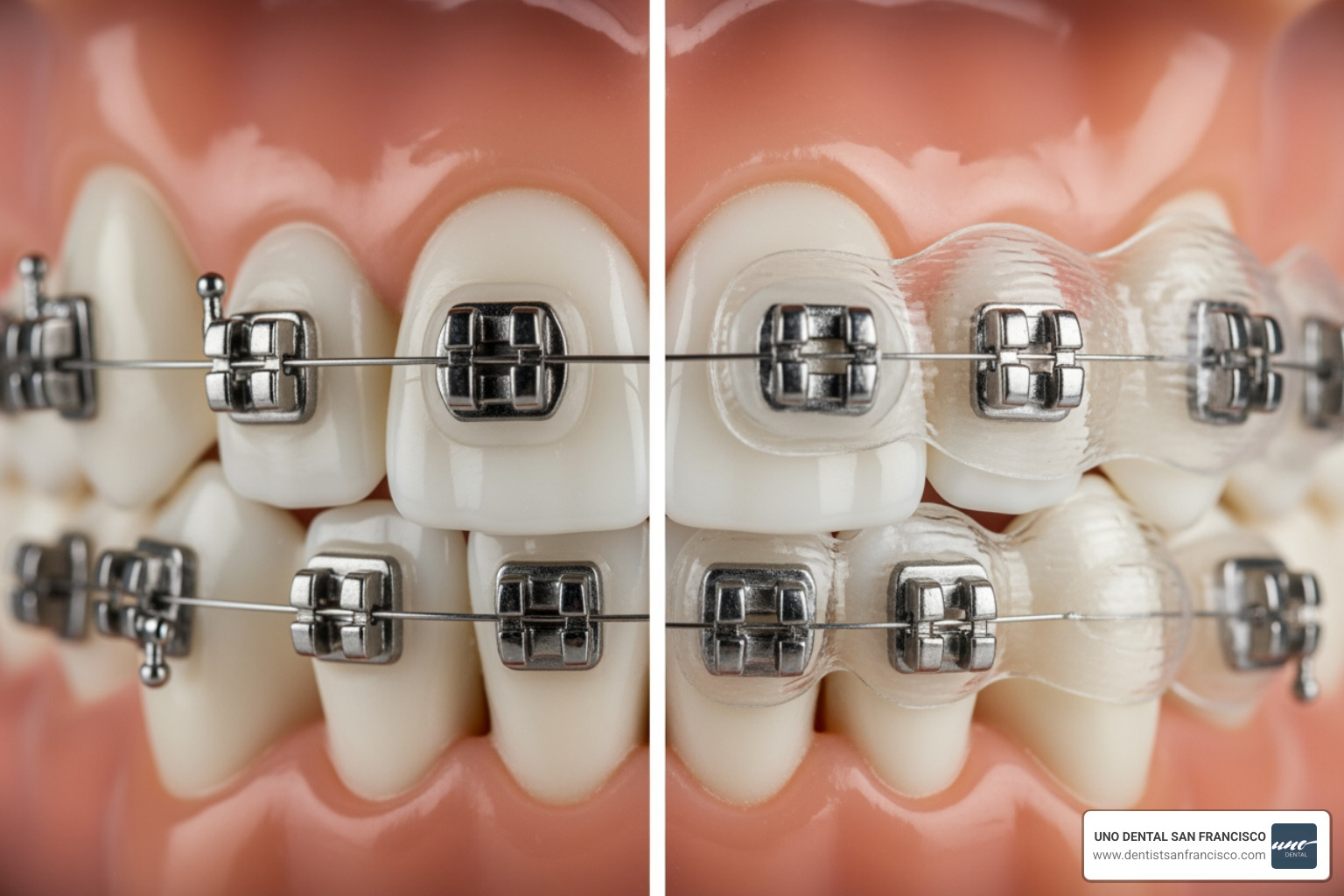
Metal brackets and ceramic braces are fixed to the teeth, creating areas where plaque can accumulate throughout treatment. While ceramic options are more aesthetic, they still require diligent cleaning. Lingual braces, placed on the back of the teeth, can be even more challenging to clean, potentially leading to marks on the inner surfaces.
Clear aligners offer a significant advantage because they are removable appliances. This allows you to brush and floss normally, drastically reducing the risk of demineralization - as long as you avoid sugary drinks while wearing them. If you are addressing a braces relapse, clear aligners can be an excellent way to protect your enamel during re-treatment.
Frequently Asked Questions about Post-Braces Care
Are Braces Marks on Teeth Permanent?
Not necessarily. While mineral loss from a white spot is a change to the enamel, early intervention can often "fill" these areas and restore their appearance. Surface stains from food or adhesive are easily addressed during a professional cleaning. Maintaining enamel health through regular checkups is key.
How long does it typically take for braces marks to disappear?
Surface stains often disappear immediately after a professional cleaning. For white spot lesions, saliva remineralization is a natural process that can take several months. Professional treatments like resin infiltration provide nearly instant results. Most patients see a full recovery of their enamel's appearance within a six-month recovery window.
Can at-home remedies effectively treat white spots?
Fluoride toothpaste and remineralizing pastes can strengthen the enamel, but they rarely eliminate well-developed white spots. It is important to avoid whitening strips until you have had a professional consultation, as they can increase the contrast of the marks.
Conclusion
At UNO DENTAL San Francisco, we believe the completion of your orthodontic treatment should be a celebration of your new smile. Our holistic dental care approach ensures that we focus on both the alignment of your teeth and the long-term health of your enamel.
By utilizing high-tech diagnostics and individualized treatment plans, we provide effective solutions for braces marks on teeth, ensuring your smile is both healthy and radiant. From deep cleanings to advanced resin infiltration, we offer comprehensive care all under one roof.
If you are ready to perfect your post-braces smile, we invite you to schedule a free virtual smile consultation. Let us help you move beyond the brackets and enjoy the confident smile you deserve.