

Why Proper Care After Braces Removal Matters
Cleaning teeth after braces requires a fresh approach to oral hygiene. After months or years of navigating around brackets and wires, your teeth are finally free—and they need specialized care to stay healthy and straight.
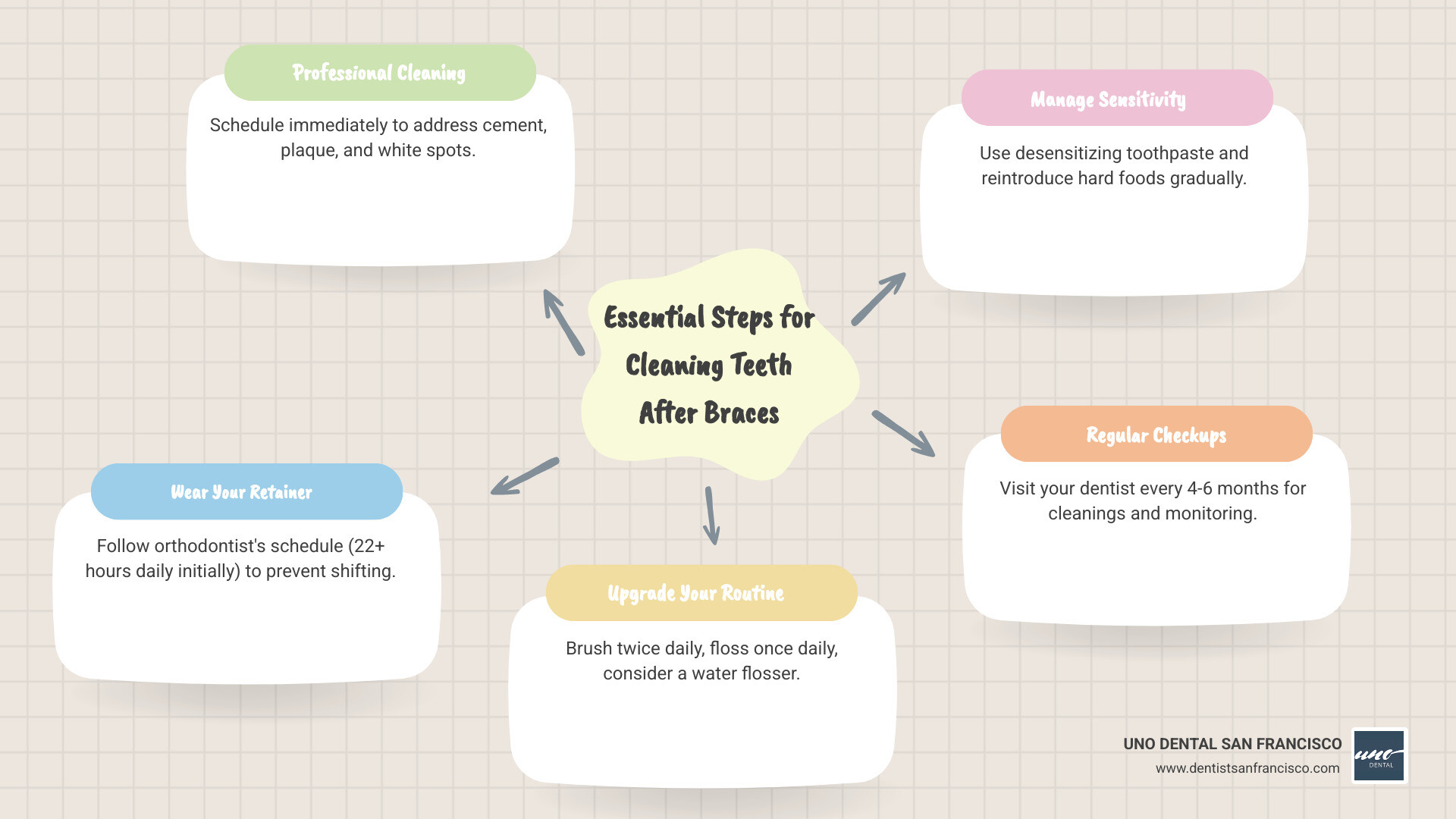
Quick Answer: Essential Steps for Cleaning Teeth After Braces
- Professional Cleaning - Schedule immediately after removal to address cement residue, plaque buildup, and potential white spots
- Wear Your Retainer - Follow your orthodontist's schedule (typically 22+ hours daily at first) to prevent teeth from shifting back
- Upgrade Your Routine - Brush twice daily with fluoride toothpaste, floss once daily without obstruction, and consider a water flosser
- Manage Sensitivity - Use desensitizing toothpaste and ease back into hard or crunchy foods gradually
- Maintain Regular Checkups - Visit your dentist every 4-6 months for professional cleanings and monitoring
Congratulations! Your braces are off, and you've earned that beautiful, straight smile. But the first few weeks after removal are critical for protecting your investment. Your teeth have the highest risk of shifting during this period, and years of having hardware can leave behind plaque, tartar, and even white spots that need professional attention.
This guide walks you through exactly what to expect at your first professional cleaning, how to adapt your daily hygiene routine, and the long-term maintenance strategies that keep your smile looking its best.
At UNO DENTAL SAN FRANCISCO, our team, led by experts like Dr. Mohammad Aghiad Kandar, has helped hundreds of patients transition from braces to their new smile maintenance routine. We focus on preventive care and personalized treatment plans for cleaning teeth after braces, combining modern techniques with patient education to ensure your orthodontic results last a lifetime.
Learn more about Cleaning teeth after braces:
Your First Professional Cleaning and Exam
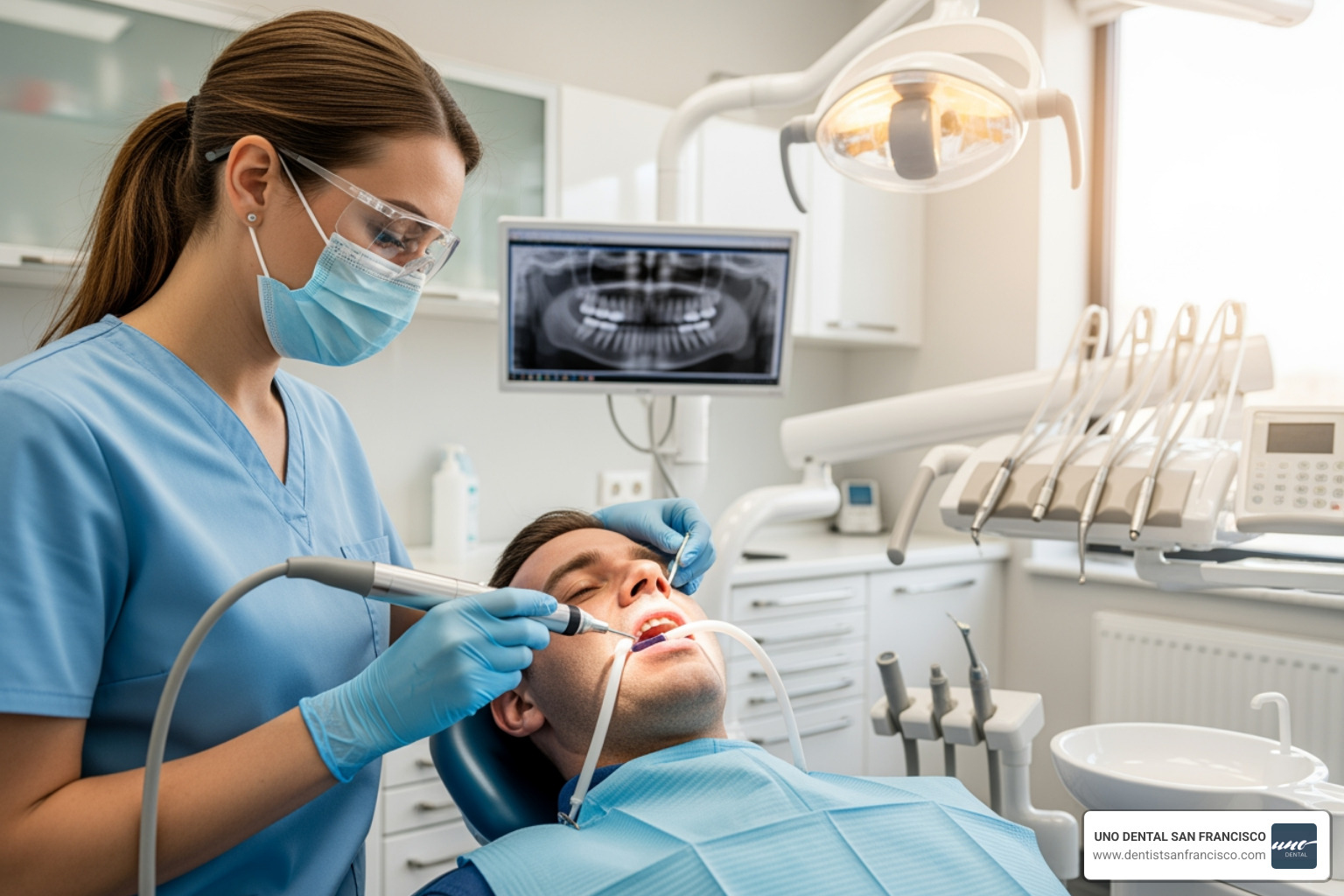
The moment your braces come off is exciting, but it’s just the beginning of a new phase of oral care. One of the first and most important steps is to schedule a comprehensive professional dental cleaning and exam with us at UNO DENTAL SAN FRANCISCO. This appointment is crucial for several reasons:
First, even with diligent brushing and flossing during your orthodontic treatment, braces create countless tiny spaces where plaque and food particles can easily get trapped. Over time, this can lead to a buildup of hardened plaque, known as tartar, around where the brackets and wires once were. Our skilled hygienists will carefully remove all residual cement from your teeth, along with any accumulated plaque and tartar that regular brushing might have missed. This thorough cleaning helps prevent future dental problems and allows your newly straightened teeth to truly shine.
Second, we'll perform a detailed examination for any signs of decalcification (those pesky white spots or marks that sometimes appear where brackets were) or cavities. The bacteria in plaque produce acids that attack your teeth, leading to decalcification and, if left untreated, tooth decay. While having braces, teeth are at a higher risk for these issues, making a post-braces check-up essential. Our team will also assess the health of your gums, which may have been inflamed or slightly swollen during treatment. We'll polish your teeth to a smooth finish, making them less susceptible to new plaque accumulation and helping to reveal their natural luster.
Think of it as hitting the reset button for your oral health. This initial cleaning sets the stage for a lifetime of healthy smiles. For more on maintaining your oral health, visit our page on Preventive Dentistry San Francisco.
Addressing Stains and Considering Whitening
After braces removal, you might notice that your teeth have an uneven color, with lighter areas where the brackets protected the enamel and slightly darker areas that were exposed. These "bracket shadows" are common and often diminish over time with good oral hygiene.
For those who desire a brighter, more uniform smile, teeth whitening can be an excellent option. However, we generally recommend waiting a few weeks to a month after braces removal before considering any whitening treatments. This allows your teeth to recover from any sensitivity and for the enamel to rehydrate.
When you're ready, we can discuss safe and effective whitening options custom to your needs. Professional teeth whitening is an effective treatment for discoloration caused by aging, smoking, or certain foods and drinks. We can help you determine if you're a good candidate and recommend the best approach, whether it's professional home-use trays or in-office treatments. Any temporary tooth sensitivity after whitening usually subsides within a few days to one week.
To learn more about brightening your smile, explore our Ultimate Teeth Whitening After Braces guide and information on Professional Dental Whitening Cost.
The Crucial Role of Retainers in Maintaining Your Results
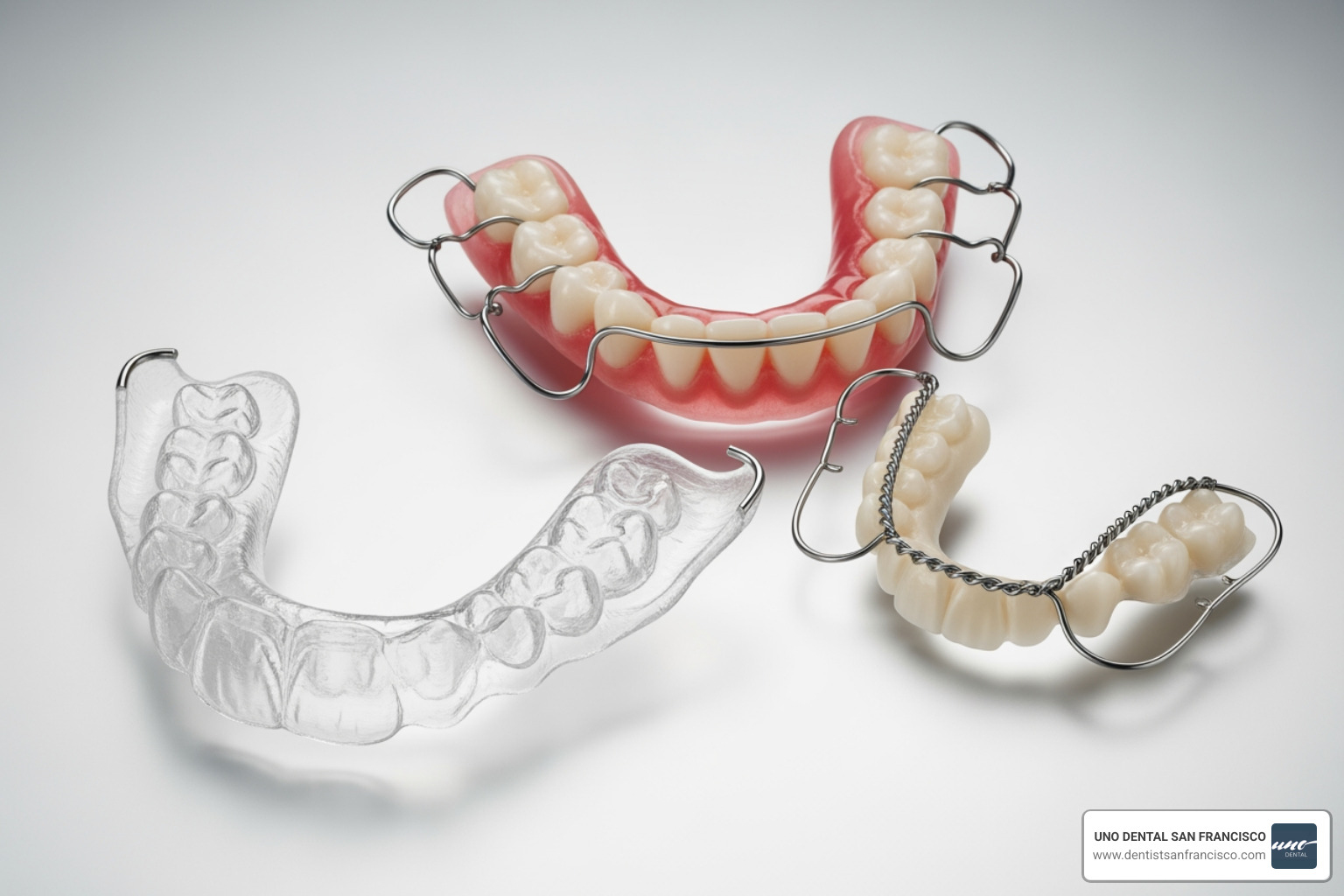
You’ve invested time, effort, and resources into achieving your perfect smile, and now it’s time to protect that investment. This is where your retainer comes in. The role of a retainer in maintaining teeth alignment after braces is absolutely crucial. Without it, your teeth are highly susceptible to shifting back to their original positions, a phenomenon known as orthodontic relapse.
Why do teeth shift back? It’s not just stubbornness! After braces are removed, the bones and ligaments that support your teeth need time to solidify and adapt to their new positions. These ligaments have a "memory" and will try to pull your teeth back into their old alignment. This is why the first few weeks and months after braces removal are the period of highest risk for teeth shifting.
Wearing your retainer as directed by your orthodontist creates a stable environment, allowing these supporting structures to firm up around your newly aligned teeth. It’s the difference between a temporary fix and a lifelong beautiful smile. Neglecting your retainer could unfortunately necessitate new orthodontic treatment down the line.
For a deeper dive into preventing this common issue, read our guide on Orthodontic Relapse Your Guide to Preventing and Fixing Shifting Teeth Post Braces.
How Long to Wear Your Retainer
One of the most common questions we hear is, "How long should retainers be worn after braces are removed?" The simple answer is: exactly as your orthodontist instructs, and often, for life.
Initially, your orthodontist will likely recommend full-time wear, typically 22 hours a day, for the first few months. This period is vital because, as mentioned, your teeth are most vulnerable to shifting immediately after braces are removed. As your bite stabilizes, you'll gradually transition to nighttime-only wear.
However, many dental professionals now advocate for lifelong retainer wear, even if it's just a few nights a week. Your teeth will naturally settle and shift slightly throughout your life due to normal aging, chewing forces, and even habits like teeth grinding. Consistent retainer use, even years down the line, is the best way to ensure your smile remains as straight as it was the day your braces came off.
The consequences of not wearing your retainer are significant. Your hard-earned results can quickly be undone, leading to crooked teeth, gaps reappearing, and changes in your bite. This relapse can be disheartening and may require further, often costly, treatment to correct. Don't let your investment go to waste! Stay committed to your retainer schedule. If you experience relapse, we can discuss Braces Relapse Treatment options.
Cleaning and Caring for Your Retainer
Just like your teeth, your retainer needs regular cleaning to stay hygienic and effective. A dirty retainer can harbor bacteria, leading to bad breath, gum irritation, and even tooth decay.
Here's a simple daily cleaning routine:
- Brush it gently: Every time you remove your retainer (especially after eating and before bed), brush it with a soft-bristled toothbrush and mild soap or a non-abrasive toothpaste. Avoid abrasive toothpastes as they can scratch the retainer, creating tiny crevices for bacteria to hide.
- Rinse thoroughly: Rinse your retainer under lukewarm water after brushing.
- Soaking solutions: For a deeper clean, you can soak your retainer in specialized cleaning crystals or a denture-cleaning solution a few times a week, as recommended by your orthodontist.
- Avoid hot water: Never use hot or boiling water to clean your retainer, as this can warp the plastic and render it unusable.
- Proper storage: When you're not wearing your retainer, always store it in the protective case provided by your orthodontist. This keeps it safe from bacteria, dirt, and accidental damage (like being stepped on or lost!). Avoid leaving it in hot places, like a car, as heat can warp the material.
If your retainer becomes lost or broken, contact us immediately. Delaying replacement can lead to your teeth shifting, making your retainer no longer fit, and potentially requiring new treatment.
Your New Routine for Cleaning Teeth After Braces
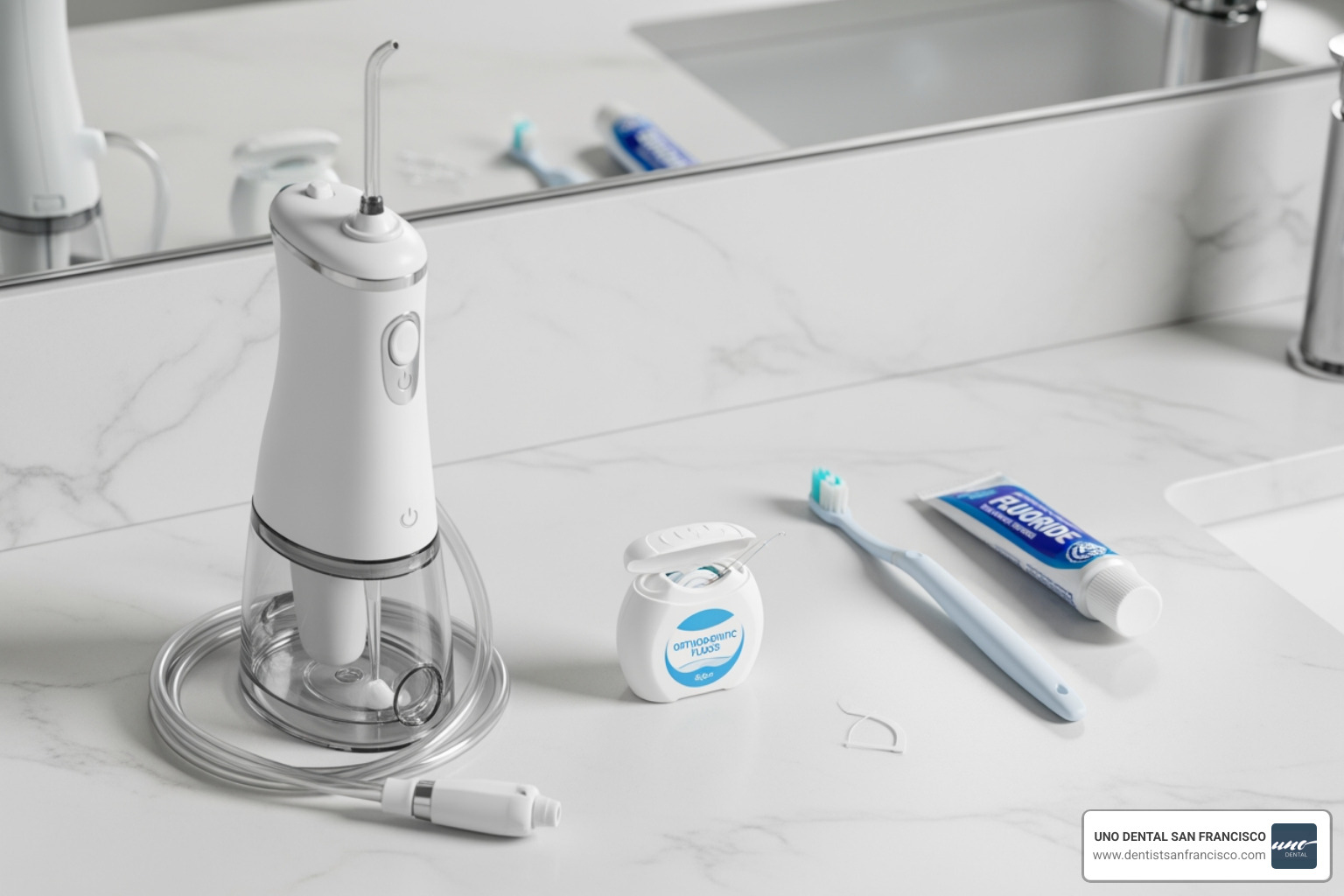
With your braces gone, you'll immediately notice how much easier it is to clean your teeth! No more navigating around wires and brackets. However, this isn't a license to get complacent. Your new, unobstructed smile still needs diligent care to remain healthy and beautiful. The key aspects of maintaining oral hygiene after braces are consistency and proper technique.
Now, you can brush and floss with renewed ease, reaching all surfaces of your teeth and along your gumline without obstruction. This makes it simpler to remove plaque and food particles, significantly reducing your risk of cavities and gum disease. Continue brushing at least twice a day with fluoride toothpaste and flossing at least once daily. We also encourage rinsing with water after meals if you can't brush immediately.
Good oral hygiene is the foundation of a healthy smile. For more detailed insights into maintaining optimal dental health, check out our Best Dental Hygiene Practices and refer to reliable resources for general dental care. You can also find helpful information on dental care from trusted sources.
The Best Tools and Techniques for Cleaning Teeth After Braces
Now that the braces are off, your oral hygiene toolkit can simplify! Here’s what we recommend for optimal cleaning teeth after braces:
- Soft-Bristled Toothbrush: A soft-bristled brush is gentle on your enamel and gums, which might still be sensitive from the orthodontic treatment. Brush at a 45-degree angle to your gums, using small circular motions, ensuring you clean all outer, inner, and chewing surfaces. Don't forget to brush your tongue to remove bacteria and freshen breath! An electric toothbrush with a rotating and oscillating action can also be highly effective at removing plaque.
- Fluoride Toothpaste: Fluoride is your enamel's best friend, helping to strengthen it and protect against cavities.
- Daily Flossing: With no wires to steer, traditional string floss is back in action! Floss at least once a day, ideally before bedtime. Use about 18 inches of floss, wrapping it around your middle fingers. Gently slide the floss between your teeth, curving it into a "C" shape against each tooth and sliding it under the gumline to scrape away plaque.
- Water Flossers: While not a complete replacement for string floss, a water flosser is an excellent addition to your routine. It uses a stream of pulsating water to dislodge food particles and plaque from between teeth and below the gumline. Many patients find water flossers particularly effective for cleaning around areas that were difficult to reach with braces.
- Interdental Brushes: These small, conical brushes can be very useful for cleaning larger gaps between teeth or around permanent retainers, if you have one.
Here is a list of dentist-recommended tools for your home to help with cleaning teeth after braces:
- Soft-bristled toothbrush (manual or electric)
- Fluoride toothpaste
- Dental floss (waxed or unwaxed)
- Water flosser
- Interdental brushes (if applicable)
- Tongue scraper
- Antiseptic mouthwash (non-alcoholic)
For more insights into beneficial dental tools, visit our page on Dentist Recommended Dental Tools for Your Home.
Managing Sensitivity and Gum Health
It’s quite common to experience some tooth sensitivity after your braces are removed. Your teeth have been protected by brackets for an extended period, and now they are fully exposed to temperature changes, air, and pressure. This sensitivity to hot or cold temperatures is usually temporary.
To address this, we recommend using a desensitizing toothpaste. Use it frequently, at least four times a day for one to two weeks, or as needed. Keeping your teeth consistently clean also significantly helps reduce sensitivity.
Your gums might also be a bit sore, puffy, or prone to slight bleeding initially, especially if there was some inflammation (gingivitis) during your orthodontic treatment. This is normal as your gums adjust and heal. Rinsing with a warm saltwater solution (1/2 teaspoon of salt in 8 ounces of warm water) several times a day can provide comfort and aid healing. For persistent gum issues, consult with our team, as we can offer targeted Gum Treatment After Braces to restore your gum health.
Reintroducing Foods to Your Diet
One of the most celebrated freedoms after braces removal is the ability to eat foods that were previously off-limits! However, it's wise to ease back into certain foods gradually. Your teeth and jaws have been undergoing significant changes, and your teeth might feel a bit sensitive, especially to hard or crunchy items, for the first few months.
While you can now enjoy popcorn, nuts, and crunchy apples, we advise caution. Start with softer versions of these foods and gradually reintroduce harder, chewier, or crunchier items as your teeth become less sensitive. Continued caution with very sticky or extremely hard items is always a good idea, as they can still pose a risk to your teeth or any dental work you might have.
Sticky, gooey, and sugary foods, while now easier to eat, still contribute to cavities. Moderation is key to maintaining your newly achieved oral health. Also, be mindful of foods and drinks that can stain your teeth, especially if you're considering or have had whitening treatments. For more information, visit our page on Foods That Stain Teeth.
Long-Term Maintenance and Protecting Your Smile
Achieving a straight, healthy smile with braces is a significant accomplishment, but maintaining it is an ongoing commitment. Long-term dental care routines after braces are crucial for protecting your investment and ensuring your smile lasts a lifetime.
First and foremost, continue your regular dental check-ups and professional cleanings every 4 to 6 months. While you might feel like an expert at cleaning teeth after braces, our hygienists can reach areas you might miss and remove any stubborn plaque or tartar buildup. These routine visits also allow us to monitor your overall oral health, check for any signs of shifting, and address potential issues like decalcification or cavities early.
Neglecting these long-term instructions can lead to several consequences:
- Orthodontic Relapse: Without consistent retainer wear, your teeth can shift back, undoing years of treatment.
- Increased Risk of Decay and Gum Disease: While cleaning is easier post-braces, inadequate oral hygiene can still lead to gingivitis (gum inflammation) and periodontal disease (inflammation leading to bone loss). Untreated tooth decay can progress to painful abscesses and more serious dental problems.
- Aesthetic Compromise: Your beautiful, straight smile can become compromised by stains, decay, or shifting teeth.
Beyond regular dental visits, continue to prioritize your daily home care. And remember, if you play sports, using a mouthguard is critical to protect your teeth from injury. We recommend looking for products with the ADA Seal of Acceptance to ensure they meet rigorous safety and efficacy standards.
For more information on keeping your smile in top shape, schedule your next Dental Checkup San Francisco with us.
Frequently Asked Questions about Cleaning Teeth After Braces
We understand you might have lingering questions after your braces journey. Here are some common concerns our patients have about cleaning teeth after braces.
Why do my teeth feel sensitive after my braces are removed?
Tooth sensitivity after braces removal is a very common experience. There are a few reasons for this:
- Enamel Exposure: For months or years, your tooth enamel was partially covered by brackets. Once they're removed, the entire surface of your teeth is suddenly exposed to external stimuli like hot, cold, and air, which can feel unfamiliar and sensitive.
- Pressure Changes: Your teeth have been undergoing constant pressure and movement during orthodontic treatment. When that pressure is removed, your teeth and surrounding structures need time to adjust to their new, stable positions.
- Temporary Gum Recession: In some cases, minor gum recession can occur during orthodontic treatment, exposing more of the tooth root surface, which is naturally more sensitive. This often improves as gums heal.
Rest assured, this sensitivity is usually temporary. It typically subsides within a few weeks as your teeth and gums settle. In the meantime, using a desensitizing toothpaste can be highly effective. We may also recommend a fluoride gel for extra relief. Keeping your teeth carefully clean can also help reduce sensitivity over time.
How do I know if my teeth are shifting back?
The fear of teeth shifting back is real, and it's why retainers are so important! Here are some signs to watch out for that might indicate your teeth are moving:
- Your Retainer Feels Tight: If your retainer, especially a removable one, feels uncomfortably tight or doesn't fit as easily as it used to, it's a strong indicator that your teeth have shifted. Don't force it!
- Visible Changes in Alignment: You might notice subtle (or not-so-subtle) changes in the straightness of your teeth. One tooth might seem slightly rotated, or a small gap could reappear.
- Gaps Appearing: If you had gaps closed during treatment, and they start to reappear, this is a clear sign of shifting.
- Changes in Your Bite: Your bite might feel "off" or different when you chew.
Teeth have the highest risk of shifting within the first few weeks after braces removal, so vigilance with your retainer is key during this period. If you notice any of these signs, contact us immediately. The sooner we address it, the simpler the correction typically is.
Can I use a water flosser instead of traditional floss?
Water flossers are fantastic tools and a great addition to your oral hygiene routine, especially when cleaning teeth after braces. They use a stream of pulsating water to remove food particles, plaque, and bacteria from between your teeth and below the gumline. Many patients find them incredibly effective and easier to use than traditional string floss.
Benefits of water flossers include:
- Reaching Difficult Areas: They can easily reach into tight spaces and around any permanent retainers, flushing out debris.
- Gentle on Gums: The water stream is often gentler than string floss, which can be beneficial if your gums are still sensitive.
- Improved Gum Health: Studies show they can significantly reduce gingivitis and bleeding gums.
However, while water flossers are highly beneficial, most dental professionals do not consider them a complete replacement for traditional string floss. String floss physically scrapes the plaque biofilm off the tooth surface, which water alone may not fully achieve. For optimal oral health, we generally recommend using both a water flosser and traditional string floss. Think of them as complementary tools in your fight against plaque and cavities.
For more detailed guidance on flossing techniques, including tips for various situations, check out our Flossing Tips San Francisco page.
Preserve Your Perfect Smile with Expert Care
Your journey to a beautiful, straight smile doesn't end when your braces come off. It transitions into a new phase of maintenance, where consistent effort is key to preserving your results for a lifetime. The first few weeks and months are particularly crucial for cleaning teeth after braces and wearing your retainer diligently.
Remember these key steps:
- Schedule your first professional cleaning and exam right after braces removal to address any residual cement, plaque, and check for concerns like decalcification.
- Wear your retainer as instructed – this is your ultimate insurance policy against orthodontic relapse.
- Adopt an upgraded daily oral hygiene routine with a soft-bristled brush, fluoride toothpaste, and daily flossing, complemented by tools like a water flosser.
- Manage any temporary sensitivity with desensitizing products and gradually reintroduce challenging foods.
- Commit to long-term maintenance with regular dental check-ups every 4-6 months to ensure ongoing oral health.
At UNO DENTAL SAN FRANCISCO, we are dedicated to providing comprehensive, patient-centered care. We combine high-tech solutions with a holistic approach to help you maintain your beautiful results for a lifetime. We are here to guide you through every step of your post-braces journey, offering personalized advice and expert care.
Continue learning with our Teeth After Braces Complete Guide and let us help you keep that smile shining!